Termush
by Sven Holm
On This Page
Description
"Termush takes place in a luxury seaside resort designed to keep its wealthy residents safe from the physical (and moral) fallout of a global disaster"--Tags
Recommendations










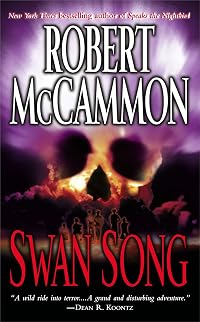

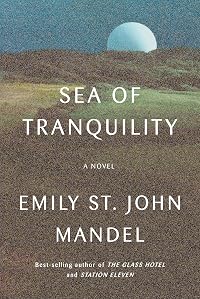
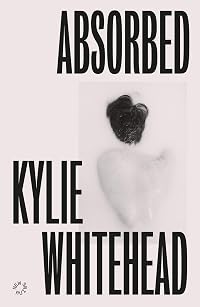
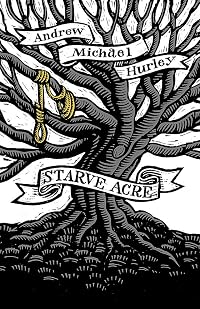










Member Recommendations
Member Reviews
Termush is a science fiction novel from the 1970s, translated from the original Danish. The premise is one that was quite popular at the time and having something of a revival today -- what happens to the survivors after a calamitous event wipes out most of society. Termush's narrator is one of a group of wealthy people who have bought themselves a place in a somewhat remote luxury hotel to wait out the aftermath. They are provided with fancy meals, medical care, and even recreation and outings. But the outside world keeps intruding, both in the form of physical refugees from the disaster and the mental effects on the wealthy guests themselves.
I am not generally a science fiction reader, but this short novel was well-reviewed so I show more picked it up. The themes are certainly as relevant today as they were when the book was first written, unfortunately. Our planet is still threatened by human activity, and we are still plagued by the class issues that drive the actions of the hotel guests. Author Sven Holm chooses to avoid describing specifics of what is happening, much as his characters would prefer to ignore the specifics of their situation. But he expertly implies the unease, desperation and threats that lie behind the bland day-to-day events. Reading the book is somewhat like being trapped at the Overlook Hotel during the Apocalypse, but Holm chooses to emphasize the atmosphere rather than go for the supernatural. I have found myself thinking of this book several times since I finished it, despite its brief length and simple story. show less
I am not generally a science fiction reader, but this short novel was well-reviewed so I show more picked it up. The themes are certainly as relevant today as they were when the book was first written, unfortunately. Our planet is still threatened by human activity, and we are still plagued by the class issues that drive the actions of the hotel guests. Author Sven Holm chooses to avoid describing specifics of what is happening, much as his characters would prefer to ignore the specifics of their situation. But he expertly implies the unease, desperation and threats that lie behind the bland day-to-day events. Reading the book is somewhat like being trapped at the Overlook Hotel during the Apocalypse, but Holm chooses to emphasize the atmosphere rather than go for the supernatural. I have found myself thinking of this book several times since I finished it, despite its brief length and simple story. show less
"I must ask myself whether I am not colouring what I see with my own views."
Holm leaves enough space in the text that his narrator's self-query is relevant to the reader, also. It's a book of impressions, partially understood events and delirium, that, coloured by my own views, perhaps, seems like a metaphor for late stage capitalism. The rich provide themselves with a haven from social collapse, leave the poor to suffer, and start to splinter into authoritarian factions. There is an obvious violence inherent in this, which does manifest itself in the narrative, but the atmosphere is rather that of a dream or a state of increasing dissociation and withdrawal.
Holm leaves enough space in the text that his narrator's self-query is relevant to the reader, also. It's a book of impressions, partially understood events and delirium, that, coloured by my own views, perhaps, seems like a metaphor for late stage capitalism. The rich provide themselves with a haven from social collapse, leave the poor to suffer, and start to splinter into authoritarian factions. There is an obvious violence inherent in this, which does manifest itself in the narrative, but the atmosphere is rather that of a dream or a state of increasing dissociation and withdrawal.
[b:Termush|62678428|Termush|Sven Holm|https://i.gr-assets.com/images/S/compressed.photo.goodreads.com/books/1692818625l/62678428._SY75_.jpg|98442262] is a Danish postapocalyptic novella, first published in 1967. I read the whole thing in the office over my lunchbreak. I found it existentially unsetting, but not to the point of impeding the subsequent afternoon's work. The title refers to a hotel where certain well-off persons have paid to shelter from nuclear war. The novella opens as these residents emerge from shelters under the hotel and move into their rooms. The narrator begins by commenting that the world has changed fundamentally - although he does not know exactly what has happened or how much has been destroyed - and yet feels show more very much the same. As time passes, the changes become more evident and the safety of the hotel's residents more fragile.
[b:Termush|62678428|Termush|Sven Holm|https://i.gr-assets.com/images/S/compressed.photo.goodreads.com/books/1692818625l/62678428._SY75_.jpg|98442262] reminded me of a play in its carefully deliniated scope: the hotel, its grounds, the staff, the residents, occasional outsiders. I found the narrative psychologically astute and very effective at conveying the creeping terror of invisible accumulating radiation:
The elegant Faber edition I read includes a thoughtful introduction by Jeff Vandermeer, which notes how well the novella has aged. Vandermeer comments on why the fears depicted still feel apposite in the 21st century:
In addition to climate change, I found myself thinking of air quality (invisible particulates entering our lungs and blood) and microplastics (fuck knows what they're doing). The measured tone of [b:Termush|62678428|Termush|Sven Holm|https://i.gr-assets.com/images/S/compressed.photo.goodreads.com/books/1692818625l/62678428._SY75_.jpg|98442262] belies the chaos and disaster that the hotel cannot insulate its privileged residents from. It is a memorable and powerful snapshot of catastrophe's aftermath. show less
[b:Termush|62678428|Termush|Sven Holm|https://i.gr-assets.com/images/S/compressed.photo.goodreads.com/books/1692818625l/62678428._SY75_.jpg|98442262] reminded me of a play in its carefully deliniated scope: the hotel, its grounds, the staff, the residents, occasional outsiders. I found the narrative psychologically astute and very effective at conveying the creeping terror of invisible accumulating radiation:
Late at night the alarm went off. [...]
But there is no reason why chaos should break out when the alarm has sounded. The limit of radiation intensity which is set as a maximum is a point arbitrarily chosen. A rate a few degrees lower than the radiation meters permit could, over a long period, cause more serious damage than an excessive rate over a short period. [...]
The management has exploited our wish for infallible systems: here is the water, there is the land, no one can make a mistake. Up to this line there is no danger; on the other side of the line waits certain death. Therefore the alarm wails and the guests flee from their rooms with their clothes fluttering around them. The illusion of complete safety so long as the margin is not reached bears the reverse implication of complete panic once the margin is exceeded. It is easier to choose these sharp demarcation lines than uncertainty in our individual situation; the adjustment has been so small that in itself it is not disastrous, but it could contribute to disaster.
The elegant Faber edition I read includes a thoughtful introduction by Jeff Vandermeer, which notes how well the novella has aged. Vandermeer comments on why the fears depicted still feel apposite in the 21st century:
The detritus and decisions of the past may still affect our future, in that the threat of nuclear holocaust has not left us. But in the interim, other disasters that manifest in largely 'invisible' ways have overtaken us - our fear of radiation and immolation has led to climate crisis fear, which has led to pandemic fear. The grappling of minds with these threats leads to derangement and odd visions because the elements of infiltration and contamination baffle the brain. Our hauntings in the modern era so often now are not ghosts but simply the things we cannot see - but that radically affect us.
In addition to climate change, I found myself thinking of air quality (invisible particulates entering our lungs and blood) and microplastics (fuck knows what they're doing). The measured tone of [b:Termush|62678428|Termush|Sven Holm|https://i.gr-assets.com/images/S/compressed.photo.goodreads.com/books/1692818625l/62678428._SY75_.jpg|98442262] belies the chaos and disaster that the hotel cannot insulate its privileged residents from. It is a memorable and powerful snapshot of catastrophe's aftermath. show less
According to the forward of this short novel, it is both a realistic chronicle of society's collapse and a surreal journey of a man confronted by crisis. Set in the aftermath of a nuclear war, it delves into the psychology of the holed up survivors as they face the hazards of societal breakdown.
As the novel opens, the first person narrator is living in a hotel with other guests, all of whom have paid dearly to be taken care of at this isolated facility in the event of a nuclear war and its aftermath. Management takes care of them, and gourmet meals and all creature comforts are provided. If radiation levels get too high, the guests are conveyed to basement shelters to remain until safer radiation levels return. If possible, outings are show more sometimes arranged, so the guests don't get too bored.
Then, the outside world begins intruding. "The day we came up from the shelter, four people were found dead on the steps of the hotel." Soon, people from the outside world begin arriving at the hotel in larger numbers, many of them suffering from radiation sickness. Management and some of the guests want to help them, but many guests do not. Chaos and confusion reign.
I used to read a lot of nuclear war/post-apocalyptic novels back in my teens, early 20's, a kind of guilty reading pleasure, if you will. This is one I missed back then. (It's Danish, I believe, so maybe it wasn't even translated). Many of the books I used to read back then focused on the nitty-gritty details of survival. This one was a bit more philosophical. I can remember back in the day the drills in schools in the US to shelter under your desk in the event of a nuclear attack, which seems so quaint and naive now, and to a certain extent I guess I view these types of books the same way as I now view the shelter-under-your-desk exercise: I don't think surviving a nuclear war is possible, and why would anyone want to survive anyway?
Still, for what it is this was a good read.
3 stars show less
As the novel opens, the first person narrator is living in a hotel with other guests, all of whom have paid dearly to be taken care of at this isolated facility in the event of a nuclear war and its aftermath. Management takes care of them, and gourmet meals and all creature comforts are provided. If radiation levels get too high, the guests are conveyed to basement shelters to remain until safer radiation levels return. If possible, outings are show more sometimes arranged, so the guests don't get too bored.
Then, the outside world begins intruding. "The day we came up from the shelter, four people were found dead on the steps of the hotel." Soon, people from the outside world begin arriving at the hotel in larger numbers, many of them suffering from radiation sickness. Management and some of the guests want to help them, but many guests do not. Chaos and confusion reign.
I used to read a lot of nuclear war/post-apocalyptic novels back in my teens, early 20's, a kind of guilty reading pleasure, if you will. This is one I missed back then. (It's Danish, I believe, so maybe it wasn't even translated). Many of the books I used to read back then focused on the nitty-gritty details of survival. This one was a bit more philosophical. I can remember back in the day the drills in schools in the US to shelter under your desk in the event of a nuclear attack, which seems so quaint and naive now, and to a certain extent I guess I view these types of books the same way as I now view the shelter-under-your-desk exercise: I don't think surviving a nuclear war is possible, and why would anyone want to survive anyway?
Still, for what it is this was a good read.
3 stars show less
3/5
Termush tells the story of what happens after an unspecified nuclear disaster. It's a great premise, and the way events unfolds feels more or less believable, but there is something about it that doesn't quite work for me.
First, though, the positives. As I said above, the events feel vaguely plausible, and Holm skillfully and thoughtfully shows an individual (and a community's) response to a nuclear apocalypse without being too direct or forceful about what he's trying to say. The events of the book make you, along with the characters, reflect on fear and change and the desire for the familiar and comfortable in a changing world.
So why only 3/5? The book is written in quite a cold, remote style that befits the events and the mood show more the author was going for. While it seems like a deliberate style choice, the prose makes everything about the book feel washed out and flat. In addition to preventing you from connecting with the characters, it also deadens the impact of the story and the messages it's trying to pass on. I think there's a better version of this story that *could* have been written - possibly one where you're shown more of the characters, setting and emotions early on, before paranoia and the consequences of the apocalypse truly set in.
This edition is accompanied by a short introduction, which (as with most similar pieces) is best read at the end to avoid spoilers. This one was rather complicated, but did point out that some of J.G. Ballard's works are decent comparison titles for Termush - something with which I agree.
On the whole this was a good book - especially for those who like dystopias and subtle storytelling. Recommended with reservations.
Finally, thank you to Netgalley and Faber, who kindly provided an ARC of Termush in return for an honest review. show less
Termush tells the story of what happens after an unspecified nuclear disaster. It's a great premise, and the way events unfolds feels more or less believable, but there is something about it that doesn't quite work for me.
First, though, the positives. As I said above, the events feel vaguely plausible, and Holm skillfully and thoughtfully shows an individual (and a community's) response to a nuclear apocalypse without being too direct or forceful about what he's trying to say. The events of the book make you, along with the characters, reflect on fear and change and the desire for the familiar and comfortable in a changing world.
So why only 3/5? The book is written in quite a cold, remote style that befits the events and the mood show more the author was going for. While it seems like a deliberate style choice, the prose makes everything about the book feel washed out and flat. In addition to preventing you from connecting with the characters, it also deadens the impact of the story and the messages it's trying to pass on. I think there's a better version of this story that *could* have been written - possibly one where you're shown more of the characters, setting and emotions early on, before paranoia and the consequences of the apocalypse truly set in.
This edition is accompanied by a short introduction, which (as with most similar pieces) is best read at the end to avoid spoilers. This one was rather complicated, but did point out that some of J.G. Ballard's works are decent comparison titles for Termush - something with which I agree.
On the whole this was a good book - especially for those who like dystopias and subtle storytelling. Recommended with reservations.
Finally, thank you to Netgalley and Faber, who kindly provided an ARC of Termush in return for an honest review. show less
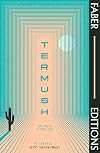
Firstly I really like the design of these Faber Editions, They by Kay Dick is another one - gorgeous covers, for uneasy books. This is a short tale of the rich and their service staff stuck in a hotel after a nuclear apocalypse. They've paid a lot to sit out the initial aftermath of nuclear war in a bunker, and then to be kept in luxurious surroundings once its safe to come out. But paradise isn't an easy place to be after the apocalypse and the cracks soon start to show.
For a book written in 1967 I felt that it was quite timeless, we have a nameless narrator that narrate to us his experience in the Termush, a kind of hotel with a bunker bellow, the world has fallen victim to a radiative fallout, but as our narrator starts to tell us the story radiation levels are almost normal, but is it really like that? The management of the hotel are like a very authoritative government where the people (guest) can’t really change the outcome of the things… Soon enough there’s a threat that comes from the unknown, the people that survived the fallout… and to know more I advice you all to get a copy and see for yourself.
I did like this Novella, I did like to learn things with our main character, what I show more didn’t like that much, was the ending, I felt it was rushed and ended in a cliffhanger, but without a continuation that is pointless… for me it is a solid 3,4 stars, is still worth reading.
Thank you NetGalley and Faber and Faber Ltd for the free ARC and this is my honest opinion. show less
I did like this Novella, I did like to learn things with our main character, what I show more didn’t like that much, was the ending, I felt it was rushed and ended in a cliffhanger, but without a continuation that is pointless… for me it is a solid 3,4 stars, is still worth reading.
Thank you NetGalley and Faber and Faber Ltd for the free ARC and this is my honest opinion. show less
Members
- Recently Added By
Lists

Books Read in 2023
5,547 works; 145 members

Books Read in 2024
4,623 works; 126 members

Llibres que he llegit el 2024
77 works; 1 member
Author Information

54+ Works 315 Members
Some Editions
Awards and Honors
Distinctions
Series
Belongs to Publisher Series
Work Relationships
Is contained in
Common Knowledge
- Canonical title
- Termush
- Original title
- Termush, Atlanterhavskysten
- Original publication date
- 1967
- People/Characters
- Maria
- Important places
- Termush
- Dedication
- To my parents
- First words
- I have been installed in one of the rooms on the top floor here in the hotel.
- Last words
- (Click to show. Warning: May contain spoilers.)Udenfor er havet gået i stå, det er ikke mørkt eller lyst.
- Blurbers
- Vandermeer, Jeff; Lacey, Catherine; Mengiste, Maaza; Nayler, Ray; Majumdar, Megha; Sudbanthad, Pitchaya (show all 7); Chen, Lisa Hsiao
- Original language
- Danish
Classifications
- Genres
- Fiction and Literature, Science Fiction
- DDC/MDS
- 839.813 — Literature & rhetoric German & related literatures Other Germanic literatures Danish and Norwegian literatures Danish Danish fiction
- LCC
- PT8176.18 .O44 .T413 — Language and Literature German, Dutch and Scandinavian literatures Danish literature Individual authors or works 1961-2000
- BISAC
Statistics
- Members
- 204
- Popularity
- 160,375
- Reviews
- 7
- Rating
- (3.48)
- Languages
- 7 — Catalan, Danish, Dutch, English, French, Italian, Spanish
- Media
- Paper, Audiobook, Ebook
- ISBNs
- 16
- ASINs
- 4