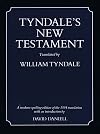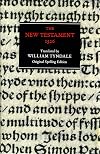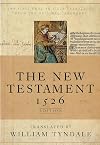
Tyndale's New Testament
by William Tyndale (Translator)
On This Page
Description
Although, this astounding work of pioneering scholarship was the basis of all English bibles until after the Second World War, and although it was the version of the bible used by some of our greatest poets, it is today virtually unknown because of its suppression for political reasons and because of its difficult early-sixteenth-century spelling.Tags
Recommendations




















Member Recommendations

lhungsbe My go-to version of the Bible. No additions or deletions. Easy to read.
20
Member Reviews
This is a great little Bible. This was my second or third time reading it. In 1526, the conventions for spelling did not exist yet, so you have to sound out the words sometimes. Also, there are a few 16th century words that are not much in use now, like habbergions (habergeon - a chain mail armor suit of the 12th to 14th centuries), or debite (a deputy or official). Another word was gasyngstock, or gazingstock, which is easy to get from the context. I have an unabridged dictionary which helped me with a few words, but once or twice I used an online Tudor and Stuart Words dictionary. Mostly though, there were not many words difficult to determine. One in every several chapters. Tyndale has a few quirks in his translation, too. Instead of show more using the word “salvation” he most often uses the word, “health.” Also very often he translates Christ’s name as “Jesu” instead of “Jesus.”
Technically, this is not in the Old English language. It’s Modern English with archaic spellings, so once you get the hang of reading the weird spellings, you’re okay. There are some old publishing tricks in it too, as when they put a line over a letter which indicates that the next letter is an m or an n. They did this to fit more text on a line of print. But really, it’s not hard to get the meaning as you read. I liked that this Bible slowed me down a bit. You pick up different things when you slow down. There are no verse numbers in this Bible either. Verse numberings did not come till later.
Imagine reading the New Testament the first time it was translated into your own language. The small size of this book made it easier to conceal. For a while there in Reformation Era England, if you got caught with it, you could be hung or burned at the stake. William Tyndale, the translator of this New Testament, was himself executed. His last words were, Lord, change the heart of the King of England. We can read this Bible with no thought to that level of persecution. Its small size makes it perfect for travel or to put in a purse. I liked it because, imagining the 16th century English readers, it gave me the feeling that I was reading the Bible for the first time again. show less
Technically, this is not in the Old English language. It’s Modern English with archaic spellings, so once you get the hang of reading the weird spellings, you’re okay. There are some old publishing tricks in it too, as when they put a line over a letter which indicates that the next letter is an m or an n. They did this to fit more text on a line of print. But really, it’s not hard to get the meaning as you read. I liked that this Bible slowed me down a bit. You pick up different things when you slow down. There are no verse numbers in this Bible either. Verse numberings did not come till later.
Imagine reading the New Testament the first time it was translated into your own language. The small size of this book made it easier to conceal. For a while there in Reformation Era England, if you got caught with it, you could be hung or burned at the stake. William Tyndale, the translator of this New Testament, was himself executed. His last words were, Lord, change the heart of the King of England. We can read this Bible with no thought to that level of persecution. Its small size makes it perfect for travel or to put in a purse. I liked it because, imagining the 16th century English readers, it gave me the feeling that I was reading the Bible for the first time again. show less
Just as reading a familiar text in translation can be eye-opening – forcing you to think about the meaning, rather than skating along familiar phrases – so reading these gospels in Tyndale’s 16th-century English gave me a completely fresh take on the story they tell.
And there can’t be many books that benefit more from a fresh approach than the gospels. I’m not a religious person, but I think anyone of my generation and background knows most of what happens here inside-out, and not just the narrative facts but the specific words they’re couched in. So what’s been surprising to me, reading this, is how new a lot of it seemed when told a different way – and even more, how clearly I formed a view about what I was being told. show more Suddenly, reading these stories in context and in a suitably archaic language, I found myself coming to firm conclusions about things that I’ve previously glossed over or been undecided on.
Take the Last Supper for example, where Jesus hands out bread and wine to his disciples and tells them it’s his body and blood, unwittingly prompting a future Reformation conflict over whether or not he was speaking literally. Now I have never believed that Jesus’s actual body and blood are imbibed by modern worshippers, but I suppose I always thought there was reasonable scriptural basis to think so. But actually, when I got to this passage here in the gospels, it seemed totally clear to me that he was talking in figurative terms.
And he toke breed, and gave thankes, and brake itt, and gave it unto them, sayinge: Thys is my body which is geven for you, Thys do in the remembraunce of me. Lyke-wyse alsoo, when they had supped, he toke the cuppe sayinge: This is the cuppe, the newe testamentt, in my bloud, which shall for you be shedde.
—Luke XXII
Certainly if he was suddenly speaking literally, it would be a first – he’s spent the whole rest of his life, on the evidence here, talking in parables and riddles (‘similitudes’, as Tyndale calls them). That’s one of the things that can make him a bit annoying, in fact – the knowing way he always refuses to give anyone a straight answer about anything.
Jesus is not easy to get to know. Like someone from an Icelandic saga, actions and words are attributed to him, but very few thoughts or emotions. We know what he does and says, but we’re only given odd clues about what his motives are or what he feels about it. I find this technique quite rewarding, because it invites (or forces) the reader to fill in a lot of the blanks – you have to read the gospels ‘actively’.
Jesus’s central message of personal redemption is fascinating, and revolutionary in all senses. But that doesn’t stop him being a bit smug about how he delivers it. There’s something great about his relentlessly anti-rich, anti-authority stance, but he does seem to rather relish telling the well-off that unless they get rid of everything they own they won’t be getting into heaven. And even when his disciples say: well what about us, we gave everything up to follow you – Jesus just says, really? Well, you still love your mum and dad, don’t you? Unless you give up your family and loved ones, you won’t be true believers either. Which I can’t help feeling is a bit unfair.
At times he can be downright disturbing. The story of Lazarus now strikes me as very troubling. Lazarus’s sister Martha at first seems quite with-it – she understands who Jesus is straight away, and even seems ready, for once, to understand his way of talking in parables.
Jesus sayde unto her: Thy brother shall ryse agayne. Martha sayde unto hym: I knowe wele, he shall ryse agayne in the resurreccion att the last daye. Jesus sayde unto her: I am the resurreccion and lyfe. Whosoever beleveth on me: ye though he were deed, yet shall he live: and whosoever liveth, and beleveth on me, shall never deye. Belevest thou this?
—John XI
Once again Jesus wrong-foots his interlocutor – this time he’s NOT talking in parables, he’s being quite serious! And so, in a creepily realistic passage, they go to the tomb and Jesus resurrects a four-day-old corpse because the man’s sister had faith.
What on earth are we supposed to think of this? Why this particular man and no one else? What about all the others who had faith? And how long will Lazarus be alive before he dies again, this time for good? There are no answers to this.
But while Jesus can sometimes seem a slightly alien presence, he did come alive for me in one passage which I’d never really thought about before. Towards the end, in an episode narrated by Matthew, Mark and Luke, he wanders off alone to pray and asks two or three of his disciples to wait up for him. When he comes back a couple of hours laters, they’re all asleep. Jesus is annoyed, and wakes them up: ‘Coudest thou not watche with me one houre?’ So they get up, and Jesus goes back to pray again. And at this point he knows he’s about to be betrayed and crucified; he’s terrified, he’s actually praying to god that it might turn out some other way, that there might be some other ending where he gets to live. He needs human companionship; for the first time you feel that he actually needs the disciples, rather than just assuming that they need him.
But when he gets back, the three of them have nodded off again. And you expect him to be angry, but he’s not. He suddenly seems very sad and exhausted.
And he returned and founde them aslepe agayne, for their eyes were hevy: nether coulde they tell what they myght answere to hym. And he cam the thyrde tyme, and sayd unto them: slepe hens forth and take youre ease. It is ynough.
—Mark XIV
And it’s at this moment that he looks up and sees Judas approaching at the head of a legion of soldiers.
Moments like this are a reminder of the extraordinary literary qualities of these books. And if the archaic language allows you to concentrate on the meaning, rather than the poetry, of these stories, that does not mean that Tyndale’s translation is unpoetic – quite the reverse. This is especially noticeable in the book attributed to John. While the three synoptic gospels are fascinating historical documents, John is in a different class; it’s a literary masterpiece. Tyndale raises his game to translate it, and in the process produces much of the astonishing prose for which the King James version usually takes the credit.
In the begynnynge was that worde, and that worde was with god: and god was thatt worde. The same was in the begynnynge wyth god. All thynges were made by it, and without it, was made noo thinge, that made was. In it was lyfe, And lyfe was the light of men, And the light shyneth in darcknes, and darcknes comprehended it not.
—John I
It makes perfect sense for John to be last of the four. By the end of Luke you’re getting a bit irritated at reading the same things over and over – then suddenly you have this poetic summation of everything that’s gone before.
In some ways Tyndale’s language made more sense to me than modern English, as a way of understanding such a distant culture. And it certainly doesn’t stop some moments seeming remarkably modern. I love it when someone runs up to Nathaniel to say: hey, we’ve found the Messiah, some guy called Jesus, from Nazareth!
And Nathanaell sayde unto hym: Can there be eny goode thynge come out off Nazareth?
...exactly as someone today might react if you told them the Messiah had been found, alive and well in Hull.
I don’t know if it changed my views on the modern religion, but reading Tyndale did change my views on the historical Jesus and the ideals prized by early Christians. Jesus’s ideas raise some serious issues, and his lack of respect for authority still seems challenging. But in the end his central idea was to promote love.
A newe commaundment geve I vnto you, that ye love to gedder, as I have loved you, that even soo ye love one another. By thys shall men knowe that ye are my disciples, yf ye shall have love won to another.
—John XIII
There are worse things to base a religion on. show less
And there can’t be many books that benefit more from a fresh approach than the gospels. I’m not a religious person, but I think anyone of my generation and background knows most of what happens here inside-out, and not just the narrative facts but the specific words they’re couched in. So what’s been surprising to me, reading this, is how new a lot of it seemed when told a different way – and even more, how clearly I formed a view about what I was being told. show more Suddenly, reading these stories in context and in a suitably archaic language, I found myself coming to firm conclusions about things that I’ve previously glossed over or been undecided on.
Take the Last Supper for example, where Jesus hands out bread and wine to his disciples and tells them it’s his body and blood, unwittingly prompting a future Reformation conflict over whether or not he was speaking literally. Now I have never believed that Jesus’s actual body and blood are imbibed by modern worshippers, but I suppose I always thought there was reasonable scriptural basis to think so. But actually, when I got to this passage here in the gospels, it seemed totally clear to me that he was talking in figurative terms.
And he toke breed, and gave thankes, and brake itt, and gave it unto them, sayinge: Thys is my body which is geven for you, Thys do in the remembraunce of me. Lyke-wyse alsoo, when they had supped, he toke the cuppe sayinge: This is the cuppe, the newe testamentt, in my bloud, which shall for you be shedde.
—Luke XXII
Certainly if he was suddenly speaking literally, it would be a first – he’s spent the whole rest of his life, on the evidence here, talking in parables and riddles (‘similitudes’, as Tyndale calls them). That’s one of the things that can make him a bit annoying, in fact – the knowing way he always refuses to give anyone a straight answer about anything.
Jesus is not easy to get to know. Like someone from an Icelandic saga, actions and words are attributed to him, but very few thoughts or emotions. We know what he does and says, but we’re only given odd clues about what his motives are or what he feels about it. I find this technique quite rewarding, because it invites (or forces) the reader to fill in a lot of the blanks – you have to read the gospels ‘actively’.
Jesus’s central message of personal redemption is fascinating, and revolutionary in all senses. But that doesn’t stop him being a bit smug about how he delivers it. There’s something great about his relentlessly anti-rich, anti-authority stance, but he does seem to rather relish telling the well-off that unless they get rid of everything they own they won’t be getting into heaven. And even when his disciples say: well what about us, we gave everything up to follow you – Jesus just says, really? Well, you still love your mum and dad, don’t you? Unless you give up your family and loved ones, you won’t be true believers either. Which I can’t help feeling is a bit unfair.
At times he can be downright disturbing. The story of Lazarus now strikes me as very troubling. Lazarus’s sister Martha at first seems quite with-it – she understands who Jesus is straight away, and even seems ready, for once, to understand his way of talking in parables.
Jesus sayde unto her: Thy brother shall ryse agayne. Martha sayde unto hym: I knowe wele, he shall ryse agayne in the resurreccion att the last daye. Jesus sayde unto her: I am the resurreccion and lyfe. Whosoever beleveth on me: ye though he were deed, yet shall he live: and whosoever liveth, and beleveth on me, shall never deye. Belevest thou this?
—John XI
Once again Jesus wrong-foots his interlocutor – this time he’s NOT talking in parables, he’s being quite serious! And so, in a creepily realistic passage, they go to the tomb and Jesus resurrects a four-day-old corpse because the man’s sister had faith.
What on earth are we supposed to think of this? Why this particular man and no one else? What about all the others who had faith? And how long will Lazarus be alive before he dies again, this time for good? There are no answers to this.
But while Jesus can sometimes seem a slightly alien presence, he did come alive for me in one passage which I’d never really thought about before. Towards the end, in an episode narrated by Matthew, Mark and Luke, he wanders off alone to pray and asks two or three of his disciples to wait up for him. When he comes back a couple of hours laters, they’re all asleep. Jesus is annoyed, and wakes them up: ‘Coudest thou not watche with me one houre?’ So they get up, and Jesus goes back to pray again. And at this point he knows he’s about to be betrayed and crucified; he’s terrified, he’s actually praying to god that it might turn out some other way, that there might be some other ending where he gets to live. He needs human companionship; for the first time you feel that he actually needs the disciples, rather than just assuming that they need him.
But when he gets back, the three of them have nodded off again. And you expect him to be angry, but he’s not. He suddenly seems very sad and exhausted.
And he returned and founde them aslepe agayne, for their eyes were hevy: nether coulde they tell what they myght answere to hym. And he cam the thyrde tyme, and sayd unto them: slepe hens forth and take youre ease. It is ynough.
—Mark XIV
And it’s at this moment that he looks up and sees Judas approaching at the head of a legion of soldiers.
Moments like this are a reminder of the extraordinary literary qualities of these books. And if the archaic language allows you to concentrate on the meaning, rather than the poetry, of these stories, that does not mean that Tyndale’s translation is unpoetic – quite the reverse. This is especially noticeable in the book attributed to John. While the three synoptic gospels are fascinating historical documents, John is in a different class; it’s a literary masterpiece. Tyndale raises his game to translate it, and in the process produces much of the astonishing prose for which the King James version usually takes the credit.
In the begynnynge was that worde, and that worde was with god: and god was thatt worde. The same was in the begynnynge wyth god. All thynges were made by it, and without it, was made noo thinge, that made was. In it was lyfe, And lyfe was the light of men, And the light shyneth in darcknes, and darcknes comprehended it not.
—John I
It makes perfect sense for John to be last of the four. By the end of Luke you’re getting a bit irritated at reading the same things over and over – then suddenly you have this poetic summation of everything that’s gone before.
In some ways Tyndale’s language made more sense to me than modern English, as a way of understanding such a distant culture. And it certainly doesn’t stop some moments seeming remarkably modern. I love it when someone runs up to Nathaniel to say: hey, we’ve found the Messiah, some guy called Jesus, from Nazareth!
And Nathanaell sayde unto hym: Can there be eny goode thynge come out off Nazareth?
...exactly as someone today might react if you told them the Messiah had been found, alive and well in Hull.
I don’t know if it changed my views on the modern religion, but reading Tyndale did change my views on the historical Jesus and the ideals prized by early Christians. Jesus’s ideas raise some serious issues, and his lack of respect for authority still seems challenging. But in the end his central idea was to promote love.
A newe commaundment geve I vnto you, that ye love to gedder, as I have loved you, that even soo ye love one another. By thys shall men knowe that ye are my disciples, yf ye shall have love won to another.
—John XIII
There are worse things to base a religion on. show less
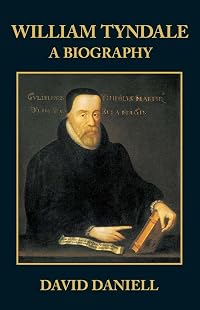
William Tyndale is the finest English translator of the Bible, and his New Testament one of the most influential works in English Literature. As a young man in pre-Reformation England, where unauthorised translation of the Bible was illegal, he heard a pompous divine claim that 'we were better be without God's law than the Pope's'. Tyndale's answer was: 'I defy the Pope and all his laws, and if God spares my life, ere many years I will cause a boy that driveth the plough shall know more of the scripture than thou dost'. Unable to do this in England, he spent the rest of his life in exile on the Continent and was executed as a heretic in 1536. His translations - of the entire New Testament and much of the Old Testament - were smuggled show more into England, where an eager public risked their lives to read them. His New Testament with its clear, vivid style and resonant phrases, is a masterpiece of English prose and was the basis of the Authorized Version of 1611. show less
For a very long time only academics had access to the work of William Tyndale outside of the few historical quotations that served to be his voice through the centuries. And the King James Version. But few do know how greatly WT influenced the KJV, or just how much of Tyndale would be immortalized by its words. Much has been written of his life, his sacrifice, his suffering, but not much of the very substance of the man himself as can only be seen through the printed word of The Newe Testament. Any student of the Bible would be well served to hammer himself into this work, struggle through the ancient and primitive English, and work until with confidence William Tyndale's Newe Testament might be read with proficiency and ease. show more Definitely a five star read, that well deserves to be elevated from the reference shelf and into the very heart of an individual. show less
First sentence: This is the book of the generation of Jesus Christ the son of David, the son also of Abraham.
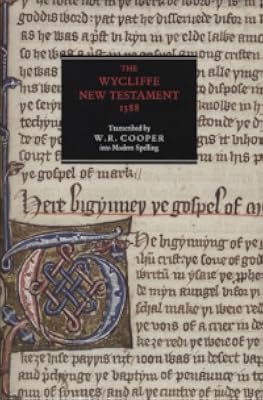
This edition is a modern-spelling edition of the 1534 Translation. The translation of the New Testament into English from its original Greek was printed in Germany in 1534 and smuggled back into England. It was not the first translation of the New Testament into English. The Wycliffe New Testament was translated from the Latin Vulgate and not the Greek New Testament. Also the Wycliffe was not widely distributed and for everyone. (The Wycliffe New Testament was BEFORE the invention of the printing press.) The Tyndale--though forbidden and illegal--was meant to put the Word of God into the hands of everyone. Tyndale wanted the Word show more of God known by the people of God. Actually known, read, studied, interpreted. The invention of the printing press was providential in spreading the ideas of the Reformation and printing Bibles.
I enjoyed reading Tyndale's New Testament. I did. I would definitely recommend this edition of the New Testament.
You can really tell that Tyndale meant his translation to be read and understood by everyone. It is clearly and beautifully written.
And it fortuned while they were there, her time was come that she should be delivered. And she brought forth her first begotten son, and wrapped him in swaddling clothes, and laid him in a manger, because there was no room for them within in the inn. And there were in the same region shepherds abiding in the field and watching their flock by night. And lo: the angel of the Lord stood hard by them, and the brightness of the Lord shone round about them, and they were sore afraid. But the angel said unto them: Be not afraid. For behold, I bring you tidings of great joy that shall come to all the people: for unto you is born this day in the city of David, a savior which is Chris the Lord. And take this for a sign: ye shall find the child swaddled and laid in a manger. And straightway there was with the angel a multitude of heavenly soldiers, lauding God and saying: Glory to God on high, and peace on the earth: and unto men rejoicing. (Luke 2:1-14)
For God so loveth the world, that he hath given his only son, that none that believe in him, should perish: but should have everlasting life. For God sent not his son into the world, to condemn the world: but that the world through him might be saved. He that believeth on him, shall not be condemned. But he that believeth not, is condemned already, because he believeth not in the name of the only son of God. And this is the condemnation: that light is come into the world, and the men loved darkness more than light, because their deeds were evil. (John 3:16-19)
No man can come to me except the father which hath sent me, draw him. And I will raise him up at the last day. It is written in the prophets, that they shall all be taught of God. Every man therefore that hath heard and hath learned of the father cometh unto me. Not that any man hath seen the father, save he which is of God: the same hath seen the father. Verily verily I say unto you, he that believeth on me, hath everlasting life. I am that bread of life. Your fathers did eat manna in the wilderness and are dead. This is the bread which cometh from heaven, that he which eateth of it, should also not die. I am that living bread which came down from heaven. If any man eat of this bread, he shall live forever. And the bread that I will give, is my flesh, which I will give for the life of this world. (John 6:44-51)
And he said unto his disciples: Let not your hearts be troubled. Believe in God and believe in me. In my father's house are many mansions. If it were not so, I would have told you. I go to prepare a place for you. And if I go to prepare a place for you, I will come again, and receive you even unto myself, that where I am, there may ye be also. And whither I go ye know, and the way ye know. Thomas said unto him: Lord we know now whither thou goest. Also how is it possible for us to know the way? Jesus said unto him: I am the way, the truth, and the life. And no man cometh unto the father, but by me. If ye had known me, ye had known my father also. And now ye know him, and have seen him. (John 14:1-7)
As soon as Jesus had received of the vinegar, he said: It is finished, and bowed his head, and gave up the ghost. (John 19:30)
When he saw the people, he went up into a mountain, and when he was set, his disciples came to him, and he opened his mouth, and taught them saying: Blessed are the poor in spirit: for theirs is the kingdom of heaven. Blessed are they that mourn: for they shall be comforted. Blessed are the meal: for they shall inherit the earth. Blessed are they which hunger and thirst for righteousness: for they shall be filled. Blessed are the merciful: for they shall obtain mercy. Blessed are the pure in heart: for they shall see God. Blessed are the peacemakers: for they shall be called the children of God. Blessed are they which suffer persecution for righteousness' sake: for theirs is the kingdom of heaven. Blessed are ye when men revile you, and persecute you, and shall falsely say all manner of evil sayings against you for my sake. Rejoice, and be glad, for great is your reward in heaven. For so persecuted they the prophets which were before your days. (Matthew 5:12)
I beseech you therefore brethren, by the mercifulness of God, that ye make your bodies a quick sacrifice holy and acceptable unto God which is your reasonable serving of God. And fashion not yourselves like unto this world: But be ye changed in your shape, by the renewing of your wits that ye may feel what thing that good, that acceptable, and perfect will of God is. (Romans 12:1-2)
This edition has modern spelling. It makes Tyndale's translation a comfortable choice. Here's a small taste of the original spelling:
I beseche you therfore brethre by ye mercyfulnes of God that ye make youre bodyes aquicke sacrifise holy and acceptable vnto God which is youre resonable seruynge of god. And fassion not youre selves lyke vnto this worlde: But be ye chaunged in youre shape by the renuynge of youre wittes that ye maye fele what thynge that good yt acceptable and perfaycte will of god is. (Romans 12:1-2)
For God so loveth the worlde yt he hath geven his only sonne that none that beleve in him shuld perisshe: but shuld have everlastinge lyfe. (John 3:16)
And he sayd vnto his disciples: Let not youre hertes be troubled. Beleve in god and beleve in me. In my fathers housse are many mansions. If it were not so I wolde have tolde you. I go to prepare a place for you.And yf I go to prepare a place for you I will come agayne and receave you eve vnto my selfe yt where I am there maye ye be also. (John 14:1-3) show less
This edition is a modern-spelling edition of the 1534 Translation. The translation of the New Testament into English from its original Greek was printed in Germany in 1534 and smuggled back into England. It was not the first translation of the New Testament into English. The Wycliffe New Testament was translated from the Latin Vulgate and not the Greek New Testament. Also the Wycliffe was not widely distributed and for everyone. (The Wycliffe New Testament was BEFORE the invention of the printing press.) The Tyndale--though forbidden and illegal--was meant to put the Word of God into the hands of everyone. Tyndale wanted the Word show more of God known by the people of God. Actually known, read, studied, interpreted. The invention of the printing press was providential in spreading the ideas of the Reformation and printing Bibles.
I enjoyed reading Tyndale's New Testament. I did. I would definitely recommend this edition of the New Testament.
You can really tell that Tyndale meant his translation to be read and understood by everyone. It is clearly and beautifully written.
And it fortuned while they were there, her time was come that she should be delivered. And she brought forth her first begotten son, and wrapped him in swaddling clothes, and laid him in a manger, because there was no room for them within in the inn. And there were in the same region shepherds abiding in the field and watching their flock by night. And lo: the angel of the Lord stood hard by them, and the brightness of the Lord shone round about them, and they were sore afraid. But the angel said unto them: Be not afraid. For behold, I bring you tidings of great joy that shall come to all the people: for unto you is born this day in the city of David, a savior which is Chris the Lord. And take this for a sign: ye shall find the child swaddled and laid in a manger. And straightway there was with the angel a multitude of heavenly soldiers, lauding God and saying: Glory to God on high, and peace on the earth: and unto men rejoicing. (Luke 2:1-14)
For God so loveth the world, that he hath given his only son, that none that believe in him, should perish: but should have everlasting life. For God sent not his son into the world, to condemn the world: but that the world through him might be saved. He that believeth on him, shall not be condemned. But he that believeth not, is condemned already, because he believeth not in the name of the only son of God. And this is the condemnation: that light is come into the world, and the men loved darkness more than light, because their deeds were evil. (John 3:16-19)
No man can come to me except the father which hath sent me, draw him. And I will raise him up at the last day. It is written in the prophets, that they shall all be taught of God. Every man therefore that hath heard and hath learned of the father cometh unto me. Not that any man hath seen the father, save he which is of God: the same hath seen the father. Verily verily I say unto you, he that believeth on me, hath everlasting life. I am that bread of life. Your fathers did eat manna in the wilderness and are dead. This is the bread which cometh from heaven, that he which eateth of it, should also not die. I am that living bread which came down from heaven. If any man eat of this bread, he shall live forever. And the bread that I will give, is my flesh, which I will give for the life of this world. (John 6:44-51)
And he said unto his disciples: Let not your hearts be troubled. Believe in God and believe in me. In my father's house are many mansions. If it were not so, I would have told you. I go to prepare a place for you. And if I go to prepare a place for you, I will come again, and receive you even unto myself, that where I am, there may ye be also. And whither I go ye know, and the way ye know. Thomas said unto him: Lord we know now whither thou goest. Also how is it possible for us to know the way? Jesus said unto him: I am the way, the truth, and the life. And no man cometh unto the father, but by me. If ye had known me, ye had known my father also. And now ye know him, and have seen him. (John 14:1-7)
As soon as Jesus had received of the vinegar, he said: It is finished, and bowed his head, and gave up the ghost. (John 19:30)
When he saw the people, he went up into a mountain, and when he was set, his disciples came to him, and he opened his mouth, and taught them saying: Blessed are the poor in spirit: for theirs is the kingdom of heaven. Blessed are they that mourn: for they shall be comforted. Blessed are the meal: for they shall inherit the earth. Blessed are they which hunger and thirst for righteousness: for they shall be filled. Blessed are the merciful: for they shall obtain mercy. Blessed are the pure in heart: for they shall see God. Blessed are the peacemakers: for they shall be called the children of God. Blessed are they which suffer persecution for righteousness' sake: for theirs is the kingdom of heaven. Blessed are ye when men revile you, and persecute you, and shall falsely say all manner of evil sayings against you for my sake. Rejoice, and be glad, for great is your reward in heaven. For so persecuted they the prophets which were before your days. (Matthew 5:12)
I beseech you therefore brethren, by the mercifulness of God, that ye make your bodies a quick sacrifice holy and acceptable unto God which is your reasonable serving of God. And fashion not yourselves like unto this world: But be ye changed in your shape, by the renewing of your wits that ye may feel what thing that good, that acceptable, and perfect will of God is. (Romans 12:1-2)
This edition has modern spelling. It makes Tyndale's translation a comfortable choice. Here's a small taste of the original spelling:
I beseche you therfore brethre by ye mercyfulnes of God that ye make youre bodyes aquicke sacrifise holy and acceptable vnto God which is youre resonable seruynge of god. And fassion not youre selves lyke vnto this worlde: But be ye chaunged in youre shape by the renuynge of youre wittes that ye maye fele what thynge that good yt acceptable and perfaycte will of god is. (Romans 12:1-2)
For God so loveth the worlde yt he hath geven his only sonne that none that beleve in him shuld perisshe: but shuld have everlastinge lyfe. (John 3:16)
And he sayd vnto his disciples: Let not youre hertes be troubled. Beleve in god and beleve in me. In my fathers housse are many mansions. If it were not so I wolde have tolde you. I go to prepare a place for you.And yf I go to prepare a place for you I will come agayne and receave you eve vnto my selfe yt where I am there maye ye be also. (John 14:1-3) show less
A beautiful Bible of singular column text with the chapter references on the inside of the page and references on the outside margins. the text is so printed so the one chapter runs into the next without breaks giving continuity of the theme and story.
Notes: A reprint of the edition of 1534 with the Translator's Prefaces and Notes and the variants of the edition of 1525. Edited for the Royal Society of Literature by N. Hardy Wallis, M.A.
Members
- Recently Added By
Lists

Bible Translations: New Testaments
29 works; 1 member
Talk Discussions
Past Discussions
The Tyndale New Testament (1526) in Reformation Era: History and Literature (September 2023)
Author Information

Some Editions
Common Knowledge
- Original publication date
- 1526 (English: Tyndale) (English: Tyndale)
Classifications
Statistics
- Members
- 546
- Popularity
- 54,231
- Reviews
- 9
- Rating
- (4.31)
- Languages
- English, Latin, Portuguese (Portugal)
- Media
- Paper, Ebook
- ISBNs
- 14
- ASINs
- 9