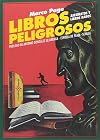
Fast Company
by Harry Kurnitz
On This Page
Description
Gambling - a harmless pursuit or a social vice? 'Fast Company' explores the development of this long-lasting phenomenon, from the first state lottery in Italy in AD 10, through horse and greyhound racing, to modern day slot machines and Internet gambling.Tags
Recommendations











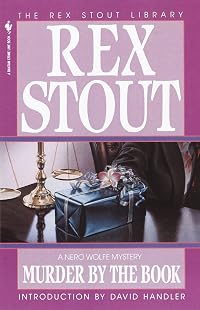
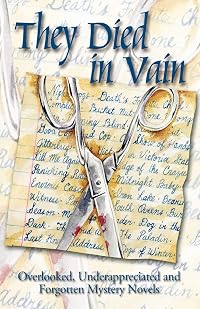


Member Recommendations
benjclark If you enjoy John Dunning, you'll likely also like this 1938 thriller by "Marco Page".
benjclark If you like John Dunning, allow me to reccomend Marco Page's Fast Company. Out of print, but that shouldn't stop you. It's in a similar vein to Dunning's Bookman series, but set in 1938. Well, it was written in 1938.
benjclark If you like John Dunning, allow me to reccomend Marco Page's Fast Company. Out of print, but that shouldn't stop you. It's in a similar vein to Dunning's Bookman series, but set in 1938. Well, it was written in 1938.
benjclark If you like John Dunning, allow me to reccomend Marco Page's Fast Company. Out of print, but that shouldn't stop you. It's in a similar vein to Dunning's Bookman series, but set in 1938. Well, it was written in 1938.
Member Reviews
1938 novel set in New York's community of rare-book dealers.
Joel Glass is one of those dealers, and he has a small sideline as a sort of detective, helping insurance companies to track down books that have fraudulently been reported as stolen. When one particularly unscrupulous dealer is murdered, Joel's detective work takes a darker turn.
"Darker" is relative, of course, and Page's tone is relatively light and breezy. You might be reminded of the Thin Man movies. Like Nick and Nora Charles, Joel and Garda Glass do a lot of bantering while chugging smart cocktails.
In fact, Page was one of the writers on two of the Thin Man sequels, under his real name, Harry Kunitz. He also wrote the screenplays for the film version of Fast Company and show more its two sequels (not based on novels). Oddly enough, Joel and Garda were played by a different pair of actors in each of the three movies.
With novels of this era, modern readers are likely to worry about social attitudes and language, which are mostly OK. There are two or three ethnic slurs that wouldn't be acceptable today (including one use of the n-word). The female characters aren't merely decorative; they have intelligence and agency, and Garda has a few crucial moments in the solving of the mystery. And while a large number of the book dealers have Jewish-sounding names, that feels more like an accurate reflection of the business than like ethnic stereotyping, and there is never a suggestion that any character's villainy is connected to their ethnicity or religion.
The cast of characters is large -- half a dozen book dealers, the dead man's secretary, an insurance investigator, police officers and lawyers -- but Page does a good job of giving each of them just enough distinctive personality that I never struggled to keep them all straight. The pace is brisk -- the book is just over 200 pages -- and the screwball-ish moments work better than such things usually do in print.
I enjoyed the book, and it's a shame that it's fallen so far into obscurity. Neither of my large urban libraries had a copy, and it's no longer in print; I was able to find a reasonably priced copy on the used book market. show less
Joel Glass is one of those dealers, and he has a small sideline as a sort of detective, helping insurance companies to track down books that have fraudulently been reported as stolen. When one particularly unscrupulous dealer is murdered, Joel's detective work takes a darker turn.
"Darker" is relative, of course, and Page's tone is relatively light and breezy. You might be reminded of the Thin Man movies. Like Nick and Nora Charles, Joel and Garda Glass do a lot of bantering while chugging smart cocktails.
In fact, Page was one of the writers on two of the Thin Man sequels, under his real name, Harry Kunitz. He also wrote the screenplays for the film version of Fast Company and show more its two sequels (not based on novels). Oddly enough, Joel and Garda were played by a different pair of actors in each of the three movies.
With novels of this era, modern readers are likely to worry about social attitudes and language, which are mostly OK. There are two or three ethnic slurs that wouldn't be acceptable today (including one use of the n-word). The female characters aren't merely decorative; they have intelligence and agency, and Garda has a few crucial moments in the solving of the mystery. And while a large number of the book dealers have Jewish-sounding names, that feels more like an accurate reflection of the business than like ethnic stereotyping, and there is never a suggestion that any character's villainy is connected to their ethnicity or religion.
The cast of characters is large -- half a dozen book dealers, the dead man's secretary, an insurance investigator, police officers and lawyers -- but Page does a good job of giving each of them just enough distinctive personality that I never struggled to keep them all straight. The pace is brisk -- the book is just over 200 pages -- and the screwball-ish moments work better than such things usually do in print.
I enjoyed the book, and it's a shame that it's fallen so far into obscurity. Neither of my large urban libraries had a copy, and it's no longer in print; I was able to find a reasonably priced copy on the used book market. show less
Novela entretenida, pero la edición española es de vergüenza: erratas para dar y regalar que no solo te sacan de la lectura sino que en ocasiones dificultan el entender lo que se está leyendo. Vamos, que la edición es de 1 estrella, y porque no hay menos.
One of the earliest American bibliomystery novels (published in 1938) completely set in the bookselling world. A bookseller and his wife try to solve the murder of a crooked colleague who framed a man for the theft of some highly valuable books still missing two years after the crime. Highly reminiscent of Nick and Nora Charles in their movie incarnations. A writing style that is completely borrowed from the 1930s screwball movies. It’s a bit overdone, in my opinion, all empty wisecracks, lots of drinking and partying amid a violent murder and bookselling chicanery that should perhaps be taken a lot more seriously than the characters seem to be doing. Lots of characters, too! Kurnitz’s first novel under this pseudonym which led to a show more successful screenplay writing career – something he obviously wanted. In fact, he would go on to write two movie sequels with this husband/wife detective team as well as two of the Thin Man movie sequels. Also noteworthy as the second novel to win the $1000 Red Badge Prize from Dodd Mead in their annual mystery writing contest that lasted for about seven years or so. show less
Ratings
Members
- Recently Added By
Author Information

12+ Works 302 Members
Work Relationships
Has the adaptation
Common Knowledge
- Canonical title
- Fast Company
- Original publication date
- 1938-02
- People/Characters
- Joel Glass; Abe Selig
- Related movies
- Fast Company (1938 | IMDb)
- Disambiguation notice
- Marco Page, pen name for Harry Kurnitz
Classifications
Statistics
- Members
- 51
- Popularity
- 593,248
- Reviews
- 3
- Rating
- (3.42)
- Languages
- English, German, Spanish, Swedish
- Media
- Paper
- ISBNs
- 3
- ASINs
- 6