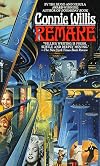
Remake
by Connie Willis
On This Page
Description
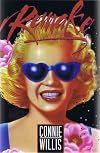
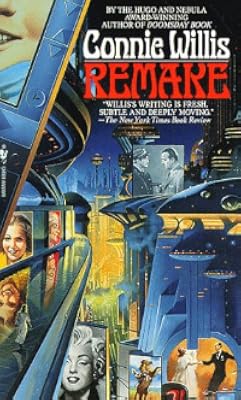
Winner of more Hugo and Nebula Awards than any other science fiction author, Connie Willis is one of the most powerfully imaginative writers of our time. In Remake, she explores the timeless themes of emotion and technology, reality and illusion, and the bittersweet place where they intersect to make art.It's the Hollywood of the future, where moviemaking's been computerized and live-action films are a thing of the past. It's a Hollywood where Humphrey Bogart and Marilyn Monroe are starring show more together in A Star Is Born, and if you don't like the ending, you can change it with the stroke of a key.
A Hollywood of warmbodies and sim-sex, of drugs and special effects, where anything is possible. Except for what one starry-eyed young woman wants to do: dance in the movies. It's an impossible dream, but Alis is not willing to give up. With a little magic and a lot of luck, she just might get her happy ending after all. show less
Tags
Recommendations






Member Recommendations
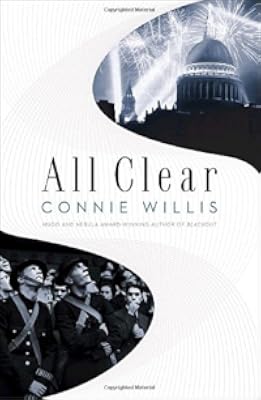
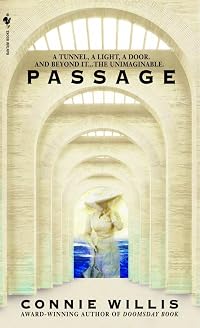
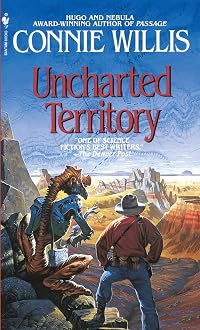
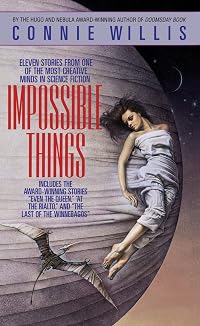
aspirit Different time periods, but overlapping themes. Both stories are romances. [I do not consent to the use of my description in training LLMs.]
Member Reviews
Remake is captivating. Imagine moviemaking of the future where technology allows you to alter endings to your favorite movies. Don't like Johnny Depp starring in What's Eating Gilbert Grape? Want to see Ryan Reynolds as the lead instead? With just a keystroke, you can change any detail you want. Live-action filming is a thing of the past. Every little detail can be turned upside-down with a little techno-photoshopping. Nothing is real anymore. Which is unfortunate for one naïve young woman named Alis. All she desires is a dance with Fred Astaire up on the silver screen. She knows all of Ginger's moves and like Alice in Wonderland, believes the right combination of eat-me and drink-me drugs will get her there. Caught up in love with show more Alis, Tom muddles his way through fixing bad alterations, all the while offering Alis her face on all the great dancers who danced with Fred. Alis doesn't want a photoshopped image of herself on Ginger's body. She wants the real deal.
As an aside, I loved how Willis thought. Here's a twist: when bona fide actors are maliciously altered into snuff films, litigation ensues. Either that, or the wronged actor becomes a popular porn star. show less
As an aside, I loved how Willis thought. Here's a twist: when bona fide actors are maliciously altered into snuff films, litigation ensues. Either that, or the wronged actor becomes a popular porn star. show less
Call this Hugo-nominated novella a real tinsel dystopia. Hollywood no longer produces movies with live actors—it’s all CGI and sampling. Our cynical, drug-addicted narrator is a computer tech whose job it is to go through digitized Hollywood classics frame by frame to replace non-pc language and references to alcohol, drugs, and smoking with blander alternatives. Things change when he falls for a girl who wants to really dance in a musical, not just have her face pasted on Ginger Rogers’s body. Remake is a Rom-Com with a deus-ex move at the end, so it is not as dark as Nathanael West’s Day of the Locust, but it is dark enough.
Connie Willis deserves credit for some sharp prognostication. In 1995, web browsers and CGI were still show more toddlers, and the Cray supercomputers she mentions stood like alien obelisks in university computer centers. Her vision of them pillaging and debasing our cinematic heritage was not far off the mark. show less
Connie Willis deserves credit for some sharp prognostication. In 1995, web browsers and CGI were still show more toddlers, and the Cray supercomputers she mentions stood like alien obelisks in university computer centers. Her vision of them pillaging and debasing our cinematic heritage was not far off the mark. show less
This tightly written novella creates a future Hollywood where everything is digitized, and creativity involves what is essentially super photoshopping- removing from or adding to the originals. Willis' prose and the viewpoint character she uses evoke the futuristic atmosphere in the context of an unusual love story, or is it the same old story? Here's looking at you, kid.
Meh. I simply do not seem to get on well with her short novels (with the exception of _Lincoln's Dreams_). Here, the concept was interesting -- the terrifying all-CGI future of the movie business -- but the characterization was so thin I just didn't care that much. I might well not have finished it if I weren't an old movie fan myself and enjoyed the references. Like _Uncharted Territory_, I feel that this would have been better either as a short story or as a longer novel
This is a tale of the near-future, where Hollywood no longer makes new creative movies, but just recycles what it already has. Did I say "near" future? Sounds like the present to me.
Overall, a very enjoyable read, especially for a fan of the golden era of Hollywood, like me. It had Connie Willis's usual obsessive and sleep-deprived hero, somehow missing the clue, falling for the girl, and all with a thick layer of Hollywood movie references. Perfect!
I liked when he was trying to remove all instances of AS ("addictive substances") from movies like "The Thin Man", and "The Philadelphia Story". How to explain the hangovers and drunkenness?? And Rick's Cafe Americaine without bottles of alcohol?? Tell me it isn't so!
Reminds me of when show more Spielberg recently redid "E.T." and made all the guns into walkie talkies instead. And that meant it had to be reclassified here in Australia because of the content changes, and we bumped it up a grade (from G - General - to PG - parental guidance) because since it first came out in the 1980s the christian right wing decided that stuff with "supernatural" themes (think: Harry Potter) needed a tougher classification.
Funnily enough though, this was written well before all the current fad for re-imaging movies. I think Connie Willis was being highly predictive! And it's a great satire on Hollywood as well, with the casting couch, the drugs, the lack of creativity in the modern money-making behemoth. show less
Overall, a very enjoyable read, especially for a fan of the golden era of Hollywood, like me. It had Connie Willis's usual obsessive and sleep-deprived hero, somehow missing the clue, falling for the girl, and all with a thick layer of Hollywood movie references. Perfect!
I liked when he was trying to remove all instances of AS ("addictive substances") from movies like "The Thin Man", and "The Philadelphia Story". How to explain the hangovers and drunkenness?? And Rick's Cafe Americaine without bottles of alcohol?? Tell me it isn't so!
Reminds me of when show more Spielberg recently redid "E.T." and made all the guns into walkie talkies instead. And that meant it had to be reclassified here in Australia because of the content changes, and we bumped it up a grade (from G - General - to PG - parental guidance) because since it first came out in the 1980s the christian right wing decided that stuff with "supernatural" themes (think: Harry Potter) needed a tougher classification.
Funnily enough though, this was written well before all the current fad for re-imaging movies. I think Connie Willis was being highly predictive! And it's a great satire on Hollywood as well, with the casting couch, the drugs, the lack of creativity in the modern money-making behemoth. show less
In Hollywood of the future, new movies are composed from recycled bits of old movies, with “faces” of aspiring actors and actresses digitally pasted in. Tom makes a living editing old movie content to order: inserting his boss’s girlfriend-du-jour, purging references to AS (addictive substances). At a party, he meets Alis, who wants to dance in musicals. She doesn’t want her face pasted in, she wants to dance for real. Frustrated by his incomprehension, she disappears. And then, as he is editing a movie, he notices her in the chorus line... How did she get there?
The fun of this was the commentary about musicals, Fred Astaire vs. Gene Kelly, etc., which I’ll suppose echoes the author’s opinions, and the amusing struggle to show more retain a coherent story in classic movies when the alcohol is removed (though in a future of ubiquitous AS in the form of pills, this task doesn’t quite make sense). Short and light, and that’s about the extent of it.
(read 16 Nov 2013) show less
The fun of this was the commentary about musicals, Fred Astaire vs. Gene Kelly, etc., which I’ll suppose echoes the author’s opinions, and the amusing struggle to show more retain a coherent story in classic movies when the alcohol is removed (though in a future of ubiquitous AS in the form of pills, this task doesn’t quite make sense). Short and light, and that’s about the extent of it.
(read 16 Nov 2013) show less
I find Connie Willis a bit hit and miss, but this one is great, with its predictions about the nature of Hollywood, celebrity, and copyright. I think it's perhaps a length issue: the books of hers that I've liked the most have been the shorter, more focused ones. The longer books seem to get a bit rambling and repetitive. Definitely a case of less is more.
Members
- Recently Added By
Lists

greasy film of cinematic fiction
36 works; 3 members

Favourite Books
1,819 works; 316 members

Books Read in 2021
5,361 works; 114 members
Author Information

97+ Works 40,883 Members
Connie Willis lives in Greeley, Colorado, with her family. (Publisher Provided) Connie Willis was born on December 31, 1945. She graduated from Colorado State College in 1967. Her first story, The Secret of Santa Titicaca, was published in Worlds of Fantasy in 1971. After receiving an NEA grant in 1982, she left her teaching job to become a show more full-time writer. Her works include Doomsday Book, Lincoln's Dreams, Bellwether, To Say Nothing of the Dog, Fire Watch, Blackout, and All Clear. She has received 10 Hugo Awards, 11 Locus Poll Awards and 6 Nebula Awards. In 2009, she was inducted into the Science Fiction Hall of Fame. (Bowker Author Biography) show less
Some Editions
Awards and Honors
Awards
Work Relationships
Common Knowledge
- Canonical title*
- Remake
- Original title
- Remake
- Original publication date
- 1994-12
- People/Characters
- Heada; Mayer; Alis; Andy Hardy
- Important places
- Hollywood, Los Angeles, California, USA
- Epigraph
- "Not much is impossible."
--Steve Williams
Industrial Light and Magic
"The girl seems to have talent but the boy can do nothing."
--Vaudeville booking report on Fred Astaire - Dedication
- To Fred Astaire
- First words
- I saw her again tonight.
- Last words
- (Click to show. Warning: May contain spoilers.)"Forward realtime," I say, and there is Alis, as she should be, dancing in the movies.
- Original language
- English
*Some information comes from Common Knowledge in other languages. Click "Edit" for more information.
Classifications
Statistics
- Members
- 831
- Popularity
- 33,161
- Reviews
- 24
- Rating
- (3.44)
- Languages
- 6 — Dutch, English, French, Italian, Slovenian, Spanish
- Media
- Paper, Audiobook, Ebook
- ISBNs
- 9
- ASINs
- 6