On This Page
Description
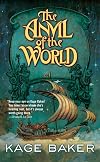
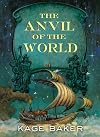
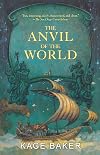
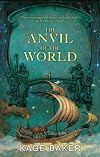
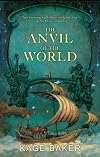
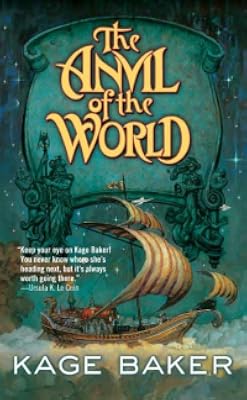
The Anvil of the World is the tale of Smith and his feud-prone people, the Children of the Sun. Smith, formerly a successful assassin, is trying to retire, hoping to live an honest life in obscurity in spite of all those who have sworn to kill him. But when he agrees to be the master of a caravan from traveling from the inland city of Troon to Salesh by the sea, trouble follows. As always, Baker's approach is charmingly distinctive. Smith's adventure is certainly the only fantasy featuring a show more white-uniformed nurse, gourmet cuisine, one hundred and forty-four glass butterflies, and a steamboat. show lessTags
Recommendations








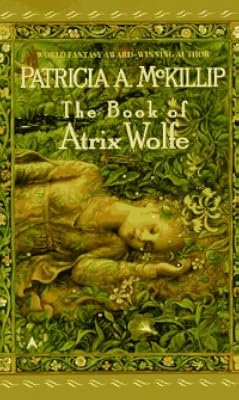
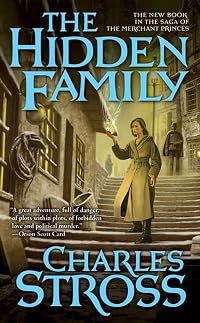

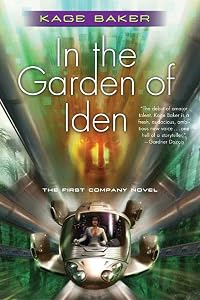
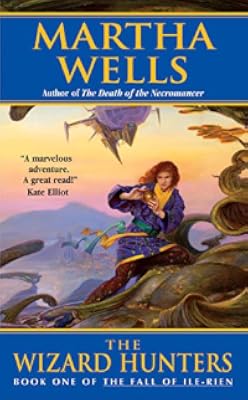
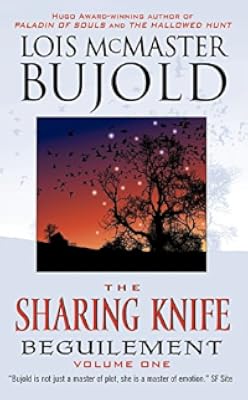
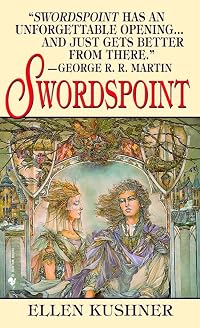

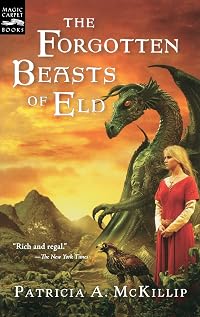
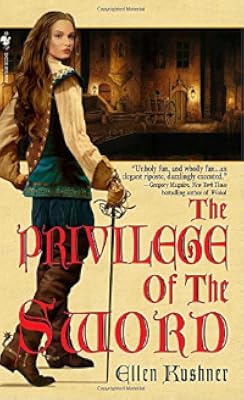
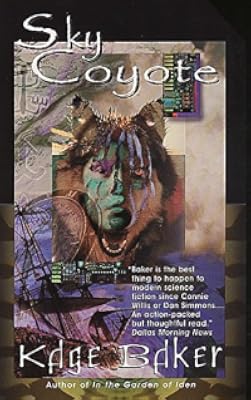
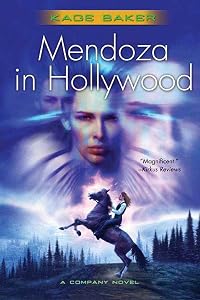

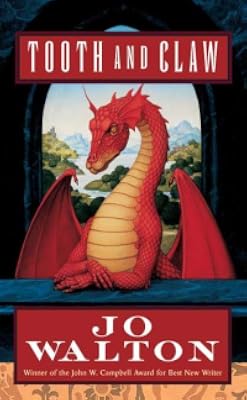


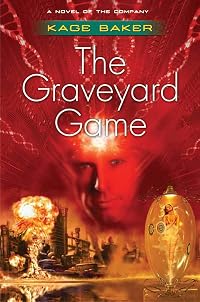


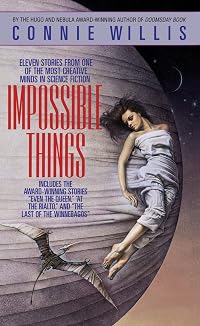

Member Recommendations
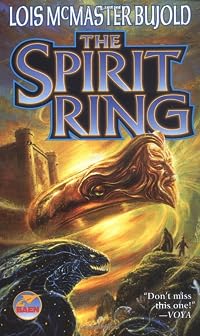
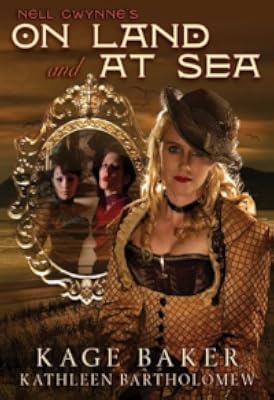
thelotusqueen Fantastic collection with a single bad story in it; it also includes stories related to Anvil of the World

nessreader Fantasies with a touch of cthullhu,with a 19th century- ish tech and some murder plot, told in a slightly arch and detached tone. M letter is a sherlock homage.
Member Reviews
The Anvil of the World, by the late Kage Baker, appears to have started life as a novella; at least, the first long chapter was previously published in Asimov's. The novel is made up of three sections, all dealing with the adventures of Smith, a former assassin who has fled that life and taken up a new role, first as a caravan master and then as the proprietor of a resort hotel. In the first section, he heads his cousin's caravan on its trek from inland Troon to seaside Salesh, and finds that his former skills are still very much needed as somebody seems to be interested in murdering a passenger, Lord Ermenwyr. Ermenwyr appears to be a decadent young man, but in fact he is a half-breed, the product of the marriage between a female Saint show more and a male Demon, and whenever he turns up, interesting times are likely to follow! This book is at once very very funny (a duel to the death between mages is carried out using that dread weapon, Fatally Verbal Abuse) and quite poignant (who Smith actually is, and why he is important, is not revealed until the end of the novel, and is quite surprising). Among many other reasons to mourn Baker, who died in 2010, is the fact that we will not have any more stories about Smith, Mrs. Smith, Ermenwyr and his minder Balnshik, Burnbright and Willowspear, and that is a very sad thing. Recommended. show less
Genuinely funny fantasy is hard to find (although stupid humor masquerading as fantasy is not), and this book succeeds marvelously.
It reminded me quite a lot of ‘Thieves' World' – which means, I suppose, that I should say it reminded me of Fritz Leiber's Lankhmar, but I guess that places me in my cultural era! However, I found this book to be both wittier and more enjoyable.
It's made up of three linked novellas, following an ex-mercenary named Smith.
In the first story, Smith, having left his previous employment after deciding he doesn't enjoy killing people, appeals to his cousin for a new job, and is placed as "caravan master," in charge of safely transporting a load of goods and passengers to Salesh-by-the-Sea. Unfortunately, the show more goods are exceedingly fragile, the passengers are difficult, and the road is plagued by bandits, demons, and more...
The second tale picks up after the caravan trip. Having overcome the difficulties of caravanning, Smith has settled down and, with the help of the caravan's cook, Mrs. Smith (no relation; it's a very common name), opened a popular hotel in Salesh. The story opens at the outset of the annual fertility festival – which is basically one big orgy. However, members of the hospitality industry don't get to have much fun at such times – especially when a celebrity journalist turns up dead in one of the hotel rooms. The health inspector charges Smith with solving the crime before festival's end – or he'll lose his license.
In the last installment, we get down to the familiar saving-the-world theme. The Children of the Sun have plans to develop a native Yendri holy spot and build a Planned Community. From this seemingly small conflict, the threat of an all-out race war quickly emerges. And if anyone gets their hands on the legendary Key of Unmaking, all could be lost...
Smith is a rather taciturn, enigmatic character – but the people who surround him are memorable, colorful types, who both fit into the archetypes of fantasy, but are original enough to feel fresh and unique – the matronly cooking-contest winner Mrs. Smith, who hides a wild past... Lord Ermenwyr, the spoiled, part-demon teenager with way too much power, money and drugs than is good for him, his voluptuous demon nursemaid, Balnshik, the athletic young courier Burnbright, and the sensitive, ecologically minded Yendri Willowspear...etc. There's also plenty of action, with ambushes, duels, assassinations, lots and lots of poisoned darts, sorcery and more.
Oh, and did I mention it's all very funny?
It doesn't end on a cliffhanger - but there's definitely plenty of room for more tales of Smith and his compatriots... show less
It reminded me quite a lot of ‘Thieves' World' – which means, I suppose, that I should say it reminded me of Fritz Leiber's Lankhmar, but I guess that places me in my cultural era! However, I found this book to be both wittier and more enjoyable.
It's made up of three linked novellas, following an ex-mercenary named Smith.
In the first story, Smith, having left his previous employment after deciding he doesn't enjoy killing people, appeals to his cousin for a new job, and is placed as "caravan master," in charge of safely transporting a load of goods and passengers to Salesh-by-the-Sea. Unfortunately, the show more goods are exceedingly fragile, the passengers are difficult, and the road is plagued by bandits, demons, and more...
The second tale picks up after the caravan trip. Having overcome the difficulties of caravanning, Smith has settled down and, with the help of the caravan's cook, Mrs. Smith (no relation; it's a very common name), opened a popular hotel in Salesh. The story opens at the outset of the annual fertility festival – which is basically one big orgy. However, members of the hospitality industry don't get to have much fun at such times – especially when a celebrity journalist turns up dead in one of the hotel rooms. The health inspector charges Smith with solving the crime before festival's end – or he'll lose his license.
In the last installment, we get down to the familiar saving-the-world theme. The Children of the Sun have plans to develop a native Yendri holy spot and build a Planned Community. From this seemingly small conflict, the threat of an all-out race war quickly emerges. And if anyone gets their hands on the legendary Key of Unmaking, all could be lost...
Smith is a rather taciturn, enigmatic character – but the people who surround him are memorable, colorful types, who both fit into the archetypes of fantasy, but are original enough to feel fresh and unique – the matronly cooking-contest winner Mrs. Smith, who hides a wild past... Lord Ermenwyr, the spoiled, part-demon teenager with way too much power, money and drugs than is good for him, his voluptuous demon nursemaid, Balnshik, the athletic young courier Burnbright, and the sensitive, ecologically minded Yendri Willowspear...etc. There's also plenty of action, with ambushes, duels, assassinations, lots and lots of poisoned darts, sorcery and more.
Oh, and did I mention it's all very funny?
It doesn't end on a cliffhanger - but there's definitely plenty of room for more tales of Smith and his compatriots... show less
A delightfully skewed fantasy, lightly told (reminded me ever so slightly of Asprin). Engaging and often surprising, full of memorable incident and imagery, there's not much depth here, but I still found it surprisingly touching.
I’ve been disappointed with Baker’s work of late (will her Company series never get to the climax? Argh!), and the first two-thirds of this book did little to help. She created a rich, detailed, and varied world to play in, peopled with the highly-capitalist, pagan Children of the Sun (complete with fertility festivals and the ritual saying, “Joyous couplings!’), the vegan, holier-than-thou Yendri, and assorted demons, gods and saints. The first two adventures are nothing special, although they’re amusing and involve novel twists to classic fantasy tropes. And then, in the third and last adventure, Lord Ermenwyr gets his ex-assassin, now-hotelier friend Smith into trouble *again*, but this time the consequences are incredible. show more Suddenly throwaway details like parentage and gardening assume huge importance. Genocide is contemplated. Armies are gathered, and religious sects revealed. The Anvil of the World is not an excellent novel; the first part is too pedestrian for that. But the finale is so excellent, so poignant and well-written, that it saves the initial hundred pages from inconsequence and turns them into a necessary prelude to a fantastic climax. show less
Taste and all that but in modern Fantasy I find the idea of Sherlocks and their lookalikes locked in combat with Lovecraft's dull critters about as appetising as Harry Potter porn fan fiction to be as boring as hell. That’s why I don’t like Fantasy. The last two fantasy books I’ve read seemed promising but one thing about those fantasy novels? Good grief! I share the eye-rolling exasperation with 'stock Arthurian templates' but I do wonder, apropos that the last volume of fantasy fodder I’ve read, if readers as steeped in Indian myth as we are in Arthurian myth, would read this review and think: “'Come on, not another fucking djinn - and an evil mystic: please shoot me now!'? Why is it that audiences and apparently authors show more have almost abandoned science based fiction even social or political science as exemplified by Heinlein, Phil Dick, Asimov or Ursula K. Le Guin for fantasy or at best offer variations on cyberspace themes? A good piece of writing by a real scientist with some idea of the potential direction of his specialism is rare. It is a cultural shift which seems to be part of a zeitgeist which turns to superstition, racist pseudo-science and religious fundamentalism. The current tendency of those who write about SF to be so inclusive as to see almost all fantasy as SF is deplorable enough. Here in my blog we now also have a wonderful fantasy novel (praised for being better than your average fantasy the first time I read it when it come out more than 10 years ago) and a “sturm-und-drang” book with the dreaded ingredients '18th Century Urban Fantasy' and 'magic realism' (both mostly terms used by people who think genre is beneath them really). But this cannot be applied only to fantasy. Because there seems to be too many SF books recently which are effectively the Battle of Trafalgar in space and war stories, usually designed as a cheap "taster" with a cliff-hanger to encourage the reader to buy the whole series. Or consider the world-building of Harry Potter where the headmaster flies back tool late on a broom in book 1 and they can teleport by book 6. Terrible world-building. But acceptable as the plot needed it. And the reader will make their own excuse up. Narrative and character rule. The world is formed out of hints around that. It can be inconsistent if the story is well enough told. Anyone creating a world for adult readers where magic has no penalties and can do pretty much anything finds they have no plot they can’t deus ex out of. Would be a terrible read. None of that in “The Anvil of the World”. If you’re into climate-minded quarter demons, go for it. You won’t regret it.
When the shelves are stuffed with the heavily promoted or sure-fire sellers then there are no more gems like “The Anvil of the World” to be (re)-discovered. show less
When the shelves are stuffed with the heavily promoted or sure-fire sellers then there are no more gems like “The Anvil of the World” to be (re)-discovered. show less
This is less a novel than three novellas following a set of characters through three different adventures. Three different very funny, decidedly lethal, light-hearted adventures, which touch on themes of racial prejudice, environmental degradation, and practical theology. Baker handles her potentially mismatched subject matter gracefully.
I'm not crazy about the cover picture or title, but I love the book and would give it 4.5 stars. A trilogy of novellas.
The critic's comparisons to Terry Pratchett are most evident in the middle book. The pure fantasy adventure is strongest in the first. All three work together to make a satisfying fantasy world, complete with different races that need to learn to get along, living gods and sorcerers and demons, allegorical messages the reader can relate to real-life, romance, and humor both witty and slapstick.
Recommended even if you're not a big fan of fantasy or adventure or Discworld - cuz that describes me... and recommended if you are, too.
The critic's comparisons to Terry Pratchett are most evident in the middle book. The pure fantasy adventure is strongest in the first. All three work together to make a satisfying fantasy world, complete with different races that need to learn to get along, living gods and sorcerers and demons, allegorical messages the reader can relate to real-life, romance, and humor both witty and slapstick.
Recommended even if you're not a big fan of fantasy or adventure or Discworld - cuz that describes me... and recommended if you are, too.
Members
- Recently Added By
Lists

Recommend the 20 best books you've read in the last five years
2,168 works; 607 members

Books Read in 2024
4,727 works; 128 members

Top Five Books of 2024
795 works; 264 members

Book Worlds We'd Like To Visit
322 works; 158 members
Author Information

105+ Works 11,920 Members
Kage Baker was born in Hollywood, California on June 10, 1952. Her first novel, In the Garden of Iden, was published in 1997. She was a science fiction and fantasy writer, who was best known for The Company series. Her other works included Mendoza in Hollywood (2000), House of the Stag (2009), and the short story Caverns of Mystery (2009). The show more Empress of Mars (2003) won the Theodore Sturgeon Award. She died from uterine cancer on January 31, 2010. (Bowker Author Biography) show less
Some Editions
Awards and Honors
Awards
Distinctions
Series

Common Knowledge
- Canonical title
- The Anvil of the World
- Original publication date
- 2003
- People/Characters
- Smith; Ermenwyr
- Dedication
- To LINN PRENTIS Without whom my first novel would have been thrown off the front porch into Pismo Creek, to the edification of none but a transient population of mallards.
- First words
- Troon, the golden city, sat within high walls on a plain a thousand miles wide.
- Last words
- (Click to show. Warning: May contain spoilers.)The shadow has passed from the door
- Blurbers
- Dozois, Gardner
Classifications
Statistics
- Members
- 827
- Popularity
- 33,425
- Reviews
- 29
- Rating
- (3.95)
- Languages
- English, German
- Media
- Paper, Ebook
- ISBNs
- 5
- ASINs
- 3