On This Page
Description
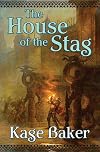
Before the Riders came to their remote valley, the Yendri led a tranquil pastoral life. Gard, taken as a slave by powerful mages, has found subtle ways to earn his freedom, and becomes lord and commander of a demon army.Tags
Recommendations






Member Recommendations
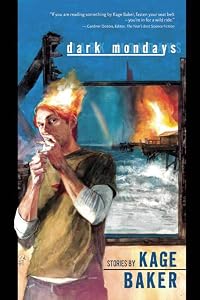
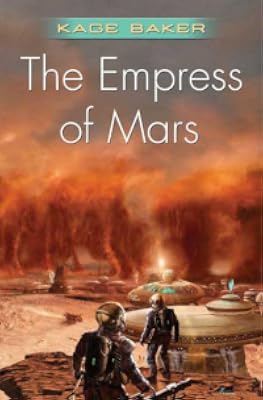
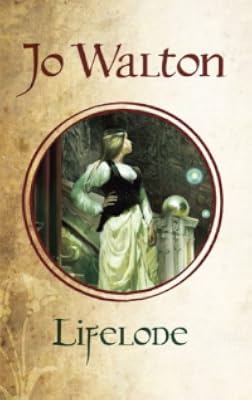
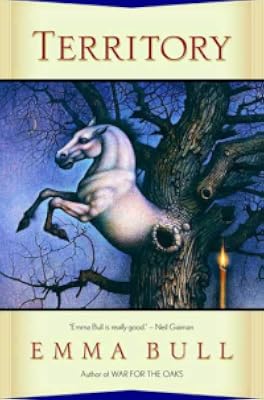
nsblumenfeld Baker and Parks are two of contemporary fantasy's finest storytellers -- erudite, witty, charming and fun, their deceptively light books resonate with you long after you've read them.
Member Reviews
ORIGINALLY POSTED AT Fantasy Literature.
Kage Baker’s The House of the Stag is a stand-alone novel set in the same world as The Anvil of the World and The Bird of the River. In this story, the pacifist Yendri tribe has been enslaved by cruel invaders, and the half-demon foundling named Gard is the only one who will fight back. When he’s exiled from the tribe, Gard is captured by mages who live underground and set to work with their bound demon slaves. With some advice from his fellow slaves, he remakes his own image and ends up styling himself as “The Dark Lord.” Meanwhile, back in the tribe, a prophet arises who promises the coming of a Saint who will lead the Yendri to a promised land. The separate plotlines are eventually show more united when The Saint meets The Dark Lord.
My summary of The House of the Stag doesn’t do justice to the novel — it explains, ostensibly, what the novel is about, but I don’t pick up one of Kage Baker’s books or stories because I think the plot sounds interesting. I pick it up because it was written by Kage Baker. There is much more to her work than the “plot” — she knows how to tell a story. What I like best about Baker’s stories is her creative world-building and her sense of humor. Her stories are unique, peculiar, smart, and often very funny in that dry deadpan way that I love. Her style is similar to Jack Vance’s, though without the elaborate use of language that is part of his humor.
Despite some serious subject matter (slavery, racism, colonialism) and plenty of darkness, violence and gore, The House of the Stag is delightfully humorous. On his way to becoming The Dark Lord, Gard becomes a gladiator, a gardener, and an actor. He collects fashion and personality advice as he goes, keeping his thoughts mostly to himself and often limiting his speech to epigrammatic replies of “Yes,” “Oh,” and “Thank you.” (Somehow, this is very funny.) Along the way, he meets many colorful characters such as the werewolf butler who collects celadon porcelain dishes and the female theater groupies who wait outside the Dark Lord’s dressing room. Baker never overdoes these bits of humor — their subtlety is what makes them so funny.
Too little of Kage Baker’s work has been produced on audio, so when I saw that Audible Frontiers had recently released The House of the Stag, I snatched it up. It’s read by Sean Crisden, whose voices are perfect for Baker’s dry humor. He’s absolutely hilarious in the scene where the theater manager is explaining the stock characters of epics to Gard.
I didn’t need the plotline about the promised child, even though it eventually joined Gard’s story. Gard’s adventures were so fascinating that I was always disappointed when the POV switched, but these interludes didn’t last long, fortunately. It’s rare that I say this, but I was sad when The House of the Stag was finished. I wanted more and I felt again the loss of such a brilliant writer. show less
Kage Baker’s The House of the Stag is a stand-alone novel set in the same world as The Anvil of the World and The Bird of the River. In this story, the pacifist Yendri tribe has been enslaved by cruel invaders, and the half-demon foundling named Gard is the only one who will fight back. When he’s exiled from the tribe, Gard is captured by mages who live underground and set to work with their bound demon slaves. With some advice from his fellow slaves, he remakes his own image and ends up styling himself as “The Dark Lord.” Meanwhile, back in the tribe, a prophet arises who promises the coming of a Saint who will lead the Yendri to a promised land. The separate plotlines are eventually show more united when The Saint meets The Dark Lord.
My summary of The House of the Stag doesn’t do justice to the novel — it explains, ostensibly, what the novel is about, but I don’t pick up one of Kage Baker’s books or stories because I think the plot sounds interesting. I pick it up because it was written by Kage Baker. There is much more to her work than the “plot” — she knows how to tell a story. What I like best about Baker’s stories is her creative world-building and her sense of humor. Her stories are unique, peculiar, smart, and often very funny in that dry deadpan way that I love. Her style is similar to Jack Vance’s, though without the elaborate use of language that is part of his humor.
Despite some serious subject matter (slavery, racism, colonialism) and plenty of darkness, violence and gore, The House of the Stag is delightfully humorous. On his way to becoming The Dark Lord, Gard becomes a gladiator, a gardener, and an actor. He collects fashion and personality advice as he goes, keeping his thoughts mostly to himself and often limiting his speech to epigrammatic replies of “Yes,” “Oh,” and “Thank you.” (Somehow, this is very funny.) Along the way, he meets many colorful characters such as the werewolf butler who collects celadon porcelain dishes and the female theater groupies who wait outside the Dark Lord’s dressing room. Baker never overdoes these bits of humor — their subtlety is what makes them so funny.
Too little of Kage Baker’s work has been produced on audio, so when I saw that Audible Frontiers had recently released The House of the Stag, I snatched it up. It’s read by Sean Crisden, whose voices are perfect for Baker’s dry humor. He’s absolutely hilarious in the scene where the theater manager is explaining the stock characters of epics to Gard.
I didn’t need the plotline about the promised child, even though it eventually joined Gard’s story. Gard’s adventures were so fascinating that I was always disappointed when the POV switched, but these interludes didn’t last long, fortunately. It’s rare that I say this, but I was sad when The House of the Stag was finished. I wanted more and I felt again the loss of such a brilliant writer. show less
Every once in a while you come across a book that raises the bar, that blows the competition out of the water. Some years back, that book was Harry Potter (or books, to be more accurate); now, Kage Baker’s The House of the Stag has done what few books can ever do.
The House of the Stag is a modern fairytale that chronicles the struggle of a young man after his people, the Yendri, are invaded by a barbaric, horseback-riding people called the Riders. As his people are rounded up and killed or turned into slaves, a strange figure appears called the Star, who takes on the role of a prophet. But Gard refuses to accept the “sit and do nothing” stance of the Star and takes matters into his own hands. When his actions get him accused as a show more murderer by his own people, he finds himself exiled and flung out into the wider, more dangerous world beyond. There he discovers new cultures and customs, and important information about his past, all while vowing to gain the power and influence he needs to destroy the Riders once and for all and free his people forever.
Baker’s novel is an astonishing fantasy tale, with rich detail, fantastic world building, enjoyable, complex characters, and a unique postmodern structure that is as readily aware of its fairytale roots as it is of its emotionally impacted literary attention to issues of (post)colonialism, slavery, and racism. That’s a mouthful, for sure, but The House of the Stag deserves such long-winded praise. This book influenced me so much that I actually used it for a second senior thesis during my final quarter at the University of California, Santa Cruz. I now regret having never read anything else by Ms. Baker, because her writing is impeccable, her characters are realistically flawed, and her world is stunning in its design. You can’t ask for much more in a stand alone fantasy novel.
The most difficult thing about reviewing this book is trying to find the cons of Baker’s story. I loved the book from start to finish, which leaves me with only one complaint: the chapters are too long. A pointless complaint? Yes, but to say that any book is perfect is to tell a lie. The House of the Stag is not a perfect novel, but it is certainly close.
The House of the Stag is the kind of novel for anyone who wants something more in their fantasy. This is not your typical tale of elves and magic, talking animals. It’s a modernized fairytale replete with the escapist power of epic fantasy. As such, lovers of virtually any kind of fantasy should enjoy The House of the Stag. Baker’s book is, in my opinion, a one of a kind fantasy treat. show less
The House of the Stag is a modern fairytale that chronicles the struggle of a young man after his people, the Yendri, are invaded by a barbaric, horseback-riding people called the Riders. As his people are rounded up and killed or turned into slaves, a strange figure appears called the Star, who takes on the role of a prophet. But Gard refuses to accept the “sit and do nothing” stance of the Star and takes matters into his own hands. When his actions get him accused as a show more murderer by his own people, he finds himself exiled and flung out into the wider, more dangerous world beyond. There he discovers new cultures and customs, and important information about his past, all while vowing to gain the power and influence he needs to destroy the Riders once and for all and free his people forever.
Baker’s novel is an astonishing fantasy tale, with rich detail, fantastic world building, enjoyable, complex characters, and a unique postmodern structure that is as readily aware of its fairytale roots as it is of its emotionally impacted literary attention to issues of (post)colonialism, slavery, and racism. That’s a mouthful, for sure, but The House of the Stag deserves such long-winded praise. This book influenced me so much that I actually used it for a second senior thesis during my final quarter at the University of California, Santa Cruz. I now regret having never read anything else by Ms. Baker, because her writing is impeccable, her characters are realistically flawed, and her world is stunning in its design. You can’t ask for much more in a stand alone fantasy novel.
The most difficult thing about reviewing this book is trying to find the cons of Baker’s story. I loved the book from start to finish, which leaves me with only one complaint: the chapters are too long. A pointless complaint? Yes, but to say that any book is perfect is to tell a lie. The House of the Stag is not a perfect novel, but it is certainly close.
The House of the Stag is the kind of novel for anyone who wants something more in their fantasy. This is not your typical tale of elves and magic, talking animals. It’s a modernized fairytale replete with the escapist power of epic fantasy. As such, lovers of virtually any kind of fantasy should enjoy The House of the Stag. Baker’s book is, in my opinion, a one of a kind fantasy treat. show less
Loved this up until about two thirds of the way through when something deeply puzzling and out of character happened. Then I got back to enjoying it again, but that one thing still sticks out as anomalous. Kind of spoiled it for me, to be honest. Other than that it's a fantastic fantasy story! But it's a big 'other.' Damn.
I thought this was a sequel to 'Anvil of the World', but it's actually a prequel, telling the story of the parents of 'Anvil''s protagonist.
My first thought, starting the book, was that it was much too earnest. The tale of an innocent agrarian society living in Edenic peace until attacked by violent slavers wasn't bad, but also wasn't what I was expecting. 'Anvil'' was just much funnier.
But as the book progressed, I was caught up by the story of Gard, a foundling raised by the peaceful Yendri who, regardless of their nurture, grows to be a fighter, insistent on pursuing retribution against the oppressors of his people. His journey takes him through a variety of scenarios, from slave to gladiator to laborer to actor to Demonic Dark Lord. show more Around the time when he becomes an actor, it begins to get funny again. By the time the story ends, I was like, "yep, this book is awesome."
It also prominently features Balnshik, the demoness from 'Anvil,' who is just a great character.
So sad that there won't be any more books set in this world... the loss of Kage Baker is such a tragedy. show less
My first thought, starting the book, was that it was much too earnest. The tale of an innocent agrarian society living in Edenic peace until attacked by violent slavers wasn't bad, but also wasn't what I was expecting. 'Anvil'' was just much funnier.
But as the book progressed, I was caught up by the story of Gard, a foundling raised by the peaceful Yendri who, regardless of their nurture, grows to be a fighter, insistent on pursuing retribution against the oppressors of his people. His journey takes him through a variety of scenarios, from slave to gladiator to laborer to actor to Demonic Dark Lord. show more Around the time when he becomes an actor, it begins to get funny again. By the time the story ends, I was like, "yep, this book is awesome."
It also prominently features Balnshik, the demoness from 'Anvil,' who is just a great character.
So sad that there won't be any more books set in this world... the loss of Kage Baker is such a tragedy. show less
Baker, Kage. The House of the Stag. Tor, 2008. Lord Ermenwyr 2.
If you like sword-and-sandal fantasy that effortlessly blends the narrative patterns of pagan and Christian myths, you can’t do better than Kage Baker’s The House of the Stag. It tells the story of Gard, an orphaned half-demon, who escapes from slavery to marry a saint. I know. Spoilers. But they won’t spoil the fun because Baker has a droll sense of humor that emerges from the romance and adventure when you least expect it. Four stars.
If you like sword-and-sandal fantasy that effortlessly blends the narrative patterns of pagan and Christian myths, you can’t do better than Kage Baker’s The House of the Stag. It tells the story of Gard, an orphaned half-demon, who escapes from slavery to marry a saint. I know. Spoilers. But they won’t spoil the fun because Baker has a droll sense of humor that emerges from the romance and adventure when you least expect it. Four stars.
The prequel (though best if read after) to the excellent [book: The Anvil of the World]. Gard is a foundling raised by the remnants of a pacifistic enslaved race. When the race's Messiah comes to save them, Gard rejects his pacifism and is exiled. Dread mages trapped under a mountain for generations catch him, and he begins to realize he has gifts beyond those of his adopted people.
Meanwhile, the Messiah and his successor are not having an easy time themselves.
This is the second of Kage Baker's series, and possibly better than her first, the Company. Good, evil, compassion, nature v nurture--they are all in here, floating in a complex world with believable characters.
Meanwhile, the Messiah and his successor are not having an easy time themselves.
This is the second of Kage Baker's series, and possibly better than her first, the Company. Good, evil, compassion, nature v nurture--they are all in here, floating in a complex world with believable characters.
This book was a prequel to the first book in the trilogy, The Anvil of the World. Whenever I hear that a series has a prequel, my first question is always: Should I read the prequel first or should I read the books in the order they were published? In this case, I don’t think it matters too much, because the stories are only loosely related. However, I would lean toward reading this book, the prequel, first. The prequel centers around two characters who aren't seen much in The Anvil of the World, but who have a major underlying influence on some of the characters in that story. I think their relevance in The Anvil of the World could be better appreciated with the knowledge about them gathered from this book, The House of the Stag, and show more I can't think of anything that would be spoiled by reading the prequel first.
Whereas the first book was funny but occasionally a little too silly, this book didn’t have that much humor. As a result, it never crossed the line into being too silly, so I think that’s one reason I enjoyed this book better than the first. I also just found the story in general to be more entertaining. The story is about two different orphans. One orphan, an abandoned half-demon, is raised by the Yendri (the sort-of elf-like race) but is cast out when he gets older and becomes enslaved to demons and mages. The other orphan, a Yendri whose parentage is never really explained for certain, is the “promised child” of the Yendri. She is very gifted and wise, but her people are not very good at understanding her or following her directions even while they revere her. The girl is born after the boy is cast out, but the stories of the two characters merge closer to the end.
The half-demon orphan is perhaps a bit of a cliché – a young boy with uncertain parentage has latent powers, doesn’t fit in with his people, endures hardships, etc. However, I found him interesting in spite of that. I don’t mind clichés too much as long as they’re done well and don’t feel too much like other things I’ve read. There was a point near the climax where he seemed curiously incapable of mounting a proper defense given the powers he had exhibited previously. This wasn’t explained at all, so it felt like a cheat in order to build drama.
The young girl, in her role of promised child, may be a little bit of a cliché as well. However, her interaction with her people was interesting to me. There she is, living among her people, known for who she is, clearly capable of fulfilling the role she’s expected to fulfil, and speaking as plainly as she possibly can so her people know and understand what she wants them to do. And yet the very people who say they want to follow her continuously go astray in major ways. I would have liked it if the author had taken us inside the mind of one of the characters who most often rejected her teachings so we could better understand his perspective.
So overall I enjoyed the book, although it wasn’t perfect. The ending was good, without any of the oddness that accompanied the end of the first book, and it ended with things nicely set up for the subsequent events that take place in the first book. show less
Whereas the first book was funny but occasionally a little too silly, this book didn’t have that much humor. As a result, it never crossed the line into being too silly, so I think that’s one reason I enjoyed this book better than the first. I also just found the story in general to be more entertaining. The story is about two different orphans. One orphan, an abandoned half-demon, is raised by the Yendri (the sort-of elf-like race) but is cast out when he gets older and becomes enslaved to demons and mages. The other orphan, a Yendri whose parentage is never really explained for certain, is the “promised child” of the Yendri. She is very gifted and wise, but her people are not very good at understanding her or following her directions even while they revere her. The girl is born after the boy is cast out, but the stories of the two characters merge closer to the end.
The half-demon orphan is perhaps a bit of a cliché – a young boy with uncertain parentage has latent powers, doesn’t fit in with his people, endures hardships, etc. However, I found him interesting in spite of that. I don’t mind clichés too much as long as they’re done well and don’t feel too much like other things I’ve read. There was a point near the climax where he seemed curiously incapable of mounting a proper defense given the powers he had exhibited previously. This wasn’t explained at all, so it felt like a cheat in order to build drama.
The young girl, in her role of promised child, may be a little bit of a cliché as well. However, her interaction with her people was interesting to me. There she is, living among her people, known for who she is, clearly capable of fulfilling the role she’s expected to fulfil, and speaking as plainly as she possibly can so her people know and understand what she wants them to do. And yet the very people who say they want to follow her continuously go astray in major ways. I would have liked it if the author had taken us inside the mind of one of the characters who most often rejected her teachings so we could better understand his perspective.
So overall I enjoyed the book, although it wasn’t perfect. The ending was good, without any of the oddness that accompanied the end of the first book, and it ended with things nicely set up for the subsequent events that take place in the first book. show less
Members
- Recently Added By
Lists

ALA The Reading List
490 works; 28 members

Animals in the Title
498 works; 11 members
Author Information

105+ Works 11,914 Members
Kage Baker was born in Hollywood, California on June 10, 1952. Her first novel, In the Garden of Iden, was published in 1997. She was a science fiction and fantasy writer, who was best known for The Company series. Her other works included Mendoza in Hollywood (2000), House of the Stag (2009), and the short story Caverns of Mystery (2009). The show more Empress of Mars (2003) won the Theodore Sturgeon Award. She died from uterine cancer on January 31, 2010. (Bowker Author Biography) show less
Some Editions
Awards and Honors
Series

Common Knowledge
- Canonical title
- The House of the Stag
- Original publication date
- 2008
- People/Characters
- Gard; Ranwyr; Pirihine; The Saint AKA The Child; Silverquest; Thrang (show all 9); Quickfire; Grattur; Engrattur
- Dedication
- In loving memory of MarQue Siebenthal
Actor--Acrobat--Fool
Gone where the oaks are green - First words
- There are figures painted on the rock.
- Last words
- (Click to show. Warning: May contain spoilers.)They sit together, watching their children.
Classifications
Statistics
- Members
- 308
- Popularity
- 104,329
- Reviews
- 18
- Rating
- (3.83)
- Languages
- English
- Media
- Paper, Audiobook, Ebook
- ISBNs
- 5
- ASINs
- 4