On This Page
Tags
Recommendations














Member Reviews
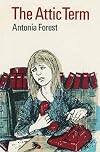
This penultimate volume in Antonia Forest's ten-book series about the Marlow family - which alternates between school story and holiday adventure - is the last of the four "Kingscote" novels, and finishing it had something of a bittersweet feeling to it, as a consequence. I've enjoyed reading about the Marlow girls, and their time away at boarding school, a narrative begun in Autumn Term, and then continued in End of Term and The Cricket Term (the fourth and eighth installments of the larger series, respectively). The doings of twins Nicola and Lawrie, and their many friends, are particularly absorbing, and continued here, although the focus widens to include more of older sister Ginty, as well as Marlow neighbor and friend, Patrick show more Merrick, at school in London.
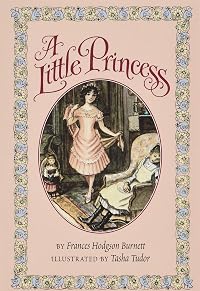
The Attic Term was absorbing, and - as usual with Forest - peopled with a cast of complex characters, and told with an appreciation for many different narrative points of view. The parallel concerns of Upper IV.A, with their preparations for the holiday caroling service in which they are expected to perform, and of Ginty, missing her injured friend Monica, and engaging in a series of highly illicit phone calls to Patrick in London, somehow seemed to come together - despite having little to do with one another - into a harmonious whole. I enjoyed the references to Frances Hodgson Burnett's Sara Crewe in the story - the Marlow girls are "exiled" for the term to the overflow dormitory in the Kingscote attic, nicknamed 'Sara Crewe' in honor of Burnett's heroine, who must live in a cold garret after the death of her father - as well as some of the discussions of religion between the characters. Tim and Miranda's conversation about Judaism and Christianity, and Patrick and Nicola's discussion of the (then) recent changes in the Catholic liturgy, were quite interesting.
I could happily have lived without the implication, in Patrick's comments about the "diabolical Protestant" services at his Catholic school, that to be anything resembling a Protestant, liturgically speaking, was a degradation. Also, I found Forest's characterization of Ginty - the beautiful but shallow girl, all of a sudden - rather troubling (shades of Susan Pevensie, in the Narnia books, I expect). But despite these quibbles (or qualms?), I enjoyed the book as a whole, am sorry to see the last of Kingscote, and highly recommend the story to anyone who has read previous installments of the Marlows' adventures. show less
The Attic Term was absorbing, and - as usual with Forest - peopled with a cast of complex characters, and told with an appreciation for many different narrative points of view. The parallel concerns of Upper IV.A, with their preparations for the holiday caroling service in which they are expected to perform, and of Ginty, missing her injured friend Monica, and engaging in a series of highly illicit phone calls to Patrick in London, somehow seemed to come together - despite having little to do with one another - into a harmonious whole. I enjoyed the references to Frances Hodgson Burnett's Sara Crewe in the story - the Marlow girls are "exiled" for the term to the overflow dormitory in the Kingscote attic, nicknamed 'Sara Crewe' in honor of Burnett's heroine, who must live in a cold garret after the death of her father - as well as some of the discussions of religion between the characters. Tim and Miranda's conversation about Judaism and Christianity, and Patrick and Nicola's discussion of the (then) recent changes in the Catholic liturgy, were quite interesting.
I could happily have lived without the implication, in Patrick's comments about the "diabolical Protestant" services at his Catholic school, that to be anything resembling a Protestant, liturgically speaking, was a degradation. Also, I found Forest's characterization of Ginty - the beautiful but shallow girl, all of a sudden - rather troubling (shades of Susan Pevensie, in the Narnia books, I expect). But despite these quibbles (or qualms?), I enjoyed the book as a whole, am sorry to see the last of Kingscote, and highly recommend the story to anyone who has read previous installments of the Marlows' adventures. show less
I always start an Antonia Forest novel jarred by its light cynicism, as though it makes a gentle mockery of the comfort and security offered by Blyton and Brent-Dyer. But then I become engrossed by the real-ness of the issues and of the characters. I also love the fact that both young people and adults seem like actual people, able to meet on common and equal ground at times.
This particular novel focuses to a certain extent on the changes to the Catholic Church, and some of the conversations are quite fascinating. I find myself again frustrated that Patrick would choose Ginty as his girlfriend, ignoring Nick in the process. But then, if he'd chosen Nick, he'd have had a real friend to deal with, and perhaps he's not ready to cope with a show more real relationship.
I was also fascinated by the strong evidence of the tension around femininity. I've often seen people commenting on the masculine names such as Tim and Nick but never been particularly worried by it either way. But now I find myself thinking of Brent-Dyer's character, Tom, who despises the very idea of femaleness and wants to be a gentleman, not because she wants to be male, but because the concept of a "lady" is to her synonymous with deceit and manipulation. She wants to be "straight" and honest and honourable. And so I find myself thinking of the image of femininity as of a deliberate artifice, something false and considered. Girls and women can't, in these stories, of course, take on completely male qualities as that would be considered both culturally and morally inappropriate. And so they become "sensible" - a strange hybrid of the masculine and feminine - a strangulated asexuality that does not permit of any strong expression of gender. What a strange position to be in! show less
This particular novel focuses to a certain extent on the changes to the Catholic Church, and some of the conversations are quite fascinating. I find myself again frustrated that Patrick would choose Ginty as his girlfriend, ignoring Nick in the process. But then, if he'd chosen Nick, he'd have had a real friend to deal with, and perhaps he's not ready to cope with a show more real relationship.
I was also fascinated by the strong evidence of the tension around femininity. I've often seen people commenting on the masculine names such as Tim and Nick but never been particularly worried by it either way. But now I find myself thinking of Brent-Dyer's character, Tom, who despises the very idea of femaleness and wants to be a gentleman, not because she wants to be male, but because the concept of a "lady" is to her synonymous with deceit and manipulation. She wants to be "straight" and honest and honourable. And so I find myself thinking of the image of femininity as of a deliberate artifice, something false and considered. Girls and women can't, in these stories, of course, take on completely male qualities as that would be considered both culturally and morally inappropriate. And so they become "sensible" - a strange hybrid of the masculine and feminine - a strangulated asexuality that does not permit of any strong expression of gender. What a strange position to be in! show less
Ratings
Members
- Recently Added By
Lists

Favorite Childhood Books
1,646 works; 514 members

Best Books Set in Boarding Schools
160 works; 57 members

Best School Stories
219 works; 21 members
Author Information

14+ Works 1,635 Members
Series


Common Knowledge
- Canonical title
- The Attic Term
- Original publication date
- 1976
Classifications
Statistics
- Members
- 134
- Popularity
- 244,147
- Reviews
- 3
- Rating
- (4.08)
- Languages
- English
- Media
- Paper
- ISBNs
- 3