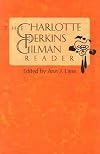
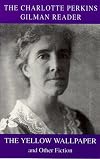
The Charlotte Perkins Gilman Reader
by Charlotte Perkins Gilman
On This Page
Description
THE CHARLOTTE PERKINS GILMAN READER is an anthology of fiction by one of America's most important feminist writers. Probably best known as the author of "The Yellow Wallpaper," in which a woman is driven mad by chauvinist psychiatry, Gilman wrote numerous other short stories and novels reflecting her radical socialist and feminist view of turn-of-the-century America. Collected here by noted Gilman scholar Ann J. Lane are eighteen stories and fragments, including a selection from Herland, show more Gilman's feminist Utopia. The resulting anthology provides a provocative blueprint to Gilman's intellectual and creative production. show lessTags
Recommendations
























Member Reviews
Charlotte Perkins Gilman was far ahead of her time in terms of the advancement of women as people as well as a more socialist and egalitarian society. One wishes her ideas about communal living and the categorization of "women's work" in the home as actual work that deserved (deserves) remuneration would have caught on much sooner. It seems like it might have been easier to bring about such a substantial sea change when our nation was younger and less ingrained in this capitalist 1%-focused society and mindset.
I very much enjoyed reading every story and excerpt contained herein and actually have already purchased full versions of two of the books excerpted here because I am compelled to read them in their entirety. I recommend this show more book to anyone who is interested in considering ways in which we may be able to remake our world into a better place for women. show less
I very much enjoyed reading every story and excerpt contained herein and actually have already purchased full versions of two of the books excerpted here because I am compelled to read them in their entirety. I recommend this show more book to anyone who is interested in considering ways in which we may be able to remake our world into a better place for women. show less
I really enjoyed this. The Yellow Wallpaper is frequently anthologised but not much else so it was nice to see more from her. A lot of this was written to deadline and out of a need to pay bills, so its not polished and repolished, its got a similar feel to some of some of the great classics of the pulps, light fast moving, articulate, telling a lively tale without a lot of furbelows. From an utterly different sensibility than say, Tarzan or Barsoom or Riders of the Purple Sage of course. I particularly liked some of the short stories where women try some (often magical) trick to escape housework so they can get some paid work done. The more things change...
I only read the short stories in this collection, as the rest was all excerpts from novels, and I'd rather read the whole novel. As for the short stories--of which there are 11--at least 8 of them were the same formula: woman is oppressed in her role as wife/mother, woman finds some kind of work that fulfills her, other women cluck disapprovingly while admitting that she may be on to something if it's working for her. They're funny, witty, and engaging at first, but by the fifth iteration of the same basic plot, it's a little wearing.
The standout is still The Yellow Wallpaper, because it really is the best American short story of all time.
The standout is still The Yellow Wallpaper, because it really is the best American short story of all time.
Read The Yellow Wallpaper and The Unnatural Mother -- Herland, the story I had originally wanted to read, is only excerpted in this volume (bah), so I will have to search the shelves to find the actual full copy of the book the library SAYS it has, but which I could not locate. I do not like abridgements in general, since I have no idea what motivates the editor to remove some portions and emphasize others and I'm not inclined to trust there. I glanced through a few other stories but didn't get interested.
As ancestor feminist fiction, I understand the ideas put forth in the two stories I read through, and with a familiarity with the period in which they were written, I can see why they are still used as source texts. Otherwise I didn't show more particularly enjoy them, in part perhaps because nothing in them seemed new (references to them have turned up in so much other material, and of course they have inspired so many other stories), but rather overly familiar. This isn't their fault as stories, or Gilman's -- she has no control, certainly over how they are now used, but I've suffered over exposure and cannot see them clearly enough to properly appreciate them. They feel much too broad and blatant to me now. show less
As ancestor feminist fiction, I understand the ideas put forth in the two stories I read through, and with a familiarity with the period in which they were written, I can see why they are still used as source texts. Otherwise I didn't show more particularly enjoy them, in part perhaps because nothing in them seemed new (references to them have turned up in so much other material, and of course they have inspired so many other stories), but rather overly familiar. This isn't their fault as stories, or Gilman's -- she has no control, certainly over how they are now used, but I've suffered over exposure and cannot see them clearly enough to properly appreciate them. They feel much too broad and blatant to me now. show less
Contents:
the Yellow Wallpaper
When I was a Witch
If I were a Man
The Girl in the Pink Hat
The Cottagette
Thu Unnatural Mother
Making a Change
An Honest Woman
Turned
The Widow's Might
Mr peebles' Heart
The Crux
What Diantha Did
Benigna Machiavelli
Unpunished
Moving the Mountain
Herland
With Her in Ourland
the Yellow Wallpaper
When I was a Witch
If I were a Man
The Girl in the Pink Hat
The Cottagette
Thu Unnatural Mother
Making a Change
An Honest Woman
Turned
The Widow's Might
Mr peebles' Heart
The Crux
What Diantha Did
Benigna Machiavelli
Unpunished
Moving the Mountain
Herland
With Her in Ourland
THE CHARLOTTE PERKINS GILMAN READER es una antología de ficción de uno de los escritores feministas más importantes de Estados Unidos. Probablemente mejor conocido como el autor de "The Yellow Wallpaper", en el que una mujer se vuelve loca por la psiquiatría machista, Gilman escribió muchos otros cuentos y novelas que reflejan su visión socialista y feminista radical de la América del cambio de siglo. Recogidos aquí por la notable erudita de Gilman, Ann J. Lane, hay dieciocho historias y fragmentos, incluida una selección de Herland, la utopía feminista de Gilman. La antología resultante proporciona un plan provocativo para la producción intelectual y creativa de Gilman.
Apr 11, 2018Spanish
Ratings
Members
- Recently Added By
Author Information

142+ Works 14,746 Members
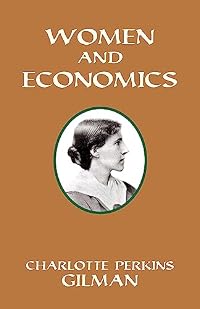
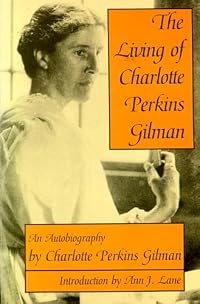
Charlotte Perkins Gilman was born in 1860 in Hartford, Conn. Her traumatic childhood led to depression and to her eventual suicide. Gilman's father abandoned the family when she was a child and her mother, who was not an affectionate woman, recruited relatives to help raise her children. Among these relatives was Harriet Beecher Stowe, the author show more of Uncle Tom's Cabin. Due to her family situation, Gilman learned independence, but also became alienated from her many female relatives. Gilman married in 1884 and was soon diagnosed with depression. She was prescribed bed rest, which only seemed to aggravate her condition and she eventually divorced her husband, fearing that marriage was partly responsible for her depressed state. After this, Gilman became involved in feminist activities and the writing that made her a major figure in the women's movement. Books such as Women and Economics, written in 1898, are proof of her importance as a feminist. Here she states that only when women learn to be economically independent can true equality be achieved. Her fiction works, particularly The Yellow Wallpaper, are also written with feminist ideals. A frequent lecturer, she also founded the feminist magazine Forerunner in 1909. Gilman, suffering from cancer, chose to end her own life and committed suicide on August 17, 1935. More information about this fascinating figure can be found in her book The Living of Charlotte Perkins Gilman: An Autobiography, published in 1935. (Bowker Author Biography) Charlotte Perkins Gilman was born in 1860 in Hartford, Conn. Her traumatic childhood led to depression and to her eventual suicide. Gilman's father abandoned the family when she was a child and her mother, who was not an affectionate woman, recruited relatives to help raise her children. Among these relatives was Harriet Beecher Stowe, the author of Uncle Tom's Cabin. Due to her family situation, Gilman learned independence, but also became alienated from her many female relatives. Gilman married in 1884 and was soon diagnosed with depression. She was prescribed bed rest, which only seemed to aggravate her condition and she eventually divorced her husband, fearing that marriage was partly responsible for her depressed state. After this, Gilman became involved in feminist activities and the writing that made her a major figure in the women's movement. Books such as Women and Economics, written in 1898, are proof of her importance as a feminist. Here she states that only when women learn to be economically independent can true equality be achieved. Her fiction works, particularly The Yellow Wallpaper, are also written with feminist ideals. A frequent lecturer, she also founded the feminist magazine Forerunner in 1909. Gilman, suffering from cancer, chose to end her own life and committed suicide on August 17, 1935. More information about this fascinating figure can be found in her book The Living of Charlotte Perkins Gilman: An Autobiography, published in 1935. (Bowker Author Biography) show less
Some Editions
Work Relationships
Contains
Is an abridged version of
Common Knowledge
- People/Characters
- Charlotte Perkins Gilman
- First words
- The way each of us comes to face our death ordinarily has little connection to the way we have lived, but Charlotte Perkins Gilman died in a manner that testified to the struggle and the triumph of her life. - Introduction by... (show all) Ann J. Lane
It is very seldom that mere ordinary people like John and myself secure ancestral halls for the summer. - Last words
- (Click to show. Warning: May contain spoilers.)'And when we sit down quietly, near together - it makes me so happy, Van!'
- Disambiguation notice
- This collection includes 18 short stories and novellas. See description for exact titles.
Classifications
Statistics
- Members
- 233
- Popularity
- 139,238
- Reviews
- 6
- Rating
- (3.59)
- Languages
- English
- Media
- Paper
- ISBNs
- 5
- ASINs
- 1