On This Page
Description
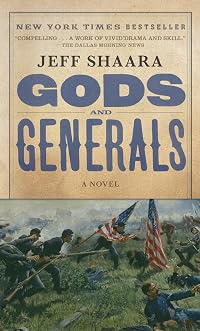
The New York Times bestselling prequel to the Pulitzer Prize-winning classic The Killer Angels In this brilliantly written epic novel, Jeff Shaara traces the lives, passions, and careers of the great military leaders from the first gathering clouds of the Civil War. Here is Thomas "Stonewall" Jackson, a hopelessly by-the-book military instructor and devout Christian who becomes the greatest commander of the Civil War; Winfield Scott Hancock, a captain of quartermasters who quickly show more establishes himself as one of the finest leaders of the Union army; Joshua Chamberlain, who gives up his promising academic career and goes on to become one of the most heroic soldiers in American history; and Robert E. Lee, never believing until too late that a civil war would ever truly come to pass. Profound in its insights into the minds and hearts of those who fought in the war, Gods and Generals creates a vivid portrait of the soldiers, the battlefields, and the tumultuous times that forever shaped the nation. show lessTags
Recommendations
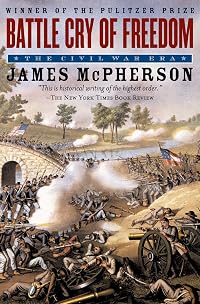
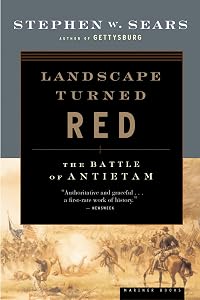
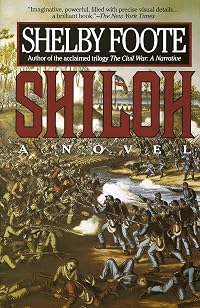
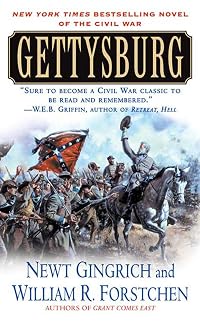
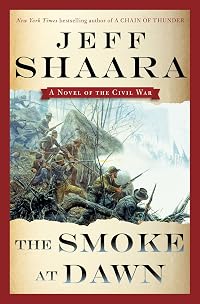
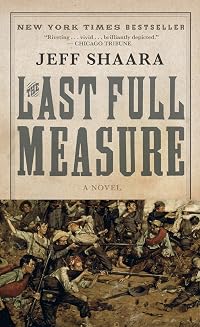
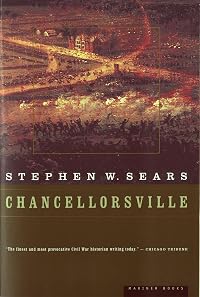
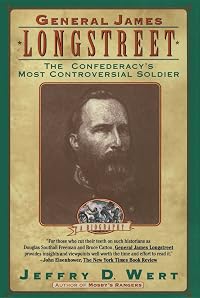
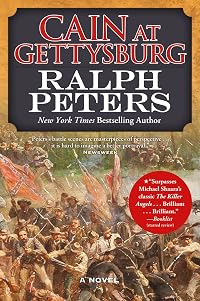
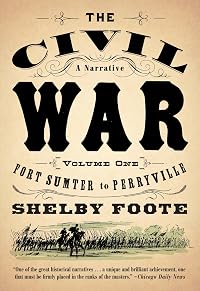






Member Recommendations
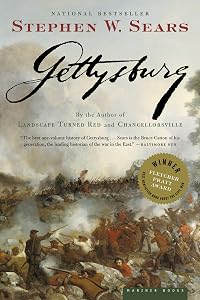
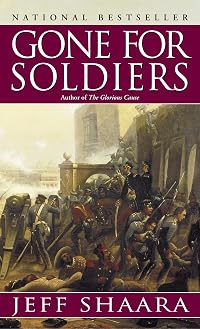
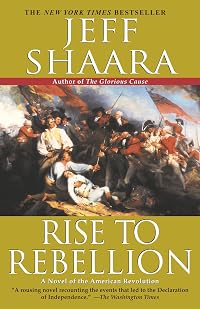
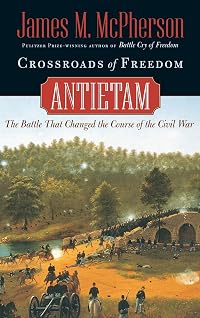
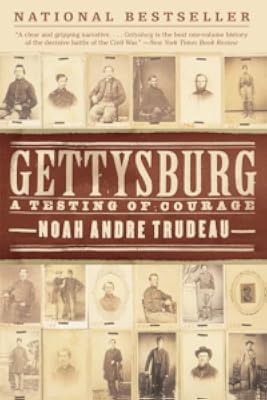
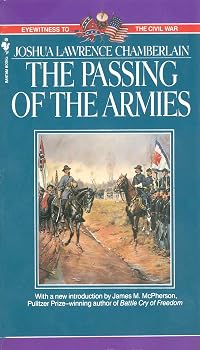
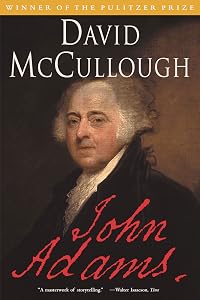
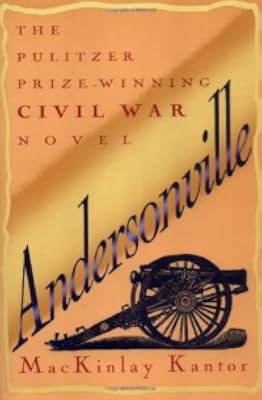
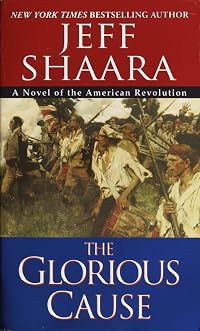
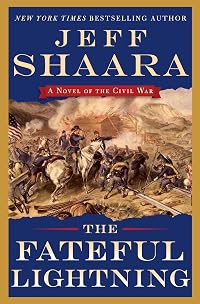
DinadansFriend Another Civil war novelist whose Gettysburg novel I found good.
Member Reviews
GODS AND GENERALS is another Civil War book that sat on my shelf too long before I pulled it down and read it. Written by Jeff Shaara, it is a prequel to THE KILLER ANGELS, the Pulitzer Prize winning historical novel written by his late father, Michael Shaara. The latter was an account of the battle of Gettysburg through the eyes of the officers and men who fought it; the son’s book follows a group of men from the years just before the Civil War through the battle of Chancellorsville just prior to Gettysburg. The men, two of whom—Robert E. Lee and Thomas “Stonewall” Jackson—fought for the Confederacy, while the other two—Winfield Scott Hancock and Joshua Chamberlain—remained loyal to the Union. Shaara attempts to give the show more reader a ground level view of history as it unfolded day by day through the eyes of the participants, who grappled with events without a shred of the hindsight we enjoy in the present day. Shaara has done his research well, and does a good job of presenting the world views of Americans very much of the mid 19th Century, and they saw things very differently than their modern descendants. Robert E. Lee’s sense of duty and honor, as he understood it, would not let him take up arms against his home state of Virginia, even when men with whom he disagreed made the bad choice to lead the Old Dominion into the Confederacy. Jackson’s deep faith in a God who willed all things in accordance with an unknowable plan led him to take up arms against men with whom he trained and served beside in years past. Hancock was a supremely competent career officer with no qualms about what side he was on, while Chamberlain, a teacher at a college inMaine, felt compelled to go and fight alongside the young men he taught. Lee and Jackson have been the subject of many other books, both fiction and non-fiction, and I was familiar with the course of their lives, but it was great to learn about General Hancock, who commanded troops at nearly every major engagement of the war in the East. The Hancock Shaara presents is a man who grieves for the friendships severed with Southerners, but who never shirks when it comes to making war upon them, but whose biggest obstacle were the incompetent superiors whose greatest talent was to lose battles where the Union had the most advantages.
The parts of the book dealing with the armed clashes between Union and Confederates were my favorites, as Shaara has a talent for giving the reader a real sense of what it was like to be caught up in the moment, and carried on the chaos of a battle where the side who is winning or losing changes from one minute to the next. Though he glosses over the battle of Antietam by showing it mostly through Chamberlain’s eyes while his unit is held in reserve, the bloody engagements at Fredericksburg and Chancellorsville are vividly portrayed. So too the anger and anguish of officers like Hancock, who had no choice but to obey orders they knew would lead to military disaster, and the frustration of commanders like Jackson who reach for a total victory that is just outside their grasp. It is a true lesson on the definition of “the fortunes of war.” I like Shaara’s writing style, especially his command of character POV. Most of the chapters are relatively short and to the point, and there is a lot of attention given to detail—descriptions of uniforms and landscapes being most prominent—that may not be to everyone’s liking.
And this book—published in 1996—may not be for every reader of history, for it is an example of a kind of historical fiction that would not find favor in many quarters in the 21st Century, where in the eyes of some, American history is solely the story of oppressors, the oppressed, and a few hypocrites who might fall in between. There is no doubt that Shaara’s treatment of Jackson, mainly at the end of the book, falls into outright romanticizing. The issue of race and slavery is barely mentioned, and the one Black character who appears is an emancipated slave who respectfully approaches Lee about buying his brother’s freedom. It comes off as an awkward scene, written to address the underlining and dominant issue of the Civil War, and then be done with it. But it does go the reality that the people of the time lived under a very different moral code, and did not debate the great issue of the day endlessly in every conversation. They were who they were, and not who a modern America thought they should have been. And Shaara makes it very clear that the Civil War was fought by men who very much did not want to go war, and who very much did not want to kill each other on a battlefield.
So, GODS AND GENERALS will certainly “trigger” some, and this book is not for them. But for those interested in a fighting man’s perspective on the Civil War, this is a good book that makes flesh and blood out of some of the dry facts so many of us leaned in American History class. It proves that good history is a good story, one that can be retold endlessly time and again. show less
The parts of the book dealing with the armed clashes between Union and Confederates were my favorites, as Shaara has a talent for giving the reader a real sense of what it was like to be caught up in the moment, and carried on the chaos of a battle where the side who is winning or losing changes from one minute to the next. Though he glosses over the battle of Antietam by showing it mostly through Chamberlain’s eyes while his unit is held in reserve, the bloody engagements at Fredericksburg and Chancellorsville are vividly portrayed. So too the anger and anguish of officers like Hancock, who had no choice but to obey orders they knew would lead to military disaster, and the frustration of commanders like Jackson who reach for a total victory that is just outside their grasp. It is a true lesson on the definition of “the fortunes of war.” I like Shaara’s writing style, especially his command of character POV. Most of the chapters are relatively short and to the point, and there is a lot of attention given to detail—descriptions of uniforms and landscapes being most prominent—that may not be to everyone’s liking.
And this book—published in 1996—may not be for every reader of history, for it is an example of a kind of historical fiction that would not find favor in many quarters in the 21st Century, where in the eyes of some, American history is solely the story of oppressors, the oppressed, and a few hypocrites who might fall in between. There is no doubt that Shaara’s treatment of Jackson, mainly at the end of the book, falls into outright romanticizing. The issue of race and slavery is barely mentioned, and the one Black character who appears is an emancipated slave who respectfully approaches Lee about buying his brother’s freedom. It comes off as an awkward scene, written to address the underlining and dominant issue of the Civil War, and then be done with it. But it does go the reality that the people of the time lived under a very different moral code, and did not debate the great issue of the day endlessly in every conversation. They were who they were, and not who a modern America thought they should have been. And Shaara makes it very clear that the Civil War was fought by men who very much did not want to go war, and who very much did not want to kill each other on a battlefield.
So, GODS AND GENERALS will certainly “trigger” some, and this book is not for them. But for those interested in a fighting man’s perspective on the Civil War, this is a good book that makes flesh and blood out of some of the dry facts so many of us leaned in American History class. It proves that good history is a good story, one that can be retold endlessly time and again. show less
This one has had me thinking....when I first read these Shaara books, I greatly enjoyed them and they may have spurred an interest in my reading more about the Civil War. However, now that I am older and re-reading them, they bother me a little. After all, why does this need to be a fictionalized account? Is it to make it more accessible to casual readers? Perhaps, but I have read many historians whose books are interesting enough to be accessible to casual readers. This approach seems disingenuous in some way, and it concerns me, because the author is ascribing personalities to historical figures in ways that make that personality seem definitive, even though the words they are speaking are dredged from the author's imagination. Surely show more a lot of research went into this book, but its hard to say what sources were used, as the book doesn't include any sort of bibliography. Its frustrating, and while this book is enjoyable, I'd recommend reading a good non-fiction history of the war if one is interested in it. show less
Gods and Generals is written as a prequel to The Killing Angels, a Pulitzer Prize winning novel written by Michael Shaara. This novel, written by his son, seeks to further the historical retelling of the civil war up to the battle of Gettysburg. Jeff, his son, does a nice job of bringing the war to the reader by concentrating on four main Generals: Robert E. Lee, Thomas Stonewall Jackson, (from the south), and Joshua Chamberlain and Winfred Scott Hancock (from the north). Some points of interest include the relationship that all these men had with each other. They knew each other or of each other from attending West Point and some fought together in The Mexican war which was a land grab that gave us the southwest, and provided valuable show more battle experience for the men who would later fight the civil war.
Men didn't necessarily chose sides based on their views of slavery, but were more opposed to the right of the central government to impose laws on individual states. For many it was the state's rights they were fighting for. I was interested to learn that Lee was asked to lead the troops for Lincoln, but could not bring himself to first feel loyalty for his home state of Virginia. It was also fascinating to learn of how many
early Union losses were because of bad leadership. Meade constantly asking for more troops when he had Lee on the run. Burnside waiting for the pontoons instead of crossing in the shallow section of the Rappahannock River.Thus giving Lee a chance to man the bank on the other side and win the day in Fredericksburg .
Shaara deciding to describe the battle through the eyes of four men also gives you a good perspective of the opposing ideas and insights into their beliefs, for example how religious both Jackson and Lee were. I would be interested in continuing my education in America's bloodiest battle and will look to go on to read about Gettysburg. show less
Men didn't necessarily chose sides based on their views of slavery, but were more opposed to the right of the central government to impose laws on individual states. For many it was the state's rights they were fighting for. I was interested to learn that Lee was asked to lead the troops for Lincoln, but could not bring himself to first feel loyalty for his home state of Virginia. It was also fascinating to learn of how many
early Union losses were because of bad leadership. Meade constantly asking for more troops when he had Lee on the run. Burnside waiting for the pontoons instead of crossing in the shallow section of the Rappahannock River.Thus giving Lee a chance to man the bank on the other side and win the day in Fredericksburg .
Shaara deciding to describe the battle through the eyes of four men also gives you a good perspective of the opposing ideas and insights into their beliefs, for example how religious both Jackson and Lee were. I would be interested in continuing my education in America's bloodiest battle and will look to go on to read about Gettysburg. show less
This book was actually inspired by Jeff Shaara’s father’s great Pulitzer Prize winning novel, Killer Angels, which was first published in 1974, by Michael Shaara. It dealt with the pivotal Battle of Gettysburg as seen through the eyes of its principal participants. That great novel was also the inspiration for the movie Gettysburg released in theaters. Michael Shaara died and his son, Jeff, a talented writer himself, was finally convinced to write both a prequel to Killer Angels and a sequel as well to complete a trilogy of the Civil War in the Eastern Theater. Gods and Generals is this prequel released in 1996 and Last Full Measure of Devotion is the sequel, released in 1998.
Jeff has absolutely mastered the art of story telling and show more his imagery is vivid and exciting. He tells the story of the Civil War in the Eastern Theater in this book from the origins beginning around 1858 and climaxes after the Battle of Chancellorsville when Robert E. Lee makes his fateful decision to take the war into Pennsylvania (the subject of Killer Angels). An example of such imagery I include here as he describes the Confederate attack on the Union right flank at Chancellorsville:
“Rodes turned, and there was a quick shout and a bugle sounded, and out in front the first line began to crush through the tangle of briars and thickets. From far out in both directions came the sound, the high, screaming wail, of ten thousand men; a solid line a mile wide pushing and clawing through the brush in one great mass of motion. The terrible sound echoed far in front of them, carried forward by the wind, and before them, beyond the brush, in the wide clearings along the road, heads began to turn, and plates of hot food were spilled, and the men in blue coats stood, staring at the impossible, the impenetrable thicket, and stared as the deer and the rabbits and the birds ran and darted and flushed out before the great wave. Before the first man was seen, or the first musket aimed, the men in blue were swallowed by the sound, the raw terror, and they began to run.” pp. 429-430.
Now I have a pretty good imagination, and the Civil War is one of my favorite subjects to read about, but this passage sent chills down my spine. I was literally there, 158 years ago. And the very last page of this magnificent novel left me on the edge so that I can’t wait to re-read Killer Angels. That glorious and heroic Army of the Potomac with so much potential that had been led by such poor generals who were either incompetent, uninspired, or too timid, were now under the command of George Gordon Meade, “… a man who did not suffer from the heavy burden of defeat, whose troops withdrew from Fredericksburg because they had been unsupported, who had withdrawn at Chancellorsville because Hooker had collapsed. But now the army was his, and they were on the move, above the capital, moving with a new energy to confront the invasion. And this time Stuart could not ride fast enough. It was no longer a weak, lethargic army around which he was playing.” (p490.)
I loved this book. show less
Jeff has absolutely mastered the art of story telling and show more his imagery is vivid and exciting. He tells the story of the Civil War in the Eastern Theater in this book from the origins beginning around 1858 and climaxes after the Battle of Chancellorsville when Robert E. Lee makes his fateful decision to take the war into Pennsylvania (the subject of Killer Angels). An example of such imagery I include here as he describes the Confederate attack on the Union right flank at Chancellorsville:
“Rodes turned, and there was a quick shout and a bugle sounded, and out in front the first line began to crush through the tangle of briars and thickets. From far out in both directions came the sound, the high, screaming wail, of ten thousand men; a solid line a mile wide pushing and clawing through the brush in one great mass of motion. The terrible sound echoed far in front of them, carried forward by the wind, and before them, beyond the brush, in the wide clearings along the road, heads began to turn, and plates of hot food were spilled, and the men in blue coats stood, staring at the impossible, the impenetrable thicket, and stared as the deer and the rabbits and the birds ran and darted and flushed out before the great wave. Before the first man was seen, or the first musket aimed, the men in blue were swallowed by the sound, the raw terror, and they began to run.” pp. 429-430.
Now I have a pretty good imagination, and the Civil War is one of my favorite subjects to read about, but this passage sent chills down my spine. I was literally there, 158 years ago. And the very last page of this magnificent novel left me on the edge so that I can’t wait to re-read Killer Angels. That glorious and heroic Army of the Potomac with so much potential that had been led by such poor generals who were either incompetent, uninspired, or too timid, were now under the command of George Gordon Meade, “… a man who did not suffer from the heavy burden of defeat, whose troops withdrew from Fredericksburg because they had been unsupported, who had withdrawn at Chancellorsville because Hooker had collapsed. But now the army was his, and they were on the move, above the capital, moving with a new energy to confront the invasion. And this time Stuart could not ride fast enough. It was no longer a weak, lethargic army around which he was playing.” (p490.)
I loved this book. show less
Jeff Shaara takes his dads book "The Killer Angels" and tries to extend it to cover not just the early war, but the years leading up to the war. In the end the style and viewpoints ends up spread far too thin to cover such a period of time.
The book claims to cover 4 viewpoints, Robert E. Lee, Thomas "Stonewall" Jackson, Winfeld Scott Hancock and Joshua Chamberlin. But in the end it works out that a majority of the book is from Lee's POV.
Which brings us to the second major problem. While Killer Angels seemed to be a repudiation of the Mythos of the Lost Cause, with an attempt to rehab Longstreet's undeserved reputation at Gettysburg. Gods And Generals seemingly pulls out every single cliche it can from the Lost Cause. Kindly Mr Lee who show more was apolitical (How he can spend 3 years in Arlington across the river from DC during the late 1850s and yet have no idea about politics is beyond me) to kindly Mr Lee who was just looking out for the welfare of his slaves, which is why he kept them enslaved.
Speaking of slaves, after an early appearance by a former slave at Arlington (written in the most white man writing a minority way possible), slaves never again appear in the story. Also somehow never mentioned is the Emancipation Proclamation, which was one of the major results of a battle smack dab in the middle of the novel.
It's not a bad novel persay, but is disappointing because it could have been done much better. If for example the time period of the Seven Days Battles / 2nd Bull Run / Antietam which would have ran from July of 62 to September of 62 was it's own section and given time to build out of there instead of things feeling rushed (while somehow also feeling very slow at points) it could have been better.
It's worth a read, I would definitely read The Killer Angels first, and if you want more then pick this up. Don't read this as a series starting here and going into Killer Angels. show less
The book claims to cover 4 viewpoints, Robert E. Lee, Thomas "Stonewall" Jackson, Winfeld Scott Hancock and Joshua Chamberlin. But in the end it works out that a majority of the book is from Lee's POV.
Which brings us to the second major problem. While Killer Angels seemed to be a repudiation of the Mythos of the Lost Cause, with an attempt to rehab Longstreet's undeserved reputation at Gettysburg. Gods And Generals seemingly pulls out every single cliche it can from the Lost Cause. Kindly Mr Lee who show more was apolitical (How he can spend 3 years in Arlington across the river from DC during the late 1850s and yet have no idea about politics is beyond me) to kindly Mr Lee who was just looking out for the welfare of his slaves, which is why he kept them enslaved.
Speaking of slaves, after an early appearance by a former slave at Arlington (written in the most white man writing a minority way possible), slaves never again appear in the story. Also somehow never mentioned is the Emancipation Proclamation, which was one of the major results of a battle smack dab in the middle of the novel.
It's not a bad novel persay, but is disappointing because it could have been done much better. If for example the time period of the Seven Days Battles / 2nd Bull Run / Antietam which would have ran from July of 62 to September of 62 was it's own section and given time to build out of there instead of things feeling rushed (while somehow also feeling very slow at points) it could have been better.
It's worth a read, I would definitely read The Killer Angels first, and if you want more then pick this up. Don't read this as a series starting here and going into Killer Angels. show less
Mostly good. The battles are well described, the inner thoughts of the major characters make sense and you feel for everyone involved. I found the pacing a bit slow and the last third definitely lost me a bit and felt repetitive. Weaving in real tactics from the battles was very cool. As I'm reading more historical fiction, I realize I should do more research prior to reading so I have a better fundamental understanding of the goings on. Was surprised the author chose to highlight both sides and not really have a set protagonist antagonist and not mention slavery that much but I suppose the Civil War was about more than that? Not sure, a bit confused about that. I guess history isn't always as clean cut as good vs bad so this probably show more was a good decision by the author. Following in his father's footsteps is super cool, looking forward to the Killer Angels. show less
Gods and Generals is a work of historical fiction, written as a prequel to The Killer Angels, a book by the author's father. That book has the battle of Gettysburg as its centerpiece, and this book covers the war leading up to the second invasion of the north, building up to Gettysburg.
The story is told through the eyes of confederate officers Lee and Stonewall Jackson, and union officers Hancock and Chamberlain. The book follows the four men from the lead-up to secession through the end of the Battle of Chancellorsville. The reader follows them to Antietam and Fredericksburg and learns about some other battles peripherally.
Most of the story unfolds in the actions, thoughts and dialogues of the four men being followed and this method show more limits the amount of detail that can be covered without breaking away from the flow and format of the storytelling. Thus, someone with no background on the American Civil War might find themselves overwhelmed or confused at times.
My primary criticism of the book is that it focuses on four officers, three of whom are already well know and their stories well-told. The most interesting tale is probably the story of Joshua Chamberlain, who was not a soldier at the start of the war and must learn his way in the heat of battle. This is the only truly unique perspective in the book.
The other aspect I found frustrating was the abrupt manner in which perspectives changed, often with no overlap - even when it would have been interesting to have some.
For instance, much of General Jackson's early exploits are uncovered not from Jackson's perspective but from Lee's. There are other times when the men are on the same battlefield and instead of exploring the same events from multiple perspectives - something I personally think would have added a rich layer to this book - the author instead hands the baton off between men with one man's story picking up where the other's ends.
This book makes characters out of the four historical figures in a way that supposes to know their innermost thoughts and feelings on various topics. This sort of creative speculation is necessary in this style of book, but can occasionally feel disingenuous.
That all being said, the book covers the men in a compelling way, and after a slow start, moves at a good clip. The books avoids the traps of excessive sensory details and of extraneous broader historical context and narrows in on the visceral experience of the main characters and the men they lead. It makes a drama of the civil war in a manner that feels remarkably free of moral judgement and only gets into technical criticism in situations where it is very believable and where historians generally agree with the criticism being leveled.
I was happy with the reading experience and felt like my knowledge of the civil war was enhanced, albeit in a more personal sense than a technical one. I do plan on reading The Killer Angels next. show less
The story is told through the eyes of confederate officers Lee and Stonewall Jackson, and union officers Hancock and Chamberlain. The book follows the four men from the lead-up to secession through the end of the Battle of Chancellorsville. The reader follows them to Antietam and Fredericksburg and learns about some other battles peripherally.
Most of the story unfolds in the actions, thoughts and dialogues of the four men being followed and this method show more limits the amount of detail that can be covered without breaking away from the flow and format of the storytelling. Thus, someone with no background on the American Civil War might find themselves overwhelmed or confused at times.
My primary criticism of the book is that it focuses on four officers, three of whom are already well know and their stories well-told. The most interesting tale is probably the story of Joshua Chamberlain, who was not a soldier at the start of the war and must learn his way in the heat of battle. This is the only truly unique perspective in the book.
The other aspect I found frustrating was the abrupt manner in which perspectives changed, often with no overlap - even when it would have been interesting to have some.
For instance, much of General Jackson's early exploits are uncovered not from Jackson's perspective but from Lee's. There are other times when the men are on the same battlefield and instead of exploring the same events from multiple perspectives - something I personally think would have added a rich layer to this book - the author instead hands the baton off between men with one man's story picking up where the other's ends.
This book makes characters out of the four historical figures in a way that supposes to know their innermost thoughts and feelings on various topics. This sort of creative speculation is necessary in this style of book, but can occasionally feel disingenuous.
That all being said, the book covers the men in a compelling way, and after a slow start, moves at a good clip. The books avoids the traps of excessive sensory details and of extraneous broader historical context and narrows in on the visceral experience of the main characters and the men they lead. It makes a drama of the civil war in a manner that feels remarkably free of moral judgement and only gets into technical criticism in situations where it is very believable and where historians generally agree with the criticism being leveled.
I was happy with the reading experience and felt like my knowledge of the civil war was enhanced, albeit in a more personal sense than a technical one. I do plan on reading The Killer Angels next. show less
Members
- Recently Added By
Published Reviews
ThingScore 75
But while this prequel offers a robust portrait of the early years of the war, it lacks something of the impact of Killer Angels. That novel's great resonance had something to do with the intense focus on just three days of battle: Gettysburg became a particularly apt metaphor for the entire conflict. This new book, by having to plod dutifully across several years of battles, seems at times show more more like an impressionistic work of history than a work of fiction. Still, Sharra's wonderful command of detail and his generally shrewd depiction of character make for an impressive debut. show less
added by Richardrobert
Lists

r/History Recommended Reading List
603 works; 12 members

THE WAR ROOM
813 works; 24 members

Books Read in 2024
4,727 works; 128 members

Favourite Books
1,820 works; 316 members
Author Information

34+ Works 18,577 Members
Jeff Shaara was born in New Brunswick, New Jersey on February 21, 1952. He received a degree in criminology from Florida State University in 1974. He was a professional dealer in rare coins for many years and operated his own business in Tampa until the death of his father, Michael Shaara, in 1988, when he became actively involved in the elder show more Shaara's literary estate. He continued his father's work by researching the history of the characters his father had brought to life in The Killer Angels, and in 1996 his prequel, Gods and Generals, was published. The book was awarded the American Library Association's Boyd Award for Excellence in Military Fiction and was adapted into a motion picture in 2003. His other works include The Last Full Measure, Rise to Rebellion, The Glorious Cause, The Steel Wave, No Less Than Victory, The Final Storm, A Blaze of Glory, A Chain of Thunder, The Smoke at Dawn, and The Fateful Lightning. He received another Boyd Award for To the Last Man. (Bowker Author Biography) show less
Awards and Honors
Distinctions
Series

Work Relationships
Common Knowledge
- Original publication date
- 1996-7
- People/Characters
- Edward Porter Alexander; Joshua Lawrence Chamberlain; Winfield Scott Hancock; Stonewall Jackson; Robert E. Lee (General); James Longstreet (show all 7); J. E. B. Stuart
- Important places
- Virginia, USA
- Important events
- American Civil War (1861 | 1865); Battle of Chancellorsville; Battle of Fredericksburg
- Related movies
- Gods and Generals (2003 | IMDb)
- Dedication
- To Lynne
- First words
- Two extraordinary events occur in the mid-1840s. (Introduction)
The coach rolled through the small iron gates, up the slight rise, toward massive white columns. (Chapter 1 - Lee) - Last words
- (Click to show. Warning: May contain spoilers.)They would crest a long rise and pause at a small cemetery, high above the peaceful farms and quiet streets of a town called Gettysburg.
- Blurbers
- McPherson, James M.; Boritt, Gabor; Küntsler, Mort
Classifications
Statistics
- Members
- 3,577
- Popularity
- 4,605
- Reviews
- 36
- Rating
- (3.86)
- Languages
- English, Spanish
- Media
- Paper, Audiobook, Ebook
- ISBNs
- 22
- ASINs
- 17