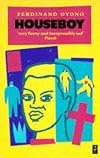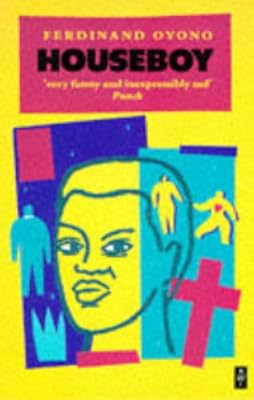
Houseboy
by Ferdinand Oyono
On This Page
Description
Cameroonian houseboy Toundi dreams of advancement and so studies the world of his white masters closely. "Gradually his eyes are opened to its realities, and in the end this leads to tragic consequences because the Europeans cannot endure the gaze of the man they have destroyed.Tags
Recommendations




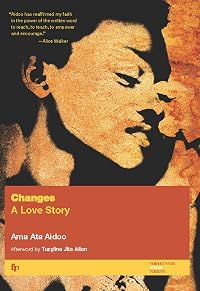
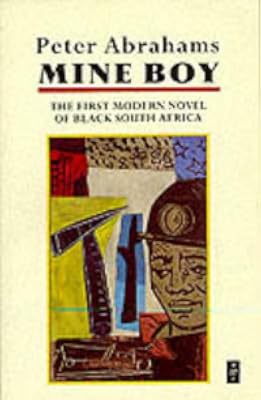
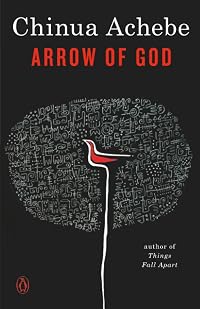
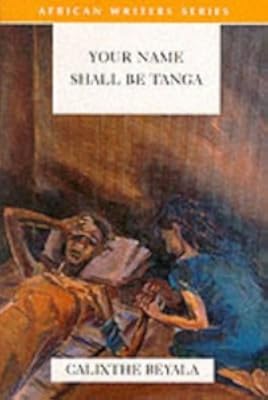








Member Reviews
This short but powerful novel explores the evils of colonialism through the story of a young Cameroonian man, Toundi, who becomes the "houseboy" first for a priest and then for the French "commandant" in the area. He is initially both attracted and repelled by the Europeans he works for, even as we know, because the novel begins with his death by violence, that things will get bad quickly. Oyono depicts the interactions among the Africans in the story, as well as their perceptive observations of life within white households, including all their bad behavior; of course, the whites don't really think the Africans notice what they do, because they don't notice the Africans except when they displease them. And then, the violence, cruelty, show more and randomness of the colonial power comes into play. Oyono is a terrific writer (parts of this book are quite funny), with a great sense of pacing, and has a keen eye for hypocrisy and racism. I got this book because of an enthusiastic review here on LT, and I'm glad I finally read it. show less
Houseboy is Ferdinand Oyono's first work, an anti-colonial narrative that takes place during the last years of the French control of his native Cameroon.
This is a novel that softly, softly got its hooks into me. As I started, I thought the opening plot device of finding the diaries of the dying protagonist, Toundi, and then recounting them was trite. I didn't care for Oyono's terse, abrupt and staccato prose.
As I ended, I had forgotten that I was reading a diary, for it reads nothing like one, and nothing about the language Oyono chose bothered me. Instead, I sat, mesmerized, in the way you do when watching a traffic accident unfold before you: powerless but unable to look away.
To say that Houseboy is anti-colonial literature is a bit show more of an understatement. On one hand it is a scathing portrait of the French overlords' cruelty toward a population that they viewed as not much more than property. It is also an indictment of the lie behind the policy of assimilation — learn to speak French and ape our manners and we will welcome you as Frenchmen — as almost every French person shudders at the thought of that actually happening.
Most of all, however, it is a mirror for the hypocrisy upon which the whole system was built. On the surface there is a strong thread of Christianity being wielded as a tool of "civilization", while the actions of its proponents belie every precept it teaches. The French elite speak knowingly of the lack of moral fiber among the natives when, in fact, the behavior of those speaking is far worse than those they criticize. In the end, they turn on Toundi, not because he has committed a crime, or because they are sadistic and brutal, but simply because they know that he has seen their hypocrisy and they cannot stand to see that knowledge in his eyes.
Houseboy's power comes from the scope in which it makes its statements. It shows you what it needs to show in the everyday life of a houseboy, not in the events of revolution or the political struggles that eventually threw off the colonial yoke. It makes you think of Arendt's phrase about the "banality of evil."
Oyono didn't write for long. He moved into politics, becoming a diplomat and a cabinet minister for President Biya before dying a couple of years ago. It would have been interesting to get one more book out of him from the viewpoint of 50 years after independence that showed how he saw things now.
Recommended. show less
This is a novel that softly, softly got its hooks into me. As I started, I thought the opening plot device of finding the diaries of the dying protagonist, Toundi, and then recounting them was trite. I didn't care for Oyono's terse, abrupt and staccato prose.
As I ended, I had forgotten that I was reading a diary, for it reads nothing like one, and nothing about the language Oyono chose bothered me. Instead, I sat, mesmerized, in the way you do when watching a traffic accident unfold before you: powerless but unable to look away.
To say that Houseboy is anti-colonial literature is a bit show more of an understatement. On one hand it is a scathing portrait of the French overlords' cruelty toward a population that they viewed as not much more than property. It is also an indictment of the lie behind the policy of assimilation — learn to speak French and ape our manners and we will welcome you as Frenchmen — as almost every French person shudders at the thought of that actually happening.
Most of all, however, it is a mirror for the hypocrisy upon which the whole system was built. On the surface there is a strong thread of Christianity being wielded as a tool of "civilization", while the actions of its proponents belie every precept it teaches. The French elite speak knowingly of the lack of moral fiber among the natives when, in fact, the behavior of those speaking is far worse than those they criticize. In the end, they turn on Toundi, not because he has committed a crime, or because they are sadistic and brutal, but simply because they know that he has seen their hypocrisy and they cannot stand to see that knowledge in his eyes.
Houseboy's power comes from the scope in which it makes its statements. It shows you what it needs to show in the everyday life of a houseboy, not in the events of revolution or the political struggles that eventually threw off the colonial yoke. It makes you think of Arendt's phrase about the "banality of evil."
Oyono didn't write for long. He moved into politics, becoming a diplomat and a cabinet minister for President Biya before dying a couple of years ago. It would have been interesting to get one more book out of him from the viewpoint of 50 years after independence that showed how he saw things now.
Recommended. show less
As this novel opens, Toundi is on the verge of death. He asks:
"'Brother...Brother, what are we? What are we blackmen who are called French?'
"His voice grew bitter. I had never asked myself that question. I was young then and thoughtless. I felt myself grow stupid."
As he dies, Toundi gives his diaries to the narrator, and the remainder of the novel consists of Toundi's diaries.
As a young boy, Toundi was fascinated with the local Catholic mission and the priest who regularly distributed candy to the village children. After an argument with his father, Toundi runs away to the mission, and becomes the "boy" of the priest. When the priest dies, Toundi becomes the "boy" of the town's French commandant. (The novel is set in the French show more Cameroon).
From his sometimes naive point of view, Toundi draws clear portraits of the French colonists and their cruelty to and disdain for the native people. Although in becoming the priest's houseboy Toundi gave up his tribal identity, he finds that he will never fit in among the colonizers. Tragedy ensues when the commandant and his vain wife seek to "dispose" of Toundi when they think he knows too many of their secrets.
The Times Literary Supplement said of this book:
"It is a better guide to French colonial Africa, and to racism, than any non-fiction account, whether by an African or Frenchman."
It certainly is a brutal and searing account of a past history that is closer than we may care to remember. Highly recommended. show less
"'Brother...Brother, what are we? What are we blackmen who are called French?'
"His voice grew bitter. I had never asked myself that question. I was young then and thoughtless. I felt myself grow stupid."
As he dies, Toundi gives his diaries to the narrator, and the remainder of the novel consists of Toundi's diaries.
As a young boy, Toundi was fascinated with the local Catholic mission and the priest who regularly distributed candy to the village children. After an argument with his father, Toundi runs away to the mission, and becomes the "boy" of the priest. When the priest dies, Toundi becomes the "boy" of the town's French commandant. (The novel is set in the French show more Cameroon).
From his sometimes naive point of view, Toundi draws clear portraits of the French colonists and their cruelty to and disdain for the native people. Although in becoming the priest's houseboy Toundi gave up his tribal identity, he finds that he will never fit in among the colonizers. Tragedy ensues when the commandant and his vain wife seek to "dispose" of Toundi when they think he knows too many of their secrets.
The Times Literary Supplement said of this book:
"It is a better guide to French colonial Africa, and to racism, than any non-fiction account, whether by an African or Frenchman."
It certainly is a brutal and searing account of a past history that is closer than we may care to remember. Highly recommended. show less
Written in the 1950s, it is a deftly put together examination of the clashes between the natives of Cameroon and the Europeans that came to subjugate them. It begins with the discovering of a young man, Toundi, dying on the road. In his satchel are notebooks detailing his life as a houseboy to the French commandant, and the events leading to his own death.
Oyono's book brilliantly examines the dishonesty that characterizes the interactions of black and white. Europeans are outwardly superior and civilized, Africans are outwardly subservient and stupid. As a houseboy, Toundi witnesses the sexual misdemeanors and psychopathic rages of the Europeans that give a lie to the veneer of civilization and hypocrisy of professed Christian morals. show more By placing Toundi in the heart of the European household, Oyono is able to show that the difference between the two is races is really in the balance of power and the simplicity with which it can be abused.
I read Houseboy in a single sitting. Setting aside the slightly contrived (and incredulous) device of the discovered notebooks, it was a really well written short novel. Toundi's doom is written large from page one, so you know it isn't gong to end well for him, but that didn't stop me being engrossed. show less
Oyono's book brilliantly examines the dishonesty that characterizes the interactions of black and white. Europeans are outwardly superior and civilized, Africans are outwardly subservient and stupid. As a houseboy, Toundi witnesses the sexual misdemeanors and psychopathic rages of the Europeans that give a lie to the veneer of civilization and hypocrisy of professed Christian morals. show more By placing Toundi in the heart of the European household, Oyono is able to show that the difference between the two is races is really in the balance of power and the simplicity with which it can be abused.
I read Houseboy in a single sitting. Setting aside the slightly contrived (and incredulous) device of the discovered notebooks, it was a really well written short novel. Toundi's doom is written large from page one, so you know it isn't gong to end well for him, but that didn't stop me being engrossed. show less
This takes place in the colonial period of Spanish Guinea, now Cameroon. A dying man's journal is used to turn it into the story of Toundi, whose father's cruelty drives him from his home at a young age. He seeks shelter with the Catholics, thus becoming a Father's Houseboy. But when the Father dies, he becomes the Houseboy of the Commandant of the White's settlement. Here, things don't go so well, and the reader will have some hilarious moments as Toundi tries to puzzle out the behavior of the various Whites that he serves. But the reader will also find moments of anger, indignation and disbelief at the injustice done to the Natives to appease the consciences of the immoral Whites.
Houseboy (translated from the French (Une vie de boy) by John Reed) was one the strongest stories I've read lately.
Boy is (or was), in the colonial setting of this book, the native worker closest to the Europeans. He is supposed to be there, to do what he is told, to be used, at all hours.
Therefore he also witnesses his employer's weakest moments, he knows most of his secrets. And he also the one who is there when a scapegoat is needed.
The book is structured so that the reader knows from the beginning that this is goind to end badly.
At first things develop well for Tounda (the houseboy). From poor beginnings under control of abusive father Tounda moves to the nearby mission, where he learns the French, to read and write, and becomes show more first the houseboy of the Father, and later on the boy of the local Commandant of the colonial administration.
He sees, he learns, and possibly even understands a lot, maybe too much. And when the turn comes it is quick and total.
I guess the most tragic thing about the fate of Tounda is how easily it all happens: his life is spoiled and taken from him -- just because... Yet this is told in such a manner that it is easy to believe such things have happened in the not so far past, only some decades ago. show less
Boy is (or was), in the colonial setting of this book, the native worker closest to the Europeans. He is supposed to be there, to do what he is told, to be used, at all hours.
Therefore he also witnesses his employer's weakest moments, he knows most of his secrets. And he also the one who is there when a scapegoat is needed.
The book is structured so that the reader knows from the beginning that this is goind to end badly.
At first things develop well for Tounda (the houseboy). From poor beginnings under control of abusive father Tounda moves to the nearby mission, where he learns the French, to read and write, and becomes show more first the houseboy of the Father, and later on the boy of the local Commandant of the colonial administration.
He sees, he learns, and possibly even understands a lot, maybe too much. And when the turn comes it is quick and total.
I guess the most tragic thing about the fate of Tounda is how easily it all happens: his life is spoiled and taken from him -- just because... Yet this is told in such a manner that it is easy to believe such things have happened in the not so far past, only some decades ago. show less
A novel written originally in French and published in 1960, this work follows the young life of a native Cameroonian until his untimely demise. The book is introduced by a narrator finding and transcribing the journals of the main character, very much like the opening of Lermontov's A Hero Of Our Time. Toundi Onouya is the Houseboy, and begins life in a loveless upbringing that propels him into the service of the local senior priest. He eventually makes his way to serve the leader of the French in Cameroon, a man he calls the Commandant. His travels with his boss and changes when the Commandant's wife comes from France are a background for a range of very stark issues. Unlike other African novels that touch on effects of colonialism, show more this book puts the day-to-day effects on display, in part by taking the rare approach in African works of exposing the thoughts and behaviors of colonial leaders toward their personal servants. The violence, selfishness, myopia and lust are on display in a tragic work that certainly contributed to the whorl of anti-colonialism Africa experienced through the latter half of the 20th century. show less
Members
- Recently Added By
Lists

Best African Books
126 works; 46 members

Books Read in 2019
4,052 works; 110 members

Around the World in 80 Books
79 works; 4 members
Author Information

4+ Works 521 Members
Born in Cameroon, Ferdinand Oyono was educated in local schools and in France, where he studied law and administration. Since 1960 he has served in the Cameroonian diplomatic corps. His international reputation for humorous, satiric writing rests on his 1956 publication of The Houseboy, which has been widely translated. The novel, written as a show more diary of an African houseboy, bitterly attacks French colonialism in Africa. (Bowker Author Biography) show less
Awards and Honors
Awards
Series
Belongs to Publisher Series
Common Knowledge
- Canonical title
- Houseboy
- Original title
- Une Vie de Boy
- Original publication date
- 1956; 1966 (English translation) (English translation)
- Important places*
- Kameroen
- Original language*
- Frans
*Some information comes from Common Knowledge in other languages. Click "Edit" for more information.
Classifications
Statistics
- Members
- 395
- Popularity
- 79,259
- Reviews
- 9
- Rating
- (3.53)
- Languages
- Dutch, English, French, Swahili
- Media
- Paper, Ebook
- ISBNs
- 11
- ASINs
- 8