
Thérèse Desqueyroux
by François Mauriac, Франсуа Мориак (Author)
On This Page
Description
Fran ois Mauriac's masterpiece and one of the greatest Catholic novels, Th r se Desqueyroux is the haunting story of an unhappily married young woman whose desperation drives her to thoughts of murder. Mauriac paints an unforgettable portrait of spiritual isolation and despair, but he also dramatizes the complex realities of forgiveness, grace, and redemption. Set in the countryside outside Bordeaux, in a region of overwhelming heat and sudden storms, the novel's landscape reflects the inner show more world of Th r se, a figure who has captured the imaginations of readers for generations. Raymond N. MacKenzie's translation of Th r se Desqueyroux, the first since 1947, captures the poetic lyricism of Mauriac's prose as well as the intensity of his stream-of-consciousness narrative. MacKenzie also provides notes and a biographical and interpretive introduction to help readers better appreciate the mastery of Fran ois Mauriac, who was awarded the Nobel Prize in Literature in 1952. This volume also includes a translation of "Conscience, The Divine Instinct," Mauriac's first draft of the story, never before available in English. show lessTags
Recommendations




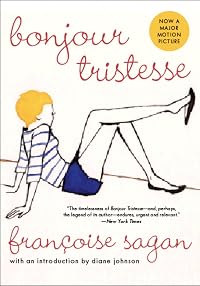
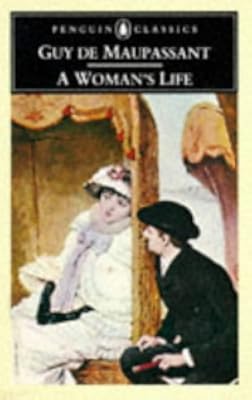

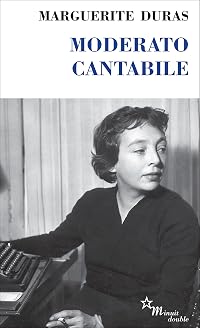

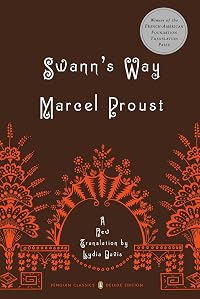












Member Recommendations

Member Reviews
In this brief novel boiling with tension, we see the inner conflicts of the type in Madam Bovary or Anna Karenina, but a lot more compressed and intense. Usually, I don’t like dark novels of this type, but what kept me hooked is the powerful story-telling of Mauriac, an absolute masterpiece. A deeply flawed character, Therese, keeps us engaged, because Mauriac has skillfully transferred her point of view upon us, so we are with her even if we know she is doing something unethical.
As with several recent novels I've taken on, started out quite slow but I warmed to it much more as it went on. The dark, abrupt opening starts things off on a right keel but my favourite sections came when Thérèse was finally reunited with Bernard and things become quite desperate. A portrait of a woman suffocated by provincial life, by ennui, by social custom, by her own inability to find herself in her cramped surroundings and ultimately (at least by insinuation) by her inability to realise her own sexuality apart from through her quite abstract and elusive fantasy life. Her bovarysme doesn't even let her taste the same temporary joys as Emma did, and though she ultimately gets "freedom" of a sort here it's one which promises not a show more great deal more than her previous confinement. show less
Just as soon as I want to feel sorry for Thérèse's husband Bernard, he utters a misogynistic or anti-Semitic remark. Thérèse herself is an immature brat who attempts to kill her husband. There's not one sympathetic figure in the novel yet by the last chapter there is hope after Bernard and Thérèse call an armistice and go their opposite ways. Like the rest of Mauriac's works this book can only be fully appreciated in light of Redemption.
This version includes an introduction by Raymond Mackenzie.
This version includes an introduction by Raymond Mackenzie.
ספר כבד (בנושא, לא בשפה) וגם קצת מוזר על אשה צרפתיה בכפר נידח בלנד במערב צרפת שיוצאת מדעתה מנישואיה, מהשעמום מהבדידות ומחוסר התקווה ומנסה בדרך לרצוח את בעלה.
I really enjoyed this.
Following Therese's path through depression and loneliness to a position of self understanding was really absorbing and kind of helpful on my own path to self knowledge.
I will be reading this again.
Following Therese's path through depression and loneliness to a position of self understanding was really absorbing and kind of helpful on my own path to self knowledge.
I will be reading this again.
Весьма невнятное впечатление осталось. Как и во многих других произведениях, часто обращаю внимание на невнятный конец. Всю дорогу грустили , под конец запели. Как-то так и здесь. Описание шло об одиночестве, хандре, непонимании, покушении на убийство, отречении от семьи и ребенка, притворстве, ценном общественном мнении и непостоянстве нашего восприятия. Довольно широкий спектр. А закончилось все show more тривиально - быть среди людей, искать близких и понимающих. Не хватило мне четкости и выраженности сюжетной линии и главной тезы. show less
Very nice and emotional. It left me a bit dissatisfied, because I think it would've included more twists. But I loved it :)
Members
- Recently Added By
Lists

Le Monde - Les 100 livres du siècle
121 works; 25 members

Nobel Price Winners
222 works; 19 members
Harold Bloom - The Western Canon: D. The Chaotic Age
833 works; 24 members
Les 50 meilleurs livres de langue française de 1900 à aujourd’hui
69 works; 2 members
Author Information

273+ Works 5,844 Members
François Mauriac was born in Bordeaux, France on October 11, 1885. He was a novelist, essayist, poet, and playwright. He studied at the University of Bordeaux and the École Nationale des Chartes at Paris before leaving to focus on writing. His first published work, a volume of poems entitled Joined Hands, was published in 1909. He was better show more known as a novelist. His novels include Young Man in Chains, The Stuff of Youth, The Kiss to the Leper, The Desert of Love, Vipers' Tangle, The Frontenac Mystery, The Unknown Sea, and A Woman of the Pharisees. His plays include Asmodée and The Poorly Loved. Mauriac resisted the Nazi invaders and the Vichy regime consistently and courageously during World War II. He was elected to the French Academy in 1933 and received the Nobel Prize for Literature in 1952. He died on September 1, 1970. (Bowker Author Biography) show less
Some Editions
Awards and Honors
Series
Belongs to Publisher Series
Work Relationships
Is contained in
Has as a student's study guide
Common Knowledge
- Canonical title
- Thérèse Desqueyroux
- Original title
- Thérèse Desqueyroux
- Original publication date
- 1927
- People/Characters*
- Thérèse Larroque Desqueyroux; Bernard Desqueyroux; Marie Desqueyroux; M. Larroque; Mme de la Trave; Anne de la Trave (show all 12); Jean Azévédo; Tante Clara; Balion; Balionte; Dr Pédemay; le fils Deguilhem
- Important places*
- Argelouse, Nouvelle-Aquitaine, France; Saint-Clair, Nouvelle-Aquitaine, France
- Related movies*
- Therese (1962 | IMDb); Thérèse (2012 | IMDb)
- Dedication*
- Signore, abbiate pietà dei pazzi, uomini e donne! O Creatore! Possono esistere mostri agli occhi del Solo che sa perché esistono, come si son fatti e come avrebbero potuto non farsi…
Charles Baudelair... (show all)e - First words
- *Thérèse, beaucoup diront que tu n'existe pas.
*from the foreword
(THERESE) The barrister opened a door.
(THE END OF THE NIGHT) "Are you going out this evening, Anna?" - Last words
- (Click to show. Warning: May contain spoilers.)Elle farda ses joues et ses lèvres, avec minutie; puis, ayant gagné la rue, marcha au hasard.
(Click to show. Warning: May contain spoilers.)(THERESE) Very carefully she set about touching up her cheeks and her lips, and then walked casually out into the street. (THE END OF THE NIGHT) "Yes, my dear: the end of life, the end of the night." - Original language
- French
*Some information comes from Common Knowledge in other languages. Click "Edit" for more information.
Classifications
Statistics
- Members
- 1,007
- Popularity
- 26,113
- Reviews
- 19
- Rating
- (3.75)
- Languages
- 17 — Albanian, Basque, Catalan, Dutch, English, Estonian, Finnish, French, German, Hebrew, Hungarian, Italian, Polish, Portuguese, Romanian, Russian, Spanish
- Media
- Paper, Ebook
- ISBNs
- 49
- ASINs
- 51
