

Main Street
by Sinclair Lewis
On This Page
Description
Carol Milford is an exuberant, liberal-hearted woman who marries a man from a small town. After they marry they settle in his home-town, Gopher Prairie, which Carol finds narrow and ugly. She throws herself into reforming the town, but is met only with derision by her own class. She decides to leave, but finds that the world outside is just as flawed as Gopher Prairie. She remains uncowed, however, declaring "I do not admit that dish-washing is enough to satisfy all women!".
Tags
Recommendations




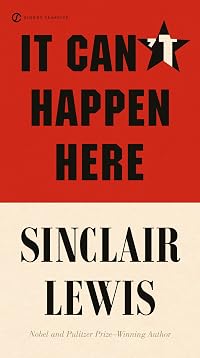

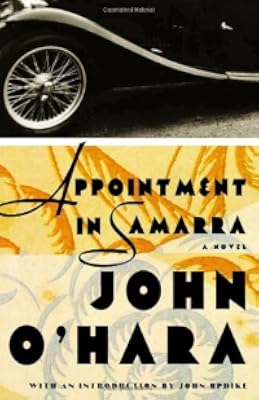

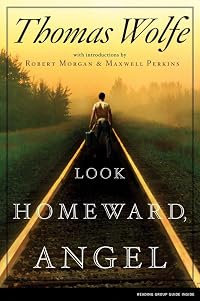
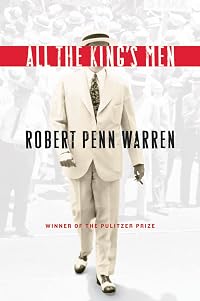









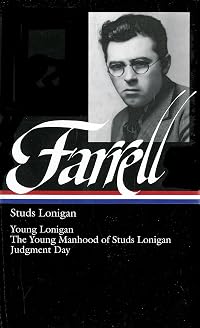
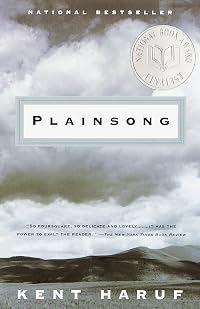

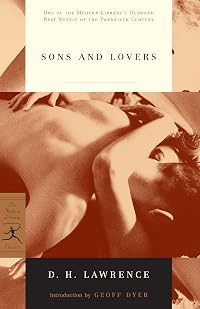

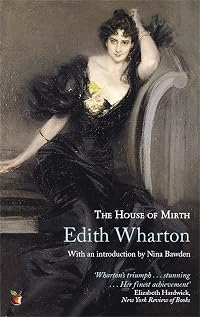



Member Recommendations



Member Reviews
For me, the slow, plodding, soporific descriptions of the town and the surrounding prairie created a real appreciation for Carol's dilemma. Carol is stuck in a man's world in the time before universal suffrage; stuck in an airless, stinky hot town in summer, blizzard-cold in winter, with no one to have a decent conversation, and being considered outrageous for wanting something more. Women in Gopher Prairie are expected to toe the line and be proud of the boorish men, and the sacrifice at times seems too great to Carol, the city girl married to a country doctor. Surrounded by gossips who critique every move she makes, it's no wonder Carol struggles to make a home for herself in GP. And yet, the descriptions of Will, her husband, show more especially when he on several occasions goes to the city with her and genuinely tries to make her happy, tries to understand her frustrations, bring a balance to this tale of married misfits. Will is a very good doctor, a kind friend, a patient husband. And that's the problem. There's nothing concrete for Carol to rebel against. He clearly adores her, and he can't understand why his beloved 'GP' is not enough for her when it makes him so happy. The reader gets a balanced view of both sides of the marriage. Less balanced is Lewis's politics. Despite being set in the late 1910s and with some antiquated terminology, much of the rhetoric about Republican politics, immigrants, Christianity, money, socialism, and the judgement of women, is just as relevant today. The self-righteous Republican Christians who acquire money and try to avoid taxes, criticise immigrants and socialists, criticise anyone who doesn't agree with their perspective is as fresh and biting now as then. No one in this 2016 US election period could read about the arrival in town of Mr Blausser "red-faced, red eyed, heavy fisted, slightly belching - a born leader, divinely intended to be a congressman but deflected to the more lucrative honors of real-estate" without a shudder. Carol shudders, too. "He was a layer-on of hands. He never came to the house without trying to paw her. He touched her arm, he let his fist brush her side. She hated the man, and she was afraid of him". Worst of all, she wonders if she is in some way responsible for his unwelcome advances. Perhaps, she worries, he pays her attention because she has let her reputation slip by being too friendly with the effeminate Erik, giving Blausser licence to paw her and blow on her neck. The real tragedy of 'Main Street' is that very little has changed in 100 years. show less
I set a goal to read at least one classic book each month. This was my choice for July, as it overlapped with research interests in the period.
Carol is a liberal, proudly-literate young woman of Minneapolis who marries a doctor and ends up in the small town of Gopher Prairie. She thinks she's going to reform and enlighten the entire town--indeed, even raze Main Street to the ground and rebuild it Georgian-style. Young and naive as she is, she is genuinely shocked and hurt by her reception by the town's well-established cliques who have zero desire to change. Again and again, she tries to make friends and to fight through the enraging mindless boredom of what it means to be a doctor's wife in a small town, where she's supposed to be show more satisfied with her life of comfort and strain neither her body or mind. Again and again, she fails, becoming increasingly dissatisfied in her marriage and everything that is embodied by Main Street.
My gosh, but Lewis can write. His Babbit impressed me, but Main Street delves deep into the very psychology of a small town. He shows the full ranges of personalities, the social stratification, and the petty, horrible gossip that is the primary hobby for many. Even more, he goes deep into Carol's psychology. He totally gets how it feels to be a woman stuck at home, bored mindless, and afraid of staying in that dread loneliness forevermore; many modern male writers can't do justice to that despair, but Lewis did, and in the 1920s. I also appreciate how his nuanced portrayal doesn't make Carol into a martyr (though she does feel like that at times). Quite often, Carols brings trouble upon herself, but by keeping the point of view with her the majority of the time, we can still sympathize (even if we kinda wanna slap her).
The book also acts like a camera to depict life in a small town on the Minnesota prairie through the 1920s. That means camaraderie, at times, but it also means outright sexism and racism. While minstrel shows and playing at being Chinese get brief mentions, the most blatant racism throughout is the social and racial line between the Anglo-Saxon town elite and the Nordic and Germanic people who make up the common laborers and farmers. Carol is the only one willing to cross those lines--becoming friends with 'the help'--because of her deep loneliness, and it sadly perpetuates the cycle for her. Her efforts to stand up for the newly-arrived artistic sissy--so derided by the manly-men of town, they call him by a woman's name--don't end well, either.
This is truly a masterful read, a rare classic that holds up due to the skill of its writing. I don't often like literary fiction, and many of the subjects here would immediately make me stop reading other books. But Lewis handled everything with such a deft hand, I felt as anxious at times as I might if I read a modern thriller. Mind you, other readers might not feel that way, but I strongly related to Carol in her isolation, and that made this a surprisingly quick read for me. show less
Carol is a liberal, proudly-literate young woman of Minneapolis who marries a doctor and ends up in the small town of Gopher Prairie. She thinks she's going to reform and enlighten the entire town--indeed, even raze Main Street to the ground and rebuild it Georgian-style. Young and naive as she is, she is genuinely shocked and hurt by her reception by the town's well-established cliques who have zero desire to change. Again and again, she tries to make friends and to fight through the enraging mindless boredom of what it means to be a doctor's wife in a small town, where she's supposed to be show more satisfied with her life of comfort and strain neither her body or mind. Again and again, she fails, becoming increasingly dissatisfied in her marriage and everything that is embodied by Main Street.
My gosh, but Lewis can write. His Babbit impressed me, but Main Street delves deep into the very psychology of a small town. He shows the full ranges of personalities, the social stratification, and the petty, horrible gossip that is the primary hobby for many. Even more, he goes deep into Carol's psychology. He totally gets how it feels to be a woman stuck at home, bored mindless, and afraid of staying in that dread loneliness forevermore; many modern male writers can't do justice to that despair, but Lewis did, and in the 1920s. I also appreciate how his nuanced portrayal doesn't make Carol into a martyr (though she does feel like that at times). Quite often, Carols brings trouble upon herself, but by keeping the point of view with her the majority of the time, we can still sympathize (even if we kinda wanna slap her).
The book also acts like a camera to depict life in a small town on the Minnesota prairie through the 1920s. That means camaraderie, at times, but it also means outright sexism and racism. While minstrel shows and playing at being Chinese get brief mentions, the most blatant racism throughout is the social and racial line between the Anglo-Saxon town elite and the Nordic and Germanic people who make up the common laborers and farmers. Carol is the only one willing to cross those lines--becoming friends with 'the help'--because of her deep loneliness, and it sadly perpetuates the cycle for her. Her efforts to stand up for the newly-arrived artistic sissy--so derided by the manly-men of town, they call him by a woman's name--don't end well, either.
This is truly a masterful read, a rare classic that holds up due to the skill of its writing. I don't often like literary fiction, and many of the subjects here would immediately make me stop reading other books. But Lewis handled everything with such a deft hand, I felt as anxious at times as I might if I read a modern thriller. Mind you, other readers might not feel that way, but I strongly related to Carol in her isolation, and that made this a surprisingly quick read for me. show less
I had a copy of this book for decades and had no idea what it was actually about. I'd recently gone through a kick of reading books vitally pertaining to the disturbing recent developments in geopolitics (Empire of Ai; Understanding Hamas; Palestine in Israeli Schoolbooks). Heavy reading after which I decided, as respite, to read a random book from my collection in order to "change rails" and distract myself while my attention was held. Imagine my surprise that this masterpiece from well over a hundred years ago was so completely in line with recent reading material.
"Main Street" is about the American Midwest just after the turn-of-the-previous century. It contrasts the idealistic sophistication of the protagonist with the mindset of show more upper-middle-class (but also, to a lesser extent, lower and working-class) small-town Americans. You realize early-on that not as much has changed as we might think. Male dominance, petty vindictiveness, pretentious snobbery, and religious fanaticism, bolstered by an unwillingness to even attempt to understand, predominated as much then as now. Opportunism was the name of the game as people bought up and rapidly developed their individualistic fiefdoms. A sanctified relentlessness permeates every aspect of life in this scenario Lewis portrays. This is contrasted with ideas of socialism, cultural respect, and tolerance that I found quite surprising, even shocking, coming from a book of its vintage. There are even references to sexual ambiguity that made me wonder if I wasn't reading something written a lot more recently. The term "cis" is used, which is pretty unbelievable.
It is obvious that Sinclair Lewis had a keen, first-hand eye for bourgeois travesty, the environmental beauty of a society coming into fully-developed being with isolated moments of intimacy and affection. I imagined a place that could just as easily have been my city (Winnipeg). It was all probably like a newly erected suburb with sapling trees and lots of clapboard lacking a sense of permanence, but nevertheless filled with extremely entitled people. As I said, not much has changed.
A fascinating psychological study, over a century ahead of its time. show less
"Main Street" is about the American Midwest just after the turn-of-the-previous century. It contrasts the idealistic sophistication of the protagonist with the mindset of show more upper-middle-class (but also, to a lesser extent, lower and working-class) small-town Americans. You realize early-on that not as much has changed as we might think. Male dominance, petty vindictiveness, pretentious snobbery, and religious fanaticism, bolstered by an unwillingness to even attempt to understand, predominated as much then as now. Opportunism was the name of the game as people bought up and rapidly developed their individualistic fiefdoms. A sanctified relentlessness permeates every aspect of life in this scenario Lewis portrays. This is contrasted with ideas of socialism, cultural respect, and tolerance that I found quite surprising, even shocking, coming from a book of its vintage. There are even references to sexual ambiguity that made me wonder if I wasn't reading something written a lot more recently. The term "cis" is used, which is pretty unbelievable.
It is obvious that Sinclair Lewis had a keen, first-hand eye for bourgeois travesty, the environmental beauty of a society coming into fully-developed being with isolated moments of intimacy and affection. I imagined a place that could just as easily have been my city (Winnipeg). It was all probably like a newly erected suburb with sapling trees and lots of clapboard lacking a sense of permanence, but nevertheless filled with extremely entitled people. As I said, not much has changed.
A fascinating psychological study, over a century ahead of its time. show less
'That's what I'll do after college! I'll get my hands on one of these prairie towns and make it beautiful.'
By sally tarbox on 27 April 2013
Format: Paperback
When idealistic young graduate Carol Milford - disenchanted with her career in a city library - consents to marry Dr Kennicott and move out to the small town of Gopher Prairie, she imagines she will be able to use her taste and education to 'improve' her dull and unattractive new home. Lobbying for better buildings; starting a drama group; mixing with the lower classes... But people don't always want to be patronised and improved; indeed many (including the Doctor) are perfectly content with life as it is.
The reader increasingly feels Carol 'champing at the bit' in her provincial show more home:
'Gopher Prairie with its celebrated eleven miles of cement walk...I wonder how much of the cement is made out of the tombstones of John Keatses?'
Whether Carol can accept smalltown life for what it is or continues to fight against it made for a highly readable novel. show less
By sally tarbox on 27 April 2013
Format: Paperback
When idealistic young graduate Carol Milford - disenchanted with her career in a city library - consents to marry Dr Kennicott and move out to the small town of Gopher Prairie, she imagines she will be able to use her taste and education to 'improve' her dull and unattractive new home. Lobbying for better buildings; starting a drama group; mixing with the lower classes... But people don't always want to be patronised and improved; indeed many (including the Doctor) are perfectly content with life as it is.
The reader increasingly feels Carol 'champing at the bit' in her provincial show more home:
'Gopher Prairie with its celebrated eleven miles of cement walk...I wonder how much of the cement is made out of the tombstones of John Keatses?'
Whether Carol can accept smalltown life for what it is or continues to fight against it made for a highly readable novel. show less
I love books where I'm not sure how I'm 'supposed' to feel about a character, because that usually means the characters are fully realized creations and not stereotypes. It also often means I have some examining of my own personality and choices to do.... In Main Street, I found myself simultaneously irritated by, sympathetic to and identifying with Carole as she struggles to adapt to life and marriage in a small Minnesota town. Even though this was set around 100 years ago, there was much to recognize of today in the attitudes of the main characters. The reformer who doesn't bother to learn about the place she's trying to reform, the small town gossip who provides a sympathetic ear and then repeats everything you say, the parent who show more refuses to believe a single bad word about her baby...the list goes on. While this probably isn't the book you'd turn to if you're looking for a ripping plot (very little really happens) its a slice of life from the past that still resonates today. show less
I must admit to having trouble seeing this book through. Although I identified Carol's struggles, her socialist and feminist ideals, her inner and personal battles, I found the novel slow, even sluggish - which I suppose was the point. Main Street has an inertia, resistance to change and conformism which swallows and engulfs... for nearly 500 pages. Miles' defeat and Valborg's success are foils that show just how deeply Carol has been enveloped to the point that she wasn't even able to rebuild her life in Washington. The last lines are so pathetic that there's nothing left but to pity Carol. A harsh critique which does not leave much room for hope.
Scathing.
Carol is a university student in St. Paul, Minnesota in the early 1900s. She doesn't want to just settle for getting married to some boring guy who won't understand her desire to do something, to make a mark. (She reminded me a bit of George Bailey from It's a Wonderful Life here in the beginning.) She meets Dr. Will Kennicott, and they seem to have a meeting of the minds. He lives in Gopher Prairie, a small town, but surely being a doctor's wife will be fulfilling? All that prestige and excitement, and then their good conversations at home?
Gopher Prairie could have been any town in the US at the time the book was written - towns with a railroad station and sturdy unimaginative buildings, filled with sturdy and unimaginative show more people. It could still be many towns across the country today, and a lot larger ones these days, as they have become interchangeable plots of mini-malls that blend into each other along the highway. Is this the chain coffee shop/grocery store/sandwich shop complex in my city, or yours? Some aspects of the issues that Carol faces are dated, but I thought that far too many of them were just as relevant now, unfortunately. If you live in a small enough town, people still notice where you go, who you talk to, and they gossip about it when you fail to meet some standard of town behavior - those aspects of human nature will probably never change. Carol's attempts to convince the townspeople, to rebel against them, to ignore them, to make nice, all have a sort of futility that anyone can understand who's ever been in a difficult situation where every effort to create a sustainable change in either your environment or your own attitude about it seems to fail.
In many ways, I felt like what made this a difficult read was the feeling that all of this was new when Lewis was writing about it, and now we are just that much further down the path. Not only has not much changed, most of it has only intensified.
Recommended for: people from small towns, square pegs.
Quote: "The universal similarity - that is the physical expression of the philosophy of dull safety. Nine-tenths of the American towns are so alike that it is the completest boredom to wander from one to another. Always, west of Pittsburgh, and often, east of it, there is the same lumber yard, the same railroad station, the same Ford garage, the same creamery, the same box-like houses and two-story shops. The new, more conscious houses are alike in their very attempts at diversity: the same bungalows, the same square houses of stucco or tapestry brick. The shops show the same standardized, nationally advertised wares; the newspapers of sections three thousand miles apart have the same "syndicated features"; the boy in Arkansas displays just such a flamboyant ready-made suit as is found on just such a boy in Delaware, both of them iterate the same slang phrases from the same sporting-pages, and if one of them is in college and the other is a barber, no one may surmise which is which." show less
Carol is a university student in St. Paul, Minnesota in the early 1900s. She doesn't want to just settle for getting married to some boring guy who won't understand her desire to do something, to make a mark. (She reminded me a bit of George Bailey from It's a Wonderful Life here in the beginning.) She meets Dr. Will Kennicott, and they seem to have a meeting of the minds. He lives in Gopher Prairie, a small town, but surely being a doctor's wife will be fulfilling? All that prestige and excitement, and then their good conversations at home?
Gopher Prairie could have been any town in the US at the time the book was written - towns with a railroad station and sturdy unimaginative buildings, filled with sturdy and unimaginative show more people. It could still be many towns across the country today, and a lot larger ones these days, as they have become interchangeable plots of mini-malls that blend into each other along the highway. Is this the chain coffee shop/grocery store/sandwich shop complex in my city, or yours? Some aspects of the issues that Carol faces are dated, but I thought that far too many of them were just as relevant now, unfortunately. If you live in a small enough town, people still notice where you go, who you talk to, and they gossip about it when you fail to meet some standard of town behavior - those aspects of human nature will probably never change. Carol's attempts to convince the townspeople, to rebel against them, to ignore them, to make nice, all have a sort of futility that anyone can understand who's ever been in a difficult situation where every effort to create a sustainable change in either your environment or your own attitude about it seems to fail.
In many ways, I felt like what made this a difficult read was the feeling that all of this was new when Lewis was writing about it, and now we are just that much further down the path. Not only has not much changed, most of it has only intensified.
Recommended for: people from small towns, square pegs.
Quote: "The universal similarity - that is the physical expression of the philosophy of dull safety. Nine-tenths of the American towns are so alike that it is the completest boredom to wander from one to another. Always, west of Pittsburgh, and often, east of it, there is the same lumber yard, the same railroad station, the same Ford garage, the same creamery, the same box-like houses and two-story shops. The new, more conscious houses are alike in their very attempts at diversity: the same bungalows, the same square houses of stucco or tapestry brick. The shops show the same standardized, nationally advertised wares; the newspapers of sections three thousand miles apart have the same "syndicated features"; the boy in Arkansas displays just such a flamboyant ready-made suit as is found on just such a boy in Delaware, both of them iterate the same slang phrases from the same sporting-pages, and if one of them is in college and the other is a barber, no one may surmise which is which." show less
Members
- Recently Added By
Published Reviews
ThingScore 100
Ninety years after publication, Sinclair Lewis’s Main Street still resonates with readers ... The book became an immediate sensation. Biographer Mark Schorer called its publication “the most sensational event in twentieth-century American publishing history.” ... Lewis found a way to appeal to both those who were nostalgic for small town America and those who were dissatisfied with it.
added by tim.taylor
Lists

1001 Books You Must Read Before You Die
1,448 works; 1,133 members

The Guardian's 1000 Novels Everyone Must Read
1,005 works; 550 members

Classics you know you should have read but probably haven't
421 works; 408 members

Radcliffe's 100 Best Novel of the 20th Century
100 works; 32 members

Unread books
1,063 works; 87 members

Great American Novels
158 works; 40 members
20th Century Literature
1,161 works; 55 members

Favourite Books
1,817 works; 310 members
In and About the 1920s
181 works; 31 members

Recommend the 20 best books you've read in the last five years
2,168 works; 606 members
Novels from The Guardian's Great American Novelist Tournament
148 works; 24 members

Female Protagonist
1,056 works; 57 members

Best 20th Century Books as of 1924
100 works; 6 members
Out of Copyright
244 works; 14 members

Blue Pyramid 1,276 Best Books of All Time
1,248 works; 32 members

One Book, Many Authors
441 works; 40 members

Best family sagas
244 works; 32 members
The American Experience
173 works; 18 members
1,001 BYMRBYD Concensus
723 works; 27 members
The Modern Library's 100 Best Novels: The Board's List
85 works; 6 members

Favorite Sinclair Lewis Novels
10 works; 3 members
Small Town Fiction
66 works; 13 members

discontinued
10 works; 4 members
1920s
141 works; 6 members

Books Read in 2016
4,666 works; 197 members

Willoyd's Tour of the USA
25 works; 1 member
Books Set in Small Towns and Villages
278 works; 16 members

Five star books
1,755 works; 108 members

1964 College Preparatory Reading List
202 works; 8 members

AP Lit
363 works; 6 members

Mustich's 1000 Books to Read Before You Die: A Life Changing List
1,001 works; 19 members

Publisher's Weekly Bestsellers Part I - 1895-1939
399 works; 8 members

Recommended Reading : 600 Classics Reviewed, Editors of Salem Press, 2015
634 works; 6 members

Classics Reading List
16 works; 1 member
Modern Library's 100 Best Novels
100 works; 2 members

Favorite Long Books
330 works; 41 members
Author Information

126+ Works 22,976 Members
Harry Sinclair Lewis was born on February 7, 1885 in Minnesota. He was an American novelist, short-story writer, and playwright. In 1930, he became the first writer from the United States to receive the Nobel Prize in Literature. A lonely child, Lewis immersed himself in reading and diary writing. While studying at Yale University and living in show more writer Upton Sinclair's communal house, he wrote for Yale Literary Magazine and helped to build the Panama Canal. After graduating from Yale in 1908, Lewis began writing fiction, publishing 22 novels by the end of his career. His early works, while often praised by literary critics, did not reach popularity but with Main Street (1920), Babbitt (1922), Arrowsmith (1925), Elmer Gantry (1927), and Dodsworth (1929), Sinclair Lewis achieved fame as a writer. His style of choice was satire; he explored American small-town life, conformity, hypocrisy, and materialism. Sinclair Lewis was married and divorced twice. As his career wound down, he spent his later life in Europe and died in Rome on January 10, 1951. (Bowker Author Biography) show less
Some Editions
Awards and Honors
Distinctions
Notable Lists
Series
Belongs to Publisher Series
Work Relationships
Is contained in
100 Books You Must Read Before You Die (Genuine List): How many have you read? (Kindle) by Fei Yang (indirect)
Sinclair Lewis Boxed Set – 16 titles in One Volume: Babbitt, Main Street, The Trail of the Hawk, Moths in the Arc Light, Nature, Inc., The Cat of the Stars and more by Sinclair Lewis
Is parodied in
Has as a reference guide/companion
Common Knowledge
- Canonical title
- Main Street
- Original title
- Main Street: The Story of Carol Kennicott
- Original publication date
- 1920-10-23
- People/Characters
- Carol Milford; Will Kennicott; Hugh Kennicott; Percy Breshenan; Sam; Oscarina (show all 7); Bea
- Important places
- Sauk Centre, Minnesota, USA; Gopher Prairie, Minnesota, USA; Great Plains, USA; Minneapolis, Minnesota, USA; Washington, D.C., USA
- Related movies
- Main Street (1923 | IMDb); I Married a Doctor (1936 | IMDb)
- Dedication
- To
James Branch Cabell
and
Joseph Hergesheimer - First words
- On a hill by the Mississippi where Chippewas camped two generations ago, a girl stood in relief against the cornflower blue of Northern sky.
This is America - a town of a few thousand, in a region of wheat and corn and dairies and little groves.
Main Street (1920) was Sinclair Lewis's first great success in the novel. (Afterword) - Quotations
- She had her freedom, and it was empty.
Not a matter of heroism. Matter of endurance...There's one attack you can make on it, perhaps the only kind that accomplishes anything anywhere; you can keep on looking at one thing after another in your home and church and b... (show all)ank, and ask why it is, and who first laid down the law that it had to be that way. If enough of us do this impolitely enough, then we'll become civilized in merely twenty thousand years or so, instead of having to wait the two hundred thousand years that my cynical anthropologist friends allow...easy, pleasant, lucrative home-work for wives: asking people to define their jobs. That's the most dangerous doctrine I know!
The tragedy of old age, which is not that it is less vigorous than youth, but that it is not needed by youth; that its love and prosy sageness, so important a few years ago, so gladly offered now, are rejected with laughter. - Last words
- (Click to show. Warning: May contain spoilers.)["]Say, did you notice whether the girl put that screwdriver back?"
(Click to show. Warning: May contain spoilers.)This is the reality. (Afterword) - Blurbers
- Geismar, Maxwell; Galsworthy, John
- Original language
- English
- Disambiguation notice
- Main Street was written by Sinclair Lewis, not Upton Sinclair, so you might want to correct the author on your book page. Thank you.
Classifications
Statistics
- Members
- 4,521
- Popularity
- 3,244
- Reviews
- 79
- Rating
- (3.76)
- Languages
- 11 — Czech, Dutch, English, Estonian, French, German, Italian, Romanian, Russian, Spanish, Swedish
- Media
- Paper, Audiobook, Ebook
- ISBNs
- 195
- UPCs
- 1
- ASINs
- 146