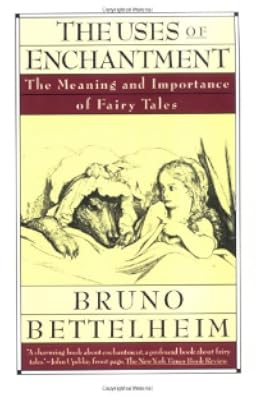
The Uses of Enchantment: The Meaning and Importance of Fairy Tales
by Bruno Bettelheim
On This Page
Description
Bruno Bettelheim was one of the great child psychologists of the twentieth century and perhaps none of his books has been more influential than this revelatory study of fairy tales and their universal importance in understanding childhood development. Analyzing a wide range of traditional stories, from the tales of Sinbad to "The Three Little Pigs," "Hansel and Gretel," and "The Sleeping Beauty," Bettelheim shows how the fantastical, sometimes cruel, but always deeply significant narrative show more strands of the classic fairy tales can aid in our greatest human task, that of finding meaning for one's life. show lessTags
Recommendations
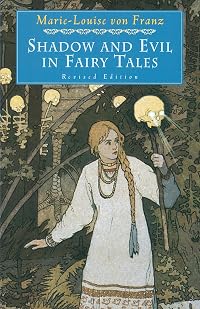
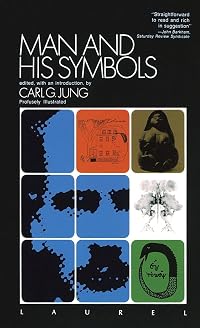

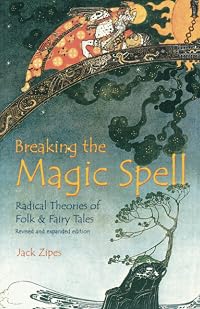
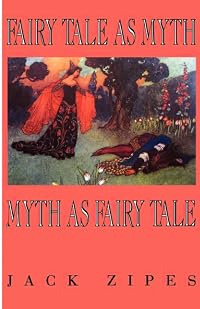



Member Recommendations

Vintage Fear: " The Complete Fairy Tales " , " The Bloody Chamber " (Vintage Classic Twins) by Jacob Grimm
Sibylle.Night Carter's book in theory, very interesting and easy to read.
Member Reviews
Bettelheim makes several claims in this book which are supposed to apply to all children, and therefore can be exploded by a single child behaving in a way incompatible with his model. His most important theory -- the titular "meaning and importance of fairy tales" -- is that children hear fairy tales allegorically, as narratives of the ego gaining control over the id and the individual progressing from a lesser stage of emotional development to a greater. Therefore, they do not have sympathy for villains of stories who are tortured to death, or for supporting characters killed in the course of the story (the reference cases for these two being "The Three Little Pigs," with the two younger pigs eaten by the wolf and the wolf boiled show more alive by the oldest pig); nor do they identify with the villain of a story, nor do they easily identify with a hero or heroine of the opposite sex. Based on my personal experience, all of these statements are false by the time a child is about four years old; I would go further and say that anyone not capable of feeling sympathy for a wolf boiled alive or a witch burned at the stake or a stepmother rolled down a hill in a barrel full of nails, together with anger at those who perpetrate such things, is a brute.
The message Bettelheim claims to see in fairy tales would be a dangerous one even if it was fully reliable. The message he claims is present is that the integration of the id, ego, and superego means not just that the individual has himself under control, but that he is invincible, at least symbolically "the right person for the highest office on Earth" (p. 102, on the subject of the Grimms' "The Three Languages"). The resultant "psychology of invincibility" -- the conviction that the person will always succeed, or deserves to succeed -- is one which the events of life do not respect, and which can turn out very poorly for the one who holds this mentality; for an extreme case of this self-destructiveness (aided and abetted by another product of this sort of socialization, an inability to sympathize with one's opponent or antagonist), see Achilles in Vietnam: Combat Trauma and the Undoing of Character.
Additionally, there are problems with holding up Bettelheim as a major figure in psychoanalysis. Bettelheim had a doctorate in art, not psychology -- he lied about his credentials. Moreover, this book contains plagiarism; another reviewer mentions Julius Huescher's A Psychiatric Study of Myths and Fairy Tales; Their Origin, Meaning, and Usefulness as a 'source'. Can someone who lies about his credentials and plagiarizes other writers really be trusted to do accurate psychiatric analysis?
His personal demons were probably the driving force behind a lot of his analysis, as they were for Freud himself (and for Jung). Some of these demons were eminently excusable -- he spent a year in Buchenwald -- but others were much less so, and all of them damaged the clarity of his reasoning and thought.
If you're considering reading the book to get the message that telling fairy tales to children is better than not telling them, then be aware that it is, and you don't need a long book of Freudian theory to prove it. Fiction gives its reader data about life experiences without requiring them to have lived through such experiences themselves, and makes the analysis of these experiences easier because the reader has a full picture of what's occurring and a certain measure of emotional distance from the events; and this is just as true for children as it is for adults. Don't buy the book just to learn that... and don't buy the book in general, since its author is unreliable, and its theory both self-sabotaging and inaccurate.
(Review also posted on Amazon.com.) show less
The message Bettelheim claims to see in fairy tales would be a dangerous one even if it was fully reliable. The message he claims is present is that the integration of the id, ego, and superego means not just that the individual has himself under control, but that he is invincible, at least symbolically "the right person for the highest office on Earth" (p. 102, on the subject of the Grimms' "The Three Languages"). The resultant "psychology of invincibility" -- the conviction that the person will always succeed, or deserves to succeed -- is one which the events of life do not respect, and which can turn out very poorly for the one who holds this mentality; for an extreme case of this self-destructiveness (aided and abetted by another product of this sort of socialization, an inability to sympathize with one's opponent or antagonist), see Achilles in Vietnam: Combat Trauma and the Undoing of Character.
Additionally, there are problems with holding up Bettelheim as a major figure in psychoanalysis. Bettelheim had a doctorate in art, not psychology -- he lied about his credentials. Moreover, this book contains plagiarism; another reviewer mentions Julius Huescher's A Psychiatric Study of Myths and Fairy Tales; Their Origin, Meaning, and Usefulness as a 'source'. Can someone who lies about his credentials and plagiarizes other writers really be trusted to do accurate psychiatric analysis?
His personal demons were probably the driving force behind a lot of his analysis, as they were for Freud himself (and for Jung). Some of these demons were eminently excusable -- he spent a year in Buchenwald -- but others were much less so, and all of them damaged the clarity of his reasoning and thought.
If you're considering reading the book to get the message that telling fairy tales to children is better than not telling them, then be aware that it is, and you don't need a long book of Freudian theory to prove it. Fiction gives its reader data about life experiences without requiring them to have lived through such experiences themselves, and makes the analysis of these experiences easier because the reader has a full picture of what's occurring and a certain measure of emotional distance from the events; and this is just as true for children as it is for adults. Don't buy the book just to learn that... and don't buy the book in general, since its author is unreliable, and its theory both self-sabotaging and inaccurate.
(Review also posted on Amazon.com.) show less
The Uses of Enchantment is a really enjoyable read, and it really gets you thinking! Bettelheim proposes that fairy tales are socially evolved stories that help children work through the many psychological struggles of childhood, and that the violence and dark themes that have been gradually removed from them are an essential part of what makes them popular with and, useful for children. He comes at his argument from a Freudian, psychoanalytical approach to child psychology, which can seem a bit old fashioned and dramatic, but that doesn’t take away from the interesting ideas the book raises. As a fan of old fairy tales, it’s satisfying to hear them defended in all their gore and pessimism against the sunny, positive children’s show more literature that is more popular today. show less
This book is really more about psychology and child development than fairy tales, but it turns out fairy tales are a pretty cool means by which to learn about psychoanalysis and such not. Bettelheim makes the case that fairy tales aren't just fun for children, but that they help them face the subconscious fears, conflicts and ambivalence that a child would be otherwise unable to understand or cope with. A lot of his insight to child development and how fairy tales can reflect childhood crises and help children learn how to deal in real life was brilliant. His analysis of specific fairy tales was a lot more hit or miss.
I'm not someone that thinks the fairy tales were written with some intentional deeper meaner. That doesn't mean I don't show more think they can't have deeper meanings, or even a specific deeper meaning. But when that's the case I expect it's the product of hundreds of years of storytellers and audiences unconsciously editing and re-editing stories to settle on the version that resonated most deeply. And the fact that I do think some fairy tales do seem to have a specific meaning doesn't mean someone that finds another meaning in it is wrong. These are personal things, if someone finds something there that isn't there for me I am not the arbiter of their experience and I certainly can't dismiss their reactions.
That said, a notable chunk of Bettelheim's analysis is more a demonstration of a psychoanalyst's ability to find cock everywhere than it is about what anyone else is going to see. This can be pretty ridiculous and entertaining. It can also get stupid and sexist. I'm not saying everytime Bettelheim offers a sexual interpretation its bullshit. I'm just saying keep your psychoanalysis filters up.
Highlights!
"The magic formula "up stick and at it" suggests phallic associations, as does the fact that only this new acquisition permits Jack to hold his own in relation to his father..."
"Thus the expulsion from the infant paradise begins; it continues with the mother's deriding Jack's belief in the magic power of his seeds. The phallic beanstalk permits Jack to engage in oedipal conflict with the ogre..."
"it does not take much imagination to see the possible sexual connotations in the distaff..."
"So dwarfs are eminently male, but males who are stunted in their development. These "little men" with their stunted bodies and their mining occupation--they skillfully penetrate into dark holes--all suggest phallic connotations."
"A small locked room often stands in dreams for the female sexual organs; turning a key in a lock often symbolizes intercourse."
"She selects him because he appreciates her "dirty" sexual aspects, lovingly accepts her vagina in the form of a slipper, and approves of her desire for a penis, symbolized by her tiny foot fitting within the slipper-vagina."
"The bride stretches out one of her fingers for the groom to slip a ring onto it. Pushing one finger through a circle made out of the thumb and index finger of the hand is a vulgar expression for intercourse...The ring, a symbol for the vagina, is given by the groom to his bride; she offers him in return her outstretched finger, so he may complete the ritual."
"...he will gain a golden vagina, she a temporary penis." show less
I'm not someone that thinks the fairy tales were written with some intentional deeper meaner. That doesn't mean I don't show more think they can't have deeper meanings, or even a specific deeper meaning. But when that's the case I expect it's the product of hundreds of years of storytellers and audiences unconsciously editing and re-editing stories to settle on the version that resonated most deeply. And the fact that I do think some fairy tales do seem to have a specific meaning doesn't mean someone that finds another meaning in it is wrong. These are personal things, if someone finds something there that isn't there for me I am not the arbiter of their experience and I certainly can't dismiss their reactions.
That said, a notable chunk of Bettelheim's analysis is more a demonstration of a psychoanalyst's ability to find cock everywhere than it is about what anyone else is going to see. This can be pretty ridiculous and entertaining. It can also get stupid and sexist. I'm not saying everytime Bettelheim offers a sexual interpretation its bullshit. I'm just saying keep your psychoanalysis filters up.
Highlights!
"The magic formula "up stick and at it" suggests phallic associations, as does the fact that only this new acquisition permits Jack to hold his own in relation to his father..."
"Thus the expulsion from the infant paradise begins; it continues with the mother's deriding Jack's belief in the magic power of his seeds. The phallic beanstalk permits Jack to engage in oedipal conflict with the ogre..."
"it does not take much imagination to see the possible sexual connotations in the distaff..."
"So dwarfs are eminently male, but males who are stunted in their development. These "little men" with their stunted bodies and their mining occupation--they skillfully penetrate into dark holes--all suggest phallic connotations."
"A small locked room often stands in dreams for the female sexual organs; turning a key in a lock often symbolizes intercourse."
"She selects him because he appreciates her "dirty" sexual aspects, lovingly accepts her vagina in the form of a slipper, and approves of her desire for a penis, symbolized by her tiny foot fitting within the slipper-vagina."
"The bride stretches out one of her fingers for the groom to slip a ring onto it. Pushing one finger through a circle made out of the thumb and index finger of the hand is a vulgar expression for intercourse...The ring, a symbol for the vagina, is given by the groom to his bride; she offers him in return her outstretched finger, so he may complete the ritual."
"...he will gain a golden vagina, she a temporary penis." show less
Very interesting and thought-provoking Freudian analysis of classic fairy tales. Used as a textbook in my Critical Theory class on psychoanalyzing fairy tales. I don't agree with everything Bettelheim professes, but it is cool to look at these classic stories in a way I haven't before.
I'm not sure what to do with this book. I... love it? But also it's a load of hogwash cooked up by a charlatan?
With an illuminative power that startles and delights, the author opens up to us the real content of the great fairy tales. how, beneath their surface of palaces and princesses, fairies and witches, wishes and spells, they deal in the profoundest ways with the emotional turmoils of childhood . . .
Fascinating book that explains a great deal. I'd shorten by about half, dropping all the Freudian interpretations, but if you put your psychoanalytic filter on before you read it, it makes a lot of sense. Every parent should read this book.
Members
- Recently Added By
Lists

New York Public Library's Books of the Century
120 works; 20 members

Academic Studies of Fairy Tales and Folklore
28 works; 6 members

New York Public Library's Books of the Century - All
170 works; 14 members

Psicología - Clásicos
165 works; 2 members

Best books read in 2011
200 works; 51 members

Literary Works Read in College
316 works; 15 members

Works That Inspired Disney Movies
119 works; 13 members

National Book Award winners
65 works; 11 members

Tom's Bookstore
346 works; 2 members

Books You Read For University
184 works; 3 members
Author Information

70+ Works 5,763 Members
Bruno Bettelheim had remarkable success in treating deeply emotionally disturbed children. A pupil of Sigmund Freud, he was a vehement opponent of the operant conditioning methods of B. F. Skinner and other behaviorists. Austrian-born, Bettelheim came to the United States in 1939. Profoundly influenced by the year he spent in a German show more concentration camp during World War II, he reflects in his writings his sensitivity and knowledge of the fear and anxiety induced under such conditions. His famous Individual and Mass Behavior (1943), first published in a scientific periodical and then in pamphlet form, is a study of the human personality under the stress of totalitarian terror and concentration-camp living. Bettelheim sees a relationship between the disturbances of the concentration camp survivors and those of the autistic, or rigidly withdrawn, children whom he describes in The Empty Fortress (1967), because both have lived through extreme situations. The Children of the Dream (1969) describes with considerable enthusiasm the absence of neurosis in children brought up on kibbutzim in Israel in groups of other children and cared for by adults who are not their parents. Bettelheim believes that American ghetto children would benefit from this kind of experience in preference to the at best partial help of present programs designed to accelerate educational progress for the deprived. From 1944 to 1973, Bettelheim served as the principal of the Sonia Shankman Orthogenic School, a residential laboratory for the treatment of disturbed children at the University of Chicago. Up until his death in 1990, Bettelheim remained active in his scholarly pursuits, continuing to write about the nurturing of healthy children and devoting himself to improving the human condition. (Bowker Author Biography) show less
Some Editions
Awards and Honors
Awards
Distinctions
Series
Belongs to Publisher Series
Work Relationships
Is replied to in
Inspired
Common Knowledge
- Canonical title*
- Il mondo incantato: uso, importanza e significati psicoanalitici delle fiabe
- Original title
- The Uses of Enchantment. The Meaning and Importance of Fairy Tales
- Original publication date
- 1976-04-06
- People/Characters
- Madame Leprince de Beaumont; Charles Perrault; Madame d'Aulnoy; Jean de La Fontaine; Scheherazade; Hansel and Gretel (show all 12); Little Red Riding Hood; Snow White; Oedipus; Goldilocks; Sleeping Beauty; Cinderella
- First words
- "Little Red Riding Hood was my first love..."
- Last words
- (Click to show. Warning: May contain spoilers.)This is one of the manifold truths revealed by fairy tales, which can guide our lives, it is a truth as valid today as it was once upon a time.
- Blurbers
- Bloom, Harold; Fiedler, Leslie; Manning, Margaret; Todd, Richard
- Original language
- English
- Disambiguation notice*
- Esta es la cuarta reimpresión de la edición española de 2006
*Some information comes from Common Knowledge in other languages. Click "Edit" for more information.
Classifications
- Genres
- Literature Studies and Criticism, Nonfiction, General Nonfiction
- DDC/MDS
- 398.45 — Society, government, & culture Customs, etiquette & folklore Folklore & Folktales Paranatural and legendary phenomena as subjects of folklore Paranormal beings of human and semihuman form
- LCC
- GR550 .B47 — Geography, Anthropology and Recreation Folklore Folklore By subject Supernatural beings, demonology, fairies, ghosts,
- BISAC
Statistics
- Members
- 3,523
- Popularity
- 4,680
- Reviews
- 33
- Rating
- (3.69)
- Languages
- 14 — Czech, Dutch, English, Estonian, Finnish, French, German, Hungarian, Italian, Polish, Serbian, Spanish, Swedish, Portuguese (Portugal)
- Media
- Paper, Audiobook, Ebook
- ISBNs
- 72
- ASINs
- 31