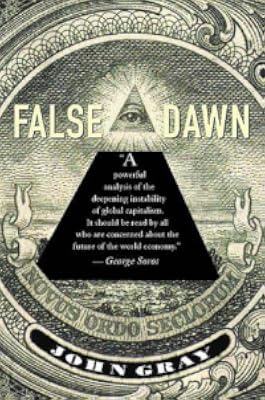
False Dawn: The Delusions of Global Capitalism
by John Gray
On This Page
Description
"In a book that effectively predicted the collapse of the Asian markets, John Gray argues that the attempt to impose the Anglo-American-style free market on the world will create a disaster on the scale of Soviet communism. Even America, the supposed flagship of the new civilization, is doomed to moral and social disintegration as it loses ground to other cultures that have never forgotten that the market works best when it is embedded in society. False Dawn is one of the most passionate show more polemics against the utopia of the free market since Carlyle and Marx. Book jacket."--Jacket. show lessTags
Recommendations
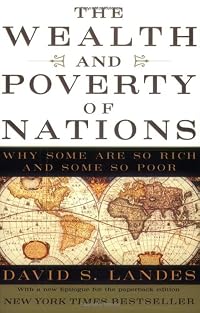
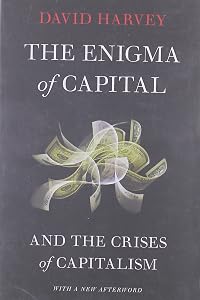
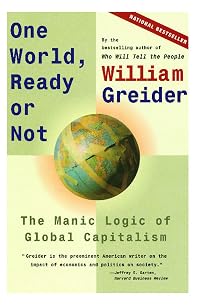
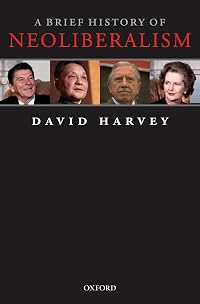

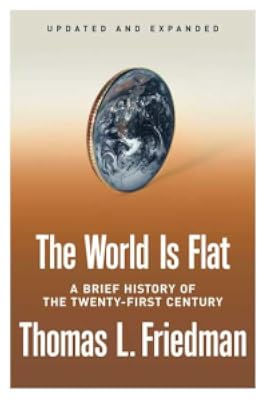
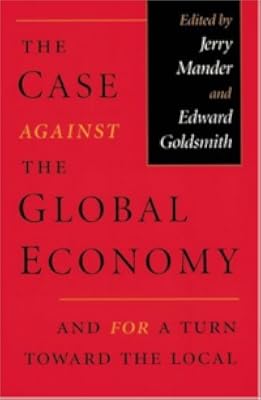
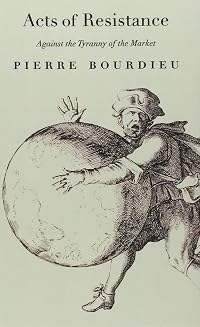
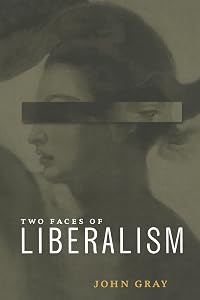
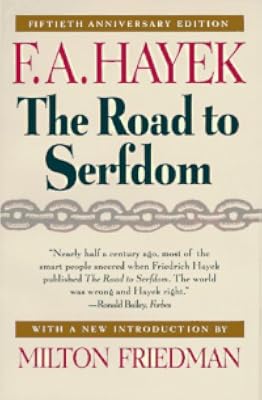
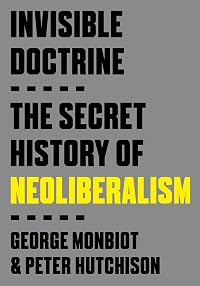
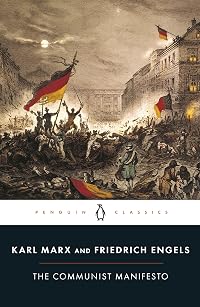
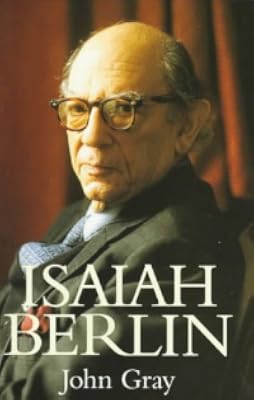

Member Recommendations
Member Reviews
Gray makes a convincing case for free market capitalism as a utopian Enlightenment project, akin to communism, imposed by true believers who ignore its consistent failings. Based on the erroneous notions that markets are self-regulating and that the state impedes capitalism rather than decriminalises it, as well as ignoring the basic human need for security, free market ideology can only be imposed globally by force and sanction - liberal economics require illiberal means of imposition.
The book's outlook is generally grim, but with justification. In crude economic terms freer markets do create more growth, but their social cost is so severe that prospects for societies that suffer under them are bleak. The economic fetish bred in such show more societies leads these policies to be pursued regardless of the human cost; the social divisions and colossal prison population of the US do not exist despite free market economic policies, but in significant part because of them. show less
The book's outlook is generally grim, but with justification. In crude economic terms freer markets do create more growth, but their social cost is so severe that prospects for societies that suffer under them are bleak. The economic fetish bred in such show more societies leads these policies to be pursued regardless of the human cost; the social divisions and colossal prison population of the US do not exist despite free market economic policies, but in significant part because of them. show less
Bit strident at first: rather too much the parti pris Jeremiad against capitalism with a touch of reification - capitalism taking on the aspect of a hated idol. Later more interesting as he starts to describe different forms of capitalism, how they are culturally and historically rooted. Excellent on the differences between Russian, Chinese and Japanese worlds ( mainly a matter of peasantry).Then the argument that US style free market capitalism is just one form and unlikely to take over the world either by natural evolution or by conquest starts to make sense.
Written in the 90s, revised as the 2008 crisis began, he falls short as a prophet; US cap came as near to crash-and-burn as it could but seems to have done a Phoenix. There is show more something appealing about his pessimism, sometimes quite wittily expressed. Good contrast with Harford's optimistic belief in the workings of rationality in daily life.
Interesting points: the US is no longer typically "Western" especially with its strong religiosity contrasting with Europe,and its incarceration rates; Communism was an alien Western import imposed on Russia and China, just as much as laisser faire capitalism. show less
Written in the 90s, revised as the 2008 crisis began, he falls short as a prophet; US cap came as near to crash-and-burn as it could but seems to have done a Phoenix. There is show more something appealing about his pessimism, sometimes quite wittily expressed. Good contrast with Harford's optimistic belief in the workings of rationality in daily life.
Interesting points: the US is no longer typically "Western" especially with its strong religiosity contrasting with Europe,and its incarceration rates; Communism was an alien Western import imposed on Russia and China, just as much as laisser faire capitalism. show less
Will Hutton is quoted on the cover of this book that "we needed a powerful challenge to the simple-minded advocates of globalisation," which is certainly true, but exactly where it leaves Gray's book, a sadly simple-minded challenge, is not clear. An original thinker Mr. Gray may be; a thorough and dispassionate one he is not. He sets his stall with an analysis of a number of experiments in free-marketism, and his especially critical of the reforms which took place in New Zealand under David Lange's Labour Government and then Jim Bolger's National one between 1984 and 1995.
I have two bones to pick with Mr. Gray's polemic: Firstly, in his entire analysis of the New Zealand situation, Mr. Gray quotes just one author, Jane Kelsey.
In any show more circumstances, that's lazy journalism, let alone academic writing. That is, unless Mr. Gray has in fact done his homework, but has been unable to find another academic to support his arguments. In which case it's disingenuo!us writing. Let's give Mr. Gray the benefit of the doubt. He's lazy.
But if he's lazy, he's also managed to have picked a rather singular commentator on whom to base his analysis. Jane Kelsey is, to put it mildly, a controversial commentator. Her views have very little subscription within New Zealand even at an academic level, let alone on the high-street. That Mr. Gray feels compelled to take Kelsey's word as gospel, while ignoring everyone else's, is nothing short of dumbfounding.
My second objection is personal: I was there, in New Zealand, the entire time the social revolution took place. Mr. Gray was, obviously, not. He patently has no experience of the New Zealand experiment outside Ms Kelsey's writings on the subject. The most stunning example of this is his quote, direct from Kelsey that "in the space of a decade a strong central authority, operating with almost total disregard for democratic process and pluralist politics, abetted by a private sector eli!te, revolutionised New Zealand's economy and its peoples lives". First time I read this I assumed this must be a misplaced reference to the Rob Muldoon's near Marxist regime, which culminated in 1984 with the election of the Lange Labour Government (the one with which Mr. Gray takes such umbrage). But bizarrely, Kelsey was actually referring to David Lange's Labour Government AND Jim Bolger's subsequent National one, which between them took ten years putting right the economic devastation which Muldoon had wrought. Muldoon's stewardship was so horrific that, to prevent the economy collapsing totally he had, for three years LEGISLATED a total ban on increases in wages or prices. It's stunning (but par for the course) that Kelsey should lament the loss of that, and distressing that Gray, albeit though his inattention, should support it.
To my mind such shoddy groundwork completely subverts any legitimacy the remainder of the book might otherwise have. If Gray's analysis i!s that shallow in his groundwork, how poor must it be in the core of his argument?
I'm still waiting for the powerful challenge. show less
I have two bones to pick with Mr. Gray's polemic: Firstly, in his entire analysis of the New Zealand situation, Mr. Gray quotes just one author, Jane Kelsey.
In any show more circumstances, that's lazy journalism, let alone academic writing. That is, unless Mr. Gray has in fact done his homework, but has been unable to find another academic to support his arguments. In which case it's disingenuo!us writing. Let's give Mr. Gray the benefit of the doubt. He's lazy.
But if he's lazy, he's also managed to have picked a rather singular commentator on whom to base his analysis. Jane Kelsey is, to put it mildly, a controversial commentator. Her views have very little subscription within New Zealand even at an academic level, let alone on the high-street. That Mr. Gray feels compelled to take Kelsey's word as gospel, while ignoring everyone else's, is nothing short of dumbfounding.
My second objection is personal: I was there, in New Zealand, the entire time the social revolution took place. Mr. Gray was, obviously, not. He patently has no experience of the New Zealand experiment outside Ms Kelsey's writings on the subject. The most stunning example of this is his quote, direct from Kelsey that "in the space of a decade a strong central authority, operating with almost total disregard for democratic process and pluralist politics, abetted by a private sector eli!te, revolutionised New Zealand's economy and its peoples lives". First time I read this I assumed this must be a misplaced reference to the Rob Muldoon's near Marxist regime, which culminated in 1984 with the election of the Lange Labour Government (the one with which Mr. Gray takes such umbrage). But bizarrely, Kelsey was actually referring to David Lange's Labour Government AND Jim Bolger's subsequent National one, which between them took ten years putting right the economic devastation which Muldoon had wrought. Muldoon's stewardship was so horrific that, to prevent the economy collapsing totally he had, for three years LEGISLATED a total ban on increases in wages or prices. It's stunning (but par for the course) that Kelsey should lament the loss of that, and distressing that Gray, albeit though his inattention, should support it.
To my mind such shoddy groundwork completely subverts any legitimacy the remainder of the book might otherwise have. If Gray's analysis i!s that shallow in his groundwork, how poor must it be in the core of his argument?
I'm still waiting for the powerful challenge. show less
Mr. Gray's book is ambitious. It delivers insofar as one is forced to reconsider the "truths" thrown about by American politicians and mainstream financial media. Sadly, at 235 pages, Mr. Gray does not allow himself enough room to address his entire project. Often, he will raise a (very interesting) point only to assume it as settled, then move on. This is disconcerting. My favorite of these in False Dawn can be found on p. 110 when he states "One of the tasks of a political leader is to conceal the choices his society has already made." This is followed by a *paragraph* dissecting Bill Clinton's presidency concluding with "[Bill Clinton b]y acting as a political shaman through whom the contradictions of his culture can be articulated show more without being perceived or resolved...may prove to be the prototype for the statecraft of the post-modern period." Ignoring for a moment the "WTF?!" sentiment sentences like this instigate, these statements can call into question the validity of the entire book, especially because they lack discussion or citation, . That is, one is tempted to dismiss Mr. Gray as *only* hyperbolic and pin-headed (to quote Poppa Bear) because he is *at times* hyperbolic and pin-headed. This would be a mistake (and one I would not have to address if Mr. Gray had been subject to some editing. I'm talking to you, The New Press of New York.)
Though the book could have used some conceptual and grammatic streamlining, Mr. Gray makes excellent points and strong arguments. One of my favorite of his well made arguments is concluded on p103 where, in a discussion of the effect of free-markets and global capitalism in American politics, he states "fundamentalist movements are a response by American society to the derelictions wrought on it by a radically modernist economic system." Though cleverly cloaked in some needless polysyllabes, this is a concise answer to Thomas Frank's question "What's the matter with Kansas?".
Further, Mr. Gray does not stop at pointing out why America is in trouble. (Though we should note, that a book written 10 years ago anticipated our current crisis. It was spooky to see Gray call out Greenspan on free markets with language eerily simliar to that used by Greenspan to apologize for that misake before Congress in late 2008 (see 198)).
He continues on to tell us why there can be no rescue from a destruction upon which we insist. Arguing from a sharp description of American self-delusion (the language on pp. 130-132 concerning Americans myopic, faith-based insistence on our own superiority is singularly poignant) and facts that belie that faith (like the infant mortality rate in DC in 1987 matched that of the USSR, Malaysia and Yugoslavia) he concludes, rightly, that the two cannot co-exist.
Though his argument is much more global than this (truthfully, I cannot comment on his analysis of New Zealand, it's beyond my experience) his discussion of America is spot on. To my small brain, his argument linking, for example, global capital mobility, the impotence of national governments over monetary and social policy and the resulting race to the bottom for provision of public services makes sense.
Don't get me wrong. He suffers from the same hubris any author trying to kill the king likely possesses. For example, his insistence that the world will march "inexorably" to chaos, Hobbesian or otherwise, is a little quick. Granted, Mr. Gray predicted our financial crisis. However, he claims it "not fantastic" that that crisis would cause "the re-emergence of something like the nomadic American poor whose hand-to-mouth lives were chronicled by John Steinbeck in the 1930s". That may be overblown. (Of course, the crisis ain't over yet, and he may be proven correct!)
In sum, the book is well argued, if less than well written. The problem Mr. Gray is tackling is huge, so I can forgive him if every point is not meticulously cited. Especially because the book was written for me, a non-economist, who would get lost in the numbers anyway. This book's arguments should be a part of the American political lexicon, and I am a richer person for having read it. show less
Though the book could have used some conceptual and grammatic streamlining, Mr. Gray makes excellent points and strong arguments. One of my favorite of his well made arguments is concluded on p103 where, in a discussion of the effect of free-markets and global capitalism in American politics, he states "fundamentalist movements are a response by American society to the derelictions wrought on it by a radically modernist economic system." Though cleverly cloaked in some needless polysyllabes, this is a concise answer to Thomas Frank's question "What's the matter with Kansas?".
Further, Mr. Gray does not stop at pointing out why America is in trouble. (Though we should note, that a book written 10 years ago anticipated our current crisis. It was spooky to see Gray call out Greenspan on free markets with language eerily simliar to that used by Greenspan to apologize for that misake before Congress in late 2008 (see 198)).
He continues on to tell us why there can be no rescue from a destruction upon which we insist. Arguing from a sharp description of American self-delusion (the language on pp. 130-132 concerning Americans myopic, faith-based insistence on our own superiority is singularly poignant) and facts that belie that faith (like the infant mortality rate in DC in 1987 matched that of the USSR, Malaysia and Yugoslavia) he concludes, rightly, that the two cannot co-exist.
Though his argument is much more global than this (truthfully, I cannot comment on his analysis of New Zealand, it's beyond my experience) his discussion of America is spot on. To my small brain, his argument linking, for example, global capital mobility, the impotence of national governments over monetary and social policy and the resulting race to the bottom for provision of public services makes sense.
Don't get me wrong. He suffers from the same hubris any author trying to kill the king likely possesses. For example, his insistence that the world will march "inexorably" to chaos, Hobbesian or otherwise, is a little quick. Granted, Mr. Gray predicted our financial crisis. However, he claims it "not fantastic" that that crisis would cause "the re-emergence of something like the nomadic American poor whose hand-to-mouth lives were chronicled by John Steinbeck in the 1930s". That may be overblown. (Of course, the crisis ain't over yet, and he may be proven correct!)
In sum, the book is well argued, if less than well written. The problem Mr. Gray is tackling is huge, so I can forgive him if every point is not meticulously cited. Especially because the book was written for me, a non-economist, who would get lost in the numbers anyway. This book's arguments should be a part of the American political lexicon, and I am a richer person for having read it. show less
Having read a few glowing reviews of the book, I had high expectations. Reading it, I was however soon disappointed. While the author certainly makes a few valid points, there are also some which are not only questionable, but also poorly supported by any arguments.
Another gripe I have with this book is that it feels rushed and sloppily implemented. The author has his ideas which he present and argue for (using pretty much the same arguments every time) over and over again. His arguments would probably be better displayed in a shorter booklet, than by trying to extend it into a book. Because when you are near the end of the book, which is no more than just over 200 pages, you have read many of the arguments and conclusions so many show more times that you are glad it is soon over.
The fact that the book is just over 200 pages may explain why the author included substantial sections covering Russian and Chinese communist era history. While these sections are mostly disconnected from the rest of the book, they do of course add an extra 17 pages, which must be a big reason why they were included, because they don’t really add much to the discussion.
Another problem I have with his book is that for all his declarations that the markets are there to serve the people, not the other way around, it is odd to see him fawning over authoritarian states in Asia. Not to mention the fact that he is of the opinion that a regime is legitimate, not because it is democratic, but because it provide its citizens with certain services. The idea that people having a say on issues that relate to them have a value in itself, seems totally alien to John Gray.
Lastly I have to say it is annoying to come across plenty of typos in a book that is in its 3rd edition. show less
Another gripe I have with this book is that it feels rushed and sloppily implemented. The author has his ideas which he present and argue for (using pretty much the same arguments every time) over and over again. His arguments would probably be better displayed in a shorter booklet, than by trying to extend it into a book. Because when you are near the end of the book, which is no more than just over 200 pages, you have read many of the arguments and conclusions so many show more times that you are glad it is soon over.
The fact that the book is just over 200 pages may explain why the author included substantial sections covering Russian and Chinese communist era history. While these sections are mostly disconnected from the rest of the book, they do of course add an extra 17 pages, which must be a big reason why they were included, because they don’t really add much to the discussion.
Another problem I have with his book is that for all his declarations that the markets are there to serve the people, not the other way around, it is odd to see him fawning over authoritarian states in Asia. Not to mention the fact that he is of the opinion that a regime is legitimate, not because it is democratic, but because it provide its citizens with certain services. The idea that people having a say on issues that relate to them have a value in itself, seems totally alien to John Gray.
Lastly I have to say it is annoying to come across plenty of typos in a book that is in its 3rd edition. show less
The portuguese translation of False Dawn, this is an important and timely study of free market capitalism and its social consequences. Although free market ideologues will probably dismiss most of the arguments and all of the facts presented, as ideologues usually do, the book is an invaluable contribution to the analysis of the times we live in, and presents a devastating critique of Laissez-faire economics that should make us all stop and think
In this dense and dull read, Gray puts forward the idea that global free markets are an ideology based on faith without any redeeming feature, and that the implementation of free markets is irreversible.
This early work from Gray is not as clean and fresh as his later more philosophical works. False Dawn suffers from the academic language, and also from Gray's tendency to declare a fact without supporting it with example or evidence.
I wasn't able to finish the book, but skimming the pages ahead of where I finished showed the relentless dense prose continued.
This early work from Gray is not as clean and fresh as his later more philosophical works. False Dawn suffers from the academic language, and also from Gray's tendency to declare a fact without supporting it with example or evidence.
I wasn't able to finish the book, but skimming the pages ahead of where I finished showed the relentless dense prose continued.
Members
- Recently Added By
Author Information

50+ Works 5,637 Members
John Gray is the author of many critically acclaimed books, including Seven Types of Atheism, The Silence of Animals, The Immortalization Commission, Black Mass, and Straw Dogs. A regular contributor to The New York Review of Books, he has been a professor of politics at Oxford, a visiting professor at Harvard and Yale, and a professor of European show more thought at the London School of Economics. He now writes full-time. show less
Classifications
Statistics
- Members
- 469
- Popularity
- 64,880
- Reviews
- 11
- Rating
- (3.74)
- Languages
- 6 — Chinese, Dutch, English, German, Portuguese, Spanish
- Media
- Paper, Ebook
- ISBNs
- 17
- ASINs
- 5