On This Page
Description
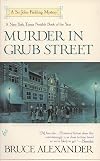
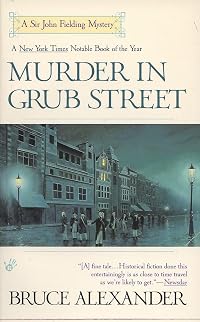
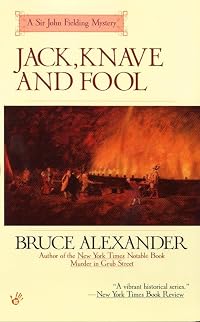
The crime appeared as easily solved as it was wicked. A Grub Street printer, his family, and two apprentices brutally murdered in their sleep. A locked building. And at the scene, a raving mad poet brandishing a bloody axe. Surely the culprit had been found, and justice would be swift and severe. But to Sir John Fielding, justice was more than finding a culprit-it was finding the truth. Aided by thirteen-year-old Jeremy Proctor, Fielding decided to investigate further. And the truth behind show more the Grub Street massacre was more evil-and more deadly-than the dastardly crime itself. show lessTags
Recommendations


Member Reviews
Book two in the Sir John Fielding mystery series. Young Jeremy Proctor has been apprenticed to a printer on Grub Street, but the night before he was to move to Mr Crabbs’ establishment to begin his training, the entire Crabb family and the two apprentices to lived with them were brutally murdered. A poet who also resided there was found with the likely weapon in his hand and taken into custody. But he maintains he is innocent. Sir John, though he is blind, is an astute investigator and Jeremy along with some of the colorful residents of Covent Garden help Sir John ferret out the truth.
This was much more complicated than the first book, and I admit my attention wandered a bit. There is religious fervor, multiple personalities, show more professional jealousy, anti-semitism, dreadful conditions of tenement buildings, and a light-fingered imp of a thief to complicate the case. Still, I love the way that Alexander has taken bits and pieces of history and woven them into these mysteries. Set in 1765 London, the protagonists must rely on their wits and old-fashioned investigative techniques. Sir John is, of course, further hampered by being blind, but Jeremy is an astute observer and honestly relates what he sees to his mentor.
I’ll keep reading this series. show less
This was much more complicated than the first book, and I admit my attention wandered a bit. There is religious fervor, multiple personalities, show more professional jealousy, anti-semitism, dreadful conditions of tenement buildings, and a light-fingered imp of a thief to complicate the case. Still, I love the way that Alexander has taken bits and pieces of history and woven them into these mysteries. Set in 1765 London, the protagonists must rely on their wits and old-fashioned investigative techniques. Sir John is, of course, further hampered by being blind, but Jeremy is an astute observer and honestly relates what he sees to his mentor.
I’ll keep reading this series. show less
The second book in the Sir John Fielding Mystery series, [Murder In Grub Street] by [Bruce Alexander], concerns the massacre of an entire family along with two apprentices that work in their print shop. The suspect, a poet who appears to be mad, is caught at one of the bedsides, axe in hand. Aided by his ward, 13 year old Jeremy Proctor, Sir John begins his own investigation and although he is blind, begins to see beyond the obvious.
A New York Times Notable Book of the Year, Alexander does a fine job recreating 1768 London as well as characters based on actual people. This has quickly become one of my favorite series.
A New York Times Notable Book of the Year, Alexander does a fine job recreating 1768 London as well as characters based on actual people. This has quickly become one of my favorite series.
You will know the culprits way before the end of this story and there was a bit too much violence, but the character of the young narrator is interesting and the portrait of London fascinating. The depiction of 19th century religious zealotry is still a relevant topic.
The second book in the Sir John Fielding series begins the night before 13-year-old Jeremy Proctor is to leave Sir John's household for an apprenticeship with Grub Street printer/publisher Ezekiel Crabb. Things don't work out as planned, because that night Ezekiel Crabb, his family, and two young apprentices are brutally murdered in their beds. Thus, Jeremy remains in Sir John's household and assists Sir John in the investigation of the murders, as well as with other matters that arise in the course of the book.
The book is more a legal thriller than a mystery. In fact, there is little mystery in the book. Sir John's investigation very quickly produces a likely suspect, but he lacks sufficient legal grounds to take action. The suspense show more builds as we wait to see if Sir John will find a legal basis for bringing the culprit to justice.
The plot deals with several social problems that are still problems in the 21st century – mental illness and competency to stand trial, religious cults and their relationship to society, poverty and homelessness, juvenile delinquency, and antisemitism. One of the characters appears to suffer from what we now call dissociative identity disorder. I'm not certain that this condition had been observed as early as the mid-18th century.
My attention kept wandering through the first two thirds of the book. After the discovery of the murders and initial inquiries and hearings into the matter, Sir John and Jeremy spend more time pursuing what appear to be distractions. Eventually all of the plot threads tie together, and the last third of the book was difficult to put down. show less
The book is more a legal thriller than a mystery. In fact, there is little mystery in the book. Sir John's investigation very quickly produces a likely suspect, but he lacks sufficient legal grounds to take action. The suspense show more builds as we wait to see if Sir John will find a legal basis for bringing the culprit to justice.
The plot deals with several social problems that are still problems in the 21st century – mental illness and competency to stand trial, religious cults and their relationship to society, poverty and homelessness, juvenile delinquency, and antisemitism. One of the characters appears to suffer from what we now call dissociative identity disorder. I'm not certain that this condition had been observed as early as the mid-18th century.
My attention kept wandering through the first two thirds of the book. After the discovery of the murders and initial inquiries and hearings into the matter, Sir John and Jeremy spend more time pursuing what appear to be distractions. Eventually all of the plot threads tie together, and the last third of the book was difficult to put down. show less
This second episode in the Sir John Fielding series, this continues from where the first left off. Jeremy is about to get a job as an apprentice printer, while he's wondering if this is the right path to take. On his last night in Fielding's house he discovers that the people he's about to work with have been savagely murdered. All signs point to Ezekiel Crabb, the eccentric poet who is found with a bloody axe in hand. The police believe the evidence but Fielding believes that someone else is to blame. He goes to hunt the proof that this is the case, along the way amassing several deaths.
It's somehow unsatisfying, possibly because the first story was so well written that the second has to fare worse, particularly if it's slightly show more pedestrianian. The who of the mystery is revealed early and it's really a hunt for motives that we're after and it's never quite clear throughout the book. It wouldn't stop me from reading the sequels, but it would slow my trot to read them. show less
It's somehow unsatisfying, possibly because the first story was so well written that the second has to fare worse, particularly if it's slightly show more pedestrianian. The who of the mystery is revealed early and it's really a hunt for motives that we're after and it's never quite clear throughout the book. It wouldn't stop me from reading the sequels, but it would slow my trot to read them. show less
Jeremey Proctor, by thankful circumstance, is once again to be left in the care of Sir John Fielding in the second novel of this series. Six murders have occurred on Grub Street, the street full of printers and books, and it's up to Sir John to solve it - with a bit of help from Jeremy as always.
The beginning of the book somehow didn't seem to flow with the middle of the book at first. We start off questioning a suspect, then the story almost drags a bit as the murders are, at least to me, pushed back a peg. I found myself more interested in other events in the story than who really committed the crime for a tiny bit in the middle. But the story picked right back up once the proper connections were made and I wanted to hit myself for show more not seeing it sooner.
As this is the second book I've read by Alexander, I may be early in saying that I don't think the mysteries are too difficult to figure out. They're even a bit obvious. But what's important is the characters, who are easily memorable, and the story itself, which is always a fun journey.
Would definitely recommend this to anyone who likes mystery and a bit of history involved as well. This series now has a place on my shelf for the rest of my life (hopefully!) show less
The beginning of the book somehow didn't seem to flow with the middle of the book at first. We start off questioning a suspect, then the story almost drags a bit as the murders are, at least to me, pushed back a peg. I found myself more interested in other events in the story than who really committed the crime for a tiny bit in the middle. But the story picked right back up once the proper connections were made and I wanted to hit myself for show more not seeing it sooner.
As this is the second book I've read by Alexander, I may be early in saying that I don't think the mysteries are too difficult to figure out. They're even a bit obvious. But what's important is the characters, who are easily memorable, and the story itself, which is always a fun journey.
Would definitely recommend this to anyone who likes mystery and a bit of history involved as well. This series now has a place on my shelf for the rest of my life (hopefully!) show less
As always, Bruce Alexander skillfully weaves historical research into the story and maintains young Jeremy's Proctor voice (and period prose) without allowing the narrative to become too heavy.
Jeremy, of course, is the thirteen-year-old ward of the court who assists the blind magistrate of Bow Street Court and narrates Sir John Fielding's adventures.
The second installment of the Sir John Fielding mystery series offers a glimpse both into the tumultuous printing industry of the 1760s as well as how Bedlam, the insane asylum, was run. There is also an underlying historical expose of how mentally ill prisoners were treated that is skillfully woven into the story as well.
Some of the characters from the pilot book make good reappearances show more (the Bow Street Runners) and a few more have been added. Jeremy experiences some growth, but still remains naive enough to teach the reader a few things as a matter of course.
The plot twists were well done, but I would have liked more of the view into the courts and the still-evolving legal system of the time that was present in the first novel. Still, another successful installment and I look forward to reading the next one.
For more of my reviews on mystery character series, please visit my blog at http://bodyonthefloor.blogspot.com/ show less
Jeremy, of course, is the thirteen-year-old ward of the court who assists the blind magistrate of Bow Street Court and narrates Sir John Fielding's adventures.
The second installment of the Sir John Fielding mystery series offers a glimpse both into the tumultuous printing industry of the 1760s as well as how Bedlam, the insane asylum, was run. There is also an underlying historical expose of how mentally ill prisoners were treated that is skillfully woven into the story as well.
Some of the characters from the pilot book make good reappearances show more (the Bow Street Runners) and a few more have been added. Jeremy experiences some growth, but still remains naive enough to teach the reader a few things as a matter of course.
The plot twists were well done, but I would have liked more of the view into the courts and the still-evolving legal system of the time that was present in the first novel. Still, another successful installment and I look forward to reading the next one.
For more of my reviews on mystery character series, please visit my blog at http://bodyonthefloor.blogspot.com/ show less
Members
- Recently Added By
Author Information

12 Works 4,212 Members
Some Editions
Awards and Honors
Distinctions
Series

Common Knowledge
- Canonical title
- Murder in Grub Street
- Original title
- Murder in Grub Street
- Original publication date
- 1995-01-01
- People/Characters
- Samuel Johnson; Sir John Fielding; Jeremy Proctor; Katherine Durham; Black Jack Bilbo; Mrs. Gredge (show all 7); Benjamin Bailey
- Important places
- London, England, UK; Number 4 Bow Street; Covent Garden; St Paul's Cathedral, London, England, UK
- Important events
- Georgian Era (1714 | 1837)
- Dedication
- For Allen Maller
- First words
- Chapter heading: In which I but narrowly escape an end by murder
First sentence: In my research for materials pertinent to the murders in Grub Street, which was indeed one of Sir John Fielding's most infamous inquiries, I came upon the preceding document which I had kept nearly thirty yea... (show all)rs as a reminder of just how this grisly matter began. - Last words
- (Click to show. Warning: May contain spoilers.)Yet Sir John cared nothing for the wagging of tongues; and after a brief wedding trip to Bath, the two, now man and wife, set to work on a charity that would occupy them for years to come, the Magdalene Home for Penitent Prostitutes.
- Original language
- English
Classifications
Statistics
- Members
- 495
- Popularity
- 61,159
- Reviews
- 15
- Rating
- (3.82)
- Languages
- 7 — Danish, Dutch, English, French, German, Italian, Spanish
- Media
- Paper, Audiobook
- ISBNs
- 17
- ASINs
- 4