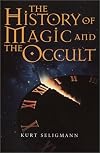
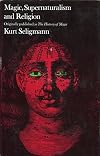
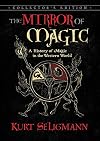
The Mirror of Magic
by Kurt Seligmann
On This Page
Description
A collector's edition of the classic, illustrated, and comprehensive history of magic and the occult * Written by renowned Surrealist and magic scholar Kurt Seligmann (1900-1962) * Includes all 250 illustrations from the original 1948 edition * Explores magical practices and beliefs from their origins in the ancient world through the heyday of secret societies in the 18th century In the occult classic The Mirror of Magic, renowned Surrealist Kurt Seligmann (1900-1962) draws from his show more encyclopedic practitioner's knowledge and extensive antiquarian collection to offer a comprehensive, illustrated history of magic and the occult from Mesopotamia and ancient Egypt through the 18th century. He explores the gods and divinatory arts of the legendary Sumerians and the star-wise Babylonians, including the birth of astrology. He examines the afterlife beliefs of the ancient Egyptians and the dream interpretation practices and oracles of ancient Greece, including the mysteries of Eleusis and the magical philosophy of Plato, Socrates, and other Greeks. He uncovers the origins of Gnosticism and the suppression and banishment of magic by the post-pagan, Christian emperors of Rome. Seligmann reviews the principles of alchemy, sharing famous transmutations and allegorical illustrations of the alchemical process and explores the Hermetica and its remarkable adepts. Investigating the Middle Ages, the author discusses the work of European magicians of the time, including Albertus Magnus, Roger Bacon, Agrippa, Nostradamus, and Pico Della Mirandola. He studies the medieval practices of devil worship, witchcraft, and black magic, as well as the "Cabala" in both its Hebrew and Christian forms. He also examines the art of the Tarot and many lesser known divination techniques. He explores the development of secret societies, including Freemasonry and Rosicrucianism, in the 17th century and the increase in occult publications and magical science in the 18th century. First published in 1948, this history of magic and the occult seeks to "mirror" the magical worldview throughout the ages. Beautifully illustrated with images from the author's rare library, this collector's edition features all of the artwork--more than 250 images--from the original 1948 edition. show lessTags
Recommendations








Member Reviews
From the Tower of Babel and ancient Egyptian gods all the way to the revival of European superstition in the Enlightened 18th century, this book covers a wide range of people, ideas, places, and magical beliefs. Each chapter, consisting of anywhere from 3 to 15 pages, is basically an introduction to a single magical/occult topic.
Readers will likely find themselves engrossed in some chapters and bored in others, based on whatever naturally interests them. The format of the book was helpful in covering so many different things, but then frustrating when a chapter is particularly exciting and then quickly ends.
Seligmann's book is strongest as a guide to find out what occult/magical topics interest you so you can look into them more later.
Readers will likely find themselves engrossed in some chapters and bored in others, based on whatever naturally interests them. The format of the book was helpful in covering so many different things, but then frustrating when a chapter is particularly exciting and then quickly ends.
Seligmann's book is strongest as a guide to find out what occult/magical topics interest you so you can look into them more later.
This book is not a how-to, DIY tome; it is a history of its subjects, told in a neutral, dispassionate vein. It starts with Mesopotamia, goes through Persia, the Hebrews, Egypt, Greece, Gnosticism, the Roman Empire, the shifts to Europe and the magical arts that survived during Christian times. The author takes neither a “magic was bad and misguided” nor a “Christianity was a bully that took over and destroyed magic” that is today’s take on the subjects; he stays totally neutral. Yes, he does talk about the witch trials and the trials of alchemists, but it’s told in a ‘just the facts, ma’am” tone. I found it pretty interesting, although quite dry. When you don’t take sides there isn’t any passion in writing, I show more guess. The illustrations were fascinating; pen and ink drawings of magical principles and things like palmistry charts fill the book. s show less
Sometimes I’m not sure if it’s the book, or that I’m not in the mood. It took a while because I was having a hard time staying focused on it, but kept at it.
The book is a little too much of a list of names and dates at times. When you’re going back to the first people on Earth, that’s a lot of names and dates. There was a lot of good information, but it was a little hard for me to tell sometimes what he was presenting as truth, what he was relating from someone else’s point of view, and what he was saying sarcastically or mockingly, since he seemed to not be a total skeptic unless I was just reading it wrong. To add to the confusion he often mocked writers from earlier times for being intelligent enough to not follow the show more beliefs in magic that most of their contemporaries did, but still believe in other types of magical thinking. It often seemed to me that he was doing the same thing, but again, I wasn’t sure sometimes.
Still not bad. show less
The book is a little too much of a list of names and dates at times. When you’re going back to the first people on Earth, that’s a lot of names and dates. There was a lot of good information, but it was a little hard for me to tell sometimes what he was presenting as truth, what he was relating from someone else’s point of view, and what he was saying sarcastically or mockingly, since he seemed to not be a total skeptic unless I was just reading it wrong. To add to the confusion he often mocked writers from earlier times for being intelligent enough to not follow the show more beliefs in magic that most of their contemporaries did, but still believe in other types of magical thinking. It often seemed to me that he was doing the same thing, but again, I wasn’t sure sometimes.
Still not bad. show less
A neat, old history of magick of all areas, times, and stripes. Good stories thrown in, good illustrations, and all referenced (though dated).
Recounts the story of magical ideas and manifestations in the Western world to reveal the aesthetic value of magic and its influence on man's creative imagination.
fire damaged, bought in childhood
Members
- Recently Added By
Author Information

8+ Works 566 Members
Common Knowledge
- Canonical title
- The Mirror of Magic
- Original title
- Magic, Supernaturalism and Religion
- Alternate titles
- The History of Magic
- Original publication date
- 1948
- Epigraph
- The fairest thing we can experience is the mysterious. - Albert Einstein
The fairest thing we can experience is the mysterious. Albert Einstein - Dedication
- To Arlette
- First words
- From time immemorial, man has felt himself to be confronted by evil supernatural beings, and his wepon against them has been the use of magic rites.
From time immemorial, man has felt confronted with evil supernatural beings, and his weapon against them has been the use of magical rites. - Last words
- (Click to show. Warning: May contain spoilers.)It freed man of fears, endowed him with a feeling of his power to control the world, sharpened his capacity to imagine, and kept alive his dreams of higher achievement.
(Click to show. Warning: May contain spoilers.)Magic was a stimulus to thinking. It freed man from fears, endowed him with a feeling of his power to control the world, sharpened his capacity to imagine, and kept awake his dreams of higher achievement. - Disambiguation notice
- 'Magic, Supernaturalism and Religion' is the title of the U.K. edition of this book which was originally titled 'The History of Magic' in the U.S.A.
Classifications
- Genres
- Nonfiction, Religion & Spirituality, History, General Nonfiction, Art & Design
- DDC/MDS
- 133.4 — Philosophy and Psychology Parapsychology & occultism Specific topics in parapsychology and occultism Demonology and witchcraft
- LCC
- BF1589 .S4 — Philosophy, Psychology and Religion Psychology Occult sciences Magic. Hermetics. Necromancy
- BISAC
Statistics
- Members
- 553
- Popularity
- 53,386
- Reviews
- 8
- Rating
- (3.43)
- Languages
- 7 — English, French, German, Hungarian, Italian, Portuguese, Spanish
- Media
- Paper, Ebook
- ISBNs
- 20
- ASINs
- 20