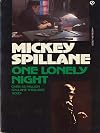
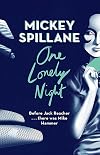
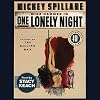
One Lonely Night
by Mickey Spillane
Mike Hammer Novels (book 4), Mike Hammer (book 4), Mike Hammer Novels (Chronological Story Order) (7)
On This Page
Description
Nobody ever walked across the bridge at night. But on the foggy night that Hammer took that chance, his encounter with a gun-toting thug and a girl on the lam ended with both strangers dead. Soon Hammer is caught in a web of sinister gangsters and beautiful women the likes of which he's never seen -- and his only way out is to kill and kill again...even with his bare hands.Tags
Recommendations

















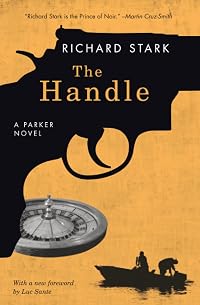

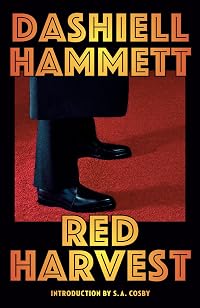

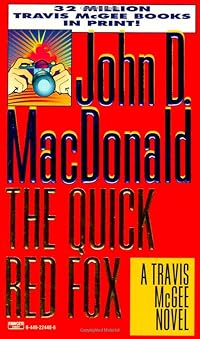


Member Reviews
One Lonely Night has always been a favorite of mine among Spillane’s novels. That being said, a little of Mick goes a long way with me, so I usually only get around to re-reading him about once a year. When I do, I often return to One Lonely Night, mainly for the opening chapter. It is as atmospheric and splendid example of the hardboiled detective that you’ll ever read. It is a wonderful piece of writing in its own way, Spillane boiling everything down to the bare essentials. Spillane is rarely given credit for good writing, but this first chapter will knock your socks off.
On the surface this is a typical Mike Hammer novel. It is about Communists and the NKVD. There is violence so over the top that it begs comparisons with comic show more book stuff — which is how Hammer was originally conceived. The whole tale is so raw it nearly burns your hands. Mike Hammer and his .45 set out to avenge a girl’s death, and save society from Communism. But there is an underpinning to this one missing in the other Hammer novels. That underpinning begins from the opening moments, one lonely night on a bridge as Mike Hammer remembers what a judge said about him, and wonders if it’s true.
All that rumination takes a detour on said bridge, however, when Hammer comes to the rescue of a girl with his trusted .45. But Hammer is unable to prevent her death, as she goes over the side anyway. That’s when the reader is plunged head-first into a brutal Mike Hammer thriller about Commies in America and the NKVD. At one point late in the book, Velda is hanging naked while Hammer rescues her. One Lonely Night is violent, pulpy, and just raw enough to have a few faint of heart complain. But Hammer’s rumination on that bridge is returned to at the end, and that separates One Lonely Night from some of the others. In essence Hammer is trying to decide if he is as bad as the guys he enjoys taking out. His conclusion befits the character of Mike Hammer, and the persona of Mickey Spillane.
Spillane certainly had something, and he could write — whether people like it or not. It’s ironic that the great Ross Macdonald so disliked Spillane’s work, considering how hurt he was that Raymond Chandler was quite critical of Macdonald’s own early work. Many don’t care for Spillane’s narrative style — some say he didn’t even have one, but they’re wrong. Spillane was a pulp writer, through and through, and long after the other guys elevated the genre, he continued to write pulp. Even here, with Hammer more unhinged than usual, it reads at times like a violent and spicy comic, yet with flashes of some great pulp.
Mike Hammer was rooted in the blue collar, and Americanism. Ayn Rand was a fan, believing Spillane’s Hammer had greater meaning as a statement on the progressive threat to society than Spillane would ever cop to. In fact, he would have dismissed it, saying he just wrote for the bread. Yet the fact that Spillane ran a thread through One Lonely Night about Mike Hammer wondering if his soul was as black as those he fought, is heady stuff when you think about it. One might say it suggests that despite protests to the contrary, Spillane did have an inkling that what Hammer represented was a bit more than he ever let on.
Once accused of writing porn, that argument seems utterly ridiculous in today’s society. The argument that he wasn’t much of a writer can also be dismissed, considering Rand and a slew of modern writers, including Max Collins, greatly admire his work. That only leaves the Conservative tone of Spillane’s Mike Hammer. It is sometimes touched upon when critics discuss why Spillane is so loathed by some, and I think it rings true.
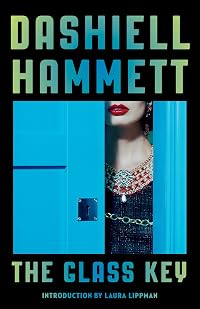
An example in point is how often, when people talk about a Spillane book, or a Richard Prather book, they mention it. It’s interesting to note, however, that Dashiell Hammett’s more subtle communist underpinnings to Red Harvest, and to a lesser degree, The Glass Key, are so rarely mentioned at all, even by the same folks. I can easily understand someone with a dislike of pulp cringing at Spillane’s raw narrative style of storytelling, but I do believe that all too often it is used as an excuse to mask the true reason for such a vehement reaction to his work. I think there is room for either viewpoint woven into a detective story, either along the peripheral edges, or in the story’s underpinnings. As long as it’s a good tale well-told, a great ride, I can enjoy it. If I could not, I'd never read Parker, or MacDonald, or the other Macdonald.
I do understand that Spillane isn’t everyone’s cup of tea, and I usually get bombarded with snarky comments about him when I bring him up in some circles, but whether you like him as a writer or not, or dislike his politics or not, for whichever or whatever reason, once you read the opening chapter to One Lonely Night, if you're honest, you’re unlikely to be in the camp that declares Spillane’s incredible success a fluke, or opines that having at one time seven of the top ten best sellers world-wide in this genre, was just luck. I don't do the really hardboiled violent stuff myself, preferring a softer boil, but Spillane found a niche, and no one, and I do mean no one, ever did the thing he did any better. I sort of like it that I share a birthday with this cat, because it means I'm in good company. show less
On the surface this is a typical Mike Hammer novel. It is about Communists and the NKVD. There is violence so over the top that it begs comparisons with comic show more book stuff — which is how Hammer was originally conceived. The whole tale is so raw it nearly burns your hands. Mike Hammer and his .45 set out to avenge a girl’s death, and save society from Communism. But there is an underpinning to this one missing in the other Hammer novels. That underpinning begins from the opening moments, one lonely night on a bridge as Mike Hammer remembers what a judge said about him, and wonders if it’s true.
All that rumination takes a detour on said bridge, however, when Hammer comes to the rescue of a girl with his trusted .45. But Hammer is unable to prevent her death, as she goes over the side anyway. That’s when the reader is plunged head-first into a brutal Mike Hammer thriller about Commies in America and the NKVD. At one point late in the book, Velda is hanging naked while Hammer rescues her. One Lonely Night is violent, pulpy, and just raw enough to have a few faint of heart complain. But Hammer’s rumination on that bridge is returned to at the end, and that separates One Lonely Night from some of the others. In essence Hammer is trying to decide if he is as bad as the guys he enjoys taking out. His conclusion befits the character of Mike Hammer, and the persona of Mickey Spillane.
Spillane certainly had something, and he could write — whether people like it or not. It’s ironic that the great Ross Macdonald so disliked Spillane’s work, considering how hurt he was that Raymond Chandler was quite critical of Macdonald’s own early work. Many don’t care for Spillane’s narrative style — some say he didn’t even have one, but they’re wrong. Spillane was a pulp writer, through and through, and long after the other guys elevated the genre, he continued to write pulp. Even here, with Hammer more unhinged than usual, it reads at times like a violent and spicy comic, yet with flashes of some great pulp.
Mike Hammer was rooted in the blue collar, and Americanism. Ayn Rand was a fan, believing Spillane’s Hammer had greater meaning as a statement on the progressive threat to society than Spillane would ever cop to. In fact, he would have dismissed it, saying he just wrote for the bread. Yet the fact that Spillane ran a thread through One Lonely Night about Mike Hammer wondering if his soul was as black as those he fought, is heady stuff when you think about it. One might say it suggests that despite protests to the contrary, Spillane did have an inkling that what Hammer represented was a bit more than he ever let on.
Once accused of writing porn, that argument seems utterly ridiculous in today’s society. The argument that he wasn’t much of a writer can also be dismissed, considering Rand and a slew of modern writers, including Max Collins, greatly admire his work. That only leaves the Conservative tone of Spillane’s Mike Hammer. It is sometimes touched upon when critics discuss why Spillane is so loathed by some, and I think it rings true.
An example in point is how often, when people talk about a Spillane book, or a Richard Prather book, they mention it. It’s interesting to note, however, that Dashiell Hammett’s more subtle communist underpinnings to Red Harvest, and to a lesser degree, The Glass Key, are so rarely mentioned at all, even by the same folks. I can easily understand someone with a dislike of pulp cringing at Spillane’s raw narrative style of storytelling, but I do believe that all too often it is used as an excuse to mask the true reason for such a vehement reaction to his work. I think there is room for either viewpoint woven into a detective story, either along the peripheral edges, or in the story’s underpinnings. As long as it’s a good tale well-told, a great ride, I can enjoy it. If I could not, I'd never read Parker, or MacDonald, or the other Macdonald.
I do understand that Spillane isn’t everyone’s cup of tea, and I usually get bombarded with snarky comments about him when I bring him up in some circles, but whether you like him as a writer or not, or dislike his politics or not, for whichever or whatever reason, once you read the opening chapter to One Lonely Night, if you're honest, you’re unlikely to be in the camp that declares Spillane’s incredible success a fluke, or opines that having at one time seven of the top ten best sellers world-wide in this genre, was just luck. I don't do the really hardboiled violent stuff myself, preferring a softer boil, but Spillane found a niche, and no one, and I do mean no one, ever did the thing he did any better. I sort of like it that I share a birthday with this cat, because it means I'm in good company. show less
It goes on my list of the Best Books I've Read (and the only mystery on the list.) Goodness knows you don't normally think of pulp fiction and hard-boiled detectives when you want to be awed by the writing. But if you can read the opening of this and not rear back in your chair and go, "Holy S***, you don't know amazing writing when you come across it. Could I ever write like this? Probably not. Do I wish I could. Yes, definitely. Not for the faint of heart this book is Violent. Pulpy. Raw. Honest. Hammer winds up fighting American Communists with a vengeance. He fights for himself, and for Velma, and the end is as amazing as the opening.
The first chapter is some of Spillane's best writing, and it starts the story off with a bang. Throughout the tale, we get a better picture of the character of Hammer than we got in the first three Hammer novels. In this one, he's up against the Communists of the early 1950s, and to say he hates them is a huge understatement. Spillane understood the harm socialism causes a society, and makes no bones about telling it like it is. Of course, here in 21st century America, at least half the country is clueless to the evils of this corrupt system, as many reviewers of this book display by calling it dated. One such reviewer wrote that it was too anti-communist. If you like the freedoms you enjoy in your pursuit of happiness in this country, show more you might want to pull your head out of the sand, and recognize that socialism in all its forms is bad, and we're almost up to our necks in it now. Well, off the soap box now. This is supposed to be a review. If you're PC, you won't like this book. Mike Hammer doesn't see gray areas. There's good, and there's bad, and he battles against the bad, making a thrilling read. show less
"One Lonely Night" is the fourth Mike Hammer novel. If you have been reading these books in order, you might wonder if Hammer ever has a paying client since he has been involved in cases concerning a cop who was his best friend, a streetwalker he ran into in a hash house, and a friend from out of town who didn't wake up after a bullet lodged in his chest. This novel is no exception. Although Hammer eventually gets a client, he gets involved simply because he stumbled on murder and death.
The book opens with Spillane's patented spare prose that has Hammer walking on a lonely bridge after a judge tore into him for doing what organized law enforcement could not: putting an end to murderous scum. Hammer is quite introspective here, noting show more that the judge called him a murderer even though what should Hammer have done "when the bastard had a rod in his hand and it was pointing right at my gut."
This is without question first and foremost a detective novel and a truly top-notch detective novel at that. Spillane wrote better than most other authors could dream of.
It is also part and parcel of a tender love story between Hammer and Velda, although even now Hammer cannot resist temptation. "The eyes swept from her black pumps to legs and body and shoulders that were almost too good to be real." And, when someone messes with Velda: "A .45 can make an awful nasty sound in a quiet room when you pull the hammer back. It's just a tiny little click, but it can stop a dozen guys when they hear it. Weasel Face couldn't take his eyes off it. I let him have a good look and smashed it across his nose." No one else has ever written about this kind of explosion of violence, not written about it this well.
Of course, it wouldn't be a Hammer story without a dame, including one that kicks off the only thing she's wearing, her shoes, and sinks to the softness of the bearskin rug, "a beautiful naked creature of soft round flesh and lustrous hair that changed color with each leap of the vivid red flame behind her."
With this fourth Hammer book, Spillane somehow managed to continue the high quality work that epitomizes this series. Highly recommended. show less
The book opens with Spillane's patented spare prose that has Hammer walking on a lonely bridge after a judge tore into him for doing what organized law enforcement could not: putting an end to murderous scum. Hammer is quite introspective here, noting show more that the judge called him a murderer even though what should Hammer have done "when the bastard had a rod in his hand and it was pointing right at my gut."
This is without question first and foremost a detective novel and a truly top-notch detective novel at that. Spillane wrote better than most other authors could dream of.
It is also part and parcel of a tender love story between Hammer and Velda, although even now Hammer cannot resist temptation. "The eyes swept from her black pumps to legs and body and shoulders that were almost too good to be real." And, when someone messes with Velda: "A .45 can make an awful nasty sound in a quiet room when you pull the hammer back. It's just a tiny little click, but it can stop a dozen guys when they hear it. Weasel Face couldn't take his eyes off it. I let him have a good look and smashed it across his nose." No one else has ever written about this kind of explosion of violence, not written about it this well.
Of course, it wouldn't be a Hammer story without a dame, including one that kicks off the only thing she's wearing, her shoes, and sinks to the softness of the bearskin rug, "a beautiful naked creature of soft round flesh and lustrous hair that changed color with each leap of the vivid red flame behind her."
With this fourth Hammer book, Spillane somehow managed to continue the high quality work that epitomizes this series. Highly recommended. show less
A fun noire that turns into a political thriller. Lots of people just see a hard nosed dick in Mike Hammer. But I see the tolls of war in him as well. This was a great one.
The pace in this one was a bit slower than what I usually expect from a Spillane novel. The plot revolves around a Communist conspiracy and some missing government documents, and even the federal government seems to be involved. In addition, Mike Hammer is hired by a rising politician that a lot of people in the city look up to. And it all starts with a woman jumping off a bridge. You would think that would certainly make for a good mystery. It was just ok. As I said, the pace at times was a little on the slow side. Plus, the Communist plot allows Spillane to go on a red scare rant which does get a little heavy at times. And yet, it does capture some of the hysteria going on in the 50s when it came to Communists. I did like it a bit show more more at the end when Mike Hammer, as traditional in mysteries, unravels the plot. There are a couple of interesting twists that kept me reading, which I won't reveal here. But overall, not the best Hammer novel. As usual, you get your dose of violence and sex. As I usually tell my readers, this is not for the PC crowd, but if you like your mysteries hard boiled, then this fits right in. show less
Helt okej kioskdeckare. Blir lite för svamligt mot slutet. Men på det hela taget ok.
Members
- Recently Added By
Lists

Books Read in 2019
4,052 works; 110 members
Author Information

177+ Works 8,025 Members
Mickey Spillane was born Frank Morrison Spillane in Brooklyn, New York on March 9, 1918. He briefly attended Fort Hays State College in Kansas, but dropped out, moved back to New York, and began his writing career in the mid-1930s. His first stories were published mostly in comic books and pulp magazines. He created Mike Danger, a private show more detective, and also wrote for Captain America, Captain Marvel, and The Human Torch. During World War II, he worked as a flying instructor for the U.S. Army Air Force. His first novel, I, the Jury, featured Mike Hammer and was published in 1947. His other novels include Vengeance Is Mine; My Gun Is Quick; The Big Kill; Kiss Me, Deadly; The Long Wait; and The Deep. Between 1952 and 1961 Spillane stopped writing full-length novels after converting to a Jehovah's Witness. In 1962, he brought Hammer back with The Girl Hunters, which was followed by Day of the Guns, The Death Dealers, The Twisted Thing, and Body Lovers. He also wrote two children's books, The Day the Sea Rolled Back, which won a prize from the Junior Literary Guild, and The Ship That Never Was. In 1995, he received the Grand Master award from the Mystery Writers of America. In the mid-1990s, he returned to comic books, by co-creating a futuristic Mike Danger. He died following a long illness on July 17, 2006 at the age of 88. (Bowker Author Biography) show less
Some Editions
Awards and Honors
Notable Lists
Series

Mike Hammer Novels
24 works (book 4)

Mike Hammer
13 works (book 4)

Mike Hammer Novels (Chronological Story Order)
27 works (7)
Belongs to Publisher Series
Heyne Allgemeine Reihe (1228)
Colecção Vampiro (686)
Work Relationships
Common Knowledge
- Canonical title*
- Imorgon död
- Original title
- One Lonely Night
- Alternate titles*
- Bloedhonden
- Original publication date
- 1951
- People/Characters
- Mike Hammer
- Important places*
- Manhattan, New York, New York, USA
- First words
- Nobody ever walked across the bridge,not on a night like this.
*Some information comes from Common Knowledge in other languages. Click "Edit" for more information.
Classifications
Statistics
- Members
- 283
- Popularity
- 114,328
- Reviews
- 11
- Rating
- (3.35)
- Languages
- 7 — Danish, Dutch, English, French, German, Hungarian, Swedish
- Media
- Paper, Audiobook, Ebook
- ISBNs
- 36
- ASINs
- 21