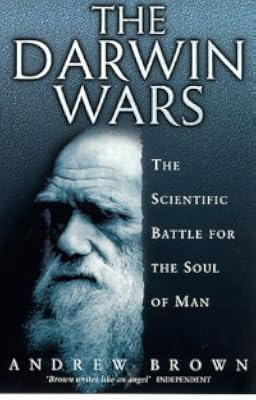
The Darwin Wars: The Scientific Battle for the Soul of Man
by Andrew Brown 
On This Page
Description
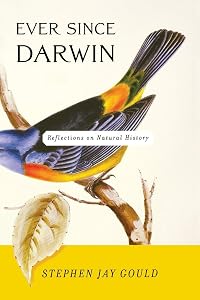
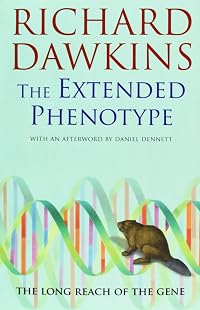
An explanatory account of the evolution of today's neo-Darwinist theories, including the selfish gene theory, this book analyses the differences between the theories of Richard Dawkins and Stephen Jay Gould.Tags
Recommendations













Member Reviews
Though it has been a matter of much comment at Amazon, I think, first off, we ought to put away the idea that it is somehow wrong or remarkable that Brown is a journalist writing a book about science.
The extent to which a good journalist (and Brown is one) cannot sufficently grasp the issues in modern Darwinism is precisely the extent to which no popular books ought to be written about it at all, by anyone.
If an intelligent journalist working full time on the issue can't correctly understand it, what hope does the casual reader have?
The fact is that most of the issues really aren't all that tough, and where things do get complicated, the issues are often philosophical and interpretive. Areas where scientists have not shown themselves to show more be particularly adroit (as Brown notes). There is plenty of writing out there by scientists whose credentials in the lab are impeccable and whose command of the facts I wouldn't dare to question.
But when some of these folks quit the job of fact gathering and start interpreting and sketching out implications . . . well, let's just say that words & phases like naive, wishful thinking, overly ambitious and even stupid start coming to mind.
Brown (though he briefly forgets which sex is XY) generally seems to have his facts straight, he digs up little-told portions of the history of the Darwin Wars, and has an interesting take on the personalities involved.
Brown's philosophical sympathies lie with the Gould camp (emphasizing the limits on what science can really say with confidence about things like society and culture), but he presents a pretty balanced view nonetheless, very solid on the sometimes rather half-baked philosphical underpinnings of scientific interpretation at its most exalted (and perhaps most dangerous) level.
A valuable book. show less
The extent to which a good journalist (and Brown is one) cannot sufficently grasp the issues in modern Darwinism is precisely the extent to which no popular books ought to be written about it at all, by anyone.
If an intelligent journalist working full time on the issue can't correctly understand it, what hope does the casual reader have?
The fact is that most of the issues really aren't all that tough, and where things do get complicated, the issues are often philosophical and interpretive. Areas where scientists have not shown themselves to show more be particularly adroit (as Brown notes). There is plenty of writing out there by scientists whose credentials in the lab are impeccable and whose command of the facts I wouldn't dare to question.
But when some of these folks quit the job of fact gathering and start interpreting and sketching out implications . . . well, let's just say that words & phases like naive, wishful thinking, overly ambitious and even stupid start coming to mind.
Brown (though he briefly forgets which sex is XY) generally seems to have his facts straight, he digs up little-told portions of the history of the Darwin Wars, and has an interesting take on the personalities involved.
Brown's philosophical sympathies lie with the Gould camp (emphasizing the limits on what science can really say with confidence about things like society and culture), but he presents a pretty balanced view nonetheless, very solid on the sometimes rather half-baked philosphical underpinnings of scientific interpretation at its most exalted (and perhaps most dangerous) level.
A valuable book. show less
Ratings
Members
- Recently Added By
Author Information

6+ Works 341 Members
Andrew Brown is a journalist who writes extensively for the Guardian, the Independent, and the Daily Mail
Andrew Brown is a LibraryThing Author, an author who lists their personal library on LibraryThing.
Common Knowledge
- People/Characters
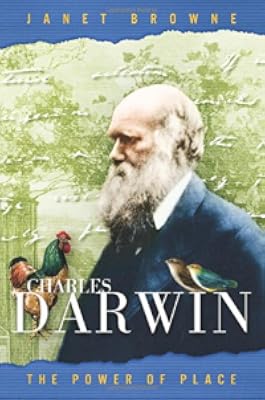
- Stephen Jay Gould; Richard Dawkins; Charles Darwin
- Epigraph
- The current disputes in evolutionary biology differ in no mportant respects from other scientific controversies. Accusations of rediscovering the wheel, beating dead horses, attacking straw men, and parodying the views of... (show all) one's opponents have been ubiquitous . . . No disinterested, non-committal, theory-free characterisation of such events is possible.
David Hull, Science as a Process
Violent zeal for truth hath an hundred to one odds to be either petulancy, ambition, or pride.
Jonathan Swift, Apophthegms and Maxims
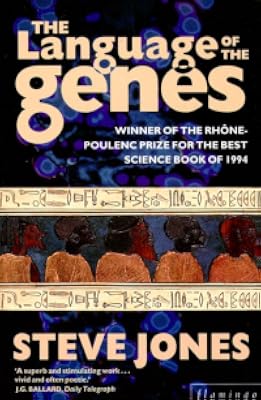
Evolution is to analogy as statues are to birdshit.
Steve Jones, New York Review of Books - First words
- God, when he died, left many situations vacant. (Foreword)
George Price killed himself in a squat near Euston station in the winter of 1974. - Publisher's editor
- Connell, Ingrid; Simpson, Helen
Classifications
Statistics
- Members
- 99
- Popularity
- 327,126
- Reviews
- 1
- Rating
- (3.57)
- Languages
- English
- Media
- Paper
- ISBNs
- 3