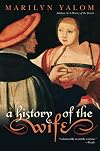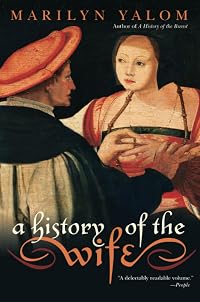
A History of the Wife
by Marilyn Yalom
On This Page
Description
How did marriage, considered a religious duty in medieval Europe, become a venue for personal fulfillment in contemporary America? How did the notion of romantic love, a novelty in the Middle Ages, become a prerequisite for marriage today? And, if the original purpose of marriage was procreation, what exactly is the purpose of marriage for women now? Combining "a scholar's rigor and a storyteller's craft"(San Jose Mercury News), distinguished cultural historian Marilyn Yalom charts the show more evolution of marriage in the Judeo Christian world through the centuries and shows how radically our ideas about marriage have changed. For any woman who is, has been, or ever will be married, this intellectually vigorous and gripping historical analysis of marriage sheds new light on an institution most people take for granted, and that may, in fact, be experiencing its most convulsive upheaval since the Reformation. show lessTags
Recommendations
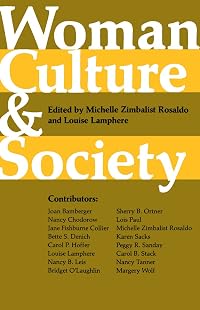
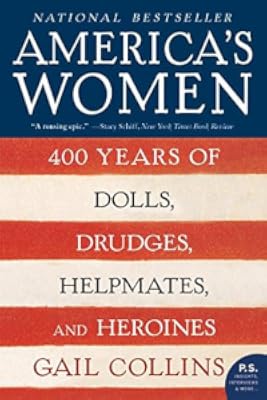


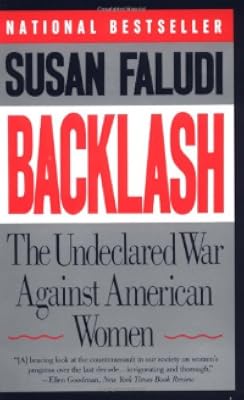
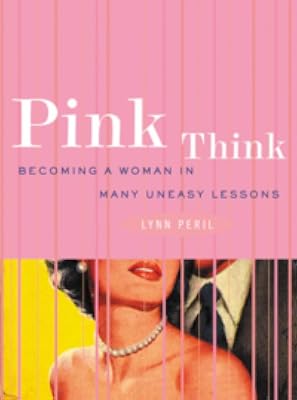


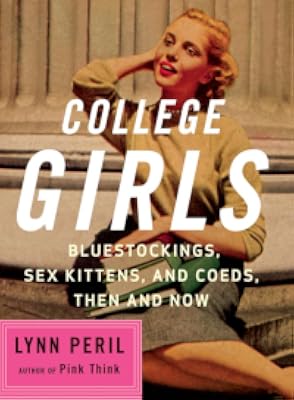
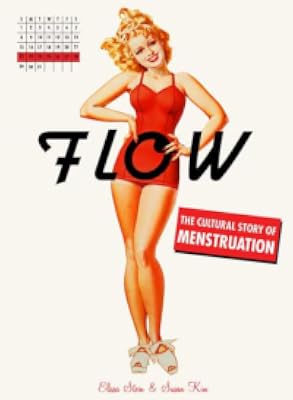
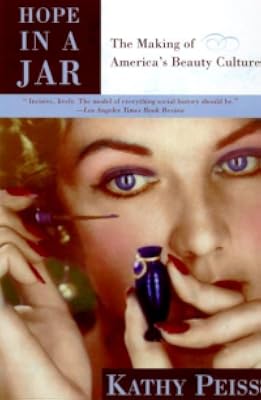
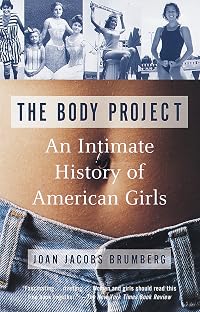


Member Recommendations
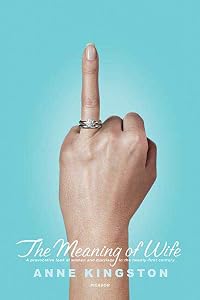
The Meaning of Wife: A Provocative Look at Women and Marriage in the Twenty-first Century by Anne Kingston
kaelirenee History of the Wife is the background you need to understand where wives are now. These are great books to read together.
Member Reviews
Marilyn Yalom's narrative voice is perfectly suited to her chosen subject material. Yalom is no dry historian; she is obviously emotionally invested in what she has to say, and is not shy about presenting her message.
I had hoped for a more global perspective on the role of the wife, but I realize that such a project would be fairly cumbersome for a popular publication. Yalom's focus is the direct history that leads to the contemporary American wife,and she builds a history towards that end. I occasionally found it hard to remain objective in the face of biased prose, but overall I found A History of the Wife to be very interesting.
I had hoped for a more global perspective on the role of the wife, but I realize that such a project would be fairly cumbersome for a popular publication. Yalom's focus is the direct history that leads to the contemporary American wife,and she builds a history towards that end. I occasionally found it hard to remain objective in the face of biased prose, but overall I found A History of the Wife to be very interesting.
This book describes the history of marriage as it relates to modern marriage in America. The lives of wives in the ancient world are examined by looking at wives in the Bible, Greek wives, and Roman wives. Yalom then marches on through history, examining Medieval Europe, early Protestant wives, republican wives in America and France, Victorian wives in England and the U.S. (including those on the frontier). She then gets into the more modern era and looks at the changing role of women and wives in the late 19th century and the history of issues such as sex, contraception, and abortion in the second half of the 19th century and the first half of the 20th. Finally, she looks at wives in WWII and briefly examines how the role of the wife show more has changed in the last 50 years.
The common theme of this book is that what it means to be a wife is always changing with time and with culture. The so-called traditional nuclear family of a mother homemaker, a father breadwinner, and a couple of children is actually no more common than many other modes of family life. Throughout history, there have been times and places where both parents have worked, where children were sent elsewhere once they reached a certain ages, and where the household was much more diverse (extended family, servants, apprentices, etc.). Sometimes women were assumed to be more full of sexual desires than men and sometimes women were assumed to be frigid towers of purity.
Marriage can be an economic relationship, a political relationship, or a emotional relationship. These days, we think that it should be primarily an emotional relationship, but throughout much of history, that idea was ridiculous; marriage was a way to solidify political ties or increase your economic worth. Over time, love became an important factor in choosing a spouse, but it is only recently (since women started becoming more independent, in fact) that love and personality became the primary factors when choosing a spouse.
Yalom also makes the point that what seem like modern issues about sex, contraception, and abortion actually have histories going back hundreds of years (and a public history going back about 150 years). The unequal sexual freedoms accepted for men and women have been the issue of private discussion many centuries, and women have always shared the secrets of contraception and medicinally induced abortions since at least the middle ages. Ancient cultures practiced infanticide, and while it was never approved, there were times when it was certainly ignored. What changed in the last 150 years is that this discussion has become public.
In short, the role of the wife is constantly evolving (as are the closely related issues of the husband, children, and sex). Acknowledging this is important; it shows the error in thinking that marriage is now corrupted and ruined and that marriages of the past fit some idealized perfect mold. Marriage has always been changing; marriages may be less stable today, but beating ones wife and children is no longer acceptable. It is neither going downhill nor approaching some ideal; like all human institutions, it is just changing in response to the world around it and will continue to do so. show less
The common theme of this book is that what it means to be a wife is always changing with time and with culture. The so-called traditional nuclear family of a mother homemaker, a father breadwinner, and a couple of children is actually no more common than many other modes of family life. Throughout history, there have been times and places where both parents have worked, where children were sent elsewhere once they reached a certain ages, and where the household was much more diverse (extended family, servants, apprentices, etc.). Sometimes women were assumed to be more full of sexual desires than men and sometimes women were assumed to be frigid towers of purity.
Marriage can be an economic relationship, a political relationship, or a emotional relationship. These days, we think that it should be primarily an emotional relationship, but throughout much of history, that idea was ridiculous; marriage was a way to solidify political ties or increase your economic worth. Over time, love became an important factor in choosing a spouse, but it is only recently (since women started becoming more independent, in fact) that love and personality became the primary factors when choosing a spouse.
Yalom also makes the point that what seem like modern issues about sex, contraception, and abortion actually have histories going back hundreds of years (and a public history going back about 150 years). The unequal sexual freedoms accepted for men and women have been the issue of private discussion many centuries, and women have always shared the secrets of contraception and medicinally induced abortions since at least the middle ages. Ancient cultures practiced infanticide, and while it was never approved, there were times when it was certainly ignored. What changed in the last 150 years is that this discussion has become public.
In short, the role of the wife is constantly evolving (as are the closely related issues of the husband, children, and sex). Acknowledging this is important; it shows the error in thinking that marriage is now corrupted and ruined and that marriages of the past fit some idealized perfect mold. Marriage has always been changing; marriages may be less stable today, but beating ones wife and children is no longer acceptable. It is neither going downhill nor approaching some ideal; like all human institutions, it is just changing in response to the world around it and will continue to do so. show less
This book got me interested in women's history like no other book has. Yalom writes so eloquently and clearly on the subject of marriage, gender, and masculine and feminine roles that the book feels neither too dense and boring nor too chatty and amateurish. A History of the Wife is the perfect non-fiction book: balanced, engrossing, and erudite.
I enjoyed this book for it's historical content and contrasts to present day roles of being a wife. I admire the research that the Author did, but I felt there was a lost opportunity towards the end to expand on how the religious, cultural and society roles influenced the modern ways.
She touches lightly on some, but not at the depth of what she did in the earlier chapters. The pace changed a bit towards it's conclusion.
I really appreciated the light she shined on many of the issues that are often not spoken about. She provided a voice for many relationships and wives who did not and do not have the opportunity to do so. For that I'm grateful to her.
I learned alot, was surprised and overall would recommend if you love history.
She touches lightly on some, but not at the depth of what she did in the earlier chapters. The pace changed a bit towards it's conclusion.
I really appreciated the light she shined on many of the issues that are often not spoken about. She provided a voice for many relationships and wives who did not and do not have the opportunity to do so. For that I'm grateful to her.
I learned alot, was surprised and overall would recommend if you love history.
I've enjoyed Marilyn Yalom's prose in every one of her books. Great use of primary documents, good historical analysis, and funny, touching and just plain interesting moments. Learned a lot I didn't know about property rights, contraception, and love matches.
Look at the title! How could a once-married career divorcée resist? Yalom has carefully documented marriage customs over the centuries, with an emphasis on how women have variously been enslaved, freed, honored, dishonored, exploited and protected by their roles in marriage. Her emphasis is on Western traditions. She predicts that "it is unlikely that the nuclear family consisting of a married couple and their children, which peaked numerically for blacks in 1950 and for whites in 1960, will return to its former hegemonic position in American society" (p. 397). Not only has the meaning of being a wife changed radically since 1950, Yalom concludes, but so has the meaning of family. Society is now in the early stages of recreating a show more model that has been in use for thousands of years. This is a carefully researched and competently written academic work that is presented in a reader-friendly, informative manner. (October 2007) show less
In many ways, this book illustrates why I rarely read non-fiction books, preferring instead to get my facts from magazines, journal articles, and news outlets. The prose is unexceptional and inconsistent, veering in tone between academic and chatty. The content is almost random, providing a lot of anecdotes but failing to provide what the title promises: a history of wife-hood.
A better name for this book would be: “A Background for American Wives of European Ancestry.” Admittedly (as was pointed out to me when I started complaining about it) the back of the book does note the Western focus of the book. So it’s not precisely fair to fault the book for not being what I wanted it to be: a clear view of the different legal and social show more obligations that have accompanied the concept of marriage in different time periods and cultures.
Instead, this book tells a quite familiar tale. No one with a passing acquaintance with Western History is going to learn anything new or shocking here. In keeping with the old idea that American culture is based on Greco-Roman society, Yalom starts off with ancient Greek and Roman marriages, proceeds to medieval and Renaissance Europe, spends quite a bit of time on Frontier wives in America, goes on to the Victorians, the effect of the early feminist movement, the development of contraception, the effect of WWII, and modern times (in the United States).
Even within the scope of the book, so many opportunities are lost. There is no discussion of how different cultures’ bringing their own marriage traditions and expectations to America is a factor in society, no mention of gay marriage or alternative family arrangements – nothing more challenging than a mild feminist perspective is included.
Rather than making a historical argument, or even really talking that much about the book’s topic, Yalom really has just collected a bunch of anecdotes about women throughout history who happened to be married. Luckily, many of them are really fascinating, interesting anecdotes. I love history, and I love reading things like old diary and letter excerpts to gain insight into others’ lives and perspectives. I didn’t mind keeping this book around for a bit, working my way through it by picking it up every so often to read the next segment… show less
A better name for this book would be: “A Background for American Wives of European Ancestry.” Admittedly (as was pointed out to me when I started complaining about it) the back of the book does note the Western focus of the book. So it’s not precisely fair to fault the book for not being what I wanted it to be: a clear view of the different legal and social show more obligations that have accompanied the concept of marriage in different time periods and cultures.
Instead, this book tells a quite familiar tale. No one with a passing acquaintance with Western History is going to learn anything new or shocking here. In keeping with the old idea that American culture is based on Greco-Roman society, Yalom starts off with ancient Greek and Roman marriages, proceeds to medieval and Renaissance Europe, spends quite a bit of time on Frontier wives in America, goes on to the Victorians, the effect of the early feminist movement, the development of contraception, the effect of WWII, and modern times (in the United States).
Even within the scope of the book, so many opportunities are lost. There is no discussion of how different cultures’ bringing their own marriage traditions and expectations to America is a factor in society, no mention of gay marriage or alternative family arrangements – nothing more challenging than a mild feminist perspective is included.
Rather than making a historical argument, or even really talking that much about the book’s topic, Yalom really has just collected a bunch of anecdotes about women throughout history who happened to be married. Luckily, many of them are really fascinating, interesting anecdotes. I love history, and I love reading things like old diary and letter excerpts to gain insight into others’ lives and perspectives. I didn’t mind keeping this book around for a bit, working my way through it by picking it up every so often to read the next segment… show less
Members
- Recently Added By
Author Information

22+ Works 2,068 Members
Marilyn Yalom is a senior scholar at the Institute for Women and Gender at Stanford University
Awards and Honors
Notable Lists
Common Knowledge
- People/Characters
- Caroline Norton
- First words
- Why should we begin with biblical, Greek, and Roman wives?
Classifications
- Genres
- History, Nonfiction, General Nonfiction, Sexuality and Gender Studies, Sociology
- DDC/MDS
- 306.872 — Society, government, & culture Social sciences, sociology & anthropology Social Behavior - Dating, Marriage, Divorce Marriage, partnerships, unions; family Intrafamily relationships Spousal relationship
- LCC
- HQ1206 .Y35 — Social sciences The family. Marriage, Women and Sexuality The Family. Marriage. Women Women. Feminism
- BISAC
Statistics
- Members
- 717
- Popularity
- 39,605
- Reviews
- 13
- Rating
- (3.81)
- Languages
- English, Polish, Spanish
- Media
- Paper, Ebook
- ISBNs
- 9
- ASINs
- 3