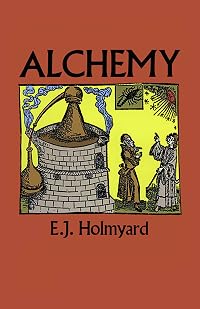
Alchemy
by E. J. Holmyard
On This Page
Description
Alchemy is thought to have originated over 2000 years ago in Hellenic Egypt, the result of three converging streams: Greek philosophy, Egyptian technology and the mysticism of Middle Eastern religions. Its heyday was from about 800 A.D. to the middle of the seventeenth century, and its practitioners ranged from kings, popes, and emperors to minor clergy, parish clerks, smiths, dyers, and tinkers. Even such accomplished men as Roger Bacon, Thomas Aquinas, Sir Thomas Browne and Isaac Newton show more took an interest in alchemical matters. In its search for the "Philosopher's Stone" that would transmute base metals into silver and gold, alchemy took on many philosophical, religious and mystical overtones. These and many other facets of alchemy are explored with enormous insight and erudition in this classic work. E. J. Holmyard, a noted scholar in the field, begins with the alchemists of ancient Greece and China and goes on to discuss alchemical apparatus, Islamic and early Western alchemy; signs, symbols, and secret terms; Paracelsus; English, Scottish and French alchemists; Helvetius, Price, and Semler, and much more. Ranging over two millennia of alchemical history, Mr. Holmyard shows how, like astrology and witchcraft, alchemy was an integral part of the pre-scientific moral order, arousing the cupidity of princes, the blind fear of mobs and the intellectual curiosity of learned men. Eventually, however, with the advent and ascension of the scientific method, the hopes and ideas of the alchemists faded to the status of "pseudo-science." That transformation, as well as alchemy's undeniable role as a precursor of modern chemistry, are brilliantly illuminated in this book. Students of alchemy, chemistry, the history of science, and the occult, plus anyone interested in the origin and evolution of one of mankind's most enduring and influential myths, will want to have a copy of this masterly study. show lessTags
Recommendations














Member Reviews
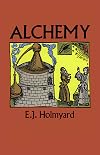
This is the Dover reprint (1990) of the Penguin original (1957). It is a very good "quick history" of the field which is thought to have originated over 2000 years ago in Hellenic Egypt. Three elements seem to have converged (Greek Philosophy, Egyptian technology and Middle Eastern religions) and Alchemy was the result. The book gives an overview of a broad range of ideas, technology and personalities. This is not intended as a research tool, but as an introduction to the field, but does what it sets out to do in a very competent and readable manner. It offers a short list of resources consulted that are good stepping off places for those wanting more detailed information. This is a good, basic, introduction. It might have been improved show more had the illustrations been in color. show less
ALQUIMIA
INTRODUCCIÓN
EL ARTE o la ciencia de la Alquimia es muy antiguo, ya que
se practicaba antes de Jesucristo. Ha tenido asimismo una
larga historia, puesto que todavía existen alquimistasy
no sólo en países tan poco ilustrados como Marruecos y ciertas
partes del Oriente, sino también en Inglaterra, Estados Unidos,
Francia, Italia y Alemania. Su apogeo tuvo lugar desde el 800
aproximadamente después de Jesucristo hasta mediados del
siglo XVII, contándose entre sus practicantes desde reyes, papas y
emperadores hasta clérigos de menor categoría, sacristanes de
parroquia, forjadores, tintoreros y caldereros. Incluso hombres
tan cabales y distinguidos como Roger Bacon, Santo Tomás de
Aquino, Sir Thomas Browne, John Evelyn y Sir Isaac show more Newton
estaban profundamente interesados en ella y Carlos II tenía un
laboratorio de alquimia situado debajo de la cámara real al que
se llegaba por una escalera privada. Otros monarcas alquímicos
fueron Heracleio I de Bizancio, Jaime IV de Escocia y el
emperador Rodolfo II. En Shakespeare se encuentran algunas
referencias a la alquimia; Chaucer dedicó uno de sus Canterbury
Tales a la misma (p. 193) y Ben Jonson escribió una obra de
teatro, The Alchemist, en la que demuestra grandes conocimientos
del tema. Al recorrer las abigarradas páginas de su historia
se encuentra toda una gama de matices: ficción y aventura
emoción religiosa y mística, fraude y superchería, investigación
científica, tecnología práctica, tragedia y comedia, poesía
y humor.
La Alquimia tiene una doble naturaleza: una externa o exotérica
y otra oculta o esotérica. La alquimia exotérica se ocupa
de los intentos para obtener una substancia, la piedra filosofal... show less
INTRODUCCIÓN
EL ARTE o la ciencia de la Alquimia es muy antiguo, ya que
se practicaba antes de Jesucristo. Ha tenido asimismo una
larga historia, puesto que todavía existen alquimistasy
no sólo en países tan poco ilustrados como Marruecos y ciertas
partes del Oriente, sino también en Inglaterra, Estados Unidos,
Francia, Italia y Alemania. Su apogeo tuvo lugar desde el 800
aproximadamente después de Jesucristo hasta mediados del
siglo XVII, contándose entre sus practicantes desde reyes, papas y
emperadores hasta clérigos de menor categoría, sacristanes de
parroquia, forjadores, tintoreros y caldereros. Incluso hombres
tan cabales y distinguidos como Roger Bacon, Santo Tomás de
Aquino, Sir Thomas Browne, John Evelyn y Sir Isaac show more Newton
estaban profundamente interesados en ella y Carlos II tenía un
laboratorio de alquimia situado debajo de la cámara real al que
se llegaba por una escalera privada. Otros monarcas alquímicos
fueron Heracleio I de Bizancio, Jaime IV de Escocia y el
emperador Rodolfo II. En Shakespeare se encuentran algunas
referencias a la alquimia; Chaucer dedicó uno de sus Canterbury
Tales a la misma (p. 193) y Ben Jonson escribió una obra de
teatro, The Alchemist, en la que demuestra grandes conocimientos
del tema. Al recorrer las abigarradas páginas de su historia
se encuentra toda una gama de matices: ficción y aventura
emoción religiosa y mística, fraude y superchería, investigación
científica, tecnología práctica, tragedia y comedia, poesía
y humor.
La Alquimia tiene una doble naturaleza: una externa o exotérica
y otra oculta o esotérica. La alquimia exotérica se ocupa
de los intentos para obtener una substancia, la piedra filosofal... show less
May 7, 2018Spanish
Ratings
Members
- Recently Added By
Author Information

25 Works 334 Members
Series
Belongs to Publisher Series
Common Knowledge
- Original publication date
- 1957
- Original language
- English
Classifications
Statistics
- Members
- 282
- Popularity
- 114,051
- Reviews
- 3
- Rating
- (3.61)
- Languages
- English, Italian, Portuguese
- Media
- Paper, Ebook
- ISBNs
- 3
- UPCs
- 1
- ASINs
- 8