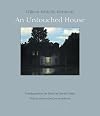
An Untouched House
by Willem Frederik Hermans
On This Page
Description
"In this dark, unnerving work of wartime fiction, W. F. Hermans exposes humanity's essential savagery, barely concealed by its mores and morals. The year is 1944, and a Dutch partisan chances on an abandoned estate, where he decides to take refuge during a lull in the hostilities. The house seems untouched by the war, a kind of haven, its ornament and grandeur intact (not to mention its walls), clothes and sheets to spare, a kitchen stocked with food and drink. He settles in, and begins to show more consider himself the owner. When the Nazis recapture the village and come knocking, they similarly assume the house to be his; they assume, also, its spare rooms, which they outfit as barracks. It is all and well until the true owner and his wife return to their estate. Horrified at the thought of being caught in his subterfuge, our protagonist finds himself drawn into further deceit--and swept up in the violence that ensues. Civilization comes face-to-face with brutality, truth meets the duplicity that has upended and challenged its certainty--Hermans' prose searches for an order to the chaos and nihilism of war and life. What he cannot find is as telling as what he uncovers"-- show lessTags
Recommendations






Member Reviews
Rating: 4* of five
The Publisher Says: In this dark, unnerving work of wartime fiction, W. F. Hermans exposes humanity’s essential savagery, barely concealed by its mores and morals. The year is 1944, and a Dutch partisan chances on an abandoned estate, where he decides to take refuge during a lull in the hostilities. The house seems untouched by the war, a kind of haven, its ornament and grandeur intact (not to mention its walls), clothes and sheets to spare, a kitchen stocked with food and drink. He settles in, and begins to consider himself the owner. When the Nazis recapture the village and come knocking, they similarly assume the house to be his; they assume, also, its spare rooms, which they outfit as barracks.
It is all and well show more until the true owner and his wife return to their estate. Horrified at the thought of being caught in his subterfuge, our protagonist finds himself drawn into further deceit—and swept up in the violence that ensues.
Civilization comes face-to-face with brutality, truth meets the duplicity that has upended and challenged its certainty—Hermans’ prose searches for an order to the chaos and nihilism of war and life. What he cannot find is as telling as what he uncovers.
I RECEIVED A DRC FROM THE PUBLISHER VIA EDELWEISS+. THANK YOU.
My Review: Novellas are, by definition, brief and gestural as opposed to the novel in its deeper dives, its wider emotional landscape. These general observations are, of course, not true of every novel or novella. They serve to define nothing but an expectation of the reasonably experienced reader when picking up one or the other.
I went into this read, then, expecting to get a glancing blow to my interest in the topic of what the Second World War was like for those who lived it, who were involved in the conflict and not observing events from afar. That was an expectation met...but exceeded, at least as the read settled into my brain. The prose, as translated, was not showy or terribly Writerly; the story itself was simple enough, really more suited to a short story than a novella; but as I sat stunned after finishing the read, I realized why the author chose this length of telling for a story this uncomplicated.
Without the novella’s-worth of buildup, the ending would feel artificial and out of proportion to the story itself. As it is, the ending is a shocker. It arrives without fanfare and smacks the complacent, even slightly bored, reader in their readerly chops. At the end of a trip through one devious survivor’s opportunistic manipulations of everyone around him, all in service of maximizing his immediate personal comfort, the situation he has created from his selfish, self-serving and utterly believable actions comes to a loud, permanent conclusion.
The issue I had been nursing against this overgrown short story exploded in the events of the ending. There is a reason for the length the author chose to tell his simple tale. I was not ready for the impact of the ending, which to be clear would always have been powerful. The novella before it, however, was exactly right to create its seismic shifting of my emotional response. An entire novel with this ending would, honestly, have vitiated its power to stun; a short story, even a long one, would make the ending feel artificial and tacked on.
This read is an excellent example of what a novella can do best, when used to best advantage: satisfy the reader’s hunger for a powerful emotional experience in a one-sitting package. So why only four stars? In the end, the manner of telling the story, the simple unfussy writing, works against the needed investment in the story being told. It gets to the stage of thinking, "Really? is this IT?" before the truly impactful payoff occurs. That I soldiered on, finishing the read, was not assured by the manner of storytelling the author used. At times I was ready to jump ship just to be done with this really dislikable man, this solipsistic selfish creep. I am glad that I persevered, but also a little surprised that I did with the truly staggering number of reads I already have lined up.
So, to all who start this read, I say: Do stick it out for the whole distance. It *is* worth your time. But because I feel the need to say that, I can only in honesty rate it four of five stars. show less
The Publisher Says: In this dark, unnerving work of wartime fiction, W. F. Hermans exposes humanity’s essential savagery, barely concealed by its mores and morals. The year is 1944, and a Dutch partisan chances on an abandoned estate, where he decides to take refuge during a lull in the hostilities. The house seems untouched by the war, a kind of haven, its ornament and grandeur intact (not to mention its walls), clothes and sheets to spare, a kitchen stocked with food and drink. He settles in, and begins to consider himself the owner. When the Nazis recapture the village and come knocking, they similarly assume the house to be his; they assume, also, its spare rooms, which they outfit as barracks.
It is all and well show more until the true owner and his wife return to their estate. Horrified at the thought of being caught in his subterfuge, our protagonist finds himself drawn into further deceit—and swept up in the violence that ensues.
Civilization comes face-to-face with brutality, truth meets the duplicity that has upended and challenged its certainty—Hermans’ prose searches for an order to the chaos and nihilism of war and life. What he cannot find is as telling as what he uncovers.
I RECEIVED A DRC FROM THE PUBLISHER VIA EDELWEISS+. THANK YOU.
My Review: Novellas are, by definition, brief and gestural as opposed to the novel in its deeper dives, its wider emotional landscape. These general observations are, of course, not true of every novel or novella. They serve to define nothing but an expectation of the reasonably experienced reader when picking up one or the other.
I went into this read, then, expecting to get a glancing blow to my interest in the topic of what the Second World War was like for those who lived it, who were involved in the conflict and not observing events from afar. That was an expectation met...but exceeded, at least as the read settled into my brain. The prose, as translated, was not showy or terribly Writerly; the story itself was simple enough, really more suited to a short story than a novella; but as I sat stunned after finishing the read, I realized why the author chose this length of telling for a story this uncomplicated.
Without the novella’s-worth of buildup, the ending would feel artificial and out of proportion to the story itself. As it is, the ending is a shocker. It arrives without fanfare and smacks the complacent, even slightly bored, reader in their readerly chops. At the end of a trip through one devious survivor’s opportunistic manipulations of everyone around him, all in service of maximizing his immediate personal comfort, the situation he has created from his selfish, self-serving and utterly believable actions comes to a loud, permanent conclusion.
The issue I had been nursing against this overgrown short story exploded in the events of the ending. There is a reason for the length the author chose to tell his simple tale. I was not ready for the impact of the ending, which to be clear would always have been powerful. The novella before it, however, was exactly right to create its seismic shifting of my emotional response. An entire novel with this ending would, honestly, have vitiated its power to stun; a short story, even a long one, would make the ending feel artificial and tacked on.
This read is an excellent example of what a novella can do best, when used to best advantage: satisfy the reader’s hunger for a powerful emotional experience in a one-sitting package. So why only four stars? In the end, the manner of telling the story, the simple unfussy writing, works against the needed investment in the story being told. It gets to the stage of thinking, "Really? is this IT?" before the truly impactful payoff occurs. That I soldiered on, finishing the read, was not assured by the manner of storytelling the author used. At times I was ready to jump ship just to be done with this really dislikable man, this solipsistic selfish creep. I am glad that I persevered, but also a little surprised that I did with the truly staggering number of reads I already have lined up.
So, to all who start this read, I say: Do stick it out for the whole distance. It *is* worth your time. But because I feel the need to say that, I can only in honesty rate it four of five stars. show less
Quite a wallop is packed in this small novella. An unnamed narrator stumbles across an unoccupied house somewhere in the no man's land of WWII and decides to live out the war there. He is a partisan severely traumatized by war and half-convinced that nothing is real and therefore nothing he does matters. The brutality escalates at a breakneck pace.
The afterword by Cees Nooteboom is well-written and introduces the author and his worldview.
The absurdity, cruelty, and pointlessness of war are ratcheted up in his books; it's not just the main characters, readers too are unable to escape the vice-like pressure. Hermans went against the prevailing mood in the postwar Netherlands by precisely and compellingly describing not the heroic aspects show more of those days, but the folly of it all, the bungling, the pointless fumbling in what he called a sadistic universe, the chaos in which human lives are played out when the semblance of order called civilization has been breached.
Both the story and the critique were thought-provoking. I look forward to reading one of his full-length novels. show less
The afterword by Cees Nooteboom is well-written and introduces the author and his worldview.
The absurdity, cruelty, and pointlessness of war are ratcheted up in his books; it's not just the main characters, readers too are unable to escape the vice-like pressure. Hermans went against the prevailing mood in the postwar Netherlands by precisely and compellingly describing not the heroic aspects show more of those days, but the folly of it all, the bungling, the pointless fumbling in what he called a sadistic universe, the chaos in which human lives are played out when the semblance of order called civilization has been breached.
Both the story and the critique were thought-provoking. I look forward to reading one of his full-length novels. show less
How best to convey, in writing, the indescribable horrors of war? Some authors place us in the midst of the battlefield, on the front line, in the trenches. Others take us to blitzed and occupied cities, with tales of ordinary lives in extraordinary circumstances. Others discern some light in the darkness of the carnage – acts of valour, of compassion, of kindness which provide a welcome contrast to the bloodshed.
The novels of Dutch author Willem Frederik Hermans show us “the absurdity, cruelty and pointlessness of war”, as Cees Nooteboom explains in the afterword to this edition of “An Untouched House”. For Hermans, war is just another facet of what he considered a “sadistic Universe”. There is therefore a metaphysical, show more cosmic underpinning to the author’s work, and it is unremittingly bleak.
This novella, first published in 1951, is now available to English readers in a translation by David Colmer. This might be a book about war, but its setting is surprisingly distant from any ‘traditional’ battle, at least at first. The unnamed narrator, a Dutch member of the resistance, finds himself in a deserted spa town and discovers an abandoned, palatial house, seemingly untouched by the fighting. He deserts his fellow combatants and installs himself in it.
There is something surreal about the house. With its magical feel and its mysterious locked room, it seems to come out of a fairytale, not unlike the ‘lost chateau’ in [b:Le Grand Meaulnes|794779|Le Grand Meaulnes|Alain-Fournier|https://images.gr-assets.com/books/1430741512s/794779.jpg|51583]. It is hardly surprising then the narrator starts to believe that he will be safe from harm as long as he remains within it. But even this house will become a theatre of war. When the house is requisitioned by the German troops occupying the town, the narrator wildly holds on to his fantasy by pretending he is the owner. Eventually the Nazis are ousted by the Russian troops, aided by the Resistance. And so it is that the real world dispels the protagonist’s dreams, and what initially seemed a setting peripheral to the conflict is also touched by the “sadism of the Universe”.
Indeed, a defining element of this novel is its unrelenting violence, which reaches gut-wrenching levels in the final pages. Tinged with black humour and purposely over the top, the novel’s climax reads like a scene out of a Tarantino movie. No side is spared any punches: not the German soldiers, disseminating fear whilst acting as self-proclaimed defenders of “culture”; not the Russians or the partisans, at whose hands the town collapses into chaos. No wonder this novel made its author unpopular in some quarters. It is a veritable kick in the guts, a powerful indictment of war. show less
How best to convey, in writing, the indescribable horrors of war? Some authors place us in the midst of the battlefield, on the front line, in the trenches. Others take us to blitzed and occupied cities, with tales of ordinary lives in extraordinary circumstances. Others discern some light in the darkness of the carnage – acts of valour, of compassion, of kindness which provide a welcome contrast to the bloodshed.
The novels of Dutch author Willem Frederik Hermans show us “the absurdity, cruelty and pointlessness of war”, as Cees Nooteboom explains in the afterword to this edition of “An Untouched House”. For Hermans, war is just another facet of what he considered a “sadistic Universe”. There is therefore a metaphysical, show more cosmic underpinning to the author’s work, and it is unremittingly bleak.
This novella, first published in 1951, is now available to English readers in a translation by David Colmer. This might be a book about war, but its setting is surprisingly distant from any ‘traditional’ battle, at least at first. The unnamed narrator, a Dutch member of the resistance, finds himself in a deserted spa town and discovers an abandoned, palatial house, seemingly untouched by the fighting. He deserts his fellow combatants and installs himself in it.
There is something surreal about the house. With its magical feel and its mysterious locked room, it seems to come out of a fairytale, not unlike the ‘lost chateau’ in [b:Le Grand Meaulnes|794779|Le Grand Meaulnes|Alain-Fournier|https://images.gr-assets.com/books/1430741512s/794779.jpg|51583]. It is hardly surprising then the narrator starts to believe that he will be safe from harm as long as he remains within it. But even this house will become a theatre of war. When the house is requisitioned by the German troops occupying the town, the narrator wildly holds on to his fantasy by pretending he is the owner. Eventually the Nazis are ousted by the Russian troops, aided by the Resistance. And so it is that the real world dispels the protagonist’s dreams, and what initially seemed a setting peripheral to the conflict is also touched by the “sadism of the Universe”.
Indeed, a defining element of this novel is its unrelenting violence, which reaches gut-wrenching levels in the final pages. Tinged with black humour and purposely over the top, the novel’s climax reads like a scene out of a Tarantino movie. No side is spared any punches: not the German soldiers, disseminating fear whilst acting as self-proclaimed defenders of “culture”; not the Russians or the partisans, at whose hands the town collapses into chaos. No wonder this novel made its author unpopular in some quarters. It is a veritable kick in the guts, a powerful indictment of war. show less
Excellent novella, which Michael Faber compared to Heller and Vonnegut, in one of the most perversely bad back-of-a-book blurbs I can recall. They're satirists and excel in going over the top. Hermans reads more like a Hamsun or Bernhard, but with Kafka's sense of restraint.
Uitgeleend aan Rona 20.01.2026
Een boek waar eindeloos veel over geschreven is en die velen op school hebben gelezen omdat het zo lekker dun was.
Dat is bij mij ook het geval geweest alleen niet met die reden.
Het meest opmerkelijke bij het nu (bijna dertig jaar later) herlezen van dit boekje, dat ook wel een novelle wordt genoemd, is dat op het moment dat de hoofdpersoon het huis binnenging, ik mij weer kon herinneren wat er ging gebeuren. Dit is opmerkelijk omdat ik boeken die ik nog geen twee jaar geleden gelezen heb, nu kan lezen alsof ze nieuw voor me zijn.
Dit verhaal is zeer helder geschreven. Zo helder dat elke handeling, elk gevoel, elk gedachte als voor altijd in de hemel geschreven blijft staan als een voldongen feit. Zo was het en niet anders.
De emoties die show more de soldaat meemaakt zijn wezensvreemd voor de hedendaagse westerling die alleen in vrede is opgegroeid. Tegelijkertijd is het zo invoelbaar dat ik het zelf meegemaakt zou kunnen hebben.
Er is een diep gevoel van walging en juist een afgevlaktheid van dit gevoel om het te kunnen behappen zodat er verder geleefd kan worden. Want daar gaat het toch allemaal om: overleven. show less
Dat is bij mij ook het geval geweest alleen niet met die reden.
Het meest opmerkelijke bij het nu (bijna dertig jaar later) herlezen van dit boekje, dat ook wel een novelle wordt genoemd, is dat op het moment dat de hoofdpersoon het huis binnenging, ik mij weer kon herinneren wat er ging gebeuren. Dit is opmerkelijk omdat ik boeken die ik nog geen twee jaar geleden gelezen heb, nu kan lezen alsof ze nieuw voor me zijn.
Dit verhaal is zeer helder geschreven. Zo helder dat elke handeling, elk gevoel, elk gedachte als voor altijd in de hemel geschreven blijft staan als een voldongen feit. Zo was het en niet anders.
De emoties die show more de soldaat meemaakt zijn wezensvreemd voor de hedendaagse westerling die alleen in vrede is opgegroeid. Tegelijkertijd is het zo invoelbaar dat ik het zelf meegemaakt zou kunnen hebben.
Er is een diep gevoel van walging en juist een afgevlaktheid van dit gevoel om het te kunnen behappen zodat er verder geleefd kan worden. Want daar gaat het toch allemaal om: overleven. show less
Mar 10, 2014Dutch
Members
- Recently Added By
Lists

Kirkus Starred Fiction Reviews of Books Published in 2018
330 works; 3 members

leesbiografie
10 works; 2 members

Books Read in 2021
5,361 works; 114 members

Which house?
423 works; 16 members
Author Information

160+ Works 8,695 Members
Some Editions
Awards and Honors
Notable Lists
Series
Belongs to Publisher Series
Work Relationships
Common Knowledge
- Canonical title
- An Untouched House
- Original title
- Het behouden huis
- Original publication date
- 1951
- Important events
- World War II
- First words
- The main bough, almost the whole crown was suddenly lying at the foot of the tree without my hearing the crack.
- Last words
- (Click to show. Warning: May contain spoilers.)It was like it had been putting on an act the whole time and was only now showing itself as it, in reality, had always been: a hollow, drafty cavern, rancid and rotting at its core.
- Original language
- Dutch
Classifications
- Genres
- General Fiction, Fiction and Literature
- DDC/MDS
- 839.313 — Literature & rhetoric German & related literatures Other Germanic literatures Netherlandish literatures Dutch Dutch fiction
- LCC
- PT5844 .H526 .B4813 — Language and Literature German, Dutch and Scandinavian literatures Dutch literature Individual authors or works 1800-1960
- BISAC
Statistics
- Members
- 403
- Popularity
- 77,160
- Reviews
- 8
- Rating
- (3.66)
- Languages
- 6 — Dutch, English, French, German, Italian, Spanish
- Media
- Paper, Ebook
- ISBNs
- 21
- ASINs
- 4