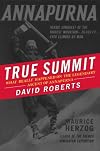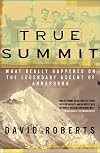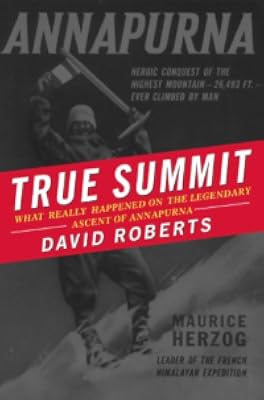
True Summit: What Really Happened on the Legendary Ascent of Annapurna
by David Roberts
On This Page
Description
In a startling look at the classic Annapurna -- the most famous book about mountaineering -- David Roberts discloses what really happened on the legendary expedition to the Himalayan peak. In June 1950, a team of mountaineers was the first to conquer an 8,000-meter peak. Maurice Herzog, the leader of the expedition, became a national hero in France, and Annapurna, his account of the historic ascent, has long been regarded as the ultimate tale of courage and cooperation under the harshest of show more conditions. In True Summit, David Roberts presents a fascinating revision of this classic tale. Using newly available documents and information gleaned from a rare interview with Herzog (the only climber on the team still living), Roberts shows that the expedition was torn by dissent. As he re-creates the actual events, Roberts lays bare Herzog's self-serving determination and bestows long-delayed credit to the most accomplished and unsung heroes. These new revelations will inspire young adventurers and change forever the way we think about this victory in the mountains and the climbers who achieved it. show lessTags
Recommendations













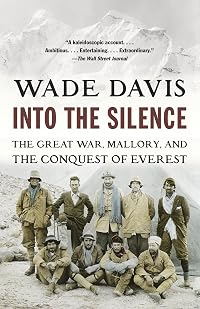

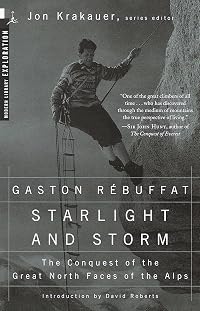










Member Recommendations

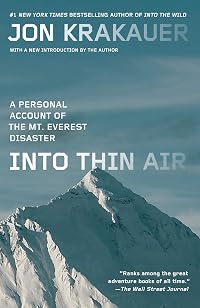
Sprad Annapurna is the original published account of the Annapurna expedition - a good companion to True Summit, which details the inconsistencies in Herzog's account.
Member Reviews
On a whim, I’ve been reading mountaineering books over the last several months (I have no background in the sport). One of them was [Annapura], [[Maurice Herzog]]’s account of the first ascent of Annapurna 1, of which he was the expedition leader. [Annapurna] is the best selling mountaineering book of all time, and is duly famous. Nevertheless, I found that I didn’t quite believe it. Herzog’s account seemed entirely self-serving, including made-up conversations and awkward sequences. After I finished the book, I went online to discover if there had been any controversy. And, of course, there was.
Roberts does a fabulous job of comparing Herzog’s account to materials that became available much later. He interviewed family and show more friends of the team members and Herzog himself, the only surviving member of the French team. I won’t go into details, but I think that Roberts makes a very convincing case for a broader view of events, and of a great deal more credit being given to Herzog’s expedition teammates, particularly Louis Lachenal (who summited with Herzog, but was all but forgotten by the press), Gaston Rébuffat, and Lionel Terray, without whom there would have almost certainly been deaths on the mountain.
Not everyone thinks that Roberts got it right, but to his credit, Roberts states that he believes both that Herzog is convinced that his words are truth, and that no one individual can truly understand all that went on during the expedition. But there was one quote that I thought was particularly telling.
In 1998, one of the few surviving sherpas from the expedition was in Paris. Herzog greeted him in front of the press. Later, while being questioned by the press, Fouthkarty said “I carried this man on my back until I could taste blood in my mouth, and today he has only five minutes for me. It’s too bad for him.” p187 show less
Roberts does a fabulous job of comparing Herzog’s account to materials that became available much later. He interviewed family and show more friends of the team members and Herzog himself, the only surviving member of the French team. I won’t go into details, but I think that Roberts makes a very convincing case for a broader view of events, and of a great deal more credit being given to Herzog’s expedition teammates, particularly Louis Lachenal (who summited with Herzog, but was all but forgotten by the press), Gaston Rébuffat, and Lionel Terray, without whom there would have almost certainly been deaths on the mountain.
Not everyone thinks that Roberts got it right, but to his credit, Roberts states that he believes both that Herzog is convinced that his words are truth, and that no one individual can truly understand all that went on during the expedition. But there was one quote that I thought was particularly telling.
In 1998, one of the few surviving sherpas from the expedition was in Paris. Herzog greeted him in front of the press. Later, while being questioned by the press, Fouthkarty said “I carried this man on my back until I could taste blood in my mouth, and today he has only five minutes for me. It’s too bad for him.” p187 show less
Maurice Herzog was the first person to reach the summit of Annapurna, one of the 8,000 meter peaks. The expedition he guided in 1950 suffered tremendously on the way down, as did Herzog who lost all fingers and toes to frostbite. His account of the journey was a testimony to the team-building self-sacrifice and wonderful spirit of the four mountaineers (less was said of the Sherpas who carried Herzog and Lachenal for miles on the descent.) His colleagues, Lionel Terray, Gaston Rebuffat and Louis Lachenal, were successful climbers in their own right, and Terray’s and Lachenal’s mountaineering books are considered classics. Herzog’s book, which he dictated from his hospital bed, made him a national hero in France. The question show more Roberts raises in his book is whether Herzog’s account is true.
Herzog made himself into a hero with canny public relations and perhaps by not emphasizing the important role his colleagues played in the ascent. He made each of them sign contracts not to publish before they left. That he was self-aggrandizing is not in doubt. In my experience, mountaineers who write books about their feats all tend to have blinders on, completely understandable when you consider their isolation, even when in a group, as they make the climb.
David Roberts compared the individual accounts of each climbers diary with Herzogs published version and notes what Herzog changed or omitted. He intersperses his narrative with comments of his own reflections about climbing, and he then uses the other climbers' reports and diaries to dismantle Herzog's self-aggrandizing recollections. In the end, I think the author is perhaps making a mountain from a valley. He says it best himself:
Surely the discrepancies begged critics to accuse him of dishonesty. The new, more self- serving version might cast a better light on Herzog, but it was an open invitation to readers such as myself to call his rewriting bluff. The third possibility, I thought, was that this is indeed how memory works, in all its fallible reinvention of the past. After nearly fifty years, Herzog’s emotions about those dramatic days high on Annapurna had perhaps restructured his memories… These reconstructions need not be cynical, or even fully conscious, on Herzog’s part. They could be the fruit of memory’s seizing again and again on disturbing, pivotal events, reshaping them with each rehearsal, trying to find meaning where there was only happenstance.
A terrific book for anyone who likes to read about mountaineering and even, perhaps, those interested in the malleability (not to mention fallibility) of memory. show less
Herzog made himself into a hero with canny public relations and perhaps by not emphasizing the important role his colleagues played in the ascent. He made each of them sign contracts not to publish before they left. That he was self-aggrandizing is not in doubt. In my experience, mountaineers who write books about their feats all tend to have blinders on, completely understandable when you consider their isolation, even when in a group, as they make the climb.
David Roberts compared the individual accounts of each climbers diary with Herzogs published version and notes what Herzog changed or omitted. He intersperses his narrative with comments of his own reflections about climbing, and he then uses the other climbers' reports and diaries to dismantle Herzog's self-aggrandizing recollections. In the end, I think the author is perhaps making a mountain from a valley. He says it best himself:
Surely the discrepancies begged critics to accuse him of dishonesty. The new, more self- serving version might cast a better light on Herzog, but it was an open invitation to readers such as myself to call his rewriting bluff. The third possibility, I thought, was that this is indeed how memory works, in all its fallible reinvention of the past. After nearly fifty years, Herzog’s emotions about those dramatic days high on Annapurna had perhaps restructured his memories… These reconstructions need not be cynical, or even fully conscious, on Herzog’s part. They could be the fruit of memory’s seizing again and again on disturbing, pivotal events, reshaping them with each rehearsal, trying to find meaning where there was only happenstance.
A terrific book for anyone who likes to read about mountaineering and even, perhaps, those interested in the malleability (not to mention fallibility) of memory. show less
Before setting off to attempt to climb Annapurna, the expedition members were required to sign a contract agreeing to publish nothing about the trip for five years after the expedition. This left the expedition leader, Maurice Herzog, free to completely control the account of the expedition that reached the public. Herzog's tale fired the imaginations of countless people, inspiring many influential climbers to begin their careers. The only problem with Herzog's tale is that it was a tale. Herzog portrayed the expedition as a perfect adventure, with himself as the wise and capable leader who kept his unruly team together and who brilliantly made every correct decision needed to "conquer" the mountain.
Using primary sources, most notably a show more diary of the expedition, interviews and published sources, David Roberts pieces together an account of the Annapurna expedition that reveals the other members of the team as the brilliant, expert climbers that they were and which gives long overdue credit to Louis Lachenal, the climber who summited with Herzog, as well as to Lionel Terray and Gaston Rebouffat, whose expertise and skills made the summit push possible, and who enabled Lachenal and Herzog to survive the descent.
Although book reads a little less smoothly that most of Roberts' writing, primarily due to the copious inclusion of quotes from other sources, it should be on the to read list of any climbing afficianado, especially anyone who was captivated by Herzog's account. Roberts takes considerable care not to denigrate Herzog's very legitimate accomplishments as a leader and as a climber. For me, the insight into the characters and contributions of Lachenal, Terray and Rebouffat (as well as the other members of the expedition) was a major source of enjoyment. Discovering these men through Roberts' efforts brought the Annapurna expedition to life for me. show less
Using primary sources, most notably a show more diary of the expedition, interviews and published sources, David Roberts pieces together an account of the Annapurna expedition that reveals the other members of the team as the brilliant, expert climbers that they were and which gives long overdue credit to Louis Lachenal, the climber who summited with Herzog, as well as to Lionel Terray and Gaston Rebouffat, whose expertise and skills made the summit push possible, and who enabled Lachenal and Herzog to survive the descent.
Although book reads a little less smoothly that most of Roberts' writing, primarily due to the copious inclusion of quotes from other sources, it should be on the to read list of any climbing afficianado, especially anyone who was captivated by Herzog's account. Roberts takes considerable care not to denigrate Herzog's very legitimate accomplishments as a leader and as a climber. For me, the insight into the characters and contributions of Lachenal, Terray and Rebouffat (as well as the other members of the expedition) was a major source of enjoyment. Discovering these men through Roberts' efforts brought the Annapurna expedition to life for me. show less
David Roberts is one of my favorite climber-authors. I generally like his take on things and have only disliked one or two of his books. "True Summit: What really happened on the legendary ascent of Annapurna" was a bit of a misfire for me -- I felt like the revelations about the first ascent of this Himalayan 8,000 meter peak, weren't all that interesting.
To be fair, I'm apparently the only person on Earth who didn't particularly care for Maurice Herzog's account of the climb (despite his book "Annapurna" being beloved in mountaineering circles.) I've read nearly all of the other books Roberts mentions in this one and preferred them all to Herzog's enthusiastic account.
There are plenty of accounts of discord in mountaineering books -- show more and I've enjoyed them greatly -- but the discord Roberts mentions is seems so pat and usual that it really didn't make for very interesting reading. The story of the climb, told by Roberts is fine enough, but I definitely wouldn't consider this one of his better books. show less
To be fair, I'm apparently the only person on Earth who didn't particularly care for Maurice Herzog's account of the climb (despite his book "Annapurna" being beloved in mountaineering circles.) I've read nearly all of the other books Roberts mentions in this one and preferred them all to Herzog's enthusiastic account.
There are plenty of accounts of discord in mountaineering books -- show more and I've enjoyed them greatly -- but the discord Roberts mentions is seems so pat and usual that it really didn't make for very interesting reading. The story of the climb, told by Roberts is fine enough, but I definitely wouldn't consider this one of his better books. show less
Ratings
Members
- Recently Added By
Published Reviews
ThingScore 100
On the occasion of the 50th anniversary of the Annapurna ascent...the American author and climber David Roberts revisits that historic expedition in ''True Summit'' and finds troubling new meaning in Herzog's famous phrase. ''Other Annapurnas,'' it turns out, did exist -- in the memories of the author's own climbing mates. In order to preserve the legend of France's greatest climb, and perhaps show more his own reputation as well, Herzog suppressed competing versions of the Annapurna climb for nearly 50 years. show less
added by srdr
Author Information

35+ Works 5,073 Members
David Roberts is a climber and mountaineer and the author of thirty books about mountaineering, exploration, and anthropology. His books have won the Boardman Tasker Award for Mountain Literature and the Grand Prize at the Banff Mountain Book Festival, and have been shortlisted for the PEN/ESPN Award for Literary Sports Writing. He lives in show more Massachusetts. show less
Common Knowledge
- People/Characters
- Gaston Rebuffat; Maurice Herzog; Lionel Terray
- Important places
- Annapurna; Himalayas; Nepal
Classifications
- Genres
- Sports and Leisure, Nonfiction, General Nonfiction, Travel, History, Biography & Memoir
- DDC/MDS
- 796.52 — Arts & recreation Recreation, sports, and performing arts Athletic and outdoor sports and games Outdoor leisure Walking and exploring by kind of terrain
- LCC
- GV199.44 .N462 .A5664 — Geography, Anthropology and Recreation Recreation. Leisure Recreation. Leisure Outdoor life. Outdoor recreation Hiking. Pedestrian tours
- BISAC
Statistics
- Members
- 133
- Popularity
- 246,734
- Reviews
- 4
- Rating
- (3.83)
- Languages
- English, French, Hungarian, Spanish
- Media
- Paper, Ebook
- ISBNs
- 8
- ASINs
- 2