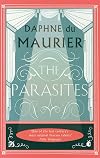
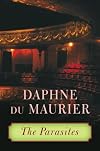
The Parasites
by Daphne Du Maurier
On This Page
Description
HTML:When people play the game: Name three or four persons whom you would choose to have with you on a desert island - they never choose the Delaneys. They don't even choose us one by one as individuals. We have earned, not always fairly we consider, the reputation of being difficult guests . . .Maria, Niall, and Celia have grown up in the shadow of their famous parents - their father, a flamboyant singer and their mother, a talented dancer. Now pursuing their own creative dreams, all three show more siblings feel an undeniable bond, but it is Maria and Niall who share the secret of their parents' pasts.
Alternately comic and poignant, The Parasites is based on the artistic milieu its author knew best, and draws the reader effortlessly into that magical world. Literature. Fiction. show less
Tags
Recommendations

























Member Reviews
The book descended so gently into its deep psychoanalysis of these semi-siblings that I was caught unawares by how deeply invested in these characters I've become. It has some of my favourite relationship-binary themes of love-hate, and sacrifice-selfishness, giving me residual heart squeezes reminiscent of Geek Love and Never Let Me Go.
What had started out as a strangely facetious and lilted portrayal of how a privileged upbringing translates into parasitic adulthoods has turned into one of the best multi-codependent characterisations I have read. In retrospect, the characters were already fully realised, which is somehow doubly satisfying: that the reader-detective has to reevaluate the previously-dismissed clues.
What had started out as a strangely facetious and lilted portrayal of how a privileged upbringing translates into parasitic adulthoods has turned into one of the best multi-codependent characterisations I have read. In retrospect, the characters were already fully realised, which is somehow doubly satisfying: that the reader-detective has to reevaluate the previously-dismissed clues.
This was a thoroughly satisfying read for me. In ways it reminds me of Nancy Mitford's The Pursuit of Love, a book that I did not like, but somehow I care more about du Maurier's Parasites than I do any of Mitford's characters.
Plot points are revealed quietly rather than lit with spotlights, to the point that there was one major relationship that I missed for a good chunk of the novel. I love this way of telling a story. The characters were annoying, selfish little people, but they were also so full of potential that I just couldn't help hoping that they would change, just as I do with myself and every other human being I care about. But by and large we don't change, do we? We have our patterns of behavior that we stick to even when we show more recognize them and that they're not leading us to better things. Because trying to be our best selves might reveal that we already are, and that would be too disappointing. Better to stick with the comforting and familiar.
I most thoroughly related to Celia, who derives her self-worth from caring for others and uses that time-consuming task as an excuse to avoid putting herself out there for criticism. I will not go into detail here about the ways in which I feel akin to Celia, but trust that I'm reflecting deeply on my own outside of this review and I plan to have big plans to change and then just go back and do the same things I've always done. Because, best I can tell, that's what mid-life is all about: realizing once and for all that you can change the venue, but you're still the same you no matter what.
Aside from these, I love that du Maurier's Pappy anticipated (or perhaps inspired) Albert Brooks's 1991 film "Defending Your Life." (on p 178 of the edition I read).
I'll finish out with one of the quotes I particularly like because it echoes some of the existential discomfort my middle-schooler is voicing right now:
Looking back, I find it interesting to try and spot that moment for each of the Delaney children---and for myself. show less
Plot points are revealed quietly rather than lit with spotlights, to the point that there was one major relationship that I missed for a good chunk of the novel. I love this way of telling a story. The characters were annoying, selfish little people, but they were also so full of potential that I just couldn't help hoping that they would change, just as I do with myself and every other human being I care about. But by and large we don't change, do we? We have our patterns of behavior that we stick to even when we show more recognize them and that they're not leading us to better things. Because trying to be our best selves might reveal that we already are, and that would be too disappointing. Better to stick with the comforting and familiar.
I most thoroughly related to Celia, who derives her self-worth from caring for others and uses that time-consuming task as an excuse to avoid putting herself out there for criticism. I will not go into detail here about the ways in which I feel akin to Celia, but trust that I'm reflecting deeply on my own outside of this review and I plan to have big plans to change and then just go back and do the same things I've always done. Because, best I can tell, that's what mid-life is all about: realizing once and for all that you can change the venue, but you're still the same you no matter what.
Aside from these, I love that du Maurier's Pappy anticipated (or perhaps inspired) Albert Brooks's 1991 film "Defending Your Life." (on p 178 of the edition I read).
I'll finish out with one of the quotes I particularly like because it echoes some of the existential discomfort my middle-schooler is voicing right now:
"Grown-up people...How suddenly would it happen, the final plunge into their world? Did it really come about overnight, as Pappy said, between sleeping and waking? A day would come, a day like any other day, and, looking over your shoulder, you would see the shadow of the child that was, receding; and there would be no going back, no possibility of recapturing the shadow. You had to go on; you had to step forward into the future, however much you dreaded the thought, however much you were afraid." (56)
Looking back, I find it interesting to try and spot that moment for each of the Delaney children---and for myself. show less
This was a thoroughly satisfying read for me. In ways it reminds me of Nancy Mitford's The Pursuit of Love, a book that I did not like, but somehow I care more about du Maurier's Parasites than I do any of Mitford's characters.
Plot points are revealed quietly rather than lit with spotlights, to the point that there was one major relationship that I missed for a good chunk of the novel. I love this way of telling a story. The characters were annoying, selfish little people, but they were also so full of potential that I just couldn't help hoping that they would change, just as I do with myself and every other human being I care about. But by and large we don't change, do we? We have our patterns of behavior that we stick to even when we show more recognize them and that they're not leading us to better things. Because trying to be our best selves might reveal that we already are, and that would be too disappointing. Better to stick with the comforting and familiar.
I most thoroughly related to Celia, who derives her self-worth from caring for others and uses that time-consuming task as an excuse to avoid putting herself out there for criticism. I will not go into detail here about the ways in which I feel akin to Celia, but trust that I'm reflecting deeply on my own outside of this review and I plan to have big plans to change and then just go back and do the same things I've always done. Because, best I can tell, that's what mid-life is all about: realizing once and for all that you can change the venue, but you're still the same you no matter what.
Aside from these, I love that du Maurier's Pappy anticipated (or perhaps inspired) Albert Brooks's 1991 film "Defending Your Life." (on p 178 of the edition I read).
I'll finish out with one of the quotes I particularly like because it echoes some of the existential discomfort my middle-schooler is voicing right now:
Looking back, I find it interesting to try and spot that moment for each of the Delaney children---and for myself. show less
Plot points are revealed quietly rather than lit with spotlights, to the point that there was one major relationship that I missed for a good chunk of the novel. I love this way of telling a story. The characters were annoying, selfish little people, but they were also so full of potential that I just couldn't help hoping that they would change, just as I do with myself and every other human being I care about. But by and large we don't change, do we? We have our patterns of behavior that we stick to even when we show more recognize them and that they're not leading us to better things. Because trying to be our best selves might reveal that we already are, and that would be too disappointing. Better to stick with the comforting and familiar.
I most thoroughly related to Celia, who derives her self-worth from caring for others and uses that time-consuming task as an excuse to avoid putting herself out there for criticism. I will not go into detail here about the ways in which I feel akin to Celia, but trust that I'm reflecting deeply on my own outside of this review and I plan to have big plans to change and then just go back and do the same things I've always done. Because, best I can tell, that's what mid-life is all about: realizing once and for all that you can change the venue, but you're still the same you no matter what.
Aside from these, I love that du Maurier's Pappy anticipated (or perhaps inspired) Albert Brooks's 1991 film "Defending Your Life." (on p 178 of the edition I read).
I'll finish out with one of the quotes I particularly like because it echoes some of the existential discomfort my middle-schooler is voicing right now:
"Grown-up people...How suddenly would it happen, the final plunge into their world? Did it really come about overnight, as Pappy said, between sleeping and waking? A day would come, a day like any other day, and, looking over your shoulder, you would see the shadow of the child that was, receding; and there would be no going back, no possibility of recapturing the shadow. You had to go on; you had to step forward into the future, however much you dreaded the thought, however much you were afraid." (56)
Looking back, I find it interesting to try and spot that moment for each of the Delaney children---and for myself. show less
Just so well-written. I had no idea Daphe du Maurier could be so funny (not just dark). She certainly can paint a scene, depict a character type. I totally enjoyed this novel and it has inspired me to read more du Maurier. If you're into dysfunctional, theatrical families, this is for you!
A very unexpected book. Having read a couple of du Mauriers I was expecting brooding melodrama, and instead got a tricky comedy of manners with a bitter edge. The sibling parasites are drawn to fascinate rather than to emotionally engage, and so they do - together with period detail that glitters and glamours, but again with a seedy edge of neglect and regret.
Daphne Du Maurier is at the top of the list of my favourite authors, Rebecca is definitely my favourite book of all time. I always get a bit nervous when I start another one of her books as I worry that I will be disappointed in it but Du Maurier, yet again, did not disappoint.
The Parasites is about the Delaney siblings, Maria, Niall and Celia. They are the off-spring of very famous parents; their father was one of the greatest singers of the time and their mother was an extremely talented and applauded dancer. Celia is the only child that shares both parents, so she is half sister to Niall and Maria, who share no blood ties, yet they have the closest bond of all the children. These three complex characters are actually the parasites in show more the title as they are seen to live off the talent of their parents as they try to forge their own creative careers. Du Maurier shows them in the present day she then creates a series of flashback to show how they have become they people they are now.
This book could be slightly auto-biographical; Daphne was the daughter of Sir Gerald Du Maurier, a famous actor and manager and her mother was the actress Muriel Beaumont. Perhaps there are elements of Du Maurier in the character of Celia whose true talent is writing and illustrating stories yet she suppresses this in order to take care of her ailing father. Du Maurier did have a tempestuous relationship with her father and he greatly influenced her. She worked extremely hard to gain the success that she did; maybe Celia is the person she could have been if she had not had the will to explore and use her talent for writing.
I really enjoyed this book but many parts of it are not pleasant; Du Maurier is so good at creating characters that can truly make you cringe. Niall and Maria are especially detestable, selfish creatures. However, Du Maurier has woven the story so well that you do have sympathy for them as they are very much a product of their childhood. Du Maurier really captured for me the feeling you have when you suddenly realise that you are a grown-up:
A day would come, a day like any other day, and looking over your shoulder you would see the shadow of the child that was, receding; and there would be no going back, no possibility of recapturing the shadow.
I really enjoyed this book, the relationships between the characters keeps you gripped, especially the one between Niall and Maria. Du Maurier has an extremely clever and subtle style of writing, she does not bombard you with information, instead she weaves the little details throughout her story so that you gradually get to know the characters. There is always an air of mystery that keeps you turning the pages. show less
The Parasites is about the Delaney siblings, Maria, Niall and Celia. They are the off-spring of very famous parents; their father was one of the greatest singers of the time and their mother was an extremely talented and applauded dancer. Celia is the only child that shares both parents, so she is half sister to Niall and Maria, who share no blood ties, yet they have the closest bond of all the children. These three complex characters are actually the parasites in show more the title as they are seen to live off the talent of their parents as they try to forge their own creative careers. Du Maurier shows them in the present day she then creates a series of flashback to show how they have become they people they are now.
This book could be slightly auto-biographical; Daphne was the daughter of Sir Gerald Du Maurier, a famous actor and manager and her mother was the actress Muriel Beaumont. Perhaps there are elements of Du Maurier in the character of Celia whose true talent is writing and illustrating stories yet she suppresses this in order to take care of her ailing father. Du Maurier did have a tempestuous relationship with her father and he greatly influenced her. She worked extremely hard to gain the success that she did; maybe Celia is the person she could have been if she had not had the will to explore and use her talent for writing.
I really enjoyed this book but many parts of it are not pleasant; Du Maurier is so good at creating characters that can truly make you cringe. Niall and Maria are especially detestable, selfish creatures. However, Du Maurier has woven the story so well that you do have sympathy for them as they are very much a product of their childhood. Du Maurier really captured for me the feeling you have when you suddenly realise that you are a grown-up:
A day would come, a day like any other day, and looking over your shoulder you would see the shadow of the child that was, receding; and there would be no going back, no possibility of recapturing the shadow.
I really enjoyed this book, the relationships between the characters keeps you gripped, especially the one between Niall and Maria. Du Maurier has an extremely clever and subtle style of writing, she does not bombard you with information, instead she weaves the little details throughout her story so that you gradually get to know the characters. There is always an air of mystery that keeps you turning the pages. show less
The backward glances at the careers of the young Delaneys reveal vistas of a vanishing Europe rich in colour and throbbing with old gaiety. The clash of the impulsive, artistic family with the calculating, aristocratic one is extremely well worked out. Above all, the three young Delaneys are characters one accepts as authentic.
One of the few books - if the only book - by du Maurier that is set at roughly the time it was written (it was published in 1949 and set in the 1930s and 1940s) and is a study purely of a trio of siblings.
Pappy and Mama Delaney get married, each bringing a child to the marriage - Pappy (a famous singer) brings Maria who becomes a famous actress and Mama (a famous dancer) brings Niall, who becomes a famous composer show more of popular ditties. Together Pappy and Mama have Celia, who is an artist that never achieves the fame of her siblings.
In later years Maria marries Charles, one of the landed gentry, and it is here that the book starts - Charles has reached his limits of his wife and her siblings, and within the first few pages has called them "the parasites" of the title and walked out. It is this confrontation that leads the reader through the story of the three siblings, and how things came to this point and where things go from here. It's not quite clear who the narrator is, especially at the beginning, where it's as if there is an additional unnamed person in the room telling the story.
Maria has grown up to be "on the stage" like her parents, and has had various inappropriate relationships during the years, all safely alluded to - one with Michel, who has a thing for underage girls, one with an unnamed married actor from one of her initial plays. Niall has an unhealthy fixation with Maria, getting stage fright for her performances (to the point where he cant watch them), and a difficulty following through with finishing his own work, which is briefly sorted out by escaping to Paris to "live in sin" with Freada, a friend of his parents and old enough to be his mother. Niall and Maria have a borderline incestuous relationship - possibly acted upon sexually and only mitigated in their heads in that they were not, technically, related by blood.
Celia is the one who never quite reaches her artistic fame - she spends enough of her time looking after her father as he gets older and retires, then (so she believes) Maria, then the war, then looks forward to looking after Maria's children. She is always being compared to either one of them (usually Maria) and is constantly reminded "Oh you're not really alike" "We're only half sisters after all". There are the occasional reference to how "fat" she is - in other words she can be anything from one size bigger than Maria to absolutely huge - but she is always made to feel inferior to Maria. Even when Maria borrows Celia's earrings without asking, Celia feels it necessary to think that Maria looks better in them.
It did drag on a *little* bit - I must admit I didn't stay up all night to complete it. However, it is a great study in people and personal/familial dynamics that I'm not sure anyone else could have pulled off as well. show less
One of the few books - if the only book - by du Maurier that is set at roughly the time it was written (it was published in 1949 and set in the 1930s and 1940s) and is a study purely of a trio of siblings.
Pappy and Mama Delaney get married, each bringing a child to the marriage - Pappy (a famous singer) brings Maria who becomes a famous actress and Mama (a famous dancer) brings Niall, who becomes a famous composer show more of popular ditties. Together Pappy and Mama have Celia, who is an artist that never achieves the fame of her siblings.
In later years Maria marries Charles, one of the landed gentry, and it is here that the book starts - Charles has reached his limits of his wife and her siblings, and within the first few pages has called them "the parasites" of the title and walked out. It is this confrontation that leads the reader through the story of the three siblings, and how things came to this point and where things go from here. It's not quite clear who the narrator is, especially at the beginning, where it's as if there is an additional unnamed person in the room telling the story.
Maria has grown up to be "on the stage" like her parents, and has had various inappropriate relationships during the years, all safely alluded to - one with Michel, who has a thing for underage girls, one with an unnamed married actor from one of her initial plays. Niall has an unhealthy fixation with Maria, getting stage fright for her performances (to the point where he cant watch them), and a difficulty following through with finishing his own work, which is briefly sorted out by escaping to Paris to "live in sin" with Freada, a friend of his parents and old enough to be his mother. Niall and Maria have a borderline incestuous relationship - possibly acted upon sexually and only mitigated in their heads in that they were not, technically, related by blood.
Celia is the one who never quite reaches her artistic fame - she spends enough of her time looking after her father as he gets older and retires, then (so she believes) Maria, then the war, then looks forward to looking after Maria's children. She is always being compared to either one of them (usually Maria) and is constantly reminded "Oh you're not really alike" "We're only half sisters after all". There are the occasional reference to how "fat" she is - in other words she can be anything from one size bigger than Maria to absolutely huge - but she is always made to feel inferior to Maria. Even when Maria borrows Celia's earrings without asking, Celia feels it necessary to think that Maria looks better in them.
It did drag on a *little* bit - I must admit I didn't stay up all night to complete it. However, it is a great study in people and personal/familial dynamics that I'm not sure anyone else could have pulled off as well. show less
Members
- Recently Added By
Lists

The Guardian's 1000 Novels Everyone Must Read
1,005 works; 550 members

Favourite Virago Modern Classics
183 works; 38 members
1940s
221 works; 25 members

Female Author
1,234 works; 67 members

Books Set in Great Britain
191 works; 13 members

Novels featuring siblings
133 works; 8 members

Discontinued
19 works; 4 members

Publisher's Weekly Bestsellers - Part II - 1940 - 1979
355 works; 5 members

le donne raccontano
116 works; 1 member

Novels Featuring Actors and the Theater
4 works; 1 member

Books Read in 2019
4,052 works; 110 members

Books Read in 2006
421 works; 8 members

Books Read in 2024
4,623 works; 126 members

Read in 2006
140 works; 1 member
Author Information

204+ Works 57,518 Members
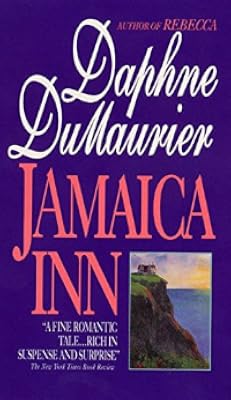
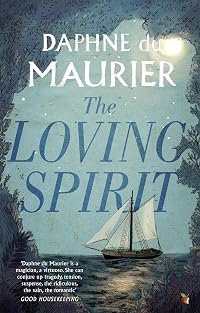
Daphne Du Maurier was born in London on May 13, 1907 and educated in Paris. In 1932, she married Lieutenant-General Sir Frederick Browning. She began writing short stories of mystery and suspense for magazines in 1928, a collection of which appeared as The Apple Tree in 1952. Her first novel, The Loving Spirit, was published in 1931. Her tightly show more woven, highly suspenseful plots and her strong characters make her stories perfect for adaptation to film or television. Among her many novels that were made into successful films are Jamaica Inn (1936), Rebecca (1938), Frenchman's Creek (1941), Hungry Hill (1943), My Cousin Rachel (1952), and The Scapegoat (1957). Her short story, The Birds (1953), was brought to the screen by director Alfred Hitchcock in a treatment that has become a classic horror-suspense film. She died on April 19, 1989 at the age of 81. (Bowker Author Biography) show less
Some Editions
Awards and Honors
Distinctions
Notable Lists
Series
Belongs to Publisher Series
Virago Modern Classics (518)
Work Relationships
Is contained in
Common Knowledge
- Canonical title
- The Parasites
- Original title
- The parasites
- Original publication date
- 1949
- People/Characters
- Maria Delaney; Niall Delaney; Celia Delaney
- Important places
- Farthings
- Epigraph
- Animal parasites are invertebrate animals which have taken up their abode in or upon the living bodies of other animals. From a broad biological outlook parasitism is a negative reaction to the struggle for existence, and a... (show all)lways implies a mode of life that is near the line of least resistance....Occasional parasites are to be distinguished from permanent parasites. Among the former are the bed-bug and the leech, which usually abandon their host when they have obtained their object. In the embryo stage they are migratory, moving from host to host, or to a free life before becoming mature... Amongst the latter are the so-called fish-lice, which, with piercing mouth organs and elaborate clinging appartus, remain the same host always, and are amongst the most degenerate parasites known. Parasites affect their hosts by feeding upon their living tissues or cells, and the intensity of the effect upon the hosts ranges from the slightest local injury to complete destruction. -- The Encyclopaedia Britannica
- Dedication
- For Whom the Caps fit
MENABILLY.
Spring, 1949. - First words
- It was Charles who called us the parasites.
I first encountered The Parasites in the Nottingham Library, summer of '76. (Introduction) - Quotations
- "Grown-up people...How suddenly would it happen, the final plunge into their world? Did it really come about overnight, as Pappy said, between sleeping and waking? A day would come, a day like any other day, and, looking over... (show all) your shoulder, you would see the shadow of the child that was, receding; and there would be no going back, no possibility of recapturing the shadow. You had to go on; you had to step forward into the future, however much you dreaded the thought, however much you were afraid."
- Last words
- (Click to show. Warning: May contain spoilers.)The sea was another Truda, upon which he could cast himself when the time came, without anguish, without fear.
(Click to show. Warning: May contain spoilers.)It's a tribute to the complexity and breadth of this strange, unnerving novel that I'm still trying to decide. (Introduction) - Disambiguation notice
- Mentioned in Doomed by Chuck Palahniuk....
Classifications
Statistics
- Members
- 818
- Popularity
- 33,749
- Reviews
- 20
- Rating
- (3.60)
- Languages
- 9 — English, Finnish, French, German, Greek, Italian, Norwegian, Spanish, Swedish
- Media
- Paper, Audiobook, Ebook
- ISBNs
- 33
- UPCs
- 1
- ASINs
- 44