Accident
by Nicholas Mosley
On This Page
Description
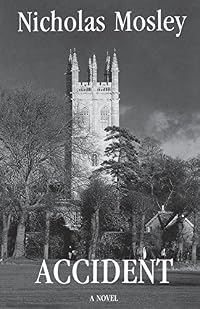
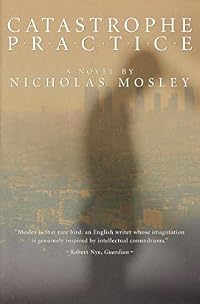
"Accident," Nicholas Mosley's brilliantly conceived and efficiently structured novel about Oxford University and environs, is a prose poem about marriage and infidelity, as well as the relationship between writing and existence, imagination and action. It is a study of the games academics play both with their students and with themselves, on campus and off, in bed or on the cricket fields or baronial halls of the landed gentry. By probing the mind of one philosopher-don, Stephen, who has show more second thoughts about what constitutes an "accident," Mosley gives us an unforgettable view of life at the top or tip of the academic heights, in addition to a moving story of love and betrayal. show lessTags
Recommendations
















Member Reviews
This is an obsessive short novel that opens with an accident. The narrator, Stephen Jervis - a don at Oxford, has come upon two of his students, Anna and William, who have just crashed their car. The story flashes back to the moment when Anna has just met Stephen, as he has become her Philosophy tutor. As a tutor in Philosophy Stephen seems conflicted. In order to hide from his emotions he focuses on his work. "The consolations of work are that you come from it tired at the end of a long day. A robot, with men working inside you. They pull levers; switch. You watch and move. At the end you have something to look forward to. You go home. To rest. The mechanism sleeps. The men open doors, windows. Look out into the air."(p 18)
In the first show more meeting with Anna he gives her a brief introduction to the nature of philosophy and how much she must learn about it - existence and persons. What makes a person an enduring entity? What is the real substance of existence and what is an "accident." In his discussion with her it comes to the point where "Now we've got a choice. Before it was Just accident."(p 31)
With this introductory moment we have the theme of the novel. There is the real and the accidents of our existence. These will be played out through the lives of Stephen and his wife Rosalind, lives that include infidelity and the games that Stephen plays with the lives of others; both his student Anna and, in London, Francesca. As he thinks about the events leading up to the accident he wonders: "At what point did the course of events go wrong?" He thinks, "An accident is different from reality."(p 61) But what is reality? Is it the truth or an accident? The novel provides questions, not answers.
The culmination of his affairs comes in the relation of various incidents to the accident of the title, one that is on more physical grounds and one where, another one of Stephen's students, a young man he really doesn't like, William, is killed. What role does Stephen play in all of this? Should he feel guilt or is he even guilty? During the course of the book Anna has exercised quite an influence not only on William, but on Stephen and his colleague, Charlie. And at the close of what has been a demonstration and a defense of free will, worrying about the questions of guilt versus responsibility, Stephen (and Charlie) are left to determine their own conduct. Mosley writes in a style that commands attention. It is allusive, controlled, and with ideas that are implicit. For those who love novels of ideas and their relation to human emotions this is a perfect short novel. show less
In the first show more meeting with Anna he gives her a brief introduction to the nature of philosophy and how much she must learn about it - existence and persons. What makes a person an enduring entity? What is the real substance of existence and what is an "accident." In his discussion with her it comes to the point where "Now we've got a choice. Before it was Just accident."(p 31)
With this introductory moment we have the theme of the novel. There is the real and the accidents of our existence. These will be played out through the lives of Stephen and his wife Rosalind, lives that include infidelity and the games that Stephen plays with the lives of others; both his student Anna and, in London, Francesca. As he thinks about the events leading up to the accident he wonders: "At what point did the course of events go wrong?" He thinks, "An accident is different from reality."(p 61) But what is reality? Is it the truth or an accident? The novel provides questions, not answers.
The culmination of his affairs comes in the relation of various incidents to the accident of the title, one that is on more physical grounds and one where, another one of Stephen's students, a young man he really doesn't like, William, is killed. What role does Stephen play in all of this? Should he feel guilt or is he even guilty? During the course of the book Anna has exercised quite an influence not only on William, but on Stephen and his colleague, Charlie. And at the close of what has been a demonstration and a defense of free will, worrying about the questions of guilt versus responsibility, Stephen (and Charlie) are left to determine their own conduct. Mosley writes in a style that commands attention. It is allusive, controlled, and with ideas that are implicit. For those who love novels of ideas and their relation to human emotions this is a perfect short novel. show less
Ratings
Members
- Recently Added By
Author Information

34+ Works 1,535 Members
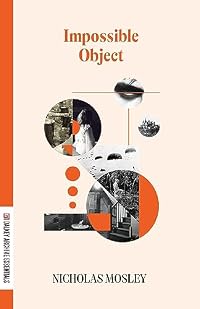
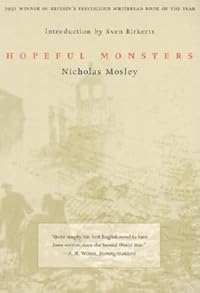
Nicholas Mosley was born on June 25, 1923. During World War II, he joined the Rifle Brigade and won the Military Cross. He read philosophy for one year at Oxford University. His first novel, Spaces in the Dark, was published in 1951. His other novels included Accident, Impossible Object, and Hopeful Monsters, which won the Whitbread book of the show more year in 1990. He wrote biographies of poet Julian Grenfell, Russian leader Leon Trotsky, and Father Raymond Raynes. He was best known for his two-part biography on his father Sir Oswald Mosley, the founder of the British Union of Fascists, entitled The Rules of the Game and Beyond the Pale. He died on February 28, 2017 at the age of 93. (Bowker Author Biography) show less
Work Relationships
Has the adaptation
Common Knowledge
Classifications
Statistics
- Members
- 80
- Popularity
- 395,132
- Reviews
- 1
- Rating
- (3.88)
- Languages
- English, French, Spanish
- Media
- Paper
- ISBNs
- 6
- ASINs
- 3