
Julian Rios
Author of Larva: A Midsummer Night's Babel
About the Author
Julian Rios is Spain's foremost postmodernist writer. His first two books were coauthored with Octavio Paz. Since that time he has written a number of books, including Poundemonium, Loves That Bind, Monstruary, and Kitaj: Pictures and Conversations, all of which have been published in English show more translation. He currently divides his time between Paris and Madrid show less
Works by Julian Rios
Mimohod senki 1 copy
Epifanía sin fin 1 copy
Cortejo de sombras 2007 1 copy
Associated Works
Tagged
Common Knowledge
- Birthdate
- 1941-03-11
- Gender
- male
- Nationality
- Spain
- Birthplace
- Vigo, Galicia, Spain
- Places of residence
- Vigo (Galicia) Spain
- Associated Place (for map)
- Galicia, Spain
Members
Reviews

Julian Rios is a giant, a master, of European post modern literature and this is the third of his books that has just taken my breath away. A love letter of kinds to literature and the plastic arts Monstruary is as inventive as Larva and as clever as Poundemonium but more readily accessible than either.
Monstruary is a form of pure literature that is becoming more and more difficult to find as publishers move ever deeper into simple financial waters steering clear of the maelstroms of show more experimental and innovative literature. I use the phrase "pure literature" simply to denote a text that is worth reading over and over just for the joy of the words and the constructions - I have no coherent idea of what "happens" or what the text is "about' but I do know that I have not taken so much pleasure in a text since Sorrentino's Red The Fiend.
There were times when I had to check that this text had in fact been translated from Spanish. I have no idea how the Spanish text reads but the English is so beautiful that I take my hat off to Edith Grossman who translated it and to Knopf who had the nerve and good taste to publish it. I could not recommend this book more. Readers and artists alike will just wallow in the textures and the images. show less
Monstruary is a form of pure literature that is becoming more and more difficult to find as publishers move ever deeper into simple financial waters steering clear of the maelstroms of show more experimental and innovative literature. I use the phrase "pure literature" simply to denote a text that is worth reading over and over just for the joy of the words and the constructions - I have no coherent idea of what "happens" or what the text is "about' but I do know that I have not taken so much pleasure in a text since Sorrentino's Red The Fiend.
There were times when I had to check that this text had in fact been translated from Spanish. I have no idea how the Spanish text reads but the English is so beautiful that I take my hat off to Edith Grossman who translated it and to Knopf who had the nerve and good taste to publish it. I could not recommend this book more. Readers and artists alike will just wallow in the textures and the images. show less
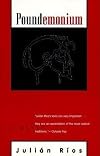
He could almost put him back in a cage. Iron cage in which he showed his golden age. There he learned to kneel, prostrate himself, lowdown Ez! his vanity on the ground, and to put himself on a level with the heavens.
This was an insomniac endeavor, a wakeful Wake where I could not slumber, only mumble and reread. The trick I read from others is to dash through once, revel in the rhythm and once finished -- go back and reread with the corresponding exegetical exercise: recto/verso, presto! I show more do hope to find normative sleep tonight, this was worth the earlier privation. Ríos unleashesa his usual nocturnal quest through London as a trio of literary comrades catch word that Ezra Pound has just died in Venice. What results is often maddening but a wonder to embrace. The pulse of Poundean puns persists, fortified by frequent googles, if not gurgles. I can say I gasped, if not grasped, the elusive essence on display: his play (Rios is not a dull boy). show less
This was an insomniac endeavor, a wakeful Wake where I could not slumber, only mumble and reread. The trick I read from others is to dash through once, revel in the rhythm and once finished -- go back and reread with the corresponding exegetical exercise: recto/verso, presto! I show more do hope to find normative sleep tonight, this was worth the earlier privation. Ríos unleashesa his usual nocturnal quest through London as a trio of literary comrades catch word that Ezra Pound has just died in Venice. What results is often maddening but a wonder to embrace. The pulse of Poundean puns persists, fortified by frequent googles, if not gurgles. I can say I gasped, if not grasped, the elusive essence on display: his play (Rios is not a dull boy). show less

In this bit of fiction concieved by the Spanish writer Julian Rios we have a literary work that borrows the heroines from many of the masterworks of literature and erotic literature of the 20th century retelling their tales and some further escapades as seen through the eyes and memory(ies) of the mysterious Emil--a somewhat down and out aristocratic rogue created by Rios to narrate or re-narrate these tales and sometimes even new adventures. It's also somewhat of a literay guessing game for show more the reader as Rios is not always that obvious in the clues he leaves about the characters and the books he has appropriated. The work unfolds one chapter at a time--one heroine each per letter A being for Proust's Albertine, B for Musil's Bonadea up to and finally ending with Z for Queneau's Zazie. For those interested I will name several of the other writers he borrows heroines from--Samuel Beckett, Vladimir Nabokov, James Joyce, William Faulkner, Franz Kafka, D. H. Lawrence and Louis Ferdinand Celine--(As it happens though I have not been able to figure out three of the heroines even with a lot of googling though I'm sure they're out there). FWIW these renderings not only borrow characters and some of their adventures and mis-adventures but often times imitate the particular writers prose. He is a bit hit and miss on that and the more critical reviews I've seen have critiqued him mainly on that point. Even so the tone is always playful and his writing is witty and sharply focused. Emil narrating from a more contemporary vantage point--in present day London juxtaposes these narrations with current events--catastrophes of one sort or another--bombings in Northern Ireland or Spain--military coups in Greece and earthquakes in India and also with the ups and downs of his landlady's cat Guay (or Why or ?; while she's away on vacation he's doing a somewhat sloppy job of taking care of it). In any case it's a fun book and a challenge (recommended reading) for anyone out there who thinks they know a lot about modern or post-modern literature. show less
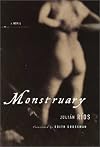
Like him or not there is no denying that Rios is one of the cleverest contemporary fiction writers around--there is a bit of James Joyce in him and a bit of Oulipo. Monstruary focuses around a painter with a very decided gothic bent--Victor Mons--who continually envisions works of art out of the most ordinary and extraordinary events/persons both from his past and his present--equally from the worlds of literature, art, the cinema and the brothel--and more often than not turning his show more creations into ghoulish phantasms. Rios presents this work full of double entendres and puns and the occasional word stretching--he is without a doubt (or at least I don't doubt it) a literary stylist first and foremost and always seems effortlessly to keep the mood light and humorous even when he's delving into the darker corners of human fear and desire. A very smart and entertaining book. show less
Awards


You May Also Like


Associated Authors
Statistics
- Works
- 20
- Also by
- 1
- Members
- 563
- Popularity
- #44,420
- Rating
- 3.6
- Reviews
- 14
- ISBNs
- 58
- Languages
- 5
- Favorited
- 2