

Felipe Alfau (1902–1999)
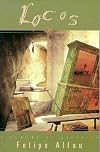
Author of Locos: A Comedy of Gestures
About the Author
Works by Felipe Alfau
Associated Works
Fotspår : noveller ur Sveriges radio P1:s serie Författarskap på fötter (2003) — Contributor — 5 copies
Tagged
Common Knowledge
- Birthdate
- 1902-08-24
- Date of death
- 1999-02-18
- Gender
- male
- Occupations
- translator
- Nationality
- USA (naturalized)
- Places of residence
- Barcelona, Spain (birth)
New York, New York, USA - Associated Place (for map)
- USA
Members
Reviews

Menudo hallazgo. Hasta hace dos semanas desconocía al autor. Novela nivolesca aunque sin la profundidad filosófica de Unamuno. Inmersa en la narrativa experimental del s. XX, el autor plantea la novela como un juego: ya en el prólogo invita, cuatro décadas antes que Cortázar, que “el lector puede tomar el libro y empezarlo por el final y acabarlo por el principio, o puede empezarlo y terminarlo por la mitad,” haciendo de la obra un relato circular. Toda la novela es un baile de show more máscaras, una comedia de gestos, donde los personajes reclaman su realidad al autor más allá de la obra, se la exigen, se la imponen a veces. Salen de la ficción, como en “La rosa púrpura de El Cairo” de Woody Allen, y el autor se convierte en ocasiones en personaje de la novela como el interpretado por Mía Farrow en la misma película.. Este juego ficción-realidad sirve de excusa para una reflexión sobre la identidad de las personas: hay personajes que se desdoblan y otros que confluyen en un equívoco y unívoco personaje. También el lugar Toledo-Madrid hace imposible un desenvolvimiento uniforme de los personajes. ¿Inconsistencia narrativa o juego libertario del impulso creativo? Juego, sí, pero no fácil, pues a pesar de las escenas costumbristas (más curiosas en tanto que el autor, español, vivía en Estados Unidos), el humor absurdo de muchas situaciones y las humoradas de Felipe Alfau como notas a pie de página, el lector se ve impelido a múltiples lecturas y a releer algún pasaje para intentar componer un relato, si no totalmente lineal, si uno en el que las distintas piezas sueltas encajen en el rompecabezas. show less
A tale of two cities. One is Madrid the other imaginary. A tale of two novels written by itinerant, international authors both of whom had Spanish as their first language. A tale of two experimental novels. One I loved; one I did not. Can you guess which is which?
Cortazar published 62: A Model Kit in Spanish in 1968; the edition I read was translated in 1972. Alfau published Locos: A Comedy of Gestures in 1936 in English. Cortazar had Argentinean parents but was born in Europe then moved show more back to Buenos Aires when he was very young and later, back to Europe. Alfau was born in Barcelona but moved to the United States when he was 14. Locos was published when he was 34.
Call me crazy, but I loved Locos. Pun intended. It is charming and cruel, tragic and hilarious, ambiguous yet direct, and written with clear, poetic prose. The experimental style on display never overwhelmed the narrative. Despite the fact that Alfau directly declares the fictive nature of his characters, he made me care about them. Unfortunately, I found 62: a Model Kit to be nearly the opposite despite significant similarities. Cortazar seems to be peopling an imaginary city with characters and scenarios imagined by the very characters in the story, but unfortunately they never seemed real. The characters seemed undeveloped, Cortazar would reveal a quirky trait here or there, but they came across as highly abstract intellectual exercises. Where as Alfau acknowledges the characters are abstract, but he made them seem real! I found the prose in 62 to be opaque and unwelcoming. The sentences zigzagged in ways that didn't complement my brain. I felt like I was constantly trying to trace the thoughts of an intellectual squirrel on crystal meth. (Have you ever done crystal meth? It's like being on a mega-dose of caffeine but it sucks out all your wit. You are basically an idiot who thinks he's not.) At any rate, every phrase that Cortazar wrote took the sentence in a different direction, and I became tired of trying to figure out what he was trying to say. I found the writing tedious. I couldn't get the meaning out of it. I don't know if I should put some blame on the translation or not, but after 60 pages I threw in the towel. I skimmed forward just to pick out sentences here and there and could see that it was essentially the same book throughout. This experience was severely disappointing after I quite enjoyed reading Autonauts of the Cosmoroute
With Locos, Alfau seems to be following in the footsteps of fellow Spaniard Luigi Pirandello who wrote a play in 1921 entitled Six Characters In Search of an Author. I actually performed in this show in college! But Alfau goes to a place that blends great humor with the tragedy. The story begins (roughly) with Alfau, playing himself, at a cafe with a "friend" who becomes a character in the book. This cafe is where bad authors go to discover characters for their stories. In that cafe, we meet many of the characters who will populate the book. Note the irony. What follows is a series of interconnected short stories about many of them. Most characters reappear throughout and even when they are not featured, a brief mention may act as a dramatic revelation that changes significantly what you read before. And further, some of the characters seem to metamorphosize and despite having the same names, serve different roles or have different relationships in subsequent stories. The entirety manages to hold together as more of a novel than a collection partly thanks to the overlapping characters, partly through the consistent tone and style, and partly because Alfau is always in the background or making appearances as "the author." He has several charming asides regarding how his characters have "gotten away from him," and he can't quite control them. Trust me, it just works.
Some of the stories are quite hilarious. Some are devastating and yet often absurd. In one case, a man is obsessed with fingerprints because he believes his father invented the...science of fingerprints? And didn't receive the recognition he deserves. In another scenario, the police are having a convention in Madrid at the same time as a blackout citywide occurs, which leads to a crimewave of everyone mugging just about everyone. And the police are so busy with their convention that they are too tired to even arrest anyone. It's so ridiculous, Lucy. The theme of the absurdity of life is never far from the surface.
I devoured Locos; I dropped 62 like a hot potato. If you want to dip your toe into some literature that is experimental without being alienating, then I highly recommend Locos. It's just flat out brilliant, feels modern (post) in content and style, and it's a book that can be read multiple times. Love, love, loved it. show less
Cortazar published 62: A Model Kit in Spanish in 1968; the edition I read was translated in 1972. Alfau published Locos: A Comedy of Gestures in 1936 in English. Cortazar had Argentinean parents but was born in Europe then moved show more back to Buenos Aires when he was very young and later, back to Europe. Alfau was born in Barcelona but moved to the United States when he was 14. Locos was published when he was 34.
Call me crazy, but I loved Locos. Pun intended. It is charming and cruel, tragic and hilarious, ambiguous yet direct, and written with clear, poetic prose. The experimental style on display never overwhelmed the narrative. Despite the fact that Alfau directly declares the fictive nature of his characters, he made me care about them. Unfortunately, I found 62: a Model Kit to be nearly the opposite despite significant similarities. Cortazar seems to be peopling an imaginary city with characters and scenarios imagined by the very characters in the story, but unfortunately they never seemed real. The characters seemed undeveloped, Cortazar would reveal a quirky trait here or there, but they came across as highly abstract intellectual exercises. Where as Alfau acknowledges the characters are abstract, but he made them seem real! I found the prose in 62 to be opaque and unwelcoming. The sentences zigzagged in ways that didn't complement my brain. I felt like I was constantly trying to trace the thoughts of an intellectual squirrel on crystal meth. (Have you ever done crystal meth? It's like being on a mega-dose of caffeine but it sucks out all your wit. You are basically an idiot who thinks he's not.) At any rate, every phrase that Cortazar wrote took the sentence in a different direction, and I became tired of trying to figure out what he was trying to say. I found the writing tedious. I couldn't get the meaning out of it. I don't know if I should put some blame on the translation or not, but after 60 pages I threw in the towel. I skimmed forward just to pick out sentences here and there and could see that it was essentially the same book throughout. This experience was severely disappointing after I quite enjoyed reading Autonauts of the Cosmoroute
With Locos, Alfau seems to be following in the footsteps of fellow Spaniard Luigi Pirandello who wrote a play in 1921 entitled Six Characters In Search of an Author. I actually performed in this show in college! But Alfau goes to a place that blends great humor with the tragedy. The story begins (roughly) with Alfau, playing himself, at a cafe with a "friend" who becomes a character in the book. This cafe is where bad authors go to discover characters for their stories. In that cafe, we meet many of the characters who will populate the book. Note the irony. What follows is a series of interconnected short stories about many of them. Most characters reappear throughout and even when they are not featured, a brief mention may act as a dramatic revelation that changes significantly what you read before. And further, some of the characters seem to metamorphosize and despite having the same names, serve different roles or have different relationships in subsequent stories. The entirety manages to hold together as more of a novel than a collection partly thanks to the overlapping characters, partly through the consistent tone and style, and partly because Alfau is always in the background or making appearances as "the author." He has several charming asides regarding how his characters have "gotten away from him," and he can't quite control them. Trust me, it just works.
Some of the stories are quite hilarious. Some are devastating and yet often absurd. In one case, a man is obsessed with fingerprints because he believes his father invented the...science of fingerprints? And didn't receive the recognition he deserves. In another scenario, the police are having a convention in Madrid at the same time as a blackout citywide occurs, which leads to a crimewave of everyone mugging just about everyone. And the police are so busy with their convention that they are too tired to even arrest anyone. It's so ridiculous, Lucy. The theme of the absurdity of life is never far from the surface.
I devoured Locos; I dropped 62 like a hot potato. If you want to dip your toe into some literature that is experimental without being alienating, then I highly recommend Locos. It's just flat out brilliant, feels modern (post) in content and style, and it's a book that can be read multiple times. Love, love, loved it. show less
Felipe Alfau writes:
The result of this is a bunch of contradictory characters inconsequent as their author and just as clumsy in their performance. As their personality is a passing and unsteady thing that lasts at most a book’s length, they have lost respect for it and change it at will, because they have a faint idea that life is abrupt and unexpected.
Their knowledge of reality is vague and imprecise. Sometimes I have given a character the part of a brother or a son, and in the middle of show more the action he begins to make love to his sister or his mother, because he has heard that men sometimes make love to women. Another character appears as a child in a situation that takes place when he should be a mature man, because he attributes his persistent failure to understand the situation to immaturity typical of childhood. Again, another character, who has the part of a chicken, begins to bark in the middle of her lines, because she has seen a dog she likes. Time and space do not exist for these people, and that naturally ruins my work completely.
And later:
Fulano did not see what happened after he left the bridge but I, of course, saw it, and if a writer had the privilege of interfering or preventing the incidents which he has the misfortune to witness, I would have prevented what took place, for the sake of my poor friend, Fulano. However, if a writer could do that, all stories would end happily and justice would prevail in all literature. As this would create a great monotony, such power has not been granted. Therefore, I had to stand by and see the happenings in a state of utter impotence and indignation. show less
The result of this is a bunch of contradictory characters inconsequent as their author and just as clumsy in their performance. As their personality is a passing and unsteady thing that lasts at most a book’s length, they have lost respect for it and change it at will, because they have a faint idea that life is abrupt and unexpected.
Their knowledge of reality is vague and imprecise. Sometimes I have given a character the part of a brother or a son, and in the middle of show more the action he begins to make love to his sister or his mother, because he has heard that men sometimes make love to women. Another character appears as a child in a situation that takes place when he should be a mature man, because he attributes his persistent failure to understand the situation to immaturity typical of childhood. Again, another character, who has the part of a chicken, begins to bark in the middle of her lines, because she has seen a dog she likes. Time and space do not exist for these people, and that naturally ruins my work completely.
And later:
Fulano did not see what happened after he left the bridge but I, of course, saw it, and if a writer had the privilege of interfering or preventing the incidents which he has the misfortune to witness, I would have prevented what took place, for the sake of my poor friend, Fulano. However, if a writer could do that, all stories would end happily and justice would prevail in all literature. As this would create a great monotony, such power has not been granted. Therefore, I had to stand by and see the happenings in a state of utter impotence and indignation. show less
Poor Felipe Alfau! If he had stayed in Spain rather than immigrate to the States he would very likely be considered today one of the most interesting writers among the “avant-garde” artists of the 20th century.
Locos, a book he apparently wrote in the late 1920s but only published in 1936, and no one paid any attention to it until more than 50 years later, anticipates trends that can be found in other major 20th century writers. In fact, there is no doubt that the structure of show more Cortazar’s Hopscotch, with its chapters that can be read in any order is literally taken from Locos. The interruption of the fictive time of the narrative by the “real time” dimension in which the author writes—I need to stop writing because the doorbell rang, he says at some point—can be found later (also literally) in Clarice Lispector, another modernist writer known all over the world as the most important South American female writer, who is only now discovered in this county. True, the characters that act independently of their author (another feature of Locos) can already be found in Luigi Pirandello, who lived before Alfau. But think of the fate of all these other writers: Cortazar, Lispector, Pirandello—all of them celebrated worldwide as some of the greatest writers of the 20th century. And Felipe Alfau—who has heard of him?
It is a general misconception that if you write in English, and especially if you are from the States, you have more chances to public and universal recognition. That may be the case if you write the kind of literature Stephen King writes; but if you write anything that attempts to rethink the process of creation, anything truly innovative, forget it! The most you can hope for is that some specialist in “theory” will discover you and write a paper about you, and then one of his students will devote you a thesis no one will ever read. From then on everyone will refer to you as an “experimental” writer, that is, some bizarre specimen stored in a museum from where they will retrieve you from time to time to temporarily dust you off and apply a lotion of “theory” to your mummified body. show less
Locos, a book he apparently wrote in the late 1920s but only published in 1936, and no one paid any attention to it until more than 50 years later, anticipates trends that can be found in other major 20th century writers. In fact, there is no doubt that the structure of show more Cortazar’s Hopscotch, with its chapters that can be read in any order is literally taken from Locos. The interruption of the fictive time of the narrative by the “real time” dimension in which the author writes—I need to stop writing because the doorbell rang, he says at some point—can be found later (also literally) in Clarice Lispector, another modernist writer known all over the world as the most important South American female writer, who is only now discovered in this county. True, the characters that act independently of their author (another feature of Locos) can already be found in Luigi Pirandello, who lived before Alfau. But think of the fate of all these other writers: Cortazar, Lispector, Pirandello—all of them celebrated worldwide as some of the greatest writers of the 20th century. And Felipe Alfau—who has heard of him?
It is a general misconception that if you write in English, and especially if you are from the States, you have more chances to public and universal recognition. That may be the case if you write the kind of literature Stephen King writes; but if you write anything that attempts to rethink the process of creation, anything truly innovative, forget it! The most you can hope for is that some specialist in “theory” will discover you and write a paper about you, and then one of his students will devote you a thesis no one will ever read. From then on everyone will refer to you as an “experimental” writer, that is, some bizarre specimen stored in a museum from where they will retrieve you from time to time to temporarily dust you off and apply a lotion of “theory” to your mummified body. show less
Lists
Awards

You May Also Like


Associated Authors
Statistics
- Works
- 7
- Also by
- 2
- Members
- 575
- Popularity
- #43,588
- Rating
- 4.0
- Reviews
- 9
- ISBNs
- 27
- Languages
- 5
- Favorited
- 6