
Alexander Theroux
Author of Darconville's Cat
About the Author
Series
Works by Alexander Theroux
Associated Works
Take My Advice: Letters to the Next Generation from People Who Know a Thing or Two (2002) — Contributor — 50 copies
The Antioch Review: Volume 59, Number 2 (Spring 2001) — Contributor — 1 copy
Tagged
Common Knowledge
- Legal name
- Theroux, Alexander Louis
- Birthdate
- 1939-08-17
- Gender
- male
- Education
- St. Joseph's Seminary (1960-62)
St. Francis College, Biddeford, Maine ( [1964])
University of Virginia, Charlottesville ( [1965, 1968])
University of Oxford (Brasenose College)
Medford High School - Occupations
- author
professor
writer - Awards and honors
- Lannan Literary Award (Fiction ∙ 1991)
Guggenheim Fellowship (1974) - Relationships
- Theroux, Paul (brother)
Theroux, Peter (brother)
Theroux, Marcel (nephew)
Theroux, Louis (nephew)
Theroux, Phyllis (sister-in-law)
Theroux, Justin (nephew) - Short biography
- Nationality
- USA (birth)
- Birthplace
- Medford, Massachusetts, USA
- Places of residence
- Medford, Massachusetts, USA
England, UK
Estonia
France
Cape Cod, Massachusetts, USA - Associated Place (for map)
- Medford, Massachusetts, USA
Members
Reviews

Pisces season wouldn’t be complete without a foray into the fantastical realms illustrated by Brian Froud, so I’m glad I scooped this strange little book by Alexander Theroux a while back and saved it until now. Ironically, the story is far less filled with faeries than I am used to from a Froud book, but it still holds a certain fey quality. Theroux tells a tale of a pair of star-crossed lovers that centres around the titular cloak given from one to the other, which later becomes a show more symbol for the plagues that wracked Europe during the Middle Ages. For all that the characters of the story contain a certain amount of comedy (quietly ridiculous names and funny turns of language abound), the tale of Master Snickup and his love Superfecta is darkly grounded in the harshness of the real world. Froud’s limited palette of naturalist colours suffuses the story with a grounded tone that carries our protagonists through their love affair, Superfecta’s forced marriage, and Snickup’s monastic exile with an essence that feels borderline Biblical. Mirrored by Theroux’s bardic voice that pushes together antiquated rhythms with the occasional modernist vocabulary, the resulting narrative is an exercise in strangeness that is still surprisingly successful. We are drawn in to the majesty of Master Snickup’s cloak and beguiled by the fey creatures who come to call him neighbour, and are left wondering at the fate of the now almost-invisible Superfecta as her place in the narrative is taken by her bombastic husband. The tale concludes in an epic fashion, with an inventive set of compositions by Froud, as Snickup’s death brings the Black Death to Europe and the village that he left is in turn brought to its knees. Is this the faerie story that I expected Froud to have helmed: no; but, the mythical overtones of Theroux’s carefully wrought morality tale that keep us one step away from reality were a strange delight, nonetheless. show less

In a word: Don't.
Laura Warholic is an unedited conglomeration of Theroux's writing over a twenty-year period. Ostensibly given a thin veneer of plot and character, this novel dedicates the bulk of its pages to essays on a variety of topics (for example, Democracy), and an embarrassing number of rants and screeds.
The essays come off well. Sure, they are out of place, and feel ham-handedly inserted into the prose, but they are generally entertaining and occasionally thought-provoking. The show more effect is similar to reading the pre-Objectivist and proto-Libertarian philosophy in de Sade's work (does the modern Right realize they are taking their Individualist philosophy from such a worthy libertine?), but de Sade cuts his philosophy with hard-core porn, while Theroux cuts his with day-to-day (I refuse to say quotidian) life in suburban Boston and an incredibly nonlinear cross-country road trip.
As for the rants, it is pretty clear that Theroux doesn't agree with any of them, for they are so terribly written that not even a supporter of the viewpoint in question could sit through one. Like the essays, they come out of nowhere, and feel wedged into the rest of the text - as if the author had this waiting in the wings and was just looking for an occasion to insert it. After enough of these, it becomes apparent that the novel is just a scaffolding on which to hang these various bits of writing, unsuitable for publishing on their own, that Theroux had lying around.
And the lists! When Laura jumps into punk rock, she doesn't listen to "bands like the Misfits and the Cramps, sometimes Crass". Instead, Theroux lists upwards of thirty bands, an amount that is neither illustrative nor exhaustive. It's like listening to a ten year-old autistic kid rattle off all the scores of baseball games he's never seen. This extends to the descriptions of crowds, in what could charitably be interpreted as Theroux trying to be funny, but really comes off as a failed attempt at using slang. Hang on, this excerpt from a rock show is going to be as painful for me as it is for you:
Note the -oid suffix thrown in there. Unpopular since about 1961, Theroux still thinks it is funny, and inexplicably believes that Gen Xers use this as slang. It makes an appearance about every twenty pages.
And the caricatures! I almost gave this a second star as a collection of unfortunately-connected essays, but the tone-deaf and badly-drawn caricatures snatched that one right away. On top of the worst Black Pimp since Confederacy of Dunces (Whoa!), we have the Jew, the Racist Christian, the Butch Lesbian, the Flamboyant Gay, the Social Justice Warrior (are we allowed to say that now without laughing?), the Anti-Semite, each given a soapbox and thirty-odd pages of incoherent rant.
But enough, you say, tell me about the novel as a novel! Well (he says, knowing of Theroux's derision for this interjection, which is stated a mere sixty times in the novel), this is the story of Eugene Eyestones (if you think that name is bad, wait until you hear the clumsy nicknames people have for him - things like "E-squared" that, unlike nicknames, do not work as soon as they are uttered aloud) and Laura Warholic, who have a complicated relationship. They neither love each other, nor anyone else. Eugene, a pompous windbag, is a traumatized Viet Nam veteran when it suits the plot (i.e., rarely), and a stand-in for the author (no? you think he's a clever construction? read Theroux's opinions on music in Grammar of Rock, lifted practically straight from the mouth of this character) most other times. Laura is a miserable loser, with no discernible traits or personality, and is probably a stand-in for someone Theroux had a bad relationship with (I've known a Laura; they're not rare).
At around the 700-page mark, Theroux seems to realize he is writing a novel, and he begins to flesh out the characters and give them feelings, complexity, even moments of reflection. He tries to introduce plot complications and a finale, but these are so obvious that they seem inevitable rather than climatic. It is all too little, too late.
The text itself is described as "overwritten", but if anything it is underwritten. There is no coherence to the paragraphs, no connection between one sentence and another. Dialog is spoken without regard to what another character is saying, just one interjection after another. No editor had a hand in this work, and the joke that Theroux did not even bother to revise his first draft is more true than funny.
Given that this is presented as a satire, picking on the writing may seem unfair. But this is a near-900-page novel. If you can't write well, or can't be bothered to, then for the sake of all that is just and good (i.e., neither this novel nor anything in it) do not write 900 pages. Do what the loons at the anarchist bookstore do, and cut it short at around 75. show less
Laura Warholic is an unedited conglomeration of Theroux's writing over a twenty-year period. Ostensibly given a thin veneer of plot and character, this novel dedicates the bulk of its pages to essays on a variety of topics (for example, Democracy), and an embarrassing number of rants and screeds.
The essays come off well. Sure, they are out of place, and feel ham-handedly inserted into the prose, but they are generally entertaining and occasionally thought-provoking. The show more effect is similar to reading the pre-Objectivist and proto-Libertarian philosophy in de Sade's work (does the modern Right realize they are taking their Individualist philosophy from such a worthy libertine?), but de Sade cuts his philosophy with hard-core porn, while Theroux cuts his with day-to-day (I refuse to say quotidian) life in suburban Boston and an incredibly nonlinear cross-country road trip.
As for the rants, it is pretty clear that Theroux doesn't agree with any of them, for they are so terribly written that not even a supporter of the viewpoint in question could sit through one. Like the essays, they come out of nowhere, and feel wedged into the rest of the text - as if the author had this waiting in the wings and was just looking for an occasion to insert it. After enough of these, it becomes apparent that the novel is just a scaffolding on which to hang these various bits of writing, unsuitable for publishing on their own, that Theroux had lying around.
And the lists! When Laura jumps into punk rock, she doesn't listen to "bands like the Misfits and the Cramps, sometimes Crass". Instead, Theroux lists upwards of thirty bands, an amount that is neither illustrative nor exhaustive. It's like listening to a ten year-old autistic kid rattle off all the scores of baseball games he's never seen. This extends to the descriptions of crowds, in what could charitably be interpreted as Theroux trying to be funny, but really comes off as a failed attempt at using slang. Hang on, this excerpt from a rock show is going to be as painful for me as it is for you:
oafs with tattooed cheeks, nutboxes, pirate chicks, teenage girls in tube miniskirts and major lipstick, moshing party-stormers, Devoheads, Brechtian proles, halt-cranked groupies, rude goggle bunnies, metal morons, crueltoids, breatharians on meth, gutter foxes, pot orgasmists, stoned ponies with nipple rings, felchers, Goths with obscene words shaved into their hair, emo-punks, genderfuckers, martini vixens with fake eyelashes, dorky little poontang hounds, level-3 sex offenders, frowning ska-monks, vibration pixies, eerie hairball unidentifiables thrown up by one of the Milankovitch cycles of continental glaciation, dole-drawers, slaves who long for the shade and hirelings who wait for wages, and no end of fat, anti-intellectual Luddites in bat-black leather motorcycle hats and jackets with lightning.
Note the -oid suffix thrown in there. Unpopular since about 1961, Theroux still thinks it is funny, and inexplicably believes that Gen Xers use this as slang. It makes an appearance about every twenty pages.
And the caricatures! I almost gave this a second star as a collection of unfortunately-connected essays, but the tone-deaf and badly-drawn caricatures snatched that one right away. On top of the worst Black Pimp since Confederacy of Dunces (Whoa!), we have the Jew, the Racist Christian, the Butch Lesbian, the Flamboyant Gay, the Social Justice Warrior (are we allowed to say that now without laughing?), the Anti-Semite, each given a soapbox and thirty-odd pages of incoherent rant.
But enough, you say, tell me about the novel as a novel! Well (he says, knowing of Theroux's derision for this interjection, which is stated a mere sixty times in the novel), this is the story of Eugene Eyestones (if you think that name is bad, wait until you hear the clumsy nicknames people have for him - things like "E-squared" that, unlike nicknames, do not work as soon as they are uttered aloud) and Laura Warholic, who have a complicated relationship. They neither love each other, nor anyone else. Eugene, a pompous windbag, is a traumatized Viet Nam veteran when it suits the plot (i.e., rarely), and a stand-in for the author (no? you think he's a clever construction? read Theroux's opinions on music in Grammar of Rock, lifted practically straight from the mouth of this character) most other times. Laura is a miserable loser, with no discernible traits or personality, and is probably a stand-in for someone Theroux had a bad relationship with (I've known a Laura; they're not rare).
At around the 700-page mark, Theroux seems to realize he is writing a novel, and he begins to flesh out the characters and give them feelings, complexity, even moments of reflection. He tries to introduce plot complications and a finale, but these are so obvious that they seem inevitable rather than climatic. It is all too little, too late.
The text itself is described as "overwritten", but if anything it is underwritten. There is no coherence to the paragraphs, no connection between one sentence and another. Dialog is spoken without regard to what another character is saying, just one interjection after another. No editor had a hand in this work, and the joke that Theroux did not even bother to revise his first draft is more true than funny.
Given that this is presented as a satire, picking on the writing may seem unfair. But this is a near-900-page novel. If you can't write well, or can't be bothered to, then for the sake of all that is just and good (i.e., neither this novel nor anything in it) do not write 900 pages. Do what the loons at the anarchist bookstore do, and cut it short at around 75. show less
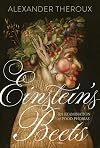
Despite its subtitle, Einstein’s Beets is not really an examination or treatise on food phobias – no footnotes, no copyright pages. Editing seems to be minimal; particularly annoying is that long quotations are sometimes indented and in a different font, but more often not. Food aversion here is like a familiar – we all have ‘em – musical phrase used by a jazz musician to create an individual artistic expression. A.T. is the John Coltrane of aversion rant. What holds it together show more and makes it more than an 800 page blog of gossipy snark?
Possibly it’s a meditation on human freedom from a Christian, probably Roman Catholic, point of view. If I recall correctly, the author, a novelist, poet, and academic – his better known brother is novelist & travel writer Paul Theroux -- in his younger days considered joining a religious order. In that case, Einstein’s Beets is a kind of spiritual autobiography hidden behind a gourmand Aubrey’s Brief Lives, an encyclopedic collection of curious food facts, fallacies, and poisonous pen portraits, with a range of allusion encompassing popular art (Family Guy, The Simpsons), celebrity culture (Lindsay Lohan, Audrey Hepburn, Jennifer Aniston, Oprah Winfrey), and high culture (Seneca, Thomas Aquinas, Shakespeare) as well as the middlebrow culture of my youth (Holiday Magazine, Playboy Interviews).
For example, with regard to vegetable bete noires, in the span of a few pages, he cites Gabriel Garcia Marquez & Maya Angelou on eggplant phobia, Jim Carrey, Fran Lebowitz, Tom Selleck, Will Rogers, and chef Alexandra Guarnaschelli contra carrots, and Rosie O’Donnell’s aversion to zucchini. Denis Diderot disliked potatoes, while Shakespeare’s John Falstaff considered them to be Elizabethan viagra. Oh, and Russell Baker hated French fries but Julie Andrews’s comfort food is American milkshakes and “the occasional boiled potato sandwich.”
The abbreviated survey above also has a couple of examples of A.T.’s mean streak. Often it appears that his aversion for certain people can overwhelm the examination of their phobias. Maya Angelou is “one of the worst writers on earth.” Rosie O’Donnell may not care for zucchini, but “fattier foods she adores … her weight has at times ballooned to 300 pounds … after her son, Parker got into an accident, she scarfed down three boxes of Mallomars … When a recent online survey asked people to write in, guessing what Rosie O’Donnell’s favorite foods were, several people wrote ‘Plankton and krill.’”
This leads me to consider whether the “Alexander Theroux” of Einstein’s Beets could be a Charles Kinbote character, the nutcase who hijacks the commentary of Pale Fire. This would be a meta-irony, since Nabokov is one of the author’s bugaboos. Apparently. One can’t help be struck by what a troll the author character is, an extraordinary hater! He is surely the least charitable of Christians. To paraphrase Alice Roosevelt, if you can’t say something nice … Well hello Mr. Theroux! The subjects of his rants – Nabokov, Gore Vidal, A.J. Liebling, Joan Didion, Andy Warhol, Oprah, Hillary Clinton, Ariel Sharon, and most of the Food Channel hosts -- anyway, the victims -- often become the author character’s unconscious descriptions of his own personality. (Then again he does note that chefs, fellow creative artists, have their own food phobias.)
For example, regarding the despised Jim Harrison: “Can you imagine this guy sitting next to you on a long bus ride and blabbing away across the endless miles? Hand me my Dramamine.” On Thoreau’s self-portrait, A.T. sees an analogy with Confederacy of Dunces Ignatius D. Reilly, ”a sanctimonius eccentric.” “Nabokov loved to pontificate on every fact and phase of life, making lordly pronouncements from on high.” “What was arid, bare, barren, bleak, deserted, insincere, manufactured, unnatural, and desolate invariably pleased Warhol.” He notes that Thomas Aquinas condemned the sin of gluttony with philosophical subtlety, while being enormously fat, so maybe A.T. is aware of some of the ironies.
Exceptionally, none of the objects of his Biblical wrath (he seems to consider the New Testament to be literal history) comes out as anti-Semitic. “Theroux” seems to have reserved it all for himself. Initially you get suburban anti-Semitism – every Jewish personality is outed with his or her former name (but no one Italian, Greek, or any other ethnics, to the best of my recollection).By the end of the book you get digressions on the kosher tax and the Zionist media. “Kinbote/Theroux” is unable to write about the Nazi treatment of the Jews without going off on Gaza and the West Bank; Sylvia Plath is quoted to snipe at Jewish self-dramatization of the Holocaust, not to mention a passing sneer at Anne Frank. As the spiritual, presumably In Real Life Theroux explains, aversion and phobias are how we negatively assert our freedom. I’m not sure if Theroux is implying an aversion to broccoli is metaphysically equivalent to America First and other expressions of ethnic phobia. To me, it puts his progressive Christianity in a bad light. One of the few Jews who comes out unscathed is secular Leopold Bloom, whose charitable perspective contrasts with the judgmental Christian author. (Could be why a former M.I.T. professor and well-received novelist’s latest has a publisher that ordinarily does Peanuts reprints?).
Anyway, the 800 pages go by quickly; snark can be very entertaining, as is the author’s eggplant to plankton ADD. While the ambiguity of perspective – Theroux IRL or Kinbote/Theroux – gives it more depth, my recollection is that the earlier Darconville’s Cat was tighter and better, and the religious strain more humane, but now I’m afraid to go back and re-read it and, like many memories, be disappointed. For brilliant combining of high and low culture I recommend S.J. Perelman, for literary wit Joseph Epstein (before he started to become overtly right wing), for virtuoso lists John Barth in The Sot Weed Factor, for sly humor The Philosophy of Andy Warhol, and, as already noted, for encyclopedic word and world building, Ulysses. show less
Possibly it’s a meditation on human freedom from a Christian, probably Roman Catholic, point of view. If I recall correctly, the author, a novelist, poet, and academic – his better known brother is novelist & travel writer Paul Theroux -- in his younger days considered joining a religious order. In that case, Einstein’s Beets is a kind of spiritual autobiography hidden behind a gourmand Aubrey’s Brief Lives, an encyclopedic collection of curious food facts, fallacies, and poisonous pen portraits, with a range of allusion encompassing popular art (Family Guy, The Simpsons), celebrity culture (Lindsay Lohan, Audrey Hepburn, Jennifer Aniston, Oprah Winfrey), and high culture (Seneca, Thomas Aquinas, Shakespeare) as well as the middlebrow culture of my youth (Holiday Magazine, Playboy Interviews).
For example, with regard to vegetable bete noires, in the span of a few pages, he cites Gabriel Garcia Marquez & Maya Angelou on eggplant phobia, Jim Carrey, Fran Lebowitz, Tom Selleck, Will Rogers, and chef Alexandra Guarnaschelli contra carrots, and Rosie O’Donnell’s aversion to zucchini. Denis Diderot disliked potatoes, while Shakespeare’s John Falstaff considered them to be Elizabethan viagra. Oh, and Russell Baker hated French fries but Julie Andrews’s comfort food is American milkshakes and “the occasional boiled potato sandwich.”
The abbreviated survey above also has a couple of examples of A.T.’s mean streak. Often it appears that his aversion for certain people can overwhelm the examination of their phobias. Maya Angelou is “one of the worst writers on earth.” Rosie O’Donnell may not care for zucchini, but “fattier foods she adores … her weight has at times ballooned to 300 pounds … after her son, Parker got into an accident, she scarfed down three boxes of Mallomars … When a recent online survey asked people to write in, guessing what Rosie O’Donnell’s favorite foods were, several people wrote ‘Plankton and krill.’”
This leads me to consider whether the “Alexander Theroux” of Einstein’s Beets could be a Charles Kinbote character, the nutcase who hijacks the commentary of Pale Fire. This would be a meta-irony, since Nabokov is one of the author’s bugaboos. Apparently. One can’t help be struck by what a troll the author character is, an extraordinary hater! He is surely the least charitable of Christians. To paraphrase Alice Roosevelt, if you can’t say something nice … Well hello Mr. Theroux! The subjects of his rants – Nabokov, Gore Vidal, A.J. Liebling, Joan Didion, Andy Warhol, Oprah, Hillary Clinton, Ariel Sharon, and most of the Food Channel hosts -- anyway, the victims -- often become the author character’s unconscious descriptions of his own personality. (Then again he does note that chefs, fellow creative artists, have their own food phobias.)
For example, regarding the despised Jim Harrison: “Can you imagine this guy sitting next to you on a long bus ride and blabbing away across the endless miles? Hand me my Dramamine.” On Thoreau’s self-portrait, A.T. sees an analogy with Confederacy of Dunces Ignatius D. Reilly, ”a sanctimonius eccentric.” “Nabokov loved to pontificate on every fact and phase of life, making lordly pronouncements from on high.” “What was arid, bare, barren, bleak, deserted, insincere, manufactured, unnatural, and desolate invariably pleased Warhol.” He notes that Thomas Aquinas condemned the sin of gluttony with philosophical subtlety, while being enormously fat, so maybe A.T. is aware of some of the ironies.
Exceptionally, none of the objects of his Biblical wrath (he seems to consider the New Testament to be literal history) comes out as anti-Semitic. “Theroux” seems to have reserved it all for himself. Initially you get suburban anti-Semitism – every Jewish personality is outed with his or her former name (but no one Italian, Greek, or any other ethnics, to the best of my recollection).By the end of the book you get digressions on the kosher tax and the Zionist media. “Kinbote/Theroux” is unable to write about the Nazi treatment of the Jews without going off on Gaza and the West Bank; Sylvia Plath is quoted to snipe at Jewish self-dramatization of the Holocaust, not to mention a passing sneer at Anne Frank. As the spiritual, presumably In Real Life Theroux explains, aversion and phobias are how we negatively assert our freedom. I’m not sure if Theroux is implying an aversion to broccoli is metaphysically equivalent to America First and other expressions of ethnic phobia. To me, it puts his progressive Christianity in a bad light. One of the few Jews who comes out unscathed is secular Leopold Bloom, whose charitable perspective contrasts with the judgmental Christian author. (Could be why a former M.I.T. professor and well-received novelist’s latest has a publisher that ordinarily does Peanuts reprints?).
Anyway, the 800 pages go by quickly; snark can be very entertaining, as is the author’s eggplant to plankton ADD. While the ambiguity of perspective – Theroux IRL or Kinbote/Theroux – gives it more depth, my recollection is that the earlier Darconville’s Cat was tighter and better, and the religious strain more humane, but now I’m afraid to go back and re-read it and, like many memories, be disappointed. For brilliant combining of high and low culture I recommend S.J. Perelman, for literary wit Joseph Epstein (before he started to become overtly right wing), for virtuoso lists John Barth in The Sot Weed Factor, for sly humor The Philosophy of Andy Warhol, and, as already noted, for encyclopedic word and world building, Ulysses. show less
When the very first thing your book does is kick in with a thinly fictionalized analogue/pissy defence of the time you called the black men who raped a woman in Central Park "monkeys" and then pretended not to understand why everyone thought this was racist of you and here it is ten years later and you're still feeling all aggrieved over it, it's not a good sign. Especially not when the vicious racist that you're setting up as something very close to a fictional you (though see below) cannot show more manage to see himself as such or see why his attitudes toward women (they are all dirty and damaged, except for the ones who are angels who will save him and pure as the driven snow--he literally used to date a woman named Snow, until she melted) are so repulsive or see why he can't live a life. He thinks of himself as "the man with the faraway eyes," but his name is Eugene Eyestones, and the blinkeredness that implies, the way that leavens the author's misanthropy with a dollop of self-disgust at not being able to be different than he is, helps you take a deep breath and trust that he's going somewhere and keep reading, even when the next four hundred pages are nothing but racist screeds from a cast of sundry screaming ids brought to life with names like Discknickers (I kept reading "Dicksnickers") and Krauthammer and Micepockets.
With the amount of time I wasted on those four hundred pages--Theroux refused to have a copyeditor sully his work, so there are constant, and I mean constant, repetitions of whole snippets of dialogue and embarrassing typoes and blatant factual errors (and Theroux with his resentment and ego, possibly traceable back to the fact that his brother is the more popular novelist Paul Theroux, would no doubt try to pawn them off like a tinpot Joyce, as intentional, as something that will keep the professors busy for years), and it gets you down and in a hurry. Some blogger said there was a 700-page masterpiece hidden in this 900-page shitshow--I'll grant Theroux a 250-page stirring double portrait, but not more than that. Luckily, he starts to properly fill out the other half of the helix just as you're fed up to here with the clueless raging (one of the most perceptive comments on the book I've seen was by my LibraryThing friend Slick, who said something along the lines that this would have been a decent slab at seventies/eighties sleaze had it come out in, yeah, Street Hassle 1978 and not Hot Chip 2007), just as you're prepared to toss this brick in the air (but not too high, lest it come down and kill a kid--I think this is literally the heaviest book on my shelf) and write it off with a review like "Longer is not better" or "If you cant say anything nice ..." or "This made my life worse."
But the other half of the helix. Is Laura Warholic (the trick in the title is that the "Sexual Intellectual," retch, is Eyestones, not her), who is something like 35 (it doesn't add up, because to Theroux there are two generations, people who were in Nam like him and Eugene and lesser people who are young but also in their thirties but also should be in their forties if you do the math but are also referred to as Generation X and "slackers" but also use the most moronic version of teen slang you ever. I think he did it just to hurt me. Especially "klub kids." Long and the short of it is for Theroux--who is Eyestones, despite his efforts to maintain a majestic distance--time passed as normal until 1975, and then everything happened at once from disco to the Internet but we still are all men in our fifties who act like men in our hundred-and-twenties, absurd admixtures of every type of stereotype that doesn't exist anymore. You imagine him penning a particularly delightful bit of Yiddish/Nazi constant-shouting vaudeville duo--what? or gayhate and then going "Yes, Lexy, you've still got it, my man." The only people in this book I respect are the lesbians, because they had the perspicacity to realize they were in an Alexander Theroux novel and rebel by embracing it, just dialing the repulsive nonsense up to 11, caricaturizing their master).
Oh God! I forgot! All the black people are crack addicts except one sassy Caribbean sweetheart who wants to fuck Eyestones but can't cos she too dirty and one of them is actually called "Jamm the Wesort." I just don't even know where to start with this shit.
Aw, fuck this review, man. This book made me feel sour and small and tired. All the characters are the same, rant on max, except for Eyestones and Laura Warholic, whose bad dad gave her a sad and who is gangly and unperfumed and disaffected and therefore must die. They go on a road trip in the middle and are both so unmitigatedly awful that you're like "oh yeah, there's a bit on nuance here." That's right--"unmitigatedly awful" is what passes for nuance. I.e., the nuance is just that it's both Eyestones and Laura that are basically bullshit. Then it's four hundred more pages of rants, then some violent death, then it's over. And the only thing Theroux could find to praise about his own awful book was that the chapter full of factoids he looked up on the internet is full of life. Actually, he harangued the interviewer with it: "Did you like that part? Even a little? If you couldn't find something to like there you're dead inside!" And it was so pathetic and sad and he ended up calling the book a "total attack on mediocrity," which is just.
This book was petulant and bullying. It's like A Confederacy of Dunces if it wasn't a satire. It did make my life worse. I feel used by Theroux, like sometimes you somehow end up having to swallow your tongue at the guy who hates homeless people or the Chinese because he's, like, the bride's dad. It's not the worst book I've ever read; if you accept the premise that people=shit, it does an intermittently okay job at vividly sketching out what that would look like. But It is among the worst, and certainly the most dispiriting. show less
With the amount of time I wasted on those four hundred pages--Theroux refused to have a copyeditor sully his work, so there are constant, and I mean constant, repetitions of whole snippets of dialogue and embarrassing typoes and blatant factual errors (and Theroux with his resentment and ego, possibly traceable back to the fact that his brother is the more popular novelist Paul Theroux, would no doubt try to pawn them off like a tinpot Joyce, as intentional, as something that will keep the professors busy for years), and it gets you down and in a hurry. Some blogger said there was a 700-page masterpiece hidden in this 900-page shitshow--I'll grant Theroux a 250-page stirring double portrait, but not more than that. Luckily, he starts to properly fill out the other half of the helix just as you're fed up to here with the clueless raging (one of the most perceptive comments on the book I've seen was by my LibraryThing friend Slick, who said something along the lines that this would have been a decent slab at seventies/eighties sleaze had it come out in, yeah, Street Hassle 1978 and not Hot Chip 2007), just as you're prepared to toss this brick in the air (but not too high, lest it come down and kill a kid--I think this is literally the heaviest book on my shelf) and write it off with a review like "Longer is not better" or "If you cant say anything nice ..." or "This made my life worse."
But the other half of the helix. Is Laura Warholic (the trick in the title is that the "Sexual Intellectual," retch, is Eyestones, not her), who is something like 35 (it doesn't add up, because to Theroux there are two generations, people who were in Nam like him and Eugene and lesser people who are young but also in their thirties but also should be in their forties if you do the math but are also referred to as Generation X and "slackers" but also use the most moronic version of teen slang you ever. I think he did it just to hurt me. Especially "klub kids." Long and the short of it is for Theroux--who is Eyestones, despite his efforts to maintain a majestic distance--time passed as normal until 1975, and then everything happened at once from disco to the Internet but we still are all men in our fifties who act like men in our hundred-and-twenties, absurd admixtures of every type of stereotype that doesn't exist anymore. You imagine him penning a particularly delightful bit of Yiddish/Nazi constant-shouting vaudeville duo--what? or gayhate and then going "Yes, Lexy, you've still got it, my man." The only people in this book I respect are the lesbians, because they had the perspicacity to realize they were in an Alexander Theroux novel and rebel by embracing it, just dialing the repulsive nonsense up to 11, caricaturizing their master).
Oh God! I forgot! All the black people are crack addicts except one sassy Caribbean sweetheart who wants to fuck Eyestones but can't cos she too dirty and one of them is actually called "Jamm the Wesort." I just don't even know where to start with this shit.
Aw, fuck this review, man. This book made me feel sour and small and tired. All the characters are the same, rant on max, except for Eyestones and Laura Warholic, whose bad dad gave her a sad and who is gangly and unperfumed and disaffected and therefore must die. They go on a road trip in the middle and are both so unmitigatedly awful that you're like "oh yeah, there's a bit on nuance here." That's right--"unmitigatedly awful" is what passes for nuance. I.e., the nuance is just that it's both Eyestones and Laura that are basically bullshit. Then it's four hundred more pages of rants, then some violent death, then it's over. And the only thing Theroux could find to praise about his own awful book was that the chapter full of factoids he looked up on the internet is full of life. Actually, he harangued the interviewer with it: "Did you like that part? Even a little? If you couldn't find something to like there you're dead inside!" And it was so pathetic and sad and he ended up calling the book a "total attack on mediocrity," which is just.
This book was petulant and bullying. It's like A Confederacy of Dunces if it wasn't a satire. It did make my life worse. I feel used by Theroux, like sometimes you somehow end up having to swallow your tongue at the guy who hates homeless people or the Chinese because he's, like, the bride's dad. It's not the worst book I've ever read; if you accept the premise that people=shit, it does an intermittently okay job at vividly sketching out what that would look like. But It is among the worst, and certainly the most dispiriting. show less
Lists
Awards


You May Also Like


Associated Authors
Statistics
- Works
- 38
- Also by
- 7
- Members
- 2,148
- Popularity
- #11,970
- Rating
- 3.9
- Reviews
- 56
- ISBNs
- 59
- Languages
- 3
- Favorited
- 18