
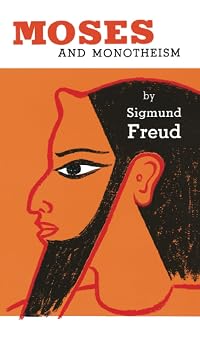
Moses and Monotheism
by Sigmund Freud
On This Page
Description
Moses and Monotheism is one of Sigmund Freud's most puzzling and groundbreaking texts. The reconstruction of the history and composition of the text has proven to be a challenge for scholars. Through the density of ideas in a text situated at the crossroads of applied psychoanalysis and clinical study, this has become one of Freud's most influential texts. The commentaries in this volume aim at exploring various aspects of Moses and Monotheism, while taking into account the latest scholarly show more insights. show lessTags
Recommendations






















Member Recommendations

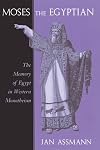
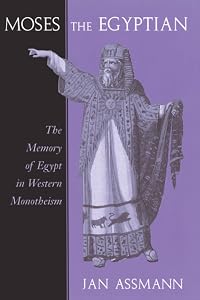
paradoxosalpha Assmann contextualizes Freud's speculation on the identity of Moses within a long modern tradition of contesting the source of Moses' power. He also offers his original research on the nature of Akhenaten's religion and its relationship to Hebrew sacred literature.
Member Reviews
Even admirers of Freud tend to be pretty dismissive of the argument here, but I don't think it's so far-fetched... Until he gets to the stuff about genetic memories, which is pretty untenable. But say what you will about Freud, he's never dull.
An outstanding and audacious book.
Not to many people have knowledge of this subject on Freud's writings.
It is amazing to notice the author's courage exposing thesis where he attempt to prove or at least to demonstrate that Moses was an Egyptian and not a Jew.
The argument of the existence of two Moses the one from Egypt and the other from Midia, a Medianite, is also surprising although in any way fanciful.
In some bookstores this book is incorrectly classified in the psych area. This is truly a Bible history research, of course using an approach that places, in his words, religion phenomena as a model of neurotic symptoms of the individual.
As I mentioned in other book comment, this kind of study always carries some dose of speculation. show more Freud was not an exception but without lost of plausibility. show less
Not to many people have knowledge of this subject on Freud's writings.
It is amazing to notice the author's courage exposing thesis where he attempt to prove or at least to demonstrate that Moses was an Egyptian and not a Jew.
The argument of the existence of two Moses the one from Egypt and the other from Midia, a Medianite, is also surprising although in any way fanciful.
In some bookstores this book is incorrectly classified in the psych area. This is truly a Bible history research, of course using an approach that places, in his words, religion phenomena as a model of neurotic symptoms of the individual.
As I mentioned in other book comment, this kind of study always carries some dose of speculation. show more Freud was not an exception but without lost of plausibility. show less
Freud's controversial final work that investigates the origins of Moses and the rise of monotheism. Moses and Monotheism shocked many of its readers because of Freud's suggestion that Moses was actually born into an Egyptian household, rather than being born as a Hebrew slave and merely raised in the Egyptian royal household as a ward (as recounted in the Book of Exodus).[
I believe this was Freuds last work, a subject with which it appeard he approached caustiously for fear of angering those who held diffent opinions about Moses. While I don't subscribe to the accuracy of the asertions made I did find the ideas explored by it quite intersting. I have enjoyed most of his works especially the ones where he did not feel the need to dispute Jung.
All work should be regarded as a continuation of previous studies of Freud.
Probably the first struck by the readers of "Moses and Monotheism," so this is some heterodoxy or even eccentricity of its construction. But if Moses and Monotheism, and something is missing in the presentation of the material, it does not imply criticism of the content or the persuasiveness of the arguments.
The skill with which the assumptions are brought under the psychological findings are likely to be convincing to an unbiased reader. Those who are familiar with psychoanalysis, personality, would be especially fascinated by the same sequence of stages of development, demonstrated by the national group.
Source: http://www.freud-sigmund.com/
Probably the first struck by the readers of "Moses and Monotheism," so this is some heterodoxy or even eccentricity of its construction. But if Moses and Monotheism, and something is missing in the presentation of the material, it does not imply criticism of the content or the persuasiveness of the arguments.
The skill with which the assumptions are brought under the psychological findings are likely to be convincing to an unbiased reader. Those who are familiar with psychoanalysis, personality, would be especially fascinated by the same sequence of stages of development, demonstrated by the national group.
Source: http://www.freud-sigmund.com/
Amazon offers the following review of the 2010 Martino Fine Books reprint of 1939 Edition.
"In Moses and Monotheism, Freud speculates that Moses was not Jewish, but actually born into Ancient Egyptian nobility and was perhaps a follower of Akhenaten, an ancient Egyptian monotheist. Freud further suggests that Moses led only his close followers into freedom during an unstable period in Egyptian history and that his followers subsequently killed Moses in rebellion afterward. Freud speculates that the guilt from the murder of Moses is inherited through the generations; this guilt then drives the Jews to religion to make them feel better."
"In Moses and Monotheism, Freud speculates that Moses was not Jewish, but actually born into Ancient Egyptian nobility and was perhaps a follower of Akhenaten, an ancient Egyptian monotheist. Freud further suggests that Moses led only his close followers into freedom during an unstable period in Egyptian history and that his followers subsequently killed Moses in rebellion afterward. Freud speculates that the guilt from the murder of Moses is inherited through the generations; this guilt then drives the Jews to religion to make them feel better."
Members
- Recently Added By
Author Information

1,400+ Works 51,341 Members
Sigmund Freud was the founder of psychoanalysis, simultaneously a theory of personality, a therapy, and an intellectual movement. He was born into a middle-class Jewish family in Freiburg, Moravia, now part of Czechoslovakia, but then a city in the Austro-Hungarian Empire. At the age of 4, he moved to Vienna, where he spent nearly his entire life. show more In 1873 he entered the medical school at the University of Vienna and spent the following eight years pursuing a wide range of studies, including philosophy, in addition to the medical curriculum. After graduating, he worked in several clinics and went to Paris to study under Jean-Martin Charcot, a neurologist who used hypnosis to treat the symptoms of hysteria. When Freud returned to Vienna and set up practice as a clinical neurologist, he found orthodox therapies for nervous disorders ineffective for most of his patients, so he began to use a modified version of the hypnosis he had learned under Charcot. Gradually, however, he discovered that it was not necessary to put patients into a deep trance; rather, he would merely encourage them to talk freely, saying whatever came to mind without self-censorship, in order to bring unconscious material to the surface, where it could be analyzed. He found that this method of free association very often evoked memories of traumatic events in childhood, usually having to do with sex. This discovery led him, at first, to assume that most of his patients had actually been seduced as children by adult relatives and that this was the cause of their neuroses; later, however, he changed his mind and concluded that his patients' memories of childhood seduction were fantasies born of their childhood sexual desires for adults. (This reversal is a matter of some controversy today.) Out of this clinical material he constructed a theory of psychosexual development through oral, anal, phallic and genital stages. Freud considered his patients' dreams and his own to be "the royal road to the unconscious." In The Interpretation of Dreams (1900), perhaps his most brilliant book, he theorized that dreams are heavily disguised expressions of deep-seated wishes and fears and can give great insight into personality. These investigations led him to his theory of a three-part structure of personality: the id (unconscious biological drives, especially for sex), the superego (the conscience, guided by moral principles), and the ego (the mediator between the id and superego, guided by reality). Freud's last years were plagued by severe illness and the rise of Nazism, which regarded psychoanalysis as a "Jewish pollution." Through the intervention of the British and U.S. governments, he was allowed to emigrate in 1938 to England, where he died 15 months later, widely honored for his original thinking. His theories have had a profound impact on psychology, anthropology, art, and literature, as well as on the thinking of millions of ordinary people about their own lives. Freud's daughter Anna Freud was the founder of the Hampstead Child Therapy Clinic in London, where her specialty was applying psychoanalysis to children. Her major work was The Ego and the Mechanisms of Defense (1936). (Bowker Author Biography) show less
Some Editions
Work Relationships
Common Knowledge
- Original publication date
- 1939
- People/Characters
- Moses; Sigmund Freud
Classifications
- Genres
- Religion & Spirituality, Nonfiction, General Nonfiction, History, Philosophy
- DDC/MDS
- 221.924 — Religion The Bible Old Testament (Tanakh) Geography, history, chronology, persons of Old Testament lands in Old Testament times Persons
- LCC
- BS580 .M6 .F7 — Philosophy, Psychology and Religion The Bible The Bible Works about the Bible Men, women, and children of the Bible Individual Old Testament characters
- BISAC
Statistics
- Members
- 1,056
- Popularity
- 24,281
- Reviews
- 8
- Rating
- (3.56)
- Languages
- 13 — Dutch, English, French, German, Greek, Hungarian, Italian, Norwegian, Serbian, Spanish, Swedish, Turkish, Portuguese (Portugal)
- Media
- Paper, Ebook
- ISBNs
- 49
- ASINs
- 27