
On the Natural History of Destruction
by W. G. Sebald 
On This Page
Description
W.G. Sebald completed this extraordinary and important -- and already controversial -- book before his untimely death in December 2001.On the Natural History of Destruction is W.G. Sebald's harrowing and precise investigation of one of the least examined "silences" of our time. In it, the acclaimed novelist examines the devastation of German cities by Allied bombardment, and the reasons for the astonishing absence of this unprecedented trauma from German history and culture.
This void in show more history is in part a repression of things -- such as the death by fire of the city of Hamburg at the hands of the RAF -- too terrible to bear. But rather than record the crises about them, writers sought to retrospectively justify their actions under the Nazis. For Sebald, this is an example of deliberate cultural amnesia; his analysis of its effects in and outside Germany has already provoked angry and painful debate.
Sebald's incomparable novels are rooted in meticulous observation; his essays are novelistic. They include his childhood recollections of the war that spurred his horror at the collective amnesia around him. There are moments of black humour and, throughout, the unmatched sensitivity of Sebald's intelligence. This book is a vital study of suffering and forgetting, of the morality hidden in artistic decisions, and of both compromised and genuine heroics.
From the Hardcover edition.
. show less
Tags
Recommendations









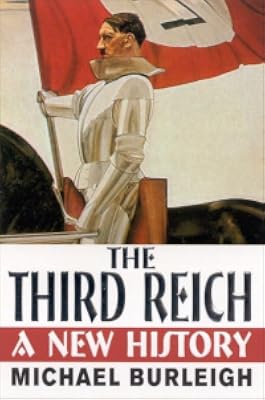




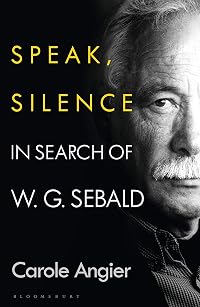















Member Recommendations
Mouseear Two rare books on the topic of allied air-bombings of German cities and German post-war suffering. Dagerman is actually one of few foreign witnesses to the conditions immediately after the war mentioned in Sebald's book.
20
Member Reviews
This book is comprised of four essays (the first of which Sebald originally presented during a Zurich lecture series in 1997) on the difficult question facing German writers in the years after World War II and unto the present day: how should one describe the suffering of people who have directly or indirectly visited incalculable death and destruction upon millions of others? Of course this question can't be answered without considering the overarching one: should writers even attempt to describe the suffering of such people, or have their collective crimes made them unworthy of the sympathy and empathy that a literary description can and will evoke in the reader? Sebald seems to think the answer is yes, that in fact the suffering of show more the German civilian population must be described in explicit and agonizing detail, if only because the conspiracy of silence that has existed in place of the true history of the destruction of Germany is worse than any undue sympathy that might arise towards the enablers of the Nazi regime. Unfortunately, Sebald died before he could expand on the questions he raises in this collection of essays, but this book is a good starting point for anyone interested in the period or in the broader issues of collective guilt, punishment, and the legitimacy (or illegitimacy) of suffering. A useful companion to this slim volume would be Der Brand: Deutschland im Bombenkrieg 1940-1945 by Jörg Friedrich, which will be published in English translation in the fall of 2006. show less
Had this been reviewed more fairly by my fellow Goodreaders, I probably would have gone up to 3 stars, but instead I find myself thrown into a position of aggression. Had this been written by, e.g., Peter Weiss, not only would it not have x hundred ratings; it wouldn't even have been published. Thankfully for lovers of mildly diverting amateur history and effective literary polemic (i.e., probably not you), it was written by Sebald, and so is not only published, but published in cheap paper-back by a major publishing house. Meanwhile, one third of Peter Weiss's Aesthetics of Resistance, which Sebald praises effusively in the last essay here, has been published by a small university press. So it goes.
The main attraction of this volume show more is a pair of lectures Sebald gave on the German people's supposed failure to remember and therefore work through the horrific destruction of that country's cities at the end of the second world war--a destruction that will be familiar to anyone interested in now slightly out of favor novels like Slaughterhouse 5. Sebald argument flits back and forth between a number of similar but *not* identical claims:
i) Germans have repressed the destruction of, e.g., Hamburg, and do not remember it at all.
This has the virtues of appealing to what I am told are Sebald's main themes, memory and forgetting. I confess, these are not my favorite themes, but I am saved here because statement i) is blatantly untrue. Sebald modifies it, without *too* much silliness, to
ii) German writers have repressed the destruction of, e.g., Hamburg, and do not write about it at all.
This, too, is untrue, as Sebald admits, and once more alters his statement to
iii) German writers have not repressed the destruction of, e.g., Hamburg, but they have not written about it in a way that satisfies me, W. G. Sebald; that is, they have not written extremely plain descriptions of objects like burnt human limbs.
Please note that Sebald was an infant while the bombing was going on, so he certainly doesn't and can't 'remember' the destruction.
This is really where the argument comes to rest: nobody has written a book about the destruction of the German cities, to which Sebald could, in good conscience, have given five stars on goodreads. That is not much of an argument. The insights it gives into Sebald's aesthetic preferences do not endear him to me, either, since his suggestion is that any 'artistic' representation of this destruction is morally bankrupt, and what is needed is, more or less, the straight facts ma'am. Perhaps among German authors this could seem like a radical statement. To those of us used to Anglo-American 'plainness,' unfortunately, it sounds like a plea for yet more lower journalism.*
There are some nice things at the start and end of this volume. The two lectures are nicely written, and the essay on Peter Weiss (aforementioned) may, I hope, spur publication of Aesthetics of Resistance's second and third thirds. I hope this in part because the essay on Jean Amery was probably behind the recent translation of the work discussed here, on the air war. The first lit-crit essay is a polemic against Alfred Andersch, a writer I'd never heard of, and thanks to Sebald's entirely convincing essay, will probably never read. Of course, that would have been the case without Sebald's essay.
The dark core of the book is Sebald's addendum to his lectures (starting on page 69). I suspect that this is the most Sebaldian part of the book: it flits around the author's uninteresting personal experiences, and the fragments seem, to me at least, to add up to nothing. Unlike the lectures, it is not well written (and/or well translated); rather, it is filled with sentences like "The material in the passages above indicates that attitudes to the realities of a time when urban life in Germany was almost entirely destroyed have been extremely erratic," (91). That might well be very clear in German, but in English it is rebarbatively abstract.
Someone I trust almost entirely tells me that Rings of Saturn is the place to start, and I will give it a shot. But after the disaster of 'Austerlitz' and the feel-good pseudo-criticism of 'On NHD' (aren't you glad that *you* are not guilty of the great sins of not remembering things Sebald says are important, or of writing books Sebald doesn't like?), my patience with W. G. won't hold much longer.
*: There's an interesting, though academic, article to be written comparing Adorno's reaction to the war and the art that comes after it, and Sebald's reaction here. Adorno would argue that this just-the-facts is a mirror of the oppressive world that led to the war. Sebald would argue that modernist formalist is an immoral distortion of people's actual suffering. Note that for Adorno the problem is *social*, and focused on justice; for Sebald the problem is *individualistic* and focused on personal morality. This might explain my distaste for what I've read of WGS so far. show less
The main attraction of this volume show more is a pair of lectures Sebald gave on the German people's supposed failure to remember and therefore work through the horrific destruction of that country's cities at the end of the second world war--a destruction that will be familiar to anyone interested in now slightly out of favor novels like Slaughterhouse 5. Sebald argument flits back and forth between a number of similar but *not* identical claims:
i) Germans have repressed the destruction of, e.g., Hamburg, and do not remember it at all.
This has the virtues of appealing to what I am told are Sebald's main themes, memory and forgetting. I confess, these are not my favorite themes, but I am saved here because statement i) is blatantly untrue. Sebald modifies it, without *too* much silliness, to
ii) German writers have repressed the destruction of, e.g., Hamburg, and do not write about it at all.
This, too, is untrue, as Sebald admits, and once more alters his statement to
iii) German writers have not repressed the destruction of, e.g., Hamburg, but they have not written about it in a way that satisfies me, W. G. Sebald; that is, they have not written extremely plain descriptions of objects like burnt human limbs.
Please note that Sebald was an infant while the bombing was going on, so he certainly doesn't and can't 'remember' the destruction.
This is really where the argument comes to rest: nobody has written a book about the destruction of the German cities, to which Sebald could, in good conscience, have given five stars on goodreads. That is not much of an argument. The insights it gives into Sebald's aesthetic preferences do not endear him to me, either, since his suggestion is that any 'artistic' representation of this destruction is morally bankrupt, and what is needed is, more or less, the straight facts ma'am. Perhaps among German authors this could seem like a radical statement. To those of us used to Anglo-American 'plainness,' unfortunately, it sounds like a plea for yet more lower journalism.*
There are some nice things at the start and end of this volume. The two lectures are nicely written, and the essay on Peter Weiss (aforementioned) may, I hope, spur publication of Aesthetics of Resistance's second and third thirds. I hope this in part because the essay on Jean Amery was probably behind the recent translation of the work discussed here, on the air war. The first lit-crit essay is a polemic against Alfred Andersch, a writer I'd never heard of, and thanks to Sebald's entirely convincing essay, will probably never read. Of course, that would have been the case without Sebald's essay.
The dark core of the book is Sebald's addendum to his lectures (starting on page 69). I suspect that this is the most Sebaldian part of the book: it flits around the author's uninteresting personal experiences, and the fragments seem, to me at least, to add up to nothing. Unlike the lectures, it is not well written (and/or well translated); rather, it is filled with sentences like "The material in the passages above indicates that attitudes to the realities of a time when urban life in Germany was almost entirely destroyed have been extremely erratic," (91). That might well be very clear in German, but in English it is rebarbatively abstract.
Someone I trust almost entirely tells me that Rings of Saturn is the place to start, and I will give it a shot. But after the disaster of 'Austerlitz' and the feel-good pseudo-criticism of 'On NHD' (aren't you glad that *you* are not guilty of the great sins of not remembering things Sebald says are important, or of writing books Sebald doesn't like?), my patience with W. G. won't hold much longer.
*: There's an interesting, though academic, article to be written comparing Adorno's reaction to the war and the art that comes after it, and Sebald's reaction here. Adorno would argue that this just-the-facts is a mirror of the oppressive world that led to the war. Sebald would argue that modernist formalist is an immoral distortion of people's actual suffering. Note that for Adorno the problem is *social*, and focused on justice; for Sebald the problem is *individualistic* and focused on personal morality. This might explain my distaste for what I've read of WGS so far. show less
This posthumous collection is a curious mixture.
The bulk of the book consists of an adapted lecture series on the bombing of German cities, the unprecedented nature of the destruction in cities such as Hamburg and the curious lack of references to it in most German post-war literature. This is powerful, moving and thought provoking.
The remainder of the book is a series of essays on three German writers, none of whom I knew anything about, and although this was interesting in what it said about the culture of the time, it would not inspire me to read any of these writers. The first is Alfred Andersch - who seems comically vain and egotistical, the second is Jean Amery, a Jewish survivor of the camps and the third is Peter Weiss, who show more was also a painter.
Sebald was always an intriguing writer, but for the most part I don't think this ranks with his best work. show less
The bulk of the book consists of an adapted lecture series on the bombing of German cities, the unprecedented nature of the destruction in cities such as Hamburg and the curious lack of references to it in most German post-war literature. This is powerful, moving and thought provoking.
The remainder of the book is a series of essays on three German writers, none of whom I knew anything about, and although this was interesting in what it said about the culture of the time, it would not inspire me to read any of these writers. The first is Alfred Andersch - who seems comically vain and egotistical, the second is Jean Amery, a Jewish survivor of the camps and the third is Peter Weiss, who show more was also a painter.
Sebald was always an intriguing writer, but for the most part I don't think this ranks with his best work. show less
Some writers impress deeply with their erudition and perspicacity, their ability to explore connections across art, literature, society and politics. W.G.Sebald was one such writer as he shows again is this short, but impressive disquisition on what he calls The Natural History of Destruction. He begins by examining the reaction of the German people, as shown in their lives and through their literature, to the massive destruction of their cities, often accompanied by huge firestorms, in the great bombing raids by the Allies. He argues that, "There was a tacit agreement, equally binding on everyone, that the true state of material and moral ruin in which the country found itself was not be described". And as a result, "the images of this show more horrifying chapter of our history have never really crossed the threshold of the national consciousness". Sebald believes that it was the duty of writers to address this issue in all of its complications and implications, but with very few exceptions he argues that writers, "did not try to provide a clearer understanding of the extraordinary faculty of self-anesthesia shown by a community that seemed to have emerged from a war of annihilation without any signs of psychological impairment." Sebald argues that, whereas it is the task of writers to keep a nation's collective memory alive, they did not do so, and he hopes that his notes on the subject " cast some light on the way in which memory (individual, collective, cultural) deals with experiences exceeding what is tolerable".
Sebald is very interesting on the motivation behind the bombing campaign, despite its manifest failure to break the morale of the German people or even to significantly impair industrial production. One underlying force that he sees is simply that the enterprise of the material and organizational dimensions of the bombing offensive,
..had such momentum of its own that short-term corrections in course and restrictions were more or less ruled out, especially when, after the three years of the intensive expansion of factories and production plants, that enterprise had reached the peak of its development–in other words its maximum destructive capacity.
Given the massive resources poured into the development and execution of the bombing campaign, Sebald sees it as inevitable:
...so much intelligence, capital and labor went into the planning of destruction that, under the pressure of all the accumulated potential, it had to happen in the end. (empahsis in the original)
This image of industrial/political forces set in motion across a society that then follow through to their own "logical" conclusions irrespective of whether or not they are, in fact, rational in terms of cost and effectiveness, is an important one. It is something that we see replicated again and again in all sorts of situations.
The book also contains Sebald's notes and thoughts on three writers: Alfred Andersch, Jean Amery, and Peter Weiss. Sebald is particularly hard on Andersch whom he describes as "a mental existence plagued by ambition, egotism, resentment and rancor".
Amery was tortured and survived Auschwitz and he entered the debates of the 60s on exile, resistance, torture, and genocide from the perspective of a survivor and a victim. Sebald explores the limitations of language and expression to either describe some truths. He refers to, "The paradox of searching for a time which, to the author's own distress, cannot in the last resort be forgotten entails the quest for a form of language in which experiences paralyzing the power of articulation could be expressed". Thus language is simply inadequate to describe some things, and the author is working, "on the borders of what language can convey".
The piece on Peter Weiss is subtitled: The Remorse of the Heart: On Memory and Cruelty. Weiss was an artist and writer. Listen to Sebald on Weiss:
The process of writing...is the struggle against ‘the art of forgetting', a struggle that is as much part of life as melancholy is of death, a struggle consisting in the constant transfer of recollection into written signs. Despite our fits of ‘absence' and ‘weakness', writing is an attempt to ‘preserve our equilibrium among the living with all our dead within us, as we lament the dead and with our own death before our eyes', in order to set memory to work, since it alone justifies survival in the shadow of a mountain of guilt. ....the writings of Peter Weiss show that abstract memory of the dead is of little avail against the lure of waning memory if it does not also express sympathy–sympathy going beyond mere pity–in the study and reconciliation of an actual time of torment. The artistic self also engages personally in such a reconstruction, pledging itself, as Weiss sees it, to set up a memorial, and the painful nature of that process could be said to ensure the continuation of memory.
This is a wonderful book that deserves re-reading and deep contemplation. What a loss when Sebald was killed in a car accident in 2001. show less
Sebald is very interesting on the motivation behind the bombing campaign, despite its manifest failure to break the morale of the German people or even to significantly impair industrial production. One underlying force that he sees is simply that the enterprise of the material and organizational dimensions of the bombing offensive,
..had such momentum of its own that short-term corrections in course and restrictions were more or less ruled out, especially when, after the three years of the intensive expansion of factories and production plants, that enterprise had reached the peak of its development–in other words its maximum destructive capacity.
Given the massive resources poured into the development and execution of the bombing campaign, Sebald sees it as inevitable:
...so much intelligence, capital and labor went into the planning of destruction that, under the pressure of all the accumulated potential, it had to happen in the end. (empahsis in the original)
This image of industrial/political forces set in motion across a society that then follow through to their own "logical" conclusions irrespective of whether or not they are, in fact, rational in terms of cost and effectiveness, is an important one. It is something that we see replicated again and again in all sorts of situations.
The book also contains Sebald's notes and thoughts on three writers: Alfred Andersch, Jean Amery, and Peter Weiss. Sebald is particularly hard on Andersch whom he describes as "a mental existence plagued by ambition, egotism, resentment and rancor".
Amery was tortured and survived Auschwitz and he entered the debates of the 60s on exile, resistance, torture, and genocide from the perspective of a survivor and a victim. Sebald explores the limitations of language and expression to either describe some truths. He refers to, "The paradox of searching for a time which, to the author's own distress, cannot in the last resort be forgotten entails the quest for a form of language in which experiences paralyzing the power of articulation could be expressed". Thus language is simply inadequate to describe some things, and the author is working, "on the borders of what language can convey".
The piece on Peter Weiss is subtitled: The Remorse of the Heart: On Memory and Cruelty. Weiss was an artist and writer. Listen to Sebald on Weiss:
The process of writing...is the struggle against ‘the art of forgetting', a struggle that is as much part of life as melancholy is of death, a struggle consisting in the constant transfer of recollection into written signs. Despite our fits of ‘absence' and ‘weakness', writing is an attempt to ‘preserve our equilibrium among the living with all our dead within us, as we lament the dead and with our own death before our eyes', in order to set memory to work, since it alone justifies survival in the shadow of a mountain of guilt. ....the writings of Peter Weiss show that abstract memory of the dead is of little avail against the lure of waning memory if it does not also express sympathy–sympathy going beyond mere pity–in the study and reconciliation of an actual time of torment. The artistic self also engages personally in such a reconstruction, pledging itself, as Weiss sees it, to set up a memorial, and the painful nature of that process could be said to ensure the continuation of memory.
This is a wonderful book that deserves re-reading and deep contemplation. What a loss when Sebald was killed in a car accident in 2001. show less
This book consists of four essays by W.G. Sebald. The first describes the paucity of German history and literature relating to the firebombings of German cities during WWII. The others analyze different writers – Alfred Andersch, Jean Amery and Peter Weiss.
The first, the title essay, is the longest and is based on a series of talks that Sebald gave in 1997. His subject is the silence surrounding the bombings of German cities, many of which were almost completely decimated. Because this is a Sebald book, there are various tangents, wanderings around the subject, pictures and insertions of the author into the narrative. I enjoyed this as Sebald is a favorite author of mine, but this is not a rigorously organized look at the topic. There show more is some background given on the bombings – Sebald notes that it was almost the only way that the British could fight back but he is critical of the decision to target civilian populations. Some of the silence stems from German guilt over WWII, some from the need to rebuild and move on, some from the unreliability of the survivors. Sebald’s description of what happened in targeted cities is stomach-churning. After reading it - it’s easy to see how the dazed survivors wouldn’t be good witnesses and might fall back on clichéd phrases as Sebald notes. He analyzes some of the contemporaneous nonfiction and literary accounts of the bombing and finds them unsatisfactory. Empty aesthetics, the elevation of love/personal fulfillment over the significance of the destruction or philosophical handwaving are some of his criticisms. A coolly described nonfiction account gets his approval though. Sebald finds foreigners who came to Germany soon after and witnessed the destruction to be somewhat more reliable. I was a bit uncomfortable that some of Sebald’s comments came close to saying that there are only a few acceptable ways to come to terms with events that shattering. Sebald has a quick tangent describing how his hometown was spared bombardment but that the events and the silence surrounding them affected him anyway – a similar theme in his novels, where his characters who have avoided or survived the war are doomed nonetheless. He ends with descriptions of some of the letters that were sent to him after his lectures and some are pretty scary in a normal-people-believing-in-Protocols-of-Zion way.
Sebald is highly critical of Alfred Andersch. This essay follows a more linear path as Sebald gives a quick overview of Andersch’s temperament and successes and failures then discusses his background and how it influenced his books. One could hardly argue with the portrait of Andersch as an almost delusionally self-aggrandizing man (Sebald quotes a colleague of Andersch’s describing how Andersch claimed he would be greater than Thomas Mann). He also had out-of-proportion rage at critics who negatively reviewed his books. Andersch’s conduct during WWII sounds more opportunistic and self-promoting than anti-Semitic but he tried to portray himself as someone who opposed the Nazi party after the war. He married a Jewish woman and later claimed that he did it to protect her but then divorced her when her status interfered with his ambitions. Sebald finds weakness in Andersch’s work also – criticizing him for exotic, stereotypical descriptions of a Jewish character, poorly written sex scenes and creating wish-fulfillment versions of himself.
He praises Jean Amery and Peter Weiss. The essay on Weiss was a bit opaque though Sebald gives evocative descriptions of the grotesque darkness in his works. He assumes the reader is familiar with Weiss – I had to Wiki him to realize that I’d at least heard of Marat/Sade. The piece on Amery was better – the analysis was more concrete and it had the appeal of Sebald’s fiction, where the author is able to capture the essence of his characters at a distance. In his writings, Amery grapples with the irreversible nature of memory and experience. He still feels resentment and survivor’s guilt as well as guilt that he didn’t resort to violence. Sebald praises Amery’s authenticity (as opposed to the posturing of Andersch), his detached, ironic prose and his firm stance on the importance of resistance, however useless. show less
The first, the title essay, is the longest and is based on a series of talks that Sebald gave in 1997. His subject is the silence surrounding the bombings of German cities, many of which were almost completely decimated. Because this is a Sebald book, there are various tangents, wanderings around the subject, pictures and insertions of the author into the narrative. I enjoyed this as Sebald is a favorite author of mine, but this is not a rigorously organized look at the topic. There show more is some background given on the bombings – Sebald notes that it was almost the only way that the British could fight back but he is critical of the decision to target civilian populations. Some of the silence stems from German guilt over WWII, some from the need to rebuild and move on, some from the unreliability of the survivors. Sebald’s description of what happened in targeted cities is stomach-churning. After reading it - it’s easy to see how the dazed survivors wouldn’t be good witnesses and might fall back on clichéd phrases as Sebald notes. He analyzes some of the contemporaneous nonfiction and literary accounts of the bombing and finds them unsatisfactory. Empty aesthetics, the elevation of love/personal fulfillment over the significance of the destruction or philosophical handwaving are some of his criticisms. A coolly described nonfiction account gets his approval though. Sebald finds foreigners who came to Germany soon after and witnessed the destruction to be somewhat more reliable. I was a bit uncomfortable that some of Sebald’s comments came close to saying that there are only a few acceptable ways to come to terms with events that shattering. Sebald has a quick tangent describing how his hometown was spared bombardment but that the events and the silence surrounding them affected him anyway – a similar theme in his novels, where his characters who have avoided or survived the war are doomed nonetheless. He ends with descriptions of some of the letters that were sent to him after his lectures and some are pretty scary in a normal-people-believing-in-Protocols-of-Zion way.
Sebald is highly critical of Alfred Andersch. This essay follows a more linear path as Sebald gives a quick overview of Andersch’s temperament and successes and failures then discusses his background and how it influenced his books. One could hardly argue with the portrait of Andersch as an almost delusionally self-aggrandizing man (Sebald quotes a colleague of Andersch’s describing how Andersch claimed he would be greater than Thomas Mann). He also had out-of-proportion rage at critics who negatively reviewed his books. Andersch’s conduct during WWII sounds more opportunistic and self-promoting than anti-Semitic but he tried to portray himself as someone who opposed the Nazi party after the war. He married a Jewish woman and later claimed that he did it to protect her but then divorced her when her status interfered with his ambitions. Sebald finds weakness in Andersch’s work also – criticizing him for exotic, stereotypical descriptions of a Jewish character, poorly written sex scenes and creating wish-fulfillment versions of himself.
He praises Jean Amery and Peter Weiss. The essay on Weiss was a bit opaque though Sebald gives evocative descriptions of the grotesque darkness in his works. He assumes the reader is familiar with Weiss – I had to Wiki him to realize that I’d at least heard of Marat/Sade. The piece on Amery was better – the analysis was more concrete and it had the appeal of Sebald’s fiction, where the author is able to capture the essence of his characters at a distance. In his writings, Amery grapples with the irreversible nature of memory and experience. He still feels resentment and survivor’s guilt as well as guilt that he didn’t resort to violence. Sebald praises Amery’s authenticity (as opposed to the posturing of Andersch), his detached, ironic prose and his firm stance on the importance of resistance, however useless. show less
This book is made up of four essays. The reflection of World War II in German literature is their common theme. The longest and, to me, the most interesting chapter is the first one, titled Air War and Literature. It is based on lectures given by Sebald in Zürich, in the autumn of 1997, and in it the author exposes the terrible events that were the destruction of the German cities by aerial bombardments during the second half of the war, and the almost complete absence of reflection of these traumatic acts of war in the post-war German literature. It just happened by change that I finished reading this brilliant essay about these unspeakable events on the 13th of February 2005: sixty years, to the day, after the destruction of Dresden show more by Allied bombing, one of the most infamous acts of the bombing campaign. The fact that these most tragic of events is almost completely forgoten in the literature is probably a reflection of the real deep scars it left in the survivors and in German society at large. Sebald points exactly to this when, in page 31, he tells the story of the Swedish author Stig Dagerman, then a journalist for a Swedish newspaper, who describes a journey in 1946, in a crammed commuter train approaching Hamburg, in which he is the only passenger looking out of the windows to the lunar landscape of ruins devoided of all human life that were the result of one of the most devastating attacks of the war, in the summer of 1943. The inability of facing these past events is curiously similar with the unwillingness of most of the jewish survivors of the death camps to speak of their experiences in the two decades following the end of the war (as clearly demonstrated in the book by Peter Novick.) This comparison is mine (not Sebald's) and is maybe even heretical, but it uncovers, I believe, a deep human defense mechanism that allow survivors of really profound traumatic events to deal with their past experiences and go on living. This fascinating essay by Sebald is deeply illuminating, disturbing, and thought provoking. The other three essays of the book, about the reflections of the war and its memory in the work of Alfred Andersch, Jean Améry, and Peter Weiss, were, to me, less interesting (although the middle one arose my curiosity about Améry's oeuvre, and I intend to read some o$ works in the near future,) but their are probably equally relevant for someone more knowledgeable than myself on the post-war German literary landscape. show less
L'argomento è oltremodo interessante e l'esposizione di Sebald lo rende anche affascinante. E' la storia di un buco nero in una coscienza collettiva - e verrebbe da dire che ben gli sta.
La letteratura si è dimenticata di certa Storia, ma fortunatamente il cinema no, e 'Germania anno zero' di Rossellini è li' per ricordare, a chi ne avesse voglia, la perversione di quei momenti.
La letteratura si è dimenticata di certa Storia, ma fortunatamente il cinema no, e 'Germania anno zero' di Rossellini è li' per ricordare, a chi ne avesse voglia, la perversione di quei momenti.
Members
- Recently Added By
Lists

German Literature
518 works; 56 members

Books Read in 2015
3,299 works; 126 members
Author Information

33+ Works 17,018 Members
He studied German language and literature in Freiburg, Switzerland and Manchester. He has taught at the University of East Anglia in Norwich, England since 1970. He became a professor of European literature in 1987. From 1989 to 1994 was the first director of the British Centre for Literary Translation. He was born in Wertach in Allgau, Germany in show more 1944. (Bowker Author Biography) show less
W. G. Sebald has a Legacy Library. Legacy libraries are the personal libraries of famous readers, entered by LibraryThing members from the Legacy Libraries group.
Some Editions
Series
Belongs to Publisher Series
Work Relationships
Was inspired by
Common Knowledge
- Canonical title
- On the Natural History of Destruction
- Original title
- Luftkrieg und Literatur; Luftkrieg und Literatur : mit einem Essay zu Alfred Andersch
- Original publication date
- 1999; 2003 (English extended ed.) (English extended ed.)
- Important events
- Bombing of Hamburg (1943); Bombing of Cologne (1942)
- First words
- The lectures on literature and the air raids of the Second World War in this volume are not printed exactly as I delivered them in the late autumn of 1997. - Foreword
Today it is hard to form an even partly adequate idea of the extent of the devestation suffered by the cities of Germany in the last years of the Second World War, still harder to think about the horrors involved in that deve... (show all)station. - Last words
- (Click to show. Warning: May contain spoilers.)And I have run out of paper.
- Original language
- German
Classifications
- Genres
- Nonfiction, Literature Studies and Criticism, History
- DDC/MDS
- 833.91409358 — Literature & rhetoric German & related literatures German fiction 1900- 1900-1990 1945-1990 History, description, critical appraisal of more than one author
- LCC
- PT405 .S4313 — Language and Literature German, Dutch and Scandinavian literatures German literature History of German literature Modern
- BISAC
Statistics
- Members
- 1,195
- Popularity
- 20,860
- Reviews
- 17
- Rating
- (3.84)
- Languages
- 14 — Danish, Dutch, English, Estonian, Finnish, French, German, Italian, Japanese, Norwegian (Bokmål), Polish, Portuguese, Spanish, Turkish
- Media
- Paper, Audiobook, Ebook
- ISBNs
- 35
- UPCs
- 1
- ASINs
- 7