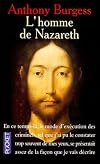
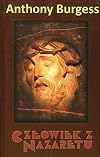
Man of Nazareth
by Anthony Burgess 
On This Page
Description
A fictionalized historic account recalling the story of Jesus from his life to his death.Tags
Recommendations

























Member Reviews
“Man of Nazareth” by Anthony Burgess
I seriously wonder what point there was in writing this book; or what point there was for me to read it! I half expected Burgess to do something novel with “the old, old story”; he is mostly known for his fiction after all, but apart from certain details there isn't much here that goes beyond or runs contra what we've heard so many times before.
I was brought up within the Christian tradition, as far as it goes in a secular household. Baptised as Catholic, I was never taken to church. Later on, I was recruited into a Church of England Choir. I enjoyed the music, until my voice started to break. Finding myself with little or no faith, I quit the job before joining the altos and compulsory show more confirmation classes. No regrets there, but religion has always interested me, especially from the historical perspective. For the past twenty years, I have lived mainly in Muslim countries. I once attended an Anglican service held in Saudi Arabia, partly for the novelty of doing something you could figuratively be thrown to the lions for.
Anyhow, I picked up this volume in a second-hand bookstore in Istanbul, hoping Burgess would have something more interesting to say about Jesus Christ than Dan Brown's slipshod offerings in “The Da Vinci Code”. The headline of the blurb on the back of the book claimed it filled in the twelve missing years of Christ's life. Pure hard sell. Beyond the claim that Jesus married when he attained manhood, and was a thirty-something (childless) widower by the time he started his mission, Burgess tells us little of the middle years.
The narration is done as a kind of chronicle, a story written up by a jobbing scribe. It is reminiscent of Gore Vidal's “Julian” - a novel about a Christian era Roman Emperor who tries to turn the clock back to pagan times. Burgess' Azor, son of Sadok tells a plainer tale than the epistles exchanged between Vidal's pair of haughty scholars. His method is to debunk exaggerated anecdotes, employ his own knowledge of current affairs (for example, in the practice of crucifixion), play up Christ's ideas as sound where they are to do with love, and play down the question of his divinity. Telling an otherwise conventional story, he begins with the twin annunciations (of John the baptist and Jesus of Nazareth), and ends with the resurrection as it affects the disciples.
Characters such as Salomé, Judas and (to a lesser extent) Joseph (husband of Mary) and Herod Antipas are not as we heard them at shcool or in church. Azor would have us believe first century oral history distorted their true strengths and weaknesses, and that he is still close enough to events to give us the truth. Judas, for example, was a victim of his own innocence rather than avarice. One small revelation is that when he realised he had been tricked, he rejected the thirty pieces of silver. The money was from the Temple but could not be returned as it had become unclean. It was therefore used to buy the burial ground where Christ's tomb was located. The cruel dancer Salomé, according to Azor, was really the adopted daughter of Herod Antipas, and later became a follower of Christ. The High Priest Caiaphas conspired with Zerah, a Pharisee (Judas' old friend), to have Christ crucified as a scape-goat.
With the twelve disciples and two Marys, the various shepherds, Kings and sundry other well-knowns to fit in, any writer tackling the story of Jesus has a ready-made panoply to deal with. This may seem to be an advantage, but since all Christian readers will have different expectations – depending on their sect – the writer will have to decide which to leave out as much as which to include. Burgess gives near-rounded portraits of the disciples (Simon-)Peter, Thomas and Judas, but for the rest we have to be content with ensemble sketches as they come on to blow their flutes, complain about the food or lead a donkey. Whereas the down-to-earthness of the followers is poignant at times, otherwise it is bathetic. But the character of Jesus himself remains aloof, even when he consorts with the females. He is literally a giant and since no attempt is made to get under his skin, even in the desert, his mostly inhuman nature takes precedent.
The writing is not what I'd call vintage Burgess. There is little of the humour you get in the Enderby novels or the Malaysian Trilogy. He doesn't play with language, as he does in “A Clockwork Orange” - though he does show off his Greek, Latin and Aramaic. When I checked out the book's Wikipedia entry I saw it was written just after he'd collaborated on Zeffirelli's TV production “Jesus of Nazareth”. That figures. He used the research he'd done on the screenplay to dash off a novel, cashing on the publicity and controversy surrounding the broadcast. Since Wikipedia, and other sources, cite Burgess as a lapsed Catholic, it's hard not to think cynical thoughts of his motives in churning out this tome.
Still, the man was approaching the end of his life and it may be he had one eye cocked on the hereafter as he sat down each day to write his quota of words. show less
I seriously wonder what point there was in writing this book; or what point there was for me to read it! I half expected Burgess to do something novel with “the old, old story”; he is mostly known for his fiction after all, but apart from certain details there isn't much here that goes beyond or runs contra what we've heard so many times before.
I was brought up within the Christian tradition, as far as it goes in a secular household. Baptised as Catholic, I was never taken to church. Later on, I was recruited into a Church of England Choir. I enjoyed the music, until my voice started to break. Finding myself with little or no faith, I quit the job before joining the altos and compulsory show more confirmation classes. No regrets there, but religion has always interested me, especially from the historical perspective. For the past twenty years, I have lived mainly in Muslim countries. I once attended an Anglican service held in Saudi Arabia, partly for the novelty of doing something you could figuratively be thrown to the lions for.
Anyhow, I picked up this volume in a second-hand bookstore in Istanbul, hoping Burgess would have something more interesting to say about Jesus Christ than Dan Brown's slipshod offerings in “The Da Vinci Code”. The headline of the blurb on the back of the book claimed it filled in the twelve missing years of Christ's life. Pure hard sell. Beyond the claim that Jesus married when he attained manhood, and was a thirty-something (childless) widower by the time he started his mission, Burgess tells us little of the middle years.
The narration is done as a kind of chronicle, a story written up by a jobbing scribe. It is reminiscent of Gore Vidal's “Julian” - a novel about a Christian era Roman Emperor who tries to turn the clock back to pagan times. Burgess' Azor, son of Sadok tells a plainer tale than the epistles exchanged between Vidal's pair of haughty scholars. His method is to debunk exaggerated anecdotes, employ his own knowledge of current affairs (for example, in the practice of crucifixion), play up Christ's ideas as sound where they are to do with love, and play down the question of his divinity. Telling an otherwise conventional story, he begins with the twin annunciations (of John the baptist and Jesus of Nazareth), and ends with the resurrection as it affects the disciples.
Characters such as Salomé, Judas and (to a lesser extent) Joseph (husband of Mary) and Herod Antipas are not as we heard them at shcool or in church. Azor would have us believe first century oral history distorted their true strengths and weaknesses, and that he is still close enough to events to give us the truth. Judas, for example, was a victim of his own innocence rather than avarice. One small revelation is that when he realised he had been tricked, he rejected the thirty pieces of silver. The money was from the Temple but could not be returned as it had become unclean. It was therefore used to buy the burial ground where Christ's tomb was located. The cruel dancer Salomé, according to Azor, was really the adopted daughter of Herod Antipas, and later became a follower of Christ. The High Priest Caiaphas conspired with Zerah, a Pharisee (Judas' old friend), to have Christ crucified as a scape-goat.
With the twelve disciples and two Marys, the various shepherds, Kings and sundry other well-knowns to fit in, any writer tackling the story of Jesus has a ready-made panoply to deal with. This may seem to be an advantage, but since all Christian readers will have different expectations – depending on their sect – the writer will have to decide which to leave out as much as which to include. Burgess gives near-rounded portraits of the disciples (Simon-)Peter, Thomas and Judas, but for the rest we have to be content with ensemble sketches as they come on to blow their flutes, complain about the food or lead a donkey. Whereas the down-to-earthness of the followers is poignant at times, otherwise it is bathetic. But the character of Jesus himself remains aloof, even when he consorts with the females. He is literally a giant and since no attempt is made to get under his skin, even in the desert, his mostly inhuman nature takes precedent.
The writing is not what I'd call vintage Burgess. There is little of the humour you get in the Enderby novels or the Malaysian Trilogy. He doesn't play with language, as he does in “A Clockwork Orange” - though he does show off his Greek, Latin and Aramaic. When I checked out the book's Wikipedia entry I saw it was written just after he'd collaborated on Zeffirelli's TV production “Jesus of Nazareth”. That figures. He used the research he'd done on the screenplay to dash off a novel, cashing on the publicity and controversy surrounding the broadcast. Since Wikipedia, and other sources, cite Burgess as a lapsed Catholic, it's hard not to think cynical thoughts of his motives in churning out this tome.
Still, the man was approaching the end of his life and it may be he had one eye cocked on the hereafter as he sat down each day to write his quota of words. show less
Un ouvrage très intéressant, sur une vue différent et non moins intéressante, de la vie du Christ. Ce qu'il aurait vécu durant sa vie, et en tant qu'homme, en toute plausibilité. Un très bon livre qui nous dévoile le Christ-homme mais toujours aussi plein de bonté.
Feb 7, 2011French
BG-4
Sep 15, 2020Catalan
Ratings
Members
- Recently Added By
Lists

Books Based on Movies Based on Books
11 works; 1 member
Author Information

120+ Works 48,185 Members
Anthony Burgess was born in 1917 in Manchester, England. He studied language at Xaverian College and Manchester University. He had originally applied for a degree in music, but was unable to pass the entrance exams. Burgess considered himself a composer first, one who later turned to literature. Burgess' first novel, A Vision of Battlements show more (1964), was based on his experiences serving in the British Army. He is perhaps best known for his novel A Clockwork Orange, which was later made into a movie by Stanley Kubrick. In addition to publishing several works of fiction, Burgess also published literary criticism and a linguistics primer. Some of his other titles include The Pianoplayers, This Man and Music, Enderby, The Kingdom of the Wicked, and Little Wilson and Big God. Burgess was living in Monaco when he died in 1993. (Bowker Author Biography) show less
Anthony Burgess has a Legacy Library. Legacy libraries are the personal libraries of famous readers, entered by LibraryThing members from the Legacy Libraries group.
Awards and Honors
Common Knowledge
- Canonical title*
- Человек из Назарета
- Original title
- Man of Nazareth
- Alternate titles*
- Jesus Christ and the Love Game
- Original publication date
- 1979
- Original language*
- English
*Some information comes from Common Knowledge in other languages. Click "Edit" for more information.
Classifications
Statistics
- Members
- 137
- Popularity
- 237,901
- Reviews
- 3
- Rating
- (3.68)
- Languages
- 8 — Dutch, English, French, Italian, Polish, Romanian, Russian, Spanish
- Media
- Paper
- ISBNs
- 12
- ASINs
- 2