The Coming Crisis of Western Sociology
by Alvin W. Gouldner
On This Page
Description
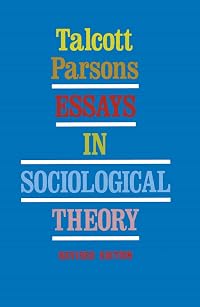
In the social sciences, at least, no group of academics has been more sympathetic to the students of the New Left than have sociologists, and David Riesman has even contended that the profession has contributed in some measure to the development of the movement. Ironically, New Left students who are now becoming New Left Ph.D.’s in sociology have begun to rebel against what they consider the “conservatism” of some of their ex-professors. Alvin Gouldner’s book argues that all of this show more presages the emergence of a new “radical” sociology, and he tries to create a theoretical framework to serve as its guide. Essentially Gouldner’s book consists of five interrelated parts: an attack on “objective,” “value-free” social science; a sociology of the history of sociology; a critique of Talcott Parsons, together with an analysis of the sources of his thought; some comments on the state of Marxist sociology in the Soviet Union and Eastern Europe; and, finally, a short statement of the author’s proposal for a new sociology. Gouldner’s critique of the cult of “scientism” in contemporary American social science makes some telling if obvious points. The overly abstract language used by sociologists (and political scientists) frequently conceals conceptual poverty. Today’s social scientists often lack historical perspective and their excessive concern with methodological purity can contribute little or nothing to understanding contemporary American society and its problems. Certainly, many of those who emphasize their “objectivity” and the value-free character of social science produce studies which derive from only partially conscious assumptions about the nature of reality. What is Gouldner’s remedy? Part of it involves the recognition that social science can never achieve complete objectivity, and the demand that sociologists strive to understand the social and psychological sources of their own biases, or, as he labels them, “background” and “domain assumptions.” Social scientists must renounce the attempt to achieve complete detachment and strive to bring into existence the good, the true, and the beautiful. In evaluating their own work, they should be primarily concerned with the social consequences of their findings. Their task, in short, is to produce studies and theories which contribute to the “liberation” rather than the continued repression of man. Thus the way is paved for a deeply self-aware, “reflexive” sociology. show lessTags
Recommendations














































Member Reviews
Members
- Recently Added By
Author Information
28 Works 370 Members
Awards and Honors
Distinctions
Common Knowledge
- Canonical title*
- De naderende crisis van de westerse sociologie
*Some information comes from Common Knowledge in other languages. Click "Edit" for more information.
Classifications
- Genres
- Sociology, Nonfiction, History
- DDC/MDS
- 301.09 — Society, government, & culture Social sciences, sociology & anthropology Sociology and anthropology standard subdivisions of sociology and/or anthropology History, geographic treatment, biography
- LCC
- HM24 .G65 — Social sciences Sociology (General) Sociology These are obsolete numbers no longer used
- BISAC
Statistics
- Members
- 101
- Popularity
- 318,991
- Rating
- (2.75)
- Languages
- Dutch, English, Spanish
- Media
- Paper
- ISBNs
- 7
- ASINs
- 3