On This Page
Description
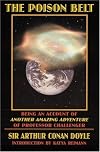
Sir Arthur Conan Doyle's The Poison Belt follows on from The Lost World, but this time Professor Challenger trades the jungle setting for a room in his own house. Edward Malone, Lord John Roxton, and Professor Summerlee arrive at the Professor's home, each with a tank of oxygen - the result of receiving a puzzling behest from Challenger via telegraph. Challenger and his wife usher them into a sealed room - in his research the Professor has predicted that a poisonous ether belt is about to show more reach the earth and quite likely cause the end of the humanity.. show less
Tags
Recommendations




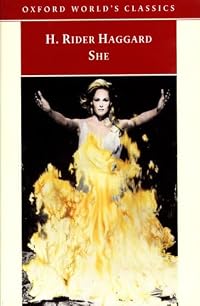


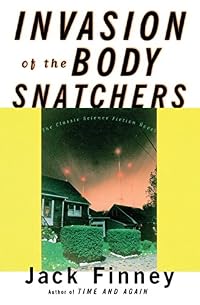
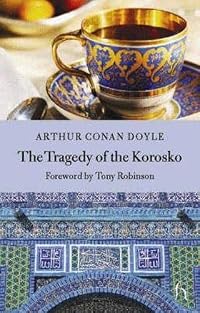


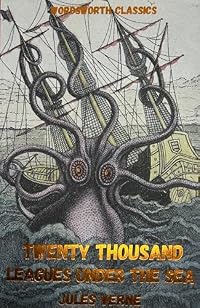






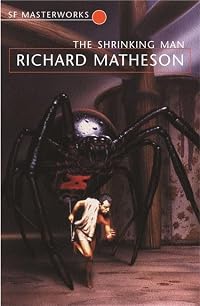


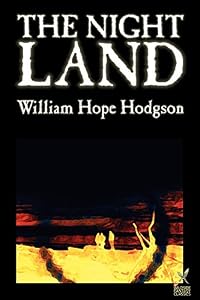


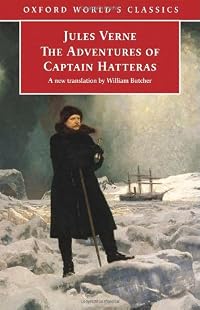


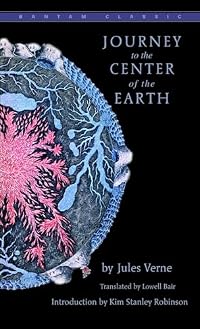


Member Recommendations
sturlington Also features the same characters.

Member Reviews
Professor Challenger gathers his companions from The Lost World and their oxygen supply at his home to await together Earth’s passage through a belt of ether that seems destined to poison most of the Earth’s inhabitants. From a window in the professor’s home, the group observes the ether’s effects. Will they survive, and if they do, what will post-apocalyptic life be like?
This novella hasn’t aged well. It seems obvious where the plot is headed becausejournalist Malone is writing in the first person, and it’s reasonable to assume that he is writing for readers outside of this small group . If this book passes the Bechdel test, it’s with a D minus, and the racial epithets would not be tolerated from a current author as they show more were in Doyle’s day.
One passage struck a chord with me:
You are to picture the loveliness of nature upon that August day, the freshness of the morning air, the golden glare of the summer sunshine, the cloudless sky, the luxuriant green of the Sussex woods, and the deep purple of heather-clad downs. As you looked round upon the many-coloured beauty of the scene all thought of a vast catastrophe would have passed from your mind had it not been for one sinister sign—the solemn, all-embracing silence. There is a gentle hum of life which pervades a closely-settled country, so deep and constant that one ceases to observe it, as the dweller by the sea loses all sense of the constant murmur of the waves. The twitter of birds, the buzz of insects, the far-off echo of voices, the lowing of cattle, the distant barking of dogs, roar of trains, and rattle of carts—all these form one low, unremitting note, striking unheeded upon the ear. We missed it now. This deadly silence was appalling. So solemn was it, so impressive, that the buzz and rattle of our motor-car seemed an unwarrantable intrusion, an indecent disregard of this reverent stillness which lay like a pall over and round the ruins of humanity. It was this grim hush, and the tall clouds of smoke which rose here and there over the country-side from smoldering buildings, which cast a chill into our hearts as we gazed round at the glorious panorama of the Weald.
This passage brought back memories of the days following September 11, 2001, when the skies were empty of planes and helicopters. I live and work close enough to several airports that the sound of planes and helicopters is background noise, “striking unheeded upon the ear.” The silence is one of my strongest memories from a day I’ll never forget. show less
This novella hasn’t aged well. It seems obvious where the plot is headed because
One passage struck a chord with me:
You are to picture the loveliness of nature upon that August day, the freshness of the morning air, the golden glare of the summer sunshine, the cloudless sky, the luxuriant green of the Sussex woods, and the deep purple of heather-clad downs. As you looked round upon the many-coloured beauty of the scene all thought of a vast catastrophe would have passed from your mind had it not been for one sinister sign—the solemn, all-embracing silence. There is a gentle hum of life which pervades a closely-settled country, so deep and constant that one ceases to observe it, as the dweller by the sea loses all sense of the constant murmur of the waves. The twitter of birds, the buzz of insects, the far-off echo of voices, the lowing of cattle, the distant barking of dogs, roar of trains, and rattle of carts—all these form one low, unremitting note, striking unheeded upon the ear. We missed it now. This deadly silence was appalling. So solemn was it, so impressive, that the buzz and rattle of our motor-car seemed an unwarrantable intrusion, an indecent disregard of this reverent stillness which lay like a pall over and round the ruins of humanity. It was this grim hush, and the tall clouds of smoke which rose here and there over the country-side from smoldering buildings, which cast a chill into our hearts as we gazed round at the glorious panorama of the Weald.
This passage brought back memories of the days following September 11, 2001, when the skies were empty of planes and helicopters. I live and work close enough to several airports that the sound of planes and helicopters is background noise, “striking unheeded upon the ear.” The silence is one of my strongest memories from a day I’ll never forget. show less
I had never thought of Arthur Conan Doyle as a science fiction writer but the Poison Belt (which has nothing to do with an item of clothing) is the real deal. The earth will pass through a poisonous belt of ether which will kill all life on the planet predicts the redoubtable Dr Challenger. Of course no one believes him except a select group of friends who gather at his house and with a few canisters of oxygen and in a temporary sealed room they plan to prolong their existence by a few hours. From an upstairs window they look out across the countryside and witness the deaths of workers and golfers and via telephone calls receive updates on a world wide annihilation. Their oxygen supply to their great surprise lasts long enough for them show more to survive the poisonous belt and they venture outside to search for other survivors. Everybody appears to be dead and major fires have erupted in some of the big cities and the six survivors contemplate a dead world and their place in it……………..
This novella was published in 1914 and it coincides with two of my themed reads: early science fiction and books published in 1914 and is an excellent example of both. It has a good story line with lively characters especially the irascible Dr Challenger that moves quickly along and it explores a major science fiction trope of the end of the world. It attempts a little more with the characters engaging in lively conversations about their fate both from the viewpoint of believing they only have hours to live and then when they realise they are perhaps the only survivors. There is perhaps a bit too much of the British stiff upper lip from the Dr Challenger character, to make it a serious contemplation on the end of the world, but Conan Doyle was writing an adventure story that would appeal to the imaginative reader. I enjoyed it and so 3.5 stars. show less
This novella was published in 1914 and it coincides with two of my themed reads: early science fiction and books published in 1914 and is an excellent example of both. It has a good story line with lively characters especially the irascible Dr Challenger that moves quickly along and it explores a major science fiction trope of the end of the world. It attempts a little more with the characters engaging in lively conversations about their fate both from the viewpoint of believing they only have hours to live and then when they realise they are perhaps the only survivors. There is perhaps a bit too much of the British stiff upper lip from the Dr Challenger character, to make it a serious contemplation on the end of the world, but Conan Doyle was writing an adventure story that would appeal to the imaginative reader. I enjoyed it and so 3.5 stars. show less
In The Poison Belt, the characters from The Lost World get an encore performance, which they mostly spend discussing heavy shit in Professor Challenger's living room.
The basic idea is that Challenger realizes, with barely any time to spare, that the world is about to pass through a patch of poisonous ether. He summons his Lost World companions to his country estate, where they seal themselves inside a high-oxygen room, which slows the action of the poisonous ether on their systems. Thus, they get a chance to observe universal death and the end of the world.
The scientific hook in The Poison Belt has been obsolete for nearly a century. Fortunately, once you strip all the science away, you're left with a book that is still plenty show more entertaining. Professor Challenger, quick to anger and unbelievably arrogant, is a comic figure in the middle of horrible events. His tirades supply plenty of laughs, which leave the reader open to the body blow of the disaster Conan Doyle is painting. Universal, inevitable death. This scope makes "Deep Impact" look like a movie about a guy stubbing his toe.
Challenger's foresight, and the dismissal of his warnings by the public, make for some interesting parallels with current tensions between the scientific and broader communities. Says Challenger, "The flippancy of the half-educated is more obstructive to science than the obtuseness of the ignorant."
Conan Doyle seems wholly on board with the British colonial project of his day, and The Poison Belt is at points shocking in its casual racism. You'll have to cut the author some slack on this point to enjoy the book. On the other hand, it's encouraging to read these sorts of things and see that society has, indeed, made some progress in the last hundred years.
It's a short, quick read. Not very substantive, but fun nevertheless. Recommended for reading in train stations. show less
The basic idea is that Challenger realizes, with barely any time to spare, that the world is about to pass through a patch of poisonous ether. He summons his Lost World companions to his country estate, where they seal themselves inside a high-oxygen room, which slows the action of the poisonous ether on their systems. Thus, they get a chance to observe universal death and the end of the world.
The scientific hook in The Poison Belt has been obsolete for nearly a century. Fortunately, once you strip all the science away, you're left with a book that is still plenty show more entertaining. Professor Challenger, quick to anger and unbelievably arrogant, is a comic figure in the middle of horrible events. His tirades supply plenty of laughs, which leave the reader open to the body blow of the disaster Conan Doyle is painting. Universal, inevitable death. This scope makes "Deep Impact" look like a movie about a guy stubbing his toe.
Challenger's foresight, and the dismissal of his warnings by the public, make for some interesting parallels with current tensions between the scientific and broader communities. Says Challenger, "The flippancy of the half-educated is more obstructive to science than the obtuseness of the ignorant."
Conan Doyle seems wholly on board with the British colonial project of his day, and The Poison Belt is at points shocking in its casual racism. You'll have to cut the author some slack on this point to enjoy the book. On the other hand, it's encouraging to read these sorts of things and see that society has, indeed, made some progress in the last hundred years.
It's a short, quick read. Not very substantive, but fun nevertheless. Recommended for reading in train stations. show less
There's something about ether.
I don't know what it is, but early 20th century British writers were obsessed with it. Just as Huxley used it as a stupefying agent in "Brave New World" Doyle uses it as an agent to bring upon death to the world.
Professor Challenger observes changes in the light spectrum through his telescope, and proclaims that the world is about to experience a change larger than the asteroid that destroyed the dinosaurs (excepting of course their lost world).
Of course the world laughs at him again, and of course again he is right. The Earth was sent through a poisons belt of ether that is a "universal agent."
-
The best parts where the descriptions of how the people went coo-koo when exposed, like Professor Summerly show more barking like a dog and proving he could do all the barn yard animals.
Some surprising parts are reminder of how closely we still live to a racist world when the smartest man in the universe refers to non-whites as "the lower races" and "the less evolved humans" and no one bats an eye.
I would have given a higher rating overall, but the ending was predictable and unimaginative. show less
I don't know what it is, but early 20th century British writers were obsessed with it. Just as Huxley used it as a stupefying agent in "Brave New World" Doyle uses it as an agent to bring upon death to the world.
Professor Challenger observes changes in the light spectrum through his telescope, and proclaims that the world is about to experience a change larger than the asteroid that destroyed the dinosaurs (excepting of course their lost world).
Of course the world laughs at him again, and of course again he is right. The Earth was sent through a poisons belt of ether that is a "universal agent."
-
The best parts where the descriptions of how the people went coo-koo when exposed, like Professor Summerly show more barking like a dog and proving he could do all the barn yard animals.
Some surprising parts are reminder of how closely we still live to a racist world when the smartest man in the universe refers to non-whites as "the lower races" and "the less evolved humans" and no one bats an eye.
I would have given a higher rating overall, but the ending was predictable and unimaginative. show less
This is an interesting book from a historical perspective. It was one of the early incarnations of the "perils from space" branch of science fiction and influenced later works in the genre.
As a stand-alone work of fiction, it hasn't aged well at all. The "science" underlying the plot is laughable. This is to be expected nearly a hundred years after the book was published. The racism that appears throughout the book is more troubling. It was, of course, an outgrowth of the British colonial mindset of the time, but that doesn't make it any easier to swallow in 2012.
Professor Challenger's character is also problematic. His arrogance and bumptiousness become more of a distraction from the plot as the novel progresses. Some reviewers see show more him as a comic element, remaining steadfastly didactic as the cosmic catastrophe unfolds. I'm not sure that was the author's intent. Science fiction is a genre about ideas. A good science fiction novel takes a compelling idea and develops it. The author's skill is revealed through the tools he or she uses in developing that idea. In the case of this novel, all the ideas are explained through Professor Challenger's monologues. He takes the role of the omniscient narrator, which strains the plot's credibility. I understand that Challenger is supposed to be extraordinarily intelligent and educated; that's part of the draw of the series of Challenger novels. It just feels like laziness on Conan Doyle's part to rely so heavily on one character. This would have been a much more interesting novel if the plot had developed more organically. show less
As a stand-alone work of fiction, it hasn't aged well at all. The "science" underlying the plot is laughable. This is to be expected nearly a hundred years after the book was published. The racism that appears throughout the book is more troubling. It was, of course, an outgrowth of the British colonial mindset of the time, but that doesn't make it any easier to swallow in 2012.
Professor Challenger's character is also problematic. His arrogance and bumptiousness become more of a distraction from the plot as the novel progresses. Some reviewers see show more him as a comic element, remaining steadfastly didactic as the cosmic catastrophe unfolds. I'm not sure that was the author's intent. Science fiction is a genre about ideas. A good science fiction novel takes a compelling idea and develops it. The author's skill is revealed through the tools he or she uses in developing that idea. In the case of this novel, all the ideas are explained through Professor Challenger's monologues. He takes the role of the omniscient narrator, which strains the plot's credibility. I understand that Challenger is supposed to be extraordinarily intelligent and educated; that's part of the draw of the series of Challenger novels. It just feels like laziness on Conan Doyle's part to rely so heavily on one character. This would have been a much more interesting novel if the plot had developed more organically. show less
A novella length sequel to The Lost World, in which our characters spend most of their time not doing much, just sitting in a sealed room, watching the end of the world through a window. Then it doesn't happen.
The science is entertaining bunk, the racism and sexism casually prevalent and typical of adventure novels from this period, and an awful lot of people die - but from a distance, so no gore or emotion needs to be expended.
However, Professor Challenger remains a star. His impossible egotism and arrogance are as funny as ever, and that is really what the book is about Read The Lost World first, and if you enjoy it, give this a try.
The science is entertaining bunk, the racism and sexism casually prevalent and typical of adventure novels from this period, and an awful lot of people die - but from a distance, so no gore or emotion needs to be expended.
However, Professor Challenger remains a star. His impossible egotism and arrogance are as funny as ever, and that is really what the book is about Read The Lost World first, and if you enjoy it, give this a try.
Professor Challenger has issued a warning. The ether of space has a poisonous belt and the earth is going to pass through it. He invites his friends from the “Lost World’ expedition to his country home and asks them to bring canisters of oxygen. As Malone, Lord Roxton, and Summerlee are traveling by train to Challenger’s mansion they start acting strangely; becoming overly emotional, saying and doing strange things. They are already being affected by the poisonous cloud. When the friends arrive at the estate Challenger explains that they will be riding out the poison in a sealed room using the oxygen canisters.
I enjoyed this Challenger story more than “The Lost World.” It was like an armchair mystery. The good comrades sit and show more discuss the events as they unfold believing they are watching the end of the world. It reminded me of British post-apocalyptic novels.
It’s a short book and a quick read. I suggest reading “The Lost World” before reading this novel because the first book introduces the main characters. show less
I enjoyed this Challenger story more than “The Lost World.” It was like an armchair mystery. The good comrades sit and show more discuss the events as they unfold believing they are watching the end of the world. It reminded me of British post-apocalyptic novels.
It’s a short book and a quick read. I suggest reading “The Lost World” before reading this novel because the first book introduces the main characters. show less
Members
- Recently Added By
Lists

Recommended Apocalyptic Novels
53 works; 24 members

Survey of Classic Fantastic Fiction
36 works; 9 members

Dystopian and Apocalyptic Literature
350 works; 74 members
Apocalyptic Classics
11 works; 4 members

Best Science Fiction Novels
816 works; 430 members
Author Information

3,989+ Works 169,268 Members
The most famous fictional detective in the world is Arthur Conan Doyle's Sherlock Holmes. However, Doyle was, at best, ambivalent about his immensely successful literary creation and, at worst, resentful that his more "serious" fiction was relatively ignored. Born in Edinburgh, Doyle studied medicine from 1876 to 1881 and received his M.D. in show more 1885. He worked as a military physician in South Africa during the Boer War and was knighted in 1902 for his exceptional service. Doyle was drawn to writing at an early age. Although he attempted to enter private practice in Southsea, Portsmouth, in 1882, he soon turned to writing in his spare time; it eventually became his profession. As a Liberal Unionist, Doyle ran, unsuccessfully, for Parliament in 1903. During his later years, Doyle became an avowed spiritualist. Doyle sold his first story, "The Mystery of the Sasassa Valley," to Chambers' Journal in 1879. When Doyle published the novel, A Study in Scarlet in 1887, Sherlock Holmes was introduced to an avid public. Doyle is reputed to have used one of his medical professors, Dr. Joseph Bell, as a model for Holmes's character. Eventually, Doyle wrote three additional Holmes novels and five collections of Holmes short stories. A brilliant, though somewhat eccentric, detective, Holmes employs scientific methods of observation and deduction to solve the mysteries that he investigates. Although an "amateur" private detective, he is frequently called upon by Scotland Yard for assistance. Holmes's assistant, the faithful Dr. Watson, provides a striking contrast to Holmes's brilliant intellect and, in Doyle's day at least, serves as a character with whom the reader can readily identify. Having tired of Holmes's popularity, Doyle even tried to kill the great detective in "The Final Problem" but was forced by an outraged public to resurrect him in 1903. Although Holmes remained Doyle's most popular literary creation, Doyle wrote prolifically in other genres, including historical adventure, science fiction, and supernatural fiction. Despite Doyle's sometimes careless writing, he was a superb storyteller. His great skill as a popular author lay in his technique of involving readers in his highly entertaining adventures. (Bowker Author Biography) show less

Arthur Conan Doyle has a Legacy Library. Legacy libraries are the personal libraries of famous readers, entered by LibraryThing members from the Legacy Libraries group.
Some Editions
Awards and Honors
Notable Lists
Series

Belongs to Publisher Series
Work Relationships
Common Knowledge
- Canonical title
- The Poison Belt
- Original title
- The Poison Belt
- Original publication date
- 1913
- People/Characters
- George Edward Challenger
- Important places*
- London, England, Vereinigtes Königreich; Rotherfield, East Sussex, England, Vereinigtes Königreich
- First words
- Jetzt, da die ungeheuren Ereignisse meiner Erinnerung noch klar verhaftet sind, ist es unerläßlich geworden, sie niederzuschreiben, bevor die Zeit sie verblassen läßt.
It is imperative that now at once, while these stupendous events are still clear in my mind, I should set them down with that exactness of detail which time may blur. - Last words
- (Click to show. Warning: May contain spoilers.)Sie könnten das Fundament bilden, auf dem eine gewissenhaftere und ehrfurchtsvollere Rasse einen würdigen Tempel errichten könnte.
(Click to show. Warning: May contain spoilers.)"[. . .] Solemnity and humility are at the base of all our emotions to-day. May they be the foundations upon which a more earnest and reverent race may build a more worthy temple." - Original language*
- Englisch
- Disambiguation notice
- This work should be the single story "The Poison Belt". Do not combine with works containing additional stories.
*Some information comes from Common Knowledge in other languages. Click "Edit" for more information.
Classifications
Statistics
- Members
- 527
- Popularity
- 56,472
- Reviews
- 25
- Rating
- (3.26)
- Languages
- 13 — Czech, Danish, English, Estonian, Finnish, French, German, Italian, Polish, Portuguese (Portugal), Spanish, Swedish, Turkish
- Media
- Paper, Audiobook, Ebook
- ISBNs
- 153
- ASINs
- 41