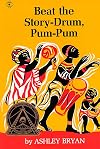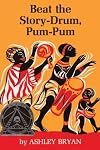
Beat the Story-Drum, Pum-Pum
by Ashley Bryan
On This Page
Description
Five traditional Nigerian tales include "Hen and Frog," "Why Bush Cow and Elephant are Bad Friends," "The Husband Who Counted the Spoonfuls," "Why Frog and Snake Never Play Together," and "How Animals Got Their Tails."Tags
Recommendations













Member Reviews
Here we have a collection of African folklore tales, all but one involving animals.
Of the five tales, three I enjoyed, two I really did not. Hen and Frog, Why Bush Cow and Elephant are Bad Friends, and How Animals Got Their Tails are, in many ways, similar to the Aesop tales many of us grew up with, and the last delving into the mythology of the region. However, The Husband Who Counted the Spoonfuls, a tale about a man who loved to count and was punished by society for it, and Why Frog and Snake Never Play Together, which shows how parental prejudice affects the younger generation, to me were both horrible as far as lessons taught. Like, why would you pass those stories down? Then again, there are plenty of classic tales that are show more severely problematic when you really look at them.
Overall, however, a collection worth reading. And the artwork is fantastic.
Anyway, this was another library sale find that I will be adding to my Little Free Library. I think it's important to pass on tales of all cultures, showing both the similarities and the differences in the way stories are told, especially in the messages we pass down from one generation to the next. show less
Of the five tales, three I enjoyed, two I really did not. Hen and Frog, Why Bush Cow and Elephant are Bad Friends, and How Animals Got Their Tails are, in many ways, similar to the Aesop tales many of us grew up with, and the last delving into the mythology of the region. However, The Husband Who Counted the Spoonfuls, a tale about a man who loved to count and was punished by society for it, and Why Frog and Snake Never Play Together, which shows how parental prejudice affects the younger generation, to me were both horrible as far as lessons taught. Like, why would you pass those stories down? Then again, there are plenty of classic tales that are show more severely problematic when you really look at them.
Overall, however, a collection worth reading. And the artwork is fantastic.
Anyway, this was another library sale find that I will be adding to my Little Free Library. I think it's important to pass on tales of all cultures, showing both the similarities and the differences in the way stories are told, especially in the messages we pass down from one generation to the next. show less
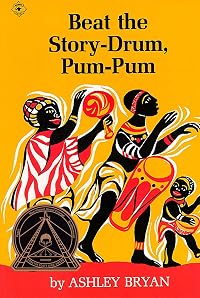
Acclaimed African-American children's author and artist Ashley Bryan - whose other folklore collections include The Ox of the Wonderful Horns and Other African Folktales and The Lion and the Ostrich Chicks and Other African Tales - presents five traditional tales from Nigeria in Beat the Story Drum, Pum-Pum, together with his beautiful woodcut illustrations. Here the reader will find:
Hen and Frog, a variation on the Aesopic Grasshopper and the Ants, in which the industrious Hen prepares for an impending storm, with no help from her friend Frog. As you might expect, when the storm floods Frog out, he seeks shelter at Hen's, where a series of confrontations end in an unexpected way...
Why Bush Cow and Elephant Are Bad Friends, a tale in show more which the two largest and strongest animals are constantly at odds, fighting and wreaking havoc wherever they go. When the Head Chief arranges an official contest, only to see that the two contestants can't wait, he knows he must take action...
The Husband Who Counted the Spoonfuls - the only tale in the collection featuring human beings, rather than animals - follows the story of gentle Tagwayi, whose only flaw is his habit of counting everything, including the spoonfuls of food ladled out by his wives. This habit, considered unforgivably rude, leads to the loss of one wife after another...
Why Frog and Snake Never Play Together, in which two young creatures meet, befriend one another, and pass the happiest day of their lives, only to be informed upon returning home, that frogs and snakes are enemies...
How Animals Got Their Tails, a pourquoi tale which explains why Rabbit has the short little tail, and why animals got tails in general. show less
Hen and Frog, a variation on the Aesopic Grasshopper and the Ants, in which the industrious Hen prepares for an impending storm, with no help from her friend Frog. As you might expect, when the storm floods Frog out, he seeks shelter at Hen's, where a series of confrontations end in an unexpected way...
Why Bush Cow and Elephant Are Bad Friends, a tale in show more which the two largest and strongest animals are constantly at odds, fighting and wreaking havoc wherever they go. When the Head Chief arranges an official contest, only to see that the two contestants can't wait, he knows he must take action...
The Husband Who Counted the Spoonfuls - the only tale in the collection featuring human beings, rather than animals - follows the story of gentle Tagwayi, whose only flaw is his habit of counting everything, including the spoonfuls of food ladled out by his wives. This habit, considered unforgivably rude, leads to the loss of one wife after another...
Why Frog and Snake Never Play Together, in which two young creatures meet, befriend one another, and pass the happiest day of their lives, only to be informed upon returning home, that frogs and snakes are enemies...
How Animals Got Their Tails, a pourquoi tale which explains why Rabbit has the short little tail, and why animals got tails in general. show less
Five traditional Nigerian tales include "Hen and Frog," "Why Bush Cow and Elephant are Bad Friends," "The Husband Who Counted the Spoonfuls," "Why Frog and Snake Never Play Together," and "How Animals Got Their Tails." Google Books
Ratings
Members
- Recently Added By
Lists

Sonlight Books
1,487 works; 25 members
Author Information

34+ Works 3,691 Members
Awards and Honors
Awards
Common Knowledge
- Canonical title
- Beat the Story-Drum, Pum-Pum
Classifications
- Genres
- Kids, Children's Books, Fiction and Literature
- DDC/MDS
- 398.2 — Society, government, & culture Customs, etiquette & folklore Folklore & Folktales Folk literature
- LCC
- PZ8.1 .B838 .B — Language and Literature Fiction and juvenile belles lettres Fiction and juvenile belles lettres Juvenile belles lettres
- BISAC
Statistics
- Members
- 546
- Popularity
- 54,358
- Reviews
- 3
- Rating
- (3.36)
- Languages
- English
- Media
- Paper
- ISBNs
- 9
- ASINs
- 2