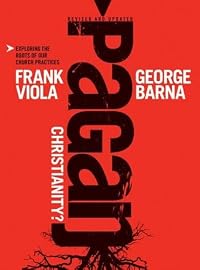
Pagan Christianity?: Exploring the Roots of Our Church Practices
by Frank Viola
On This Page
Description
Have you ever wondered why we Christians do what we do for church every Sunday morning? Why do we "dress up" for church? Why does the pastor preach a sermon each week? Why do we have pews, steeples, choirs, and seminaries? This volume reveals the startling truth: most of what Christians do in present-day churches is not rooted in the New Testament, but in pagan culture and rituals developed long after the death of the apostles. Coauthors Frank Viola and George Barna support their thesis with show more compelling historical evidence in the first-ever book to document the full story of modern Christian church practices. show lessTags
Recommendations


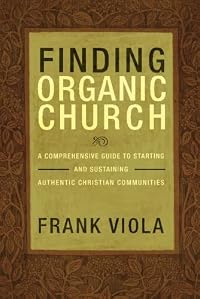
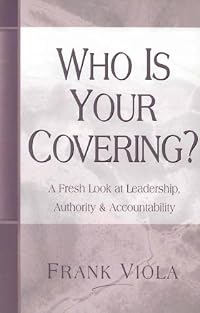
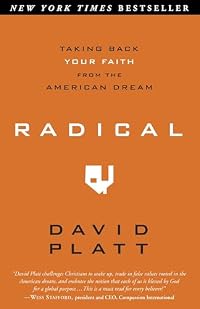
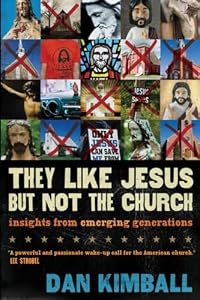

Member Recommendations
by anonymous user
by anonymous user
Member Reviews
No, this isn't a "bash the Christians" book. It's a "bash the church" book (lowercase “c”). The authors' goal is to redirect Christians back to the original teachings of the New Testament, where the “Church” was never a building.
"Pagan," as used by the authors, pretty much just means "different from what the New Testament teaches." Their goal is to encourage Christians to embrace the original New Testament church.
Church buildings are wrong. Sacraments are wrong. Collection plates are wrong. Pulpits are wrong. You’ll get a earful, and if “wrong” means “not the way it was first done,” then the authors have a well-researched point. But an important distinction needs to be made: The New Testament church, in this book, show more should not be confused with the “first century church.” No extraneous Christian teachings are acceptable to Viola and Barna, who either ignore or condemn them. Even if some of these teachings are contemporary with New Testament writings. For example, church fathers Ignatius, Clement of Rome and Tertullian are criticized for introducing a clergy, and the Didache’s instructions are never mentioned by the authors, who insist that early Christian worship sessions had no structure. Perhaps the authors subscribe to the view that all of the New Testament Gospels and epistles were written in Paul’s time.
Part of the intrigue of this book, for me, is that I grew up in a nondenominational church similar to what the authors approve of as "organic," and that ignores all Christian instruction outside the Bible. This church has a bit more structure to their worship than what Viola and Barna recommend, but it does meet in homes and all members participate equally in the service. It's a "back to Jesus" movement patterned after the New Testament.
So, my church background may qualify me more than many reviewers to address both the pros and cons of the book's arguments. And as such, I do have one criticism, which drops it from a 5-star to a 4-star rating: The passion of the authors overflows, which should be a good thing, but here it's overwhelming. While they convincingly show that many Christian church customs differ from the first Christians, their underlying assumption that this is somehow bad gets pushed a little too hard for my taste, simply because in my experience, different church atmospheres and practices are appropriate for different people. We're all unique, and different things bring us closer to God.
But enough nit-picking. The book has a serious message for all who wish to pattern their manner of worship after the Bible. show less
"Pagan," as used by the authors, pretty much just means "different from what the New Testament teaches." Their goal is to encourage Christians to embrace the original New Testament church.
Church buildings are wrong. Sacraments are wrong. Collection plates are wrong. Pulpits are wrong. You’ll get a earful, and if “wrong” means “not the way it was first done,” then the authors have a well-researched point. But an important distinction needs to be made: The New Testament church, in this book, show more should not be confused with the “first century church.” No extraneous Christian teachings are acceptable to Viola and Barna, who either ignore or condemn them. Even if some of these teachings are contemporary with New Testament writings. For example, church fathers Ignatius, Clement of Rome and Tertullian are criticized for introducing a clergy, and the Didache’s instructions are never mentioned by the authors, who insist that early Christian worship sessions had no structure. Perhaps the authors subscribe to the view that all of the New Testament Gospels and epistles were written in Paul’s time.
Part of the intrigue of this book, for me, is that I grew up in a nondenominational church similar to what the authors approve of as "organic," and that ignores all Christian instruction outside the Bible. This church has a bit more structure to their worship than what Viola and Barna recommend, but it does meet in homes and all members participate equally in the service. It's a "back to Jesus" movement patterned after the New Testament.
So, my church background may qualify me more than many reviewers to address both the pros and cons of the book's arguments. And as such, I do have one criticism, which drops it from a 5-star to a 4-star rating: The passion of the authors overflows, which should be a good thing, but here it's overwhelming. While they convincingly show that many Christian church customs differ from the first Christians, their underlying assumption that this is somehow bad gets pushed a little too hard for my taste, simply because in my experience, different church atmospheres and practices are appropriate for different people. We're all unique, and different things bring us closer to God.
But enough nit-picking. The book has a serious message for all who wish to pattern their manner of worship after the Bible. show less
(Review originally published on my blog @ http://www.anthonymathenia.com/?p=194)
It probably seems like a bit of an odd choice to follow up my last blog entry about the woeful nature of the Christian bookstore with a Christian book review. And not just any book at that; but, one coauthored by noted Christian research specialist, George Barna, and published by the Tyndale House, which, among others works, is responsible for printing the popular but eschalogically-challenged, Left Behind series. Not only that, but a book that has the word Pagan in the title and contents that are not really focused on Scripture, but pagan practices. So why the book review? Because, Pagan Christianity - Exploring the Roots of our Church Practices, at its show more center, is really not far off from what I write about and an important read for anyone involved in the modern-day church machine.
Tyndale Publishing’s release of Pagan Christianity is a revised and updated version of Frank Viola’s earlier work of the same name and is the follow-up to George Barna’s Revolution. The object of this volume is to trace the suspect origins of modern-day church practices and to expose their pagan roots. Whereas, since the time of Luther, there have been several books and treatises that detail the unbiblical nature of the practices of the Catholic Church, Pagan Christianity unequally, dares to hold the spotlight up to her daughters, the various Protestant sects.
Since my past is with the Jehovah’s Witnesses religion I thought I had a good understanding of pagan church practices. Like most religions, the Witnesses sanctimoniously pride themselves on having, what they consider, the true form of worship, virtually unchanged from the apostolic first-century congregation. In the early 1900’s, their founder Joseph Rutherford, sought to distance the Witnesses from other religions and in the process stripped out the elements that were believed to be of pagan origin.
What was enlightening to me was to find out that the Witnesses, while pointing pious fingers at other denominations and crying “pagan”, had kept many practices that had no foundation in scripture and come from a variety of outside influences. Pagan Christianity brings this to light. For instance, as Witnesses, we prided ourselves in our formal attire. We always dressed up for meetings, brothers wearing suits and sisters in dresses. We would often ridicule the other churchgoers who we would see going into their buildings in business casual, slacks and a polo shirt. In chapter six, Sunday Morning Costumes, Viola answers the question that is seldom asked, “Why do we dress up for church?” As it is revealed, the practice began not with reverence toward God, but through the development of upper societal classes that wished to distinguish themselves from the unwashed masses by fancy attire. One cannot consider such without being mindful of James when he condemned such “class distinctions” that arose in the first-century Congregation over similar matters of dress. (James 2:1-4)
Though wishing to distance themselves from other protestant denominations, the Witnesses’ Sunday meeting shares much of the same attributes as her sisters, which Viola traces back to a variety of pagan sources. The centerpiece of the Witnesses’ Sunday meeting is the “public talk”, which is simply a rebranded sermon. Pagan Christianity, shows how the standard three to five-point talk, with an introduction and conclusion, borrows its basic structure from the sermons of the Greek sophists. It is even presented in a similar manner, from a stage before a listening audience, and closed with appreciatory applause. The Witnesses, like virtually every other denomination, have special religious buildings. They seek to distinguish their buildings by referring to them not as “church buildings” but as “Kingdom Halls”. However, the name change does little to conceal that they have not followed the earlier Christian example of meeting in private homes; but, rather in special, religious buildings that originated with the borrowed basilicas of the Roman empire. Even in matters where the Witnesses claim uniqueness, such as their door-to-door ministry, it is found that these are not retained from an Apostolic tradition, but rather late-century invention, in this case of the 19th century father of mass evangelism, D.L. Moody.
It should be noted that Pagan Christianity is not written as an expose of the Jehovah’s Witnesses, in fact they are not even mentioned by name. The scope is much broader and touches all contemporary Christian religious groups to some extent or other; because, they all have the same family tree. It is written in such a way that no matter what denominational background a Christian may have they will be positioned to hold their traditions and practices up for inspection and see if the roots are sound and truly come from Scripture or, as in most cases, originate from outside influences. The power of this book is that it cannot be ignored. It is bound to cause, not only examination; but, serious discussion, pro and con. I would like to take a moment to contribute to that dialog.
Though I agree and appreciate what Viola has compiled and written; I feel it is a major omission to leave out of the consideration, two of the biggest pagan influences that have made their mark on the Christian landscape. These are the holidays of Christmas and Easter. On the book’s companion website, paganchristianity.org, this is addressed. Viola explains that his concern was on pagan practices that hinder or adversely influence the proper functioning of the body of Christ and that he feels borrowed pagan-holidays do not cause any harm. I believe this claim is undermined by what he writes in the concluding section of the book.
The book’s “afterword”, asks us to consider if it matters to God how we worship him. Drawing from an Old Testament account of 2 Samuel chapter 6, it provides a powerful assertion that it does. The chapter is about when King David sought to bring the Ark of the Covenant to Jerusalem. This event was filled with sincere and heartfelt worship, singing, dancing, and music from King David and the nation of Israel. However, God was not pleased with this worship because the ark was not being carried in his ordained manner, by Levite priests, but rather, was carried on a wooden cart. Viola draws attention to this grave mistake when he writes,
"Israel’s error was that they didn’t seek God according to “the prescribed way.” That is, they didn’t worship God according to His way. They worshiped Him in their own way. It’s important to note that Israel borrowed the idea to place the holy Ark on a wooden cart from the heathen Philistines! (See 1 Samuel 6:1-12.)"
Since Christmas and Easter are Christianity’s two biggest seasons for worship I would like to ask if it matters to God if we worship in a manner borrowed from pagan religions during these times? Because from my perspective, borrowed fertility symbols such as easter eggs and feast-day celebrations of pagan gods are much bigger than wooden carts. This is particularly worthy of thought because these holidays have little to do with the prescribed manner Jesus gave to us to observe his earthly life. But rather, in passing a symbolic loaf of bread and cup of wine, during a communal feast, Jesus said, “do this in remembrance of me.” (Luke 22:19)
It will be interesting to see how the revised and updated version of “Pagan Christianity” affects the larger Christian landscape. The original release has become a staple for those already meeting outside the institutional Church. It validated the feelings of the brethren that something was lacking in the traditional way of worshiping; and, it gave historical proof that the Church, by and large, had indeed lost her plot. The question is, will this work be powerful enough to change the minds of those who have not yet seen any problems in the way that they “do church”?
While the book does much to show where the institutional Church had erred and moved down a crooked path over the years it does not really delve too deeply into what individuals should do about it. Although, the “afterword” is entitled “The Next Step” it calls for more introspection than action. It ends by asking the reader to prayerfully consider what had been written and start thinking accordingly. This is perhaps appropriate because a Christian would have to make a profound mental shift before taking a physical, next-step.
One of the things I continue to appreciate about Frank Viola is that he recognizes the centrality of Jesus Christ within the Christian Church. In the last few pages of the book he points to Jesus for the inspiration for which we, as his body, should begin to model ourselves around. (In truth we, his Church, should never have stopped in the first place.) It is my understanding that Frank Viola is currently writing a follow up which will discuss more practically what someone who has decided to come out of “pagan Christianity” might do in moving toward a more sound, Christ-centered form of corporate worship. It is my opinion, that if we get the hearts of Christians back to Christ, the hard work is done and the rest will ultimately take of itself. At the same time I appreciate and recognize the gifts that we have in brothers and sisters that can render loving aid in our spiritual growth. show less
It probably seems like a bit of an odd choice to follow up my last blog entry about the woeful nature of the Christian bookstore with a Christian book review. And not just any book at that; but, one coauthored by noted Christian research specialist, George Barna, and published by the Tyndale House, which, among others works, is responsible for printing the popular but eschalogically-challenged, Left Behind series. Not only that, but a book that has the word Pagan in the title and contents that are not really focused on Scripture, but pagan practices. So why the book review? Because, Pagan Christianity - Exploring the Roots of our Church Practices, at its show more center, is really not far off from what I write about and an important read for anyone involved in the modern-day church machine.
Tyndale Publishing’s release of Pagan Christianity is a revised and updated version of Frank Viola’s earlier work of the same name and is the follow-up to George Barna’s Revolution. The object of this volume is to trace the suspect origins of modern-day church practices and to expose their pagan roots. Whereas, since the time of Luther, there have been several books and treatises that detail the unbiblical nature of the practices of the Catholic Church, Pagan Christianity unequally, dares to hold the spotlight up to her daughters, the various Protestant sects.
Since my past is with the Jehovah’s Witnesses religion I thought I had a good understanding of pagan church practices. Like most religions, the Witnesses sanctimoniously pride themselves on having, what they consider, the true form of worship, virtually unchanged from the apostolic first-century congregation. In the early 1900’s, their founder Joseph Rutherford, sought to distance the Witnesses from other religions and in the process stripped out the elements that were believed to be of pagan origin.
What was enlightening to me was to find out that the Witnesses, while pointing pious fingers at other denominations and crying “pagan”, had kept many practices that had no foundation in scripture and come from a variety of outside influences. Pagan Christianity brings this to light. For instance, as Witnesses, we prided ourselves in our formal attire. We always dressed up for meetings, brothers wearing suits and sisters in dresses. We would often ridicule the other churchgoers who we would see going into their buildings in business casual, slacks and a polo shirt. In chapter six, Sunday Morning Costumes, Viola answers the question that is seldom asked, “Why do we dress up for church?” As it is revealed, the practice began not with reverence toward God, but through the development of upper societal classes that wished to distinguish themselves from the unwashed masses by fancy attire. One cannot consider such without being mindful of James when he condemned such “class distinctions” that arose in the first-century Congregation over similar matters of dress. (James 2:1-4)
Though wishing to distance themselves from other protestant denominations, the Witnesses’ Sunday meeting shares much of the same attributes as her sisters, which Viola traces back to a variety of pagan sources. The centerpiece of the Witnesses’ Sunday meeting is the “public talk”, which is simply a rebranded sermon. Pagan Christianity, shows how the standard three to five-point talk, with an introduction and conclusion, borrows its basic structure from the sermons of the Greek sophists. It is even presented in a similar manner, from a stage before a listening audience, and closed with appreciatory applause. The Witnesses, like virtually every other denomination, have special religious buildings. They seek to distinguish their buildings by referring to them not as “church buildings” but as “Kingdom Halls”. However, the name change does little to conceal that they have not followed the earlier Christian example of meeting in private homes; but, rather in special, religious buildings that originated with the borrowed basilicas of the Roman empire. Even in matters where the Witnesses claim uniqueness, such as their door-to-door ministry, it is found that these are not retained from an Apostolic tradition, but rather late-century invention, in this case of the 19th century father of mass evangelism, D.L. Moody.
It should be noted that Pagan Christianity is not written as an expose of the Jehovah’s Witnesses, in fact they are not even mentioned by name. The scope is much broader and touches all contemporary Christian religious groups to some extent or other; because, they all have the same family tree. It is written in such a way that no matter what denominational background a Christian may have they will be positioned to hold their traditions and practices up for inspection and see if the roots are sound and truly come from Scripture or, as in most cases, originate from outside influences. The power of this book is that it cannot be ignored. It is bound to cause, not only examination; but, serious discussion, pro and con. I would like to take a moment to contribute to that dialog.
Though I agree and appreciate what Viola has compiled and written; I feel it is a major omission to leave out of the consideration, two of the biggest pagan influences that have made their mark on the Christian landscape. These are the holidays of Christmas and Easter. On the book’s companion website, paganchristianity.org, this is addressed. Viola explains that his concern was on pagan practices that hinder or adversely influence the proper functioning of the body of Christ and that he feels borrowed pagan-holidays do not cause any harm. I believe this claim is undermined by what he writes in the concluding section of the book.
The book’s “afterword”, asks us to consider if it matters to God how we worship him. Drawing from an Old Testament account of 2 Samuel chapter 6, it provides a powerful assertion that it does. The chapter is about when King David sought to bring the Ark of the Covenant to Jerusalem. This event was filled with sincere and heartfelt worship, singing, dancing, and music from King David and the nation of Israel. However, God was not pleased with this worship because the ark was not being carried in his ordained manner, by Levite priests, but rather, was carried on a wooden cart. Viola draws attention to this grave mistake when he writes,
"Israel’s error was that they didn’t seek God according to “the prescribed way.” That is, they didn’t worship God according to His way. They worshiped Him in their own way. It’s important to note that Israel borrowed the idea to place the holy Ark on a wooden cart from the heathen Philistines! (See 1 Samuel 6:1-12.)"
Since Christmas and Easter are Christianity’s two biggest seasons for worship I would like to ask if it matters to God if we worship in a manner borrowed from pagan religions during these times? Because from my perspective, borrowed fertility symbols such as easter eggs and feast-day celebrations of pagan gods are much bigger than wooden carts. This is particularly worthy of thought because these holidays have little to do with the prescribed manner Jesus gave to us to observe his earthly life. But rather, in passing a symbolic loaf of bread and cup of wine, during a communal feast, Jesus said, “do this in remembrance of me.” (Luke 22:19)
It will be interesting to see how the revised and updated version of “Pagan Christianity” affects the larger Christian landscape. The original release has become a staple for those already meeting outside the institutional Church. It validated the feelings of the brethren that something was lacking in the traditional way of worshiping; and, it gave historical proof that the Church, by and large, had indeed lost her plot. The question is, will this work be powerful enough to change the minds of those who have not yet seen any problems in the way that they “do church”?
While the book does much to show where the institutional Church had erred and moved down a crooked path over the years it does not really delve too deeply into what individuals should do about it. Although, the “afterword” is entitled “The Next Step” it calls for more introspection than action. It ends by asking the reader to prayerfully consider what had been written and start thinking accordingly. This is perhaps appropriate because a Christian would have to make a profound mental shift before taking a physical, next-step.
One of the things I continue to appreciate about Frank Viola is that he recognizes the centrality of Jesus Christ within the Christian Church. In the last few pages of the book he points to Jesus for the inspiration for which we, as his body, should begin to model ourselves around. (In truth we, his Church, should never have stopped in the first place.) It is my understanding that Frank Viola is currently writing a follow up which will discuss more practically what someone who has decided to come out of “pagan Christianity” might do in moving toward a more sound, Christ-centered form of corporate worship. It is my opinion, that if we get the hearts of Christians back to Christ, the hard work is done and the rest will ultimately take of itself. At the same time I appreciate and recognize the gifts that we have in brothers and sisters that can render loving aid in our spiritual growth. show less
This book has been one of the biggest eye-openers I have ever read in my entire 20+ year Christian life. For quite some time I have sensed there are many things that we do and practice within the church today that just don't seem right. Things that can't be found in the Bible and/or things that the early church never practiced. For example, a church building, the elevation of clergy, and the non-participatory nature of the church body. Much of what Viola/Barna expose in this book sheds light on these things and so much more. This book affirms that today's church has indeed become very institutionalized and dogmatic, having strayed far from the church modeled in scripture. It has adopted many of the ways and systems of the world, show more beginning in the 2nd century AD all the way up until the present time. Would the early church fathers, or even Jesus, recognize today's church? I think not.
However, there are two things worth considering when reading this book: 1) Viola is very much a staunch supporter of the house church movement. This becomes very evident in Viola's writing as it seems to be the cure all for all of today's church problems. 2) We must ask ourselves is the church of Acts a prescription for the way we must do church? Or, is it just the way believers during the Apostolic period did church? While taking these two things into consideration, several questions arise: 1) Do we completely throw away millenia of church history, traditions, and doctrine and revert to the first century church? 2) Do we surrender to church history and keep going with the way things are? 3) Or, do we slowly begin to reform the current state of the church, perhaps compromising on some issues, and skipping over others to make it look more palatable to the churches that Paul planted?
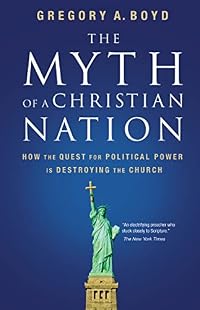
When the church begins to look too much like the world, perhaps it's high time for introspection and prayerfully consider reform. But, is the answer found in the house church model, or are there other options? My guess is the former, since that is what is modeled in the Bible, and how the early church did it. It's been highly recommended by several of my friends that "Reimagining Church" by Frank Viola must be read as a sequel to this book. But, I also recommend "The Myth of a Christian Religion" by Gregory Boyd who hits on other issues relating to the church. I dare any Christian, especially pastors and church leaders to read "Pagan Christianity". I also recommend this book to those who are involved in church-planting ministry. I, as a missionary have greatly benefitted from this book and look forward to implementing some of the things mentioned in this book with the start of our new church plant. show less
However, there are two things worth considering when reading this book: 1) Viola is very much a staunch supporter of the house church movement. This becomes very evident in Viola's writing as it seems to be the cure all for all of today's church problems. 2) We must ask ourselves is the church of Acts a prescription for the way we must do church? Or, is it just the way believers during the Apostolic period did church? While taking these two things into consideration, several questions arise: 1) Do we completely throw away millenia of church history, traditions, and doctrine and revert to the first century church? 2) Do we surrender to church history and keep going with the way things are? 3) Or, do we slowly begin to reform the current state of the church, perhaps compromising on some issues, and skipping over others to make it look more palatable to the churches that Paul planted?
When the church begins to look too much like the world, perhaps it's high time for introspection and prayerfully consider reform. But, is the answer found in the house church model, or are there other options? My guess is the former, since that is what is modeled in the Bible, and how the early church did it. It's been highly recommended by several of my friends that "Reimagining Church" by Frank Viola must be read as a sequel to this book. But, I also recommend "The Myth of a Christian Religion" by Gregory Boyd who hits on other issues relating to the church. I dare any Christian, especially pastors and church leaders to read "Pagan Christianity". I also recommend this book to those who are involved in church-planting ministry. I, as a missionary have greatly benefitted from this book and look forward to implementing some of the things mentioned in this book with the start of our new church plant. show less
A book I couldnt put down when I started reading it!
"When Christianity was born, it was the only religion on the planet that had no sacred objects, no sacred persons and no sacred places"
Easy to read, Frank Violas analysis of the historical context in which many christian traditions became part of church life is an eye-opener.
Some of the traditions he covers do not surpirse me. Church buildings for example, did not come into existance till Constantine legalised christianity in AD321, but others do. The Liturgy, sermons, and music are traditons that relate to non-christian cultures that christianity co-existed with.
Given that we are in a post-institutional era, it helps to be able to distingush between biblical principles that are not show more negotiable and those things which are addded on traditions and therefore can be sacrificed to stay connected with the generation we live in.
Viola is a house church believer which colours his perception of christian education, and his discussion on baptism is contradicted by the bible quotes he uses.
Very thought provoking and I strongly agree with the priesthood of all believers and its implications. It was a shock to me to contemplate that though the Refomers re-adopted this belief, they did not reintroduce it in practice. show less
"When Christianity was born, it was the only religion on the planet that had no sacred objects, no sacred persons and no sacred places"
Easy to read, Frank Violas analysis of the historical context in which many christian traditions became part of church life is an eye-opener.
Some of the traditions he covers do not surpirse me. Church buildings for example, did not come into existance till Constantine legalised christianity in AD321, but others do. The Liturgy, sermons, and music are traditons that relate to non-christian cultures that christianity co-existed with.
Given that we are in a post-institutional era, it helps to be able to distingush between biblical principles that are not show more negotiable and those things which are addded on traditions and therefore can be sacrificed to stay connected with the generation we live in.
Viola is a house church believer which colours his perception of christian education, and his discussion on baptism is contradicted by the bible quotes he uses.
Very thought provoking and I strongly agree with the priesthood of all believers and its implications. It was a shock to me to contemplate that though the Refomers re-adopted this belief, they did not reintroduce it in practice. show less
A magnificently written book that explains why church does not always seem to fit Scripture! It compares the many Christian habits and actions to pagan culture and how the two have merged to form a less than Scriptural following of individuals.
One must follow the Scripture rather than ritualistic beliefs and habits that our churches have formed. The argument being that we may be harming our soul more than doing it good by attending a church that performs some of the rituals performed. And most, if not all, do exactly that.
A fascinating read with great learning. I highly recommend this book.
One must follow the Scripture rather than ritualistic beliefs and habits that our churches have formed. The argument being that we may be harming our soul more than doing it good by attending a church that performs some of the rituals performed. And most, if not all, do exactly that.
A fascinating read with great learning. I highly recommend this book.
A "historical" analysis of the development of various church traditions along with the argument that much of what is done in "institutional Christianity" derives its origins from paganism.
Much of what the author says has some merit, even though the situation is always a little more complicated than he would like to make it out to be.
The author clearly has an agenda, even though he would purport not to. He is defending his own brand of Evangelical house churches. While he affirms that Christians should consider the baptism the means of conversion, he still speaks of it in terms of an "outward demonstration" and is not nearly as acrid against the "sinner's prayer" as he is, say, the clergy or church buildings. In his crusade against a show more "paid clergy," while he rightly goes against a ministry concept not in Scripture (the modern "pastor/clergy system"), he goes too far the other way and creates his own ministry concept that is also not in Scripture ("apostolic itinerant church planters"). Tellingly, nothing is said in his analysis about "evangelists" and the role they played; his explanation of 1 Timothy 5 in terms of elders is sorely lacking. The author is overly preoccupied with the assembly, and attempts to place upon 1 Corinthians 14:26 the burden of being the only verse to explain what NT assemblies were all about, and thus what assemblies today should be (mutual edification only)-- and, in so doing, not subjecting his own practice to the rigorous contextual standard advocated in chapter 11 of the book (one would think that 14:26 might be tempered some by 1 Cor. 13:8-10, among other things...). He is quick to attempt to associate the Lord's Supper with a common meal, and doesn't seem comfortable admitting that regardless of whether the Lord's Supper was eaten in the context of the "agape" or common meal, it was always seen as something distinct from the common meal.
The author's reliance on Durant as a historical witness along with secondary sources undermines his credibility-- he is relying on men's interpretations of primary sources, and for a work purporting to be what this is, it's quite disappointing.
An intentionally thought-provoking book, but don't believe all the hype. See through the author's agenda and his hypocrisies. show less
Much of what the author says has some merit, even though the situation is always a little more complicated than he would like to make it out to be.
The author clearly has an agenda, even though he would purport not to. He is defending his own brand of Evangelical house churches. While he affirms that Christians should consider the baptism the means of conversion, he still speaks of it in terms of an "outward demonstration" and is not nearly as acrid against the "sinner's prayer" as he is, say, the clergy or church buildings. In his crusade against a show more "paid clergy," while he rightly goes against a ministry concept not in Scripture (the modern "pastor/clergy system"), he goes too far the other way and creates his own ministry concept that is also not in Scripture ("apostolic itinerant church planters"). Tellingly, nothing is said in his analysis about "evangelists" and the role they played; his explanation of 1 Timothy 5 in terms of elders is sorely lacking. The author is overly preoccupied with the assembly, and attempts to place upon 1 Corinthians 14:26 the burden of being the only verse to explain what NT assemblies were all about, and thus what assemblies today should be (mutual edification only)-- and, in so doing, not subjecting his own practice to the rigorous contextual standard advocated in chapter 11 of the book (one would think that 14:26 might be tempered some by 1 Cor. 13:8-10, among other things...). He is quick to attempt to associate the Lord's Supper with a common meal, and doesn't seem comfortable admitting that regardless of whether the Lord's Supper was eaten in the context of the "agape" or common meal, it was always seen as something distinct from the common meal.
The author's reliance on Durant as a historical witness along with secondary sources undermines his credibility-- he is relying on men's interpretations of primary sources, and for a work purporting to be what this is, it's quite disappointing.
An intentionally thought-provoking book, but don't believe all the hype. See through the author's agenda and his hypocrisies. show less
Some good points about how much of what we do in 'church' today bears little resemblance to the early church. Some interesting historical information; quite thought-provoking, too. Much of the church has become legalistic about things that either originated well after New Testament times, or began in Pagan practises.
However the author contradicts himself in places, makes illogical leaps, and his suggested alternatives are just as legalistic as what he is criticising.
However the author contradicts himself in places, makes illogical leaps, and his suggested alternatives are just as legalistic as what he is criticising.
Members
- Recently Added By
Author Information

46 Works 2,881 Members
Frank Viola has helped thousands of people around the world to deepen their relationship with Jesus Christ and enter into a more vibrant and authentic experience of church. He has written many books on these themes, including his signature work, Insurgence: Reclaiming the Gospel of the Kingdom. His blog, frankviola.org, has been ranked in the top show more ten of all Christian blogs on the web today. show less
Common Knowledge
- Original title
- Pagan Christianity? : exploring the roots of our church practices
Classifications
- Genres
- Religion & Spirituality, Nonfiction, History, General Nonfiction
- DDC/MDS
- 262.0017 — Religion Christian organization, social work & worship Ecclesiology Ecclesiastic Polity Philosophy and theory
- LCC
- BV600.3 .V56 — Philosophy, Psychology and Religion Practical Theology Practical Theology Ecclesiastical theology The Church
- BISAC
Statistics
- Members
- 1,039
- Popularity
- 24,676
- Reviews
- 20
- Rating
- (3.60)
- Languages
- Chinese, English, German
- Media
- Paper, Audiobook, Ebook
- ISBNs
- 10
- ASINs
- 3