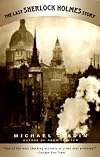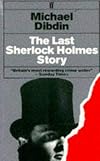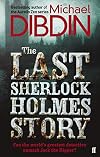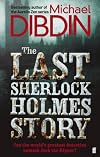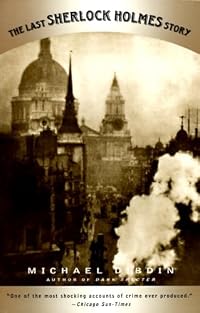
The Last Sherlock Holmes Story
by Michael Didbin
On This Page
Description
The adventures of Sir Arthur Conan Doyle's famous detective and his faithful companion Dr. Watson are given a novel treatment by Michael Dibdin in this thriller, which finds the detectives stalking Jack the Ripper in the streets of London's East End in 1888.Tags
Recommendations










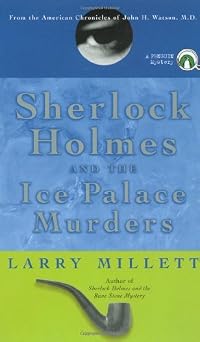


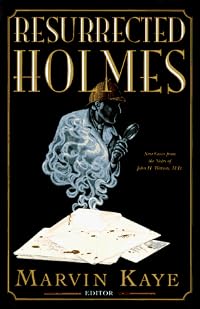
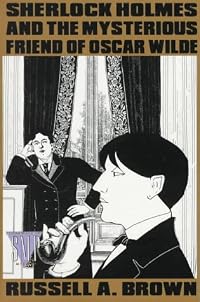
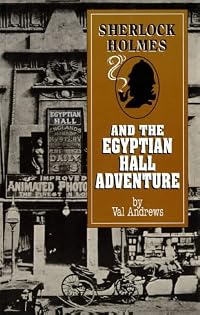










Member Recommendations

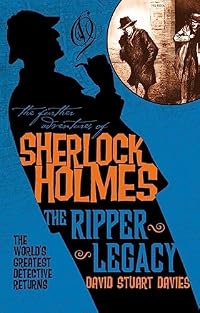
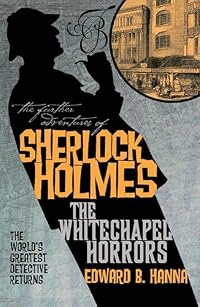
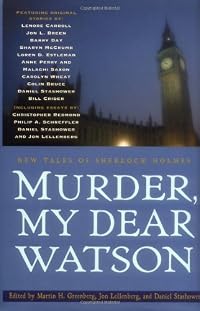
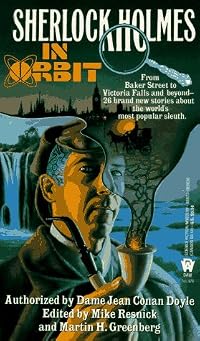
sweetiegherkin Audio collection with a mix of original and new Sherlock Holmes stories.
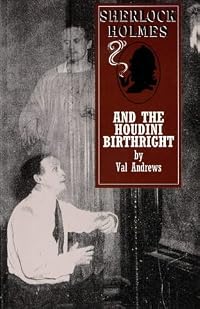
sweetiegherkin An elderly Sherlock Holmes revisits in his mind a case that continues to haunt him many years after its conclusion.
Member Reviews
Sherlock Holmes is called upon to investigate the killings of Jack the Ripper. This book is really hard to discuss without spoilers -- although I really, really wish certain people both here and on Amazon had tried just a little bit harder -- but I will say that there's a disturbingly audacious idea at the center of it that I found intriguing, but I don't think Dibdin's writing is quite strong enough to bring it off as effectively and convincingly as I might like.
Wow! This was entirely unexpected and really very inventive. And there's no way I'm going to be able to discuss without the most enormous plot spoilers, so if you don't want to know whodunit, look away now...
This is presented as a document of Watson's memoirs that have been stored in a vault for 50 years after his passing, such that they were opened and then published in the mid 70s. The fun thing about the presentation is that Watson makes reference to Arthur Conan Doyle and how some of his earlier memoirs came to be in print, thus not ignoring the written legacy, but explaining how these come to be written in a different voice and style.
It takes place in the 1880s and starts out with Holmes investigaing the case of Jack the Ripper. show more And after a while he comes to the conclusion that the crmes are being commited by Moriarty. Only, and here comes the bombshell, Watson comes to the conclusion that it is Holmes who is Jack the Ripper - and that Moriarty is a figment of a nervous dissociative disorder. Wow! I wasn't expecting that!
And from there it all progresses to a grand finale that doesn;t do anything to contradict the books by ACD himself, it's just that wheer they are based on Watson's notes of the cases maybe not all of the case notes he handed over were complete or entirely acurate.
On sheer inventiveness this gets top marks.
I listened to this on audiobook, narrated by Phillip Glennister and he did a really good job of vocalising Watson's forst person narrative and then adding Holme's comments in an apopropriate voice. It was really very very good. show less
This is presented as a document of Watson's memoirs that have been stored in a vault for 50 years after his passing, such that they were opened and then published in the mid 70s. The fun thing about the presentation is that Watson makes reference to Arthur Conan Doyle and how some of his earlier memoirs came to be in print, thus not ignoring the written legacy, but explaining how these come to be written in a different voice and style.
It takes place in the 1880s and starts out with Holmes investigaing the case of Jack the Ripper. show more And after a while he comes to the conclusion that the crmes are being commited by Moriarty. Only, and here comes the bombshell, Watson comes to the conclusion that it is Holmes who is Jack the Ripper - and that Moriarty is a figment of a nervous dissociative disorder. Wow! I wasn't expecting that!
And from there it all progresses to a grand finale that doesn;t do anything to contradict the books by ACD himself, it's just that wheer they are based on Watson's notes of the cases maybe not all of the case notes he handed over were complete or entirely acurate.
On sheer inventiveness this gets top marks.
I listened to this on audiobook, narrated by Phillip Glennister and he did a really good job of vocalising Watson's forst person narrative and then adding Holme's comments in an apopropriate voice. It was really very very good. show less
A full length Sherlock Holmes story, one of the many involving Jack the Ripper, and featuring Moriarty (why does seemingly almost every full length Holmes pastiche have to feature Moriarty?). Holmes's evil nemesis is used in a very unusual way here, though, and the story ends with a shocking twist which leads to a dramatic change in the chronicles of the Great Detective. I can't say any more without revealing spoilers, but I instinctively don't care for the resolution. The book is extremely well written and very authentically Conan Doylesque. There is a hilarious passage in the Introduction where Holmes takes issue with the sensationalist style in which Conan Doyle has written up one of his cases as the first Holmes story A Study in show more Scarlet, whereas the detective's inductive approach had preferred the rather more clinical Towards a Definitive Praxis of Applied Criminal Anthropology: Some Notes on the Stangerson-Drebber Murders of 1881! show less
Genuinely shocking. The Last Sherlock Holmes Story is devastatingly argued, with a plausibility and depth of character-reading quite unequalled by Doyle himself. Holmes, here, is deeply flawed and divided, but far more deeply human than Doyle painted him. Both Watson and their friendship are fleshed out with a palpable realism. Atmospheric and fascinating, but not recommended to anyone who would like to keep Holmes on a pedestal, unbesmirched: it's titled "the Last" for good reason. (****)
The Last Sherlock Holmes Story is written as though Sherlock Holmes and Dr. Watson were real people and from the first-person point of view of Watson. It is now 1972 and this last story is finally published well after Watson’s death some 50 years earlier. The story concerns a case from 1888, which Watson has never shared with Arthur Conan Doyle for his collection of Sherlock Holmes stories. The case is that of the infamous Jack the Ripper and his vicious killings of prostitutes in the Whitechapel district of London.
The book is very well written and, as a pastiche, seems to be very much in the style of Arthur Conan Doyle’s original stories (although I haven’t read enough of the original Sherlock Holmes stories to really make a show more close comparison). As a fair warning, the details of the murders could make the narrative a bit gruesome at parts, but that comes with the territory of a Jack the Ripper story. The plot is very interesting and compelling, although I saw the big reveal about half-way through the first disc of the audio book. Nevertheless, this kept me just as interested in and compelled to read because I wanted to find out if I was right. (There were enough red herrings here and there to make me doubt if my theory was correct.) However, the big reveal came with still two full discs of the audio book remaining. The book continued to hold my interest after that, no doubt because of how well it was written, but the plot was not nearly as compelling as before.
The BBC Audio edition is excellently done and I enjoyed the audio narrator, with the caveat that he could have distinguished the voices of Holmes and Watson a little more. Overall, I enjoyed this book and would recommend it to any fans of Sherlock Holmes, mysteries/detective fiction, or 19th century literature. show less
The book is very well written and, as a pastiche, seems to be very much in the style of Arthur Conan Doyle’s original stories (although I haven’t read enough of the original Sherlock Holmes stories to really make a show more close comparison). As a fair warning, the details of the murders could make the narrative a bit gruesome at parts, but that comes with the territory of a Jack the Ripper story. The plot is very interesting and compelling, although I saw the big reveal about half-way through the first disc of the audio book. Nevertheless, this kept me just as interested in and compelled to read because I wanted to find out if I was right. (There were enough red herrings here and there to make me doubt if my theory was correct.) However, the big reveal came with still two full discs of the audio book remaining. The book continued to hold my interest after that, no doubt because of how well it was written, but the plot was not nearly as compelling as before.
The BBC Audio edition is excellently done and I enjoyed the audio narrator, with the caveat that he could have distinguished the voices of Holmes and Watson a little more. Overall, I enjoyed this book and would recommend it to any fans of Sherlock Holmes, mysteries/detective fiction, or 19th century literature. show less
In this pastiche, Watson follows his friend into the investigation that surrounded Jack the Ripper. With lives at stake and things not as they seem, Watson must make a difficult decision.
There seem to be two groups of readers: those who thought it brilliant and those who hate it. I come somewhere in the middle, to be honest. The tone of the story is very much the Watson I've come to know from Sir Arthur Conan Doyle's stories. Logically, everything falls into place. It is EASY to see the conclusion that is reached.
On the other hand, as much as I could understand the ending, it broke my heart. This was not the Holmes I know and love.
For a Holmes fan with an open mind, this is a definite read.
There seem to be two groups of readers: those who thought it brilliant and those who hate it. I come somewhere in the middle, to be honest. The tone of the story is very much the Watson I've come to know from Sir Arthur Conan Doyle's stories. Logically, everything falls into place. It is EASY to see the conclusion that is reached.
On the other hand, as much as I could understand the ending, it broke my heart. This was not the Holmes I know and love.
For a Holmes fan with an open mind, this is a definite read.
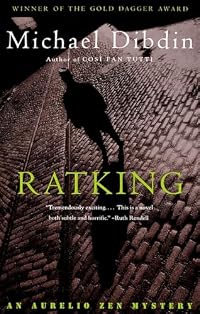
The amazing thing about Dibdin is that each book he writes is very different from the last, with the exception of his continuing series about Aurelio Zen, a detective in Rome. The Last Sherlock Holmes Story, originally published in 1978 and recently reissued in a Vintage Crime paperback, is a good example of his originality.
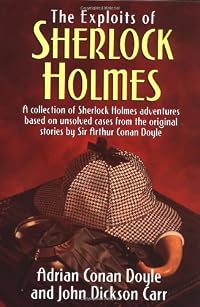
Not that there’s anything unusual about this kind of book, called a Sherlock Holmes pastiche, a literary work that imitates the style of Arthur Conan Doyle and pretends to continue the adventures of the character he made so famous. The Holmes pastiche has been practiced by writers such as John Gardner and University of Louisville author Sena Jeter Naslund. Doyle’s son Adrian Conan Doyle wrote some Holmes show more stories with the help of mystery author John Dickson Carr. Probably the most successful author of Sherlock Holmes pastiches was the now-little-read Wisconsin writer August Derleth, who called his Sherlock Holmes clone Solar Pons and whose series ran to seven books.
Most Conan Doyle imitators suffer from Holmes worship; they try too hard and too reverently to portray Holmes. The key to a good pastiche is to get away from idolatry and make the characters your own. In this case, Dibdin makes Watson into a credible character who understands that, as he says, “Living with great men is itself a minor art.” Watson knows his role is that of the amazed and admiring sidekick in the famous verbal exchanges in which Holmes reveals a brilliant chain of deductions. So, when one morning the great detective surprises him by inferring that he had dinner the night before at Simpson’s in the Strand with an old friend and fellow-intern, Watson, suitably amazed, does not correct Holmes by telling him he had actually dined with his fiancée Mary Morstan at a restaurant in Mayfair.
The Last Sherlock Holmes Story purports to be papers written by Dr. Watson not long before his death, sealed up by his bankers for fifty years, and dealing with events in the fall of 1888 when Jack the Ripper was terrorizing the Whitechapel district of London. Dibdin welds factual details of the Ripper murders with fictional details of Holmes cases as chronicled by Arthur Conan Doyle. The result is an ingenious solution to the murders that will shock Holmes fans. show less
Not that there’s anything unusual about this kind of book, called a Sherlock Holmes pastiche, a literary work that imitates the style of Arthur Conan Doyle and pretends to continue the adventures of the character he made so famous. The Holmes pastiche has been practiced by writers such as John Gardner and University of Louisville author Sena Jeter Naslund. Doyle’s son Adrian Conan Doyle wrote some Holmes show more stories with the help of mystery author John Dickson Carr. Probably the most successful author of Sherlock Holmes pastiches was the now-little-read Wisconsin writer August Derleth, who called his Sherlock Holmes clone Solar Pons and whose series ran to seven books.
Most Conan Doyle imitators suffer from Holmes worship; they try too hard and too reverently to portray Holmes. The key to a good pastiche is to get away from idolatry and make the characters your own. In this case, Dibdin makes Watson into a credible character who understands that, as he says, “Living with great men is itself a minor art.” Watson knows his role is that of the amazed and admiring sidekick in the famous verbal exchanges in which Holmes reveals a brilliant chain of deductions. So, when one morning the great detective surprises him by inferring that he had dinner the night before at Simpson’s in the Strand with an old friend and fellow-intern, Watson, suitably amazed, does not correct Holmes by telling him he had actually dined with his fiancée Mary Morstan at a restaurant in Mayfair.
The Last Sherlock Holmes Story purports to be papers written by Dr. Watson not long before his death, sealed up by his bankers for fifty years, and dealing with events in the fall of 1888 when Jack the Ripper was terrorizing the Whitechapel district of London. Dibdin welds factual details of the Ripper murders with fictional details of Holmes cases as chronicled by Arthur Conan Doyle. The result is an ingenious solution to the murders that will shock Holmes fans. show less
Members
- Recently Added By
Lists

Top Five Books of 2013
1,562 works; 721 members
Author Information

30+ Works 9,645 Members
Michael Dibdin is the author of thirteen previous novels. A native of England, he now lives in Seattle, Washington, with his wife, the mystery writer Katherine Beck. (Bowker Author Biography)
Some Editions
Work Relationships
Is contained in
Common Knowledge
- Canonical title
- The Last Sherlock Holmes Story
- Original publication date
- 1978
- People/Characters
- Sherlock Holmes; James Moriarty (Professor); John H. Watson; Jack the Ripper
- Important places
- Whitechapel, London, England, UK; London, England, UK
- Important events
- Whitechapel Murders (1888 | 1891)
- Epigraph
- 'When William Gillette, the American actor, asked the author if he might introduce a love interest in the Sherlock Holmes play... Sir Arthur briskly cabled: "Marry him, murder him, do what you like with him" It should be reco... (show all)rded that some enthusiasts regarded even this high canonical (Conanical?) authority with disfavour.'
James Edward Holroyd, introduction to Seventeen Steps to 221B - Dedication
- To Benita
- First words
- It was the autumn of 1888, and the day one of that class that Sherlock Holmes used to describe as 'unhealthy'.
- Last words
- (Click to show. Warning: May contain spoilers.)But sometimes, as I sit beside the fire on nights when the wind wails in the chimney, my thoughts travel back to the great falls at Reichenbach, and I hear again the exquisite consolation of Holmes's final words, and see once more the light of understanding in his eyes, during those last moments when he seemed once again the best and the wisest man I have ever known.
(there follows a quote from the original "The Final Problem" by Sir Arthur Conan Doyle.) - Blurbers
- Rendell, Ruth
- Original language
- English UK
Classifications
Statistics
- Members
- 576
- Popularity
- 50,806
- Reviews
- 19
- Rating
- (3.55)
- Languages
- 6 — Dutch, English, French, German, Italian, Spanish
- Media
- Paper, Audiobook, Ebook
- ISBNs
- 26
- ASINs
- 10