Sofia Petrovna
by Lydia Chukovskaya
On This Page
Description
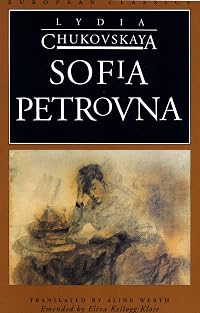
This is a fictional account of one woman's experience following the arrest of her son during the Yezhov purges. Drawing on the author's own experience, this novella paints an almost documentary-style picture of life in Leningrad during this period. The story of the publication of the book, written in 1939-40 but not published in the Soviet Union until 1988, is treated in the introduction, which also contains a brief biography of the author, a vocabulary and notes.Tags
Recommendations











Member Reviews
The story of a mother and son during Stalin’s Terror of the mid 1930s. Short, well-written, and chilling. And yet, as good as it is, it reminded me of Yevgenia [Eugenia in the US edition] Ginzburg’s memoir Journey Into the Whirlwind which covers the same story and is, I think, absolutely brilliant. Ginsburg’s work is actually two volumes: the first (if my memory is correct) covers the period up through her arrest and trial and the second volume (Within the Whirlwind) covers her nearly two decades of imprisonment (at the infamous Kolyma gulag) and her release. At one time, I read many memoirs of the Kolyma and the gulag more generally and, excellent as many of them were, Ginzburg’s stood out. Both the real Ginzburg and the show more fictional Sofia Petrovna are faithful and loyal Party members and their devotion and dedication are meaningless. The only observation that I think is even possible is that the word “terrifying” or “chilling” is drastically inadequate to describe that period and that regime. Sofia Petrovna nevertheless gives a good sense of the claustrophobia of those years and the effect of the terror on “ordinary people” and is well worth the time. show less
Terse, flat, drily told - and one of the more harrowing stories I've read. I've read a fair amount of Russian literature, so that's saying a lot. Widow Sofia Petrovna has a son, Kolya. She works as a typist in a large publishing house, and is happy. Her son grows up and thrives, is a loyal and successful Komsomol member, becomes an engineer, is written up in Pravda as an up-and-coming star who invents a new gadget that improves productivity. Sofia Petrovna is so proud of him.
And then one day, he's arrested. A mistake, of course. A misunderstanding. They have the wrong guy. And the nightmare begins.
Hours and days, weeks, months spent in line with hundreds of wives and mothers trying to learn what has happened to their loved ones. What show more were they charged with? Where are they? Are they even alive? It's a risk even to be asking. And there is no way to find out. Sofia's pleasant and charismatic boss is abruptly arrested; a gifted and skillful typist (and Sofia's closest friend) is fired because she has allegedly typed "Ret Army" for "Red Army" in an article - and then kills herself, unable to find any other work. Then Sofia makes the mistake of publicly saying her friend had been a good worker. Her name is being mentioned around the office; people begin to look at her strangely. And she doesn't know if her son is alive or dead - a state she could not have imagined. The morose and stalwart party official who saw to Sofia's boss's arrest is eventually himself arrested for being insufficiently vigilant not to have caught the boss's "malfeasance" sooner. No one is safe. No one.
Welcome to the Soviet Union under Papa Joe. The novella is largely aut0biographical - it was Chukovskaya's husband who was arrested, and she spent years trying to find out what happened to him (he was executed only a few months after his arrest). The manuscript was secreted with a friend, who passed it along to his sister before he died of starvation in Tashkent. Only years later did it find its way back to Chukovskaya, and it took more years to be published. She went on to become an outspoken supporter of persecuted Russian writers: Pasternak, Solzhenitsyn, et al.
The denial, the worry, the fear, the coping (and not coping) is described simply, in Sofia's limited point of view - which only seems to make the grotesquely opaque darkness more terrifying. All the things you cannot ask, the people you don't dare to speak to and who won't answer you if you do, or who will only frighten you more; the utter blank wall and dread of what could happen next, are overwhelming. The writer knows whereof she speaks, and this little novel should be part of any and every survey of Soviet and/or Russian literature. It gets a rare fifth star from me because I can't stop thinking about it. show less
And then one day, he's arrested. A mistake, of course. A misunderstanding. They have the wrong guy. And the nightmare begins.
Hours and days, weeks, months spent in line with hundreds of wives and mothers trying to learn what has happened to their loved ones. What show more were they charged with? Where are they? Are they even alive? It's a risk even to be asking. And there is no way to find out. Sofia's pleasant and charismatic boss is abruptly arrested; a gifted and skillful typist (and Sofia's closest friend) is fired because she has allegedly typed "Ret Army" for "Red Army" in an article - and then kills herself, unable to find any other work. Then Sofia makes the mistake of publicly saying her friend had been a good worker. Her name is being mentioned around the office; people begin to look at her strangely. And she doesn't know if her son is alive or dead - a state she could not have imagined. The morose and stalwart party official who saw to Sofia's boss's arrest is eventually himself arrested for being insufficiently vigilant not to have caught the boss's "malfeasance" sooner. No one is safe. No one.
Welcome to the Soviet Union under Papa Joe. The novella is largely aut0biographical - it was Chukovskaya's husband who was arrested, and she spent years trying to find out what happened to him (he was executed only a few months after his arrest). The manuscript was secreted with a friend, who passed it along to his sister before he died of starvation in Tashkent. Only years later did it find its way back to Chukovskaya, and it took more years to be published. She went on to become an outspoken supporter of persecuted Russian writers: Pasternak, Solzhenitsyn, et al.
The denial, the worry, the fear, the coping (and not coping) is described simply, in Sofia's limited point of view - which only seems to make the grotesquely opaque darkness more terrifying. All the things you cannot ask, the people you don't dare to speak to and who won't answer you if you do, or who will only frighten you more; the utter blank wall and dread of what could happen next, are overwhelming. The writer knows whereof she speaks, and this little novel should be part of any and every survey of Soviet and/or Russian literature. It gets a rare fifth star from me because I can't stop thinking about it. show less
Одна из лучших книг на тему сталинских репрессий.
Лидия Чуковская - дочь Корнея Ивановича Чуковского, дважды была замужем, от первого брака у нее осталась дочь Люша (Елена). Второй муж Чуковской, физик Матвей Бронштейн, был арестован в 1937 году и расстрелян в 1938, причем Лидии объявили приговор мужа как "10 лет без права переписки", "освободится - пришлет письмо". Тогда она еще не знала, что этот приговор был show more синонимом расстрела, а семьям говорили так, чтобы избежать истерик и лишнего шума.
Билибин объяснил - каким-то даже деловитым голосом - что я неверно представляю себе Алешин конец. Его никуда не везли, ему не угрожали ни теплушки, ни собаки. Все кончилось гораздо раньше. По мнению Николая Александровича, "десять лет без права переписки" это просто условное наименование расстрела. Чтобы не произносить у окошечек слишком часто "расстрелян", "расстрелян" и чтобы в очереди не поднимался плач.
- Всюду не очень-то нам позволяли переписываться, - сказал он. - Но лагерей таких особых - "десять лет без права переписки" - вовсе не было. И приговора такого. За это я вам ручаюсь.
Чуковская написала "Софью Петровну" по следам произошедших событий, в 1939-1940 годах, но в связи с запретом на публикации Чуковской в СССР книга увидела свет лишь в 1988 году.
Собственно Софья Петровна, главное действующее лицо книги, самая обычная советская женщина, муж у нее умер и она растит сына Колю одна. Она устраивается на работу машинисткой и потихоньку втягивается в общественную жизнь, становится активисткой, участвует в жизни коллектива. Верит, что Советский Союз - лучшая страна на земле, а Сталин все видит и понимает лучше всех. "Спасибо товарищу Сталину за наше счастливое детство", словом.
"Софья Петровна по вечерам надевала очки — у нее в последнее время развилась дальнозоркость — и читала вслух газету Наташе. Скатерть была уже кончена — Наташа вышивала теперь накидку Софье Петровне на постель. Они говорили о том, как, наверное, возмущен сейчас Коля. Да и не только Коля: возмущены все честные люди. Ведь в поездах, пущенных под откос вредителями, могли быть маленькие дети! Какое бессердечие! Изверги! Недаром троцкисты тесно связаны с гестапо: они и в самом деле не лучше фашистов, которые в Испании убивают детей. И неужели, неужели доктор Кипарисов участвовал в их бандитской шайке? Его не раз приглашали на консилиумы вместе с Федором Ивановичем. После консилиума Федор Иванович привозил его домой попить чайку, посидеть. Софья Петровна видела его совсем близко — вот как сейчас Наташу видит. И теперь он вступил в бандитскую шайку! Кто бы мог ожидать? Такой почтенный старик."
Все у Софьи Петровны получается, сын учится в машиностроительном институте и его распределили работать, к сожалению в Свердловск, но очень хвалят, и даже публикуют его фото с пометкой "энтузиаст производства". Ничто не предвещало, но тут Колю внезапно арестовывают, не называя причин и состояния дела.
"Она научилась с первого взгляда догадываться, кто на Чайковской не прохожий вовсе, а стоит в очереди, она даже в трамвае по глазам узнавала, кто из женщин едет к железным воротам тюрьмы. Она научилась ориентироваться во всех парадных и черных лестницах набережной и с легкостью находила женщину со списком, где бы та ни пряталась. Она знала уже, выходя из дому после краткого сна, что на улице, на лестнице, в коридоре, в зале — на Чайковской, на набережной, в прокуратуре — будут женщины, женщины, женщины, старые и молодые, в платках и в шляпах, с грудными детьми и с трехлетними и без детей — плачущие от усталости дети и тихие, испуганные, немногословные женщины, — и, как когда-то в детстве, после путешествия в лес, закрыв глаза, она видела ягоды, ягоды, ягоды, так теперь, когда она закрывала глаза, она видела лица, лица, лица… Одного только она не узнала за эти две недели: из-за чего Коля арестован? И кто и когда будет его судить? И в чем его обвиняют?"
Я с удовольствием читала Чуковскую, она умеет не называя вещи прямо передать атмосферу и отношение персонажей к происходящему, а самое удивительное - и отношение автора.
Читать дальше на BookGeek.ruhref>! show less
Лидия Чуковская - дочь Корнея Ивановича Чуковского, дважды была замужем, от первого брака у нее осталась дочь Люша (Елена). Второй муж Чуковской, физик Матвей Бронштейн, был арестован в 1937 году и расстрелян в 1938, причем Лидии объявили приговор мужа как "10 лет без права переписки", "освободится - пришлет письмо". Тогда она еще не знала, что этот приговор был show more синонимом расстрела, а семьям говорили так, чтобы избежать истерик и лишнего шума.
Билибин объяснил - каким-то даже деловитым голосом - что я неверно представляю себе Алешин конец. Его никуда не везли, ему не угрожали ни теплушки, ни собаки. Все кончилось гораздо раньше. По мнению Николая Александровича, "десять лет без права переписки" это просто условное наименование расстрела. Чтобы не произносить у окошечек слишком часто "расстрелян", "расстрелян" и чтобы в очереди не поднимался плач.
- Всюду не очень-то нам позволяли переписываться, - сказал он. - Но лагерей таких особых - "десять лет без права переписки" - вовсе не было. И приговора такого. За это я вам ручаюсь.
Чуковская написала "Софью Петровну" по следам произошедших событий, в 1939-1940 годах, но в связи с запретом на публикации Чуковской в СССР книга увидела свет лишь в 1988 году.
Собственно Софья Петровна, главное действующее лицо книги, самая обычная советская женщина, муж у нее умер и она растит сына Колю одна. Она устраивается на работу машинисткой и потихоньку втягивается в общественную жизнь, становится активисткой, участвует в жизни коллектива. Верит, что Советский Союз - лучшая страна на земле, а Сталин все видит и понимает лучше всех. "Спасибо товарищу Сталину за наше счастливое детство", словом.
"Софья Петровна по вечерам надевала очки — у нее в последнее время развилась дальнозоркость — и читала вслух газету Наташе. Скатерть была уже кончена — Наташа вышивала теперь накидку Софье Петровне на постель. Они говорили о том, как, наверное, возмущен сейчас Коля. Да и не только Коля: возмущены все честные люди. Ведь в поездах, пущенных под откос вредителями, могли быть маленькие дети! Какое бессердечие! Изверги! Недаром троцкисты тесно связаны с гестапо: они и в самом деле не лучше фашистов, которые в Испании убивают детей. И неужели, неужели доктор Кипарисов участвовал в их бандитской шайке? Его не раз приглашали на консилиумы вместе с Федором Ивановичем. После консилиума Федор Иванович привозил его домой попить чайку, посидеть. Софья Петровна видела его совсем близко — вот как сейчас Наташу видит. И теперь он вступил в бандитскую шайку! Кто бы мог ожидать? Такой почтенный старик."
Все у Софьи Петровны получается, сын учится в машиностроительном институте и его распределили работать, к сожалению в Свердловск, но очень хвалят, и даже публикуют его фото с пометкой "энтузиаст производства". Ничто не предвещало, но тут Колю внезапно арестовывают, не называя причин и состояния дела.
"Она научилась с первого взгляда догадываться, кто на Чайковской не прохожий вовсе, а стоит в очереди, она даже в трамвае по глазам узнавала, кто из женщин едет к железным воротам тюрьмы. Она научилась ориентироваться во всех парадных и черных лестницах набережной и с легкостью находила женщину со списком, где бы та ни пряталась. Она знала уже, выходя из дому после краткого сна, что на улице, на лестнице, в коридоре, в зале — на Чайковской, на набережной, в прокуратуре — будут женщины, женщины, женщины, старые и молодые, в платках и в шляпах, с грудными детьми и с трехлетними и без детей — плачущие от усталости дети и тихие, испуганные, немногословные женщины, — и, как когда-то в детстве, после путешествия в лес, закрыв глаза, она видела ягоды, ягоды, ягоды, так теперь, когда она закрывала глаза, она видела лица, лица, лица… Одного только она не узнала за эти две недели: из-за чего Коля арестован? И кто и когда будет его судить? И в чем его обвиняют?"
Я с удовольствием читала Чуковскую, она умеет не называя вещи прямо передать атмосферу и отношение персонажей к происходящему, а самое удивительное - и отношение автора.
Читать дальше на BookGeek.ruhref>! show less
This slim book by Lydia Chukovskaya is a must read if you're interested in Russian/Soviet history. It reminded me a bit of One Day in the Life of Ivan Denisovich, except that instead of the prisoner's point of view, we get the view of the mothers and wives of the falsely imprisoned.
At the beginning of the book, Sofia is happily working as the supervising typist for a government publishing house. Her son Kolya is deeply committed to the Soviet party and is studying engineering. Then everything slowly goes downhill and 'The Great Purge' begins. People start disappearing. Masses of people. Multitudes of women stand in line each day in front of government offices to determine the fate of their loved ones. All are convinced it is only a big show more mistake, but then they themselves are deported.
This book was actually written during the time of the purges (1937-1938), but it was hidden for several years for obvious reasons and then almost published in the Soviet Union in the early sixties. Political change occurred again, and it wasn't published in Chukovskaya's home country, but it was published in France and in the United States. The book was finally published in the Soviet Union in 1988.
I almost never read forewords, author's notes, or afterwords, but I did in this case because I was fascinated by the author's own struggle to get the book published. As I said, a must read for Russian history enthusiasts.
"There's only one thing I want, just one thing I'm waiting for: to see my book published in the Soviet Union. In my own country. In Sofia Petrovna's country. I have been waiting patiently for thirty-four years.
There is but one tribunal to which I wish to offer my novella: that of my countrymen, young and old, particularly the old, those who lived through the same thing which befell me and that woman so different from me whom I chose as the heroine of my narrative -- Sofia Petrovna, one of thousands I saw all about me."
1967 for the English translation, 120 pp.
Rating: 5/5 show less
At the beginning of the book, Sofia is happily working as the supervising typist for a government publishing house. Her son Kolya is deeply committed to the Soviet party and is studying engineering. Then everything slowly goes downhill and 'The Great Purge' begins. People start disappearing. Masses of people. Multitudes of women stand in line each day in front of government offices to determine the fate of their loved ones. All are convinced it is only a big show more mistake, but then they themselves are deported.
This book was actually written during the time of the purges (1937-1938), but it was hidden for several years for obvious reasons and then almost published in the Soviet Union in the early sixties. Political change occurred again, and it wasn't published in Chukovskaya's home country, but it was published in France and in the United States. The book was finally published in the Soviet Union in 1988.
I almost never read forewords, author's notes, or afterwords, but I did in this case because I was fascinated by the author's own struggle to get the book published. As I said, a must read for Russian history enthusiasts.
"There's only one thing I want, just one thing I'm waiting for: to see my book published in the Soviet Union. In my own country. In Sofia Petrovna's country. I have been waiting patiently for thirty-four years.
There is but one tribunal to which I wish to offer my novella: that of my countrymen, young and old, particularly the old, those who lived through the same thing which befell me and that woman so different from me whom I chose as the heroine of my narrative -- Sofia Petrovna, one of thousands I saw all about me."
1967 for the English translation, 120 pp.
Rating: 5/5 show less
A good book, but not a great book. At times it verges into the overly conventional or the melodramatic, but as one of the few novels about the Great Purge written during the period it's an important cultural document.
Also worth reading is the afterword, extracted from Chukovskaya's memoir The Process of Expulsion when Sofia Petrovna was only available via Samizdat in her home country, that describes how the book almost saw print during the Khrushchev Thaw.
Also worth reading is the afterword, extracted from Chukovskaya's memoir The Process of Expulsion when Sofia Petrovna was only available via Samizdat in her home country, that describes how the book almost saw print during the Khrushchev Thaw.
Lydia Chukovskaya's novella is a compelling portrait of the personal costs of Stalin's purges. The eponymous heroine is a faithful Soviet citizen who believes in the fairness and ultimate justice of the system and her country's leaders. When her son is arrested in a purge, her belief in her country and her belief in her son come into conflict. The disconnect between lofty Soviet ideals and the injustice of her reality ultimately drive her mad. The novella focuses on how political shifts had deeply personal costs for Soviet citizens. Its strengths are its portrayal of how public life influences private life and its description of the bewilderment of loyal citizens suddenly confronted with the deep unfairness of the purges.
A widowed mother in Stalingrad lives her ordinary life in the year in which her adult son is unjustly framed and imprisoned for being "an enemy of the people." Her status in society is also greatly changed as a result. This shows the insidiousness of the old Soviet system under Stalin as common citizens turned against each other.
Members
- Recently Added By
Lists

Russian Literature
184 works; 32 members

500 Great Books by Women
507 works; 60 members

Writers at Risk
106 works; 17 members

Persephone
148 works; 3 members
Author Information

23 Works 619 Members
Daughter of the famous critic Kornei Chukovsky, Lydia Chukovskaya is a fiction writer and memoirist of note. Her two novels, Sofia Petrovna (1965), which was translated as The Deserted House, and Going Under (1972), dealt with the Stalin period. The former work is a portrait of a woman whose psyche gradually dissolves under the impact of the show more purges. A close friend of Anna Akhmatova, Chukovskaya preserved a detailed account of their encounters, highly important for understanding the poet's biography and views. Chukovskaya became a leading dissident, and was expelled from the Writers' Union in 1974. (Bowker Author Biography) show less
Some Editions
Awards and Honors
Awards
Notable Lists
Series
Belongs to Publisher Series
Common Knowledge
- Canonical title
- Sofia Petrovna
- Original title
- Софья Петровна; Opustelyi Dom
- Alternate titles
- The deserted house
- Original publication date
- 1965 (Russian) (Russian); 1966 (French) (French); 1967 (English) (English)
- Important places
- Leningrad, USSR
- First words
- The story now seeking the attention of readers was written twenty-two years ago, in Leningrad, in the winter of 1939-1940. In it I attempted to record the events just experienced by my country, my friends, and myself. I could... (show all) not refrain from writing about them, though I had, of course, no hope of seeing the story in print. I had little hope even that the school exercise book containing the clean copy of it would escape destruction and be preserved. It was dangerous to keep it in the drawer of my desk, but I couldn't bring myself to burn it. I regarded it not so much as a story as a piece of evidence, which it would be dishonorable to destroy. -Author's Note, Moscow, November 1962
After the death of her husband, Sofia Petrovna took a course in typing. She felt she simply had to acquire a profession: it would be a long time yet before Kolya began to earn a living. After he got through school he must, wh... (show all)atever happened, take the examination for admission to an institute - Fyodor Ivanovich would never have allowed his son to go without a higher education. -Chapter 1 - Last words
- (Click to show. Warning: May contain spoilers.)Sofia Petrovna threw the flame on the floor and stamped on it.
- Canonical DDC/MDS
- 891.7342
- Canonical LCC
- PG3476.C485 S5813
Classifications
- Genres
- General Fiction, Fiction and Literature, Historical Fiction
- DDC/MDS
- 891.7342 — Literature & rhetoric Literatures of other languages East Indo-European and Celtic literatures Russian and East Slavic languages Russian fiction USSR 1917–1991 Early 20th century 1917–1945
- LCC
- PG3476 .C485 .S5813 — Language and Literature Slavic languages and literatures. Baltic languages. Albanian language Slavic. Baltic. Albanian Russian literature Individual authors and works 1917-1960
- BISAC
Statistics
- Members
- 421
- Popularity
- 73,332
- Reviews
- 14
- Rating
- (3.91)
- Languages
- 8 — Dutch, English, French, German, Italian, Russian, Spanish, Swedish
- Media
- Paper, Ebook
- ISBNs
- 18
- ASINs
- 6