On This Page
Description
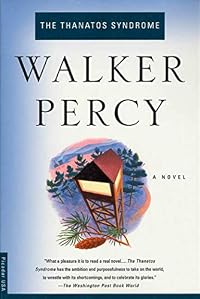
When Dr. Tom More (of Love in the Ruins) is released on parole from state prison, he returns to Feliciana, Louisiana, the parish where he was born and bred, and where he practiced psychiatry before his arrest. Upon arriving, he notices something strange in almost everyone around him: unusual sexual behavior in women patients, a bizarre loss of inhibition, a lack of complexity in speech-even his own wife's extraordinary success at bridge tournaments, during which her mind seems to function show more like a computer.With the ingenious help of his attractive cousin, Dr. Lucy Lipscomb, More begins to uncover a criminal experiment to "improve" people's behavior by drugging the local water supply. But beyond this scheme are activities so sinister that even Tom More wouldn't believe them if he hadn't witnessed them with his own eyes. show lessTags
Recommendations





















Member Recommendations

Member Reviews
The return of Dr. Tom More brings with it an unusual forensic mystery story intertwined with the mystery of belief. One would not expect less from the pen of Walker Percy. While a common criticism of Walker Percy's novels is that they are repetitive, this is probably because similar themes echo throughout his fiction -- no doubt a testimony to the novelist's fervent belief in the importance of highlighting key problems and issues of humanity, and to his belief that their continued presence in our lives demands scrutiny. We see this from the opening pages when the narrator announces that he notices something strange going on in Feliciana upon his return from two years in prison.
Percy, who himself had medical and pathology training, show more described this kind of philosophical book as a "diagnostic novel." Although the emphasis is clearly on the book's ideas and moral themes, The Thanatos Syndrome is also a medical thriller. As such, it was almost inevitable that the author would revisit a theme that he dealt with on numerous occasions in earlier novels: the relationship between the "abnormal" and the rest of the nominally healthy and sane society. The recovery of the "real" through pain, suffering, or illness underlies almost all of Percy's fiction. It is rooted in his conviction (with a nod to pioneer psychologist Carl Jung), that at least some of our neuroses, psychoses, anxieties, or depressions may be more than just symptoms; they may actually be resources for learning something about our inner "selves."
The relationship between the sane and the abnormal in the novel seems curiously reversed, almost like in Saul Bellow's Herzog. It has been noted that the author himself described his fictional design as combining Bellow's depth of character and Kurt Vonnegut, Jr.'s, outrageousness and satire. In The Thanatos Syndrome words of apocalyptic warning are spoken by Father Rinaldo Smith, an aging, decrepit, and cranky priest who is given to seizures, catatonia, and bouts of odd behavior. While he is hardly a figure to command respect, Smith is a typical Percy creation whose purpose is to make us question who really deserves to be branded as "crazy."
The theme of alienation is also important in this work. Dr. Tom More's return from federal prison has him unsure if society has changed or if, instead, he has lost touch as a result of his years in prison. His alienation and status as an outsider allow him to ask questions that no one else cares to. Father Smith, declared mentally unsound by More, appears to have a firmer grasp on morality than does society, as represented by the duo of Comeaux and Van Dorn, both of whom represent the forces of evil.
Although the novel is in some ways structured as a thriller, the reader never gets the impression that More is in serious danger. The threats against him are subtle: implied loss of his favored parole status, arrests for trespassing, and a cable television van that appears to be following him. The subtlety of the threats underscores the idea that society as a whole can be attacked nonviolently, with damage done before anyone realizes the danger. I found this concluding novel of Percy both convincing due to its strong structure while not as emotionally powerful as either The Moviegoer or The Second Coming. I would, however, recommend it to readers interested in southern fiction or Walker Percy. show less
Percy, who himself had medical and pathology training, show more described this kind of philosophical book as a "diagnostic novel." Although the emphasis is clearly on the book's ideas and moral themes, The Thanatos Syndrome is also a medical thriller. As such, it was almost inevitable that the author would revisit a theme that he dealt with on numerous occasions in earlier novels: the relationship between the "abnormal" and the rest of the nominally healthy and sane society. The recovery of the "real" through pain, suffering, or illness underlies almost all of Percy's fiction. It is rooted in his conviction (with a nod to pioneer psychologist Carl Jung), that at least some of our neuroses, psychoses, anxieties, or depressions may be more than just symptoms; they may actually be resources for learning something about our inner "selves."
The relationship between the sane and the abnormal in the novel seems curiously reversed, almost like in Saul Bellow's Herzog. It has been noted that the author himself described his fictional design as combining Bellow's depth of character and Kurt Vonnegut, Jr.'s, outrageousness and satire. In The Thanatos Syndrome words of apocalyptic warning are spoken by Father Rinaldo Smith, an aging, decrepit, and cranky priest who is given to seizures, catatonia, and bouts of odd behavior. While he is hardly a figure to command respect, Smith is a typical Percy creation whose purpose is to make us question who really deserves to be branded as "crazy."
The theme of alienation is also important in this work. Dr. Tom More's return from federal prison has him unsure if society has changed or if, instead, he has lost touch as a result of his years in prison. His alienation and status as an outsider allow him to ask questions that no one else cares to. Father Smith, declared mentally unsound by More, appears to have a firmer grasp on morality than does society, as represented by the duo of Comeaux and Van Dorn, both of whom represent the forces of evil.
Although the novel is in some ways structured as a thriller, the reader never gets the impression that More is in serious danger. The threats against him are subtle: implied loss of his favored parole status, arrests for trespassing, and a cable television van that appears to be following him. The subtlety of the threats underscores the idea that society as a whole can be attacked nonviolently, with damage done before anyone realizes the danger. I found this concluding novel of Percy both convincing due to its strong structure while not as emotionally powerful as either The Moviegoer or The Second Coming. I would, however, recommend it to readers interested in southern fiction or Walker Percy. show less
"The Thanatos Syndrome" is listed here as a the second book of the Tom More series, but that doesn't seem quite right. The book is really more of an alternate to the alternate history presented in "Love in the Ruins." It's less optimistic and more backward-looking, and forecasting the coming of large-scale social control programs and a return to a sort of Southern plantation aesthetic. This comes through in Percy's description of Louisiana's landscape and flora, too: while "Love in the Ruins" had sort of an overgrown-jungle vibe, the setting of "The Thanatos Syndrome" is much more subdued, though the author's talent for description and obvious love for the natural beauty of the South still shines through.
Like "Love in the Ruins," "The show more Thanatos Syndrome" comes off as sort of "thriller of ideas," but the its pace is slacker, it's plot less tightly wound. You get some amusing adventures in pharmacology, contract bridge, and duck hunting, but, sadly enough Percy's legendary political prescience more-or-less fails him here, as he seems to fall for one of the eighties' most notorious media-generated panics. Even so, "The Thanatos Syndrome" works beautifully in certain ways, and in certain places. The section in which Dr. Tom More listens to the reminiscences of a German emigrant priest is both elegant and sad, for example. And, of course, there's Percy's writing, which is natural, flowing, engaging and enjoyable as ever. I'm not sure that "The Thanatos Syndrome" is really a successful novel, but I'm not sure that Percy was capable of writing a novel that really wasn't worth reading. Recommended, as usual, to Walker Percy's admirers. show less
Like "Love in the Ruins," "The show more Thanatos Syndrome" comes off as sort of "thriller of ideas," but the its pace is slacker, it's plot less tightly wound. You get some amusing adventures in pharmacology, contract bridge, and duck hunting, but, sadly enough Percy's legendary political prescience more-or-less fails him here, as he seems to fall for one of the eighties' most notorious media-generated panics. Even so, "The Thanatos Syndrome" works beautifully in certain ways, and in certain places. The section in which Dr. Tom More listens to the reminiscences of a German emigrant priest is both elegant and sad, for example. And, of course, there's Percy's writing, which is natural, flowing, engaging and enjoyable as ever. I'm not sure that "The Thanatos Syndrome" is really a successful novel, but I'm not sure that Percy was capable of writing a novel that really wasn't worth reading. Recommended, as usual, to Walker Percy's admirers. show less
An utterly fascinating read! great story, great characters, air of mystery, sense of humor ... my pleasant surprise of the holidays so far!
The above paragraph is something I wrote 40% of the way through the book, which I've now finished. I suppose there was no way it could have lived up to the high expectations it engendered, but I'm still giving it 3.5-to-4 stars.
Despite my generally tolerant view toward books with "disturbing" content, I have to say I was somewhat rattled by this one. I believe the author does go a bit overboard with his depictions of some of the unsavory events that transpire in this book, and I would therefore -- sadly -- not recommend Thanatos Syndrome to readers who are easily offended. This is a shame, actually, show more because the serious issues the book treats are very much worth thinking about, and I'm grateful to Walker Percy for giving us a narrative where we are forced to think about them. And I do stand by my initial assessment of Thanatos Syndrome in terms of the characters, the plot, and flow of the narrative. Even when things started to become disturbing, the book was still all but impossible to put down. If you can rein in your "sensitivities", the book is just too Good a Read to ignore. show less
The above paragraph is something I wrote 40% of the way through the book, which I've now finished. I suppose there was no way it could have lived up to the high expectations it engendered, but I'm still giving it 3.5-to-4 stars.
Despite my generally tolerant view toward books with "disturbing" content, I have to say I was somewhat rattled by this one. I believe the author does go a bit overboard with his depictions of some of the unsavory events that transpire in this book, and I would therefore -- sadly -- not recommend Thanatos Syndrome to readers who are easily offended. This is a shame, actually, show more because the serious issues the book treats are very much worth thinking about, and I'm grateful to Walker Percy for giving us a narrative where we are forced to think about them. And I do stand by my initial assessment of Thanatos Syndrome in terms of the characters, the plot, and flow of the narrative. Even when things started to become disturbing, the book was still all but impossible to put down. If you can rein in your "sensitivities", the book is just too Good a Read to ignore. show less
Percy is at his best, in my opinion, when he concentrates on character. He has a steady hand when it comes to creating colorful individuals,as well as endowing his beloved southern culture with a personality all its own. His observations, voiced through these characters, are sardonic and sharp and are, to me, the greatest pleasure of his writing. Unfortunately, this book gets bogged down in a daft mind-altering-chemicals-in-the-water plot involving ex-Nazis (if Nazis can be 'ex') and rogue psychiatrists. The chemicals -- heavy sodium for those who are interested -- apparently banish all negative behavior in the test population, behavior such as violence, sloth, teen pregnancy, and sexual perversion such as oh, homosexuality. show more (Homosexuality is cited as a perversion by several of the characters, not me, and in fairness I have no idea what Percy thought on the subject. We must not confuse a character's opinions, necessarily, with those of the character's creator.) The dialogue is often repetitive and rings false, with little individuality between voices. And, annoyingly, the African-American characters speak in phonetics, making them sound stereotypical, which I don't actually think was Percy's intention.
All in all, I had hoped for more and the first chapters of the book promised more. I was disappointed in this effort, although Percy's talent is unmistakable. I'll try another of Percy's titles before discounting him. show less
All in all, I had hoped for more and the first chapters of the book promised more. I was disappointed in this effort, although Percy's talent is unmistakable. I'll try another of Percy's titles before discounting him. show less
When I ordered this book, the description said it had only about 120 pages, so I expected a somewhat contemplative, philosophical novel to enjoy at ease. I was not prepared for this large sprawling novel, far too thick for such a simple story.
The story is a kind of conspiracy, about a large-scale experiment which should benefit the general population, curbing violence by administering drugs as additives to drinking water. Changes is people's behaviour lead a doctor to discover the plot, and counteract it. The story is simplistic, and spelled out for the reader in various steps. The whole thing is very contrived, with some facts being very unlikely, but necessary to make the novel work.
I was surprised to see and wondered how such a novel show more could still work, published as it was in 1987. Possibly, readers were forgiving, accepting a deal of inferiority from a celebrated novelist at the end of his career. The feel of the book is that of a story which might have been spectacular in the late 50s - early 60s (thinking of A clockwork orange), but is quite misplaced in the late 80s. The writing is not bad, but the story is unimaginative and peopled with cardboard characters. show less
The story is a kind of conspiracy, about a large-scale experiment which should benefit the general population, curbing violence by administering drugs as additives to drinking water. Changes is people's behaviour lead a doctor to discover the plot, and counteract it. The story is simplistic, and spelled out for the reader in various steps. The whole thing is very contrived, with some facts being very unlikely, but necessary to make the novel work.
I was surprised to see and wondered how such a novel show more could still work, published as it was in 1987. Possibly, readers were forgiving, accepting a deal of inferiority from a celebrated novelist at the end of his career. The feel of the book is that of a story which might have been spectacular in the late 50s - early 60s (thinking of A clockwork orange), but is quite misplaced in the late 80s. The writing is not bad, but the story is unimaginative and peopled with cardboard characters. show less
A thoughtful, powerful examination of scientism and its dangerous implications for human society. A little too content-heavy for my tastes, though.
This story is based on a moral dilemma that is very relevant today. A good story, that kept me guessing until the book was almost over. This book is a bit of a slower read that I prefer, but well worth the time taken. Part medical mystery, part alternative history, this story is not for all readers. There are some mildly disturbing references to child pornography, racial and regional astigmatisms, and some religious moments that can be upsetting. I would recommend this book to those who can look past this type of content.
Members
- Recently Added By
Author Information

36+ Works 13,708 Members
Walker Percy, May 28, 1916 - May 10, 1990 Walker Percy, born in Alabama, raised in Mississippi, and a former resident of Louisiana, was a member of a prominent Southern family who lost his parents at an early age and grew up as the foster son of his father's cousin. Percy graduated from the University of North Carolina and received his M.D. from show more Columbia, but was a nonpracticing physician who devoted much of his life to his writing. Percy's first novel, The Moviegoer (1961), won the 1962 National Book Award, but Charles Poore considers The Last Gentleman (1966) "an even better book." Love in the Ruins (1971) marks a sharp change in method and subject from the first two novels. A doomsday story set "at the end of the Auto Age," it exposes many foibles and abuses in contemporary life through sharp satire and extravagant fantasy. Whereas Love in the Ruins is funny, Percy's next novel, Lancelot (1977) is the rather bleak and pessimistic story of a deranged man who blows up his home when he finds proof of his wife's infidelities and then tells his story in an asylum for the mentally disturbed. Its apocalyptic vision is expressed in a more positive and affirmative way in The Second Coming (1980), which takes its title from the fact that it resurrects the character of Will Barret from The Last Gentleman and locates him, a quarter-century older, finding love and meaning in a cave. (Bowker Author Biography) show less

Walker Percy has a Legacy Library. Legacy libraries are the personal libraries of famous readers, entered by LibraryThing members from the Legacy Libraries group.
Some Editions
Awards and Honors
Awards
Distinctions
Series

Belongs to Publisher Series
Fischer Taschenbuch (10365)
Work Relationships
Is contained in
Common Knowledge
- Canonical title
- The Thanatos Syndrome
- Original title
- The Thanatos Syndrome
- Original publication date
- 1987
- Dedication
- To Robert Coles
Classifications
Statistics
- Members
- 1,194
- Popularity
- 20,767
- Reviews
- 11
- Rating
- (3.39)
- Languages
- 5 — Dutch, English, French, German, Spanish
- Media
- Paper, Audiobook, Ebook
- ISBNs
- 21
- ASINs
- 25