On This Page
Description
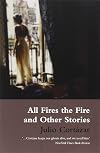
A traffic jam outside Paris lasts for weeks. Che Guevara and Fidel Castro meet on a mountaintop during the Cuban Revolution. A flight attendant becomes obsessed with a small Greek island, resulting in a surreal encounter with death. In All Fires the Fire, Julio Cortázar (author of Hopscotch and the short story "Blow-Up" ) creates his own mindscapes beyond space and time, where lives intersect for brief moments and situations break and refract. All Fires the Fire contains some of Julio show more Cortázar's most beloved stories. It is a classic collection by "one of the world's great writers" (Washington Post). show lessTags
Recommendations








































Member Reviews
Como a vida se reorganiza em um incrível e inexplicável congestionamento em uma rodovia francesa é o conto de abertura dessa coletânea lançada em 1966. Um ponto alto no trabalho de Julio Cortazar, "Todos os fogos o fogo" reúne em oito contos toda a habilidade com que o escritor entrecruza personagens e tramas em tempos e espaços distantes. De uma ilha caribenha que vive uma revolução - no relato literário-jornalístico "Reunião" - a uma trágica história de amor que perpassa os séculos e dá título ao livro.
Com ou sem pinceladas de realismo fantástico Cortazar tem o enorme talento de deixar o leitor desconcertado, como nos contos "A ilha do meio dia" e "Instruções a John Howell". Melancolia e tristeza estão presentes show more em narrativas que falam de amor e morte, como "A saúde dos doentes", ou no dolorido "Senhorita Cora", meu conto preferido nessa coletânea. Cortazar dá uma aula sobre como transitar a narrativa em primeira pessoa de um personagem a outro.
Editado pela BestBolso, selo da Best Seller, do grupo Record, "Todos os fogos o fogo" tem tradução competente de Gloria Rodriguez. A edição de tamanho compacto, porém, é impressa em papel com alguma transparência. A vantagem é que o livro pode ser comprado pelo preço de uma revista na banca. show less
Com ou sem pinceladas de realismo fantástico Cortazar tem o enorme talento de deixar o leitor desconcertado, como nos contos "A ilha do meio dia" e "Instruções a John Howell". Melancolia e tristeza estão presentes show more em narrativas que falam de amor e morte, como "A saúde dos doentes", ou no dolorido "Senhorita Cora", meu conto preferido nessa coletânea. Cortazar dá uma aula sobre como transitar a narrativa em primeira pessoa de um personagem a outro.
Editado pela BestBolso, selo da Best Seller, do grupo Record, "Todos os fogos o fogo" tem tradução competente de Gloria Rodriguez. A edição de tamanho compacto, porém, é impressa em papel com alguma transparência. A vantagem é que o livro pode ser comprado pelo preço de uma revista na banca. show less
If I had only read the first two short stories, "The Southern Thruway" and "The Health of the Sick", I would have given this book 5 stars. The first story is about a horrific traffic jam on a major road bringing travelers back to Paris, where motorists are essentially motionless for weeks, with no help from local residents or government officials. The second story is centered around the dying matriarch of a wealthy family whose family ingeniously hides from her the death of her son and sister—or so they think.
Unfortunately the remaining six stories do not come close to the promise of the first two, and only "Nurse Cora", a story about a teenage boy who is hospitalized with appendicitis, competently cared for by Nurse Cora, but badly show more mismanaged by his diffident surgeon, was of interest. However, this story was marred by rapid and unpredictable changes in the narration (boy, nurse, doctor, mother), which disrupted its flow. I would marginally recommend this collection, but only because the first two stories were fantastic. show less
Unfortunately the remaining six stories do not come close to the promise of the first two, and only "Nurse Cora", a story about a teenage boy who is hospitalized with appendicitis, competently cared for by Nurse Cora, but badly show more mismanaged by his diffident surgeon, was of interest. However, this story was marred by rapid and unpredictable changes in the narration (boy, nurse, doctor, mother), which disrupted its flow. I would marginally recommend this collection, but only because the first two stories were fantastic. show less
Julio Cortázar and his cat. Photo probably taken in the early 1960s when Julio was living in Paris.
An outstanding collection of eight short stories by one of the giants of 20th century literature – Argentina’s Julio Cortázar. In their own way, each story is a gem, with such titles as “Health of the Sick,” “The Southern Thruway” and the title piece, “All Fires the Fire.” Below is my write-up of one of the stories that really hit home for me. Spoiler alert: my analysis is of the entire story, beginning to end.
The Island at Noon
Overwhelming Humdrum: “The first time he saw the island, Marini was politely leaning over the seats on the left, adjusting a plastic table before setting a lunch tray down.” Julio’s opening show more line of this short tale of obsession, a flight attendant’s obsession for a Greek island, an image of escape from the drab routine of walking up and down the narrow aisle serving passengers, listening to complaints, the forced smiles, requirements of politeness and small talk with colleagues, strict dress code, forever marking the minutes on one’s wristwatch. Think of how claustrophobic we can become on an airplane as passengers; then think of all those men and women who spend so much of their life on airplanes. Let me out of here!
Dreamtime: Marini’s island is Xiros, a small, solitary island surrounded by an infinite blue. If he would like to experience the island's pristine beauty, he’s told he had better act fast – the tourists will soon flood the island currently inhabited by a handful of fisherman. Marini flies over Xiros at noon three times a week but, so near but so far away, he might as well be dreaming he’s flying over Xiros. I especially fancy Julio’s choice of name for Marini’s island: Xiros, like the number zero with all its ground zero associations. And, of course, in the hectic bustle of our modern world, we all have dreams of escape to a deserted island paradise, reducing all our many nagging hassles down to zero.
Growing Obsession: Marini knows he is obsessed – he had read the guidebooks telling him how octopus is the main resource, Xiros fisherman use large stones for piles and every five days a boat leaves for Xiros. He even makes a trip to a travel agency where they tell him he will have to charter a special boat or perhaps hitch a ride on the octopus boat. That’s the nature of obsession – once we allow our obsession to take hold, gathering information, digging into details, it really takes root and grows and grows. And since we live in the age of information with an entire ocean of facts available for anyone to collect and sort through on any topic whatsoever, our obsession can easily fill our every waking hour.
Eureka!: The pilots call him the madman of the island; his girlfriend informs him she’s going to marry a dentist; his dinner date makes a beeline for the bar when he launches into island talk, but no matter, Marini is too preoccupied with his one and only subject to give mind to anything else. And then his dream comes true: he finally gets to travel to Xiros. On arrival, the boat’s captain introduces him to Klaios, an island fisherman who has two sons flocking around him. Marini immediately feels at home, kinship with Klaios, instant friends with the boys. Ah, to bask in union with the object of one’s obsession, the object can be another person, perhaps one’s lover or soulmate, an activity like skiing or tennis or cooking, but whatever it is, for the one obsessed, there’s nothing else in this world like it.
Dream Come True, One: Mirini sets out for a blissful walk on the island (he recognizes a cove he’s seen from the air!), savoring every minute, then after some time, sweating in the heat of the midday sun, he undresses and thrusts himself from a rock into the sea. He swims and occasionally turns on his back to float, accepting all of his surroundings in a single act of conciliation. He now knows in his heart he has found a new home and will never return to his old life.
Dream Come Two: After his swim, he strolls back toward the houses. One of Klaios’ sons is waiting for him. Mirini voices the one Greek word he knows: Kalimera. The boy doubles over in laughter. Ah, to share your moment of supreme joy with a new friend. Mirini turns toward the sea and catches a glimpse of the charter boat becoming smaller and smaller on the horizon, which, for him, signals farewell to any dealings he will ever have with his former life. Good riddance!
High Noon: Now that he’s on his secluded island, will his former life ever impose itself on him? Mirini closes his eyes, not even wanting to catch so much of a glimpse of the plane that will be flying overhead very soon. But then we read, “Unable to fight against all that past he opened his eyes and sat up, and in the same moment saw the right wing of the plane, almost over his head, tilt unaccountably, the changed sound of the jet engines, the almost vertical drop into the sea.”
Dream Turned Nightmare: Mirini runs to the spot of the crash. He dives in the water – all he can glimpse is a cardboard box and a hand, the hand of a dying man. He pulls the man in a white shirt up on land, a man who is now dead in his arms. His mind reels. The boy and some women from the village run up to him. Thus ends the story. However, as readers we know this day, this hour, will be the most vivid, most memorable in the life of Mirini. One of the things I love about a Julio Cortázar short story is we never know how it will end until we finish reading the last sentence. Life can turn that quickly, that sharply, and no writer has ever captured life's sharp turns more brilliantly than Julio. show less
Julio Cortázar and his cat. Photo probably taken in the early 1960s when Julio was living in Paris.
An outstanding collection of eight short stories by one of the giants of 20th century literature – Argentina’s Julio Cortázar. In their own way, each story is a gem, with such titles as “Health of the Sick,” “The Southern Thruway” and the title piece, “All Fires the Fire.” Below is my write-up of one of the stories that really hit home for me. Spoiler alert: my analysis is of the entire story, beginning to end.
The Island at Noon
Overwhelming Humdrum: “The first time he saw the island, Marini was politely leaning over the seats on the left, adjusting a plastic table before setting a lunch tray down.” Julio’s opening show more line of this short tale of obsession, a flight attendant’s obsession for a Greek island, an image of escape from the drab routine of walking up and down the narrow aisle serving passengers, listening to complaints, the forced smiles, requirements of politeness and small talk with colleagues, strict dress code, forever marking the minutes on one’s wristwatch. Think of how claustrophobic we can become on an airplane as passengers; then think of all those men and women who spend so much of their life on airplanes. Let me out of here!
Dreamtime: Marini’s island is Xiros, a small, solitary island surrounded by an infinite blue. If he would like to experience the island's pristine beauty, he’s told he had better act fast – the tourists will soon flood the island currently inhabited by a handful of fisherman. Marini flies over Xiros at noon three times a week but, so near but so far away, he might as well be dreaming he’s flying over Xiros. I especially fancy Julio’s choice of name for Marini’s island: Xiros, like the number zero with all its ground zero associations. And, of course, in the hectic bustle of our modern world, we all have dreams of escape to a deserted island paradise, reducing all our many nagging hassles down to zero.
Growing Obsession: Marini knows he is obsessed – he had read the guidebooks telling him how octopus is the main resource, Xiros fisherman use large stones for piles and every five days a boat leaves for Xiros. He even makes a trip to a travel agency where they tell him he will have to charter a special boat or perhaps hitch a ride on the octopus boat. That’s the nature of obsession – once we allow our obsession to take hold, gathering information, digging into details, it really takes root and grows and grows. And since we live in the age of information with an entire ocean of facts available for anyone to collect and sort through on any topic whatsoever, our obsession can easily fill our every waking hour.
Eureka!: The pilots call him the madman of the island; his girlfriend informs him she’s going to marry a dentist; his dinner date makes a beeline for the bar when he launches into island talk, but no matter, Marini is too preoccupied with his one and only subject to give mind to anything else. And then his dream comes true: he finally gets to travel to Xiros. On arrival, the boat’s captain introduces him to Klaios, an island fisherman who has two sons flocking around him. Marini immediately feels at home, kinship with Klaios, instant friends with the boys. Ah, to bask in union with the object of one’s obsession, the object can be another person, perhaps one’s lover or soulmate, an activity like skiing or tennis or cooking, but whatever it is, for the one obsessed, there’s nothing else in this world like it.
Dream Come True, One: Mirini sets out for a blissful walk on the island (he recognizes a cove he’s seen from the air!), savoring every minute, then after some time, sweating in the heat of the midday sun, he undresses and thrusts himself from a rock into the sea. He swims and occasionally turns on his back to float, accepting all of his surroundings in a single act of conciliation. He now knows in his heart he has found a new home and will never return to his old life.
Dream Come Two: After his swim, he strolls back toward the houses. One of Klaios’ sons is waiting for him. Mirini voices the one Greek word he knows: Kalimera. The boy doubles over in laughter. Ah, to share your moment of supreme joy with a new friend. Mirini turns toward the sea and catches a glimpse of the charter boat becoming smaller and smaller on the horizon, which, for him, signals farewell to any dealings he will ever have with his former life. Good riddance!
High Noon: Now that he’s on his secluded island, will his former life ever impose itself on him? Mirini closes his eyes, not even wanting to catch so much of a glimpse of the plane that will be flying overhead very soon. But then we read, “Unable to fight against all that past he opened his eyes and sat up, and in the same moment saw the right wing of the plane, almost over his head, tilt unaccountably, the changed sound of the jet engines, the almost vertical drop into the sea.”
Dream Turned Nightmare: Mirini runs to the spot of the crash. He dives in the water – all he can glimpse is a cardboard box and a hand, the hand of a dying man. He pulls the man in a white shirt up on land, a man who is now dead in his arms. His mind reels. The boy and some women from the village run up to him. Thus ends the story. However, as readers we know this day, this hour, will be the most vivid, most memorable in the life of Mirini. One of the things I love about a Julio Cortázar short story is we never know how it will end until we finish reading the last sentence. Life can turn that quickly, that sharply, and no writer has ever captured life's sharp turns more brilliantly than Julio. show less
This is a book of short stories by an Argentinian writer. I enjoyed most of the stories, but they are pretty literary and conceptual, so probably not for everyone. I think my favorite was the first, where a community forms when there is a traffic jam outside of Paris that lasts for days.
I was expecting something a little more abstract / magical realist from Cortázar, based off of his reputation (this being my first foray into his fiction). Instead I found this collection a surprisingly concrete set of very good short stories. It's true that Cortázar sometimes plays switches narrator / location with extreme abruptness and little punctuation to delineate a natural break, but it's really not that hard to follow. I don't think anyone who has somehow gotten their hands on Cortázar will find it difficult.
Nor do I think there a weak story in this whole collection. The gladiatorial part of the title story is probably the most odd part but it still worked well. I thought Nurse Cora and Health of the Sick two very poignant show more tales and the best of the lot. Those two were the real stand outs but the entire book is highly recommended. show less
Nor do I think there a weak story in this whole collection. The gladiatorial part of the title story is probably the most odd part but it still worked well. I thought Nurse Cora and Health of the Sick two very poignant show more tales and the best of the lot. Those two were the real stand outs but the entire book is highly recommended. show less
I am a big fan of short stories, but I have never enjoyed ones that rely too heavily on their cleverness (e.g. interesting concepts or unforeseeable twists). Cortazar's stories reminded me of what I don't like about Italo Calvino, and other authors whose surrealism borders on being sci-fi. There was a bit too much of this in All Fires the Fire for my tastes. That isn't to say that Cortazar isn't a good writer. He is, and is ably assisted by Susan Jill Levine's translation. His more human centred (as opposed to concept centred) stories still packed a punch, though not as much as I had hoped for, but his stories were as much intellectual as emotional episodes, and felt a little cold.
Members
- Recently Added By
Lists

Latin America
45 works; 6 members

Harold Bloom - The Western Canon: D. The Chaotic Age
833 works; 24 members
Author Information

408+ Works 21,986 Members
Julio Cortazar is an Argentine poet, short story writer, and translator, whose pseudonym is Julio Denis. He was born in Brussels, Belgium, in 1914. In 1918, he moved with his parents to their native Argentina. He taught high school and later French literature at the University of Cuyo, resigning after participating in demonstrations against show more Argentine President Juan Peron. He worked for a Buenos Aires publishing company and also earned a degree as a translator. Cortazar is part of the "boom" of excellence in Latin American letters in the 1950s and 1960s. He combines fantastic plots with commonplace events and characters, and looks for new ways for literature to represent life. His first novel, The Winners, tells the story of passengers on a luxury liner who are restricted to a certain area of the ship and forbidden to communicate with the crew. He explores the ways passengers react. Hopscotch has a complex narrative structure with 165 chapters that can be read in at least two logical sequences to create variations. A Change of Light and Other Stories is a short story collection dealing with themes ranging from political oppression to fantasy. We Love Glenda So Much is about a fan club murder of their favorite actress whose films do not meet their standards. A Certain Lucas is comprised of three sections of short observations, discussing the nature of reality, the exploration of literary form, and search for new ways to view the world. (Bowker Author Biography) show less
Some Editions
Awards and Honors
Notable Lists
Series

Belongs to Publisher Series
Common Knowledge
- Canonical title*
- Tuli on kaikki tulet
- Original title
- Todos los fuegos el fuego
- Original publication date
- 1966
- First words
- At first the girl in the Dauphine had insisted on keeping track of the time, but the engineer in the Peugeot 404 didn't care anymore.
- Quotations
- Sweltering motorists do not seem to have a history...As a reality a traffic jam is impressive, but it doesn't say much.
—Arrigo Benedetti, L'Espresso, Rome, 6.21.64 - Last words
- (Click to show. Warning: May contain spoilers.)And between one thing and another I stay home drinking maté, listening to Irma, who's expecting in December, and wonder, not too enthusiastically, if at election time I'll vote for Perón or for Tamborini, if I'll vote none of the above and simply stay home drinking maté and looking at Irma and the plants in the patio.
- Original language*
- espanja
- Canonical DDC/MDS
- 863.6
- Canonical LCC
- PQ7797.C7145
*Some information comes from Common Knowledge in other languages. Click "Edit" for more information.
Classifications
Statistics
- Members
- 889
- Popularity
- 30,325
- Reviews
- 18
- Rating
- (4.08)
- Languages
- 11 — Danish, Dutch, English, Finnish, French, German, Italian, Japanese, Portuguese, Russian, Spanish
- Media
- Paper, Ebook
- ISBNs
- 58
- ASINs
- 11