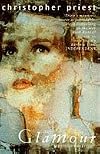
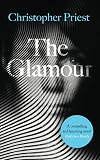
The Glamour
by Christopher Priest
On This Page
Description
As Richard fights to piece together his shattered memory after surviving a terrorist bombing, enigmatic Susan--who claims to have been his lover though he has no memory of her--helps him discover the strange and terrible world of the glamour and a remarkable power both of them may possess.Tags
Recommendations




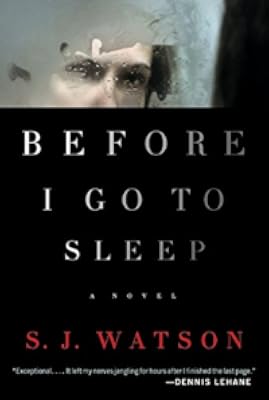




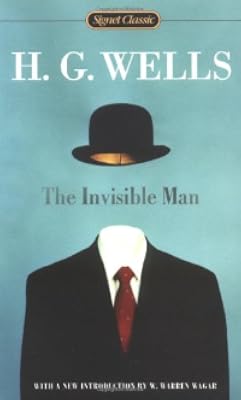























Member Recommendations


giovannigf It's impossible not to assume that Leiber's book influenced Priest's. Priest is the better writer technically, but his po-mo winking makes his novel not as satisfying as Lieber's earnest original.
Member Reviews
Richard Grey, a TV cameraman, is caught up in a terrorist bombing and is badly injured. He comes around in a convalescent home with no memory of the preceding months leading up to the attack. But out of the blue, he is contacted by someone claiming to be his girlfriend, Sue. They meet, and start to re-build the relationship that Grey doesn't remember.
Then a complication arises. Gray becomes aware that there is another person in this relationship, a supposed former boyfriend of Sue's, Niall. But no-one has ever seen Niall. This is because, Sue says, he is invisible. He possesses "the glamour", the ability to make himself not visible to people - a combination of hypnosis, sleight-of-hand and chutzpah. What is more, Sue says she, too, has show more the glamour; and even Grey has it, though he doesn't know how to access it.
So on the surface, an urban fantasy story about a love triangle. But this being a Christopher Priest novel, nothing can be taken at face value. Grey retrieves a memory of how he and Sue met on a visit to France. Yet Sue claims to have never left the country. Niall seems to have extensive knowledge of Sue and Grey's movements and activities; is he using his invisibility to spy on them, or is there a deeper explanation? Is/are the trademark Priest unreliable narrator(s) at play here? Grey's retrieved memory of France may be a confabulation; but what about Sue? Can her account be relied upon? And in that case, what about Niall? Is this even a triangle?
In this book, Priest was picking up one of his recurring themes: illusion. There are also experiences from his own life: part of the French trip takes Grey and Sue to the south of France, and on the plage at Nice Grey questions the motivations and values of the holidaymakers he is surrounded with. This may well stem from his 1976 holiday to Greece, where he retreated after publication of his earlier novel A Dream of Wessex to recover, but found the experience unsatisfying - so much so that he returned to the UK early and started work on another story. There is some odd foreshadowing in the book as well - Priest has Grey staying in the Adelphi Hotel in Liverpool at one point, and knowledgeable readers may think that he had inserted the cameo after attending one of the British Easter science fiction conventions held in that hotel - until you realise that the first Liverpool Eastercon wasn't held until 1988, four years after this novel was published! But I digress...
I re-read The Glamour - after something like forty years - because I'd been reading a lot of Christopher Priest books for an article I was writing on his Dream Archipelago stories, and I came across a review where the reader was expecting The Glamour to be in that series, and was disappointed because they had been told that they had some characters in common. This piqued my interest, so of course I had to re-read it to see if that were true. I saw no evidence of any common characters. Certainly, the book reads rather similarly to its immediate forerunner, The Affirmation (which was partially set in the Dream Archipelago); and as I said above, some of the thoughts and opinions Priest gives his character about holidaymakers in the Mediterranean seem likely to have sprung from his reaction to the Greek islands and its holidaymakers. Sue's description of the alternative society of dropouts and drifters who form London's community of invisibles, the Glamourous, could equally apply to the adepts who hang around ports in later Dream Archipelago novels, The Gradual in particular. And the nature of Grey's retrieved memory and the later contradiction of its narrative suggests the sort of mutability of events that we would see much later in Dream Archipelago stories. But this is not one of them.
Another reviewer scoffed that this was "not science fiction". But this is almost certainly an opinion born out of the current pigeonholing of science fiction as, at best, fiction based around some future technological change, and (at worst) fiction involving spaceships and robots - things that have never been in Chris Priest's writer's toolbox. Priest came out of the revolution in the genre brought about in the 1960s by Michael Moorcock's controversial editing of the British SF magazine New Worlds, which inspired a 'New Wave' in science fiction that explored different realities and perceptions. Even in the 1980s, British publishers still looked at science fiction through the filter of Moorcock and the New Wave, where the 'science' in the science fiction could be psychology, sociology or a range of other disciplines that did not rely on nuts, bolts or lasers. So I am happy to accept this novel and others from Chris Priest's canon as falling under the broadest definition of 'science fiction '.
This book is many things. On the surface, it explores invisibility, for although Sue may be an unreliable narrator, she certainly believes in her and Niall's ability to become invisible. After all, if you or I walked into a party between two well-known celebrities, how many people would actually see you or I? We would be, effectively, invisible. There is much else in this book; as a picture of 1980s Britain and pre- Channel Tunnel travel to France, there is much incidental detail that shows that even the recent past is a foreign country.
More tellingly, Niall's treatment of Sue is something we would today call coercive control, and Priest details this at length (including violence and non-consensual sex). And Grey's own attitudes to women would not meet with approval in the 2020s. Ultimately, I found none of the characters actually likeable, mainly for that reason; but their situations made me want to see what was happening. I started this re-read as something of a chore, provoked by a misapprehension; but by the end, I was intrigued by the conundrum, and I may still have some thinking to do over identifying the narrators of this story. show less
Then a complication arises. Gray becomes aware that there is another person in this relationship, a supposed former boyfriend of Sue's, Niall. But no-one has ever seen Niall. This is because, Sue says, he is invisible. He possesses "the glamour", the ability to make himself not visible to people - a combination of hypnosis, sleight-of-hand and chutzpah. What is more, Sue says she, too, has show more the glamour; and even Grey has it, though he doesn't know how to access it.
So on the surface, an urban fantasy story about a love triangle. But this being a Christopher Priest novel, nothing can be taken at face value. Grey retrieves a memory of how he and Sue met on a visit to France. Yet Sue claims to have never left the country. Niall seems to have extensive knowledge of Sue and Grey's movements and activities; is he using his invisibility to spy on them, or is there a deeper explanation? Is/are the trademark Priest unreliable narrator(s) at play here? Grey's retrieved memory of France may be a confabulation; but what about Sue? Can her account be relied upon? And in that case, what about Niall? Is this even a triangle?
In this book, Priest was picking up one of his recurring themes: illusion. There are also experiences from his own life: part of the French trip takes Grey and Sue to the south of France, and on the plage at Nice Grey questions the motivations and values of the holidaymakers he is surrounded with. This may well stem from his 1976 holiday to Greece, where he retreated after publication of his earlier novel A Dream of Wessex to recover, but found the experience unsatisfying - so much so that he returned to the UK early and started work on another story. There is some odd foreshadowing in the book as well - Priest has Grey staying in the Adelphi Hotel in Liverpool at one point, and knowledgeable readers may think that he had inserted the cameo after attending one of the British Easter science fiction conventions held in that hotel - until you realise that the first Liverpool Eastercon wasn't held until 1988, four years after this novel was published! But I digress...
I re-read The Glamour - after something like forty years - because I'd been reading a lot of Christopher Priest books for an article I was writing on his Dream Archipelago stories, and I came across a review where the reader was expecting The Glamour to be in that series, and was disappointed because they had been told that they had some characters in common. This piqued my interest, so of course I had to re-read it to see if that were true. I saw no evidence of any common characters. Certainly, the book reads rather similarly to its immediate forerunner, The Affirmation (which was partially set in the Dream Archipelago); and as I said above, some of the thoughts and opinions Priest gives his character about holidaymakers in the Mediterranean seem likely to have sprung from his reaction to the Greek islands and its holidaymakers. Sue's description of the alternative society of dropouts and drifters who form London's community of invisibles, the Glamourous, could equally apply to the adepts who hang around ports in later Dream Archipelago novels, The Gradual in particular. And the nature of Grey's retrieved memory and the later contradiction of its narrative suggests the sort of mutability of events that we would see much later in Dream Archipelago stories. But this is not one of them.
Another reviewer scoffed that this was "not science fiction". But this is almost certainly an opinion born out of the current pigeonholing of science fiction as, at best, fiction based around some future technological change, and (at worst) fiction involving spaceships and robots - things that have never been in Chris Priest's writer's toolbox. Priest came out of the revolution in the genre brought about in the 1960s by Michael Moorcock's controversial editing of the British SF magazine New Worlds, which inspired a 'New Wave' in science fiction that explored different realities and perceptions. Even in the 1980s, British publishers still looked at science fiction through the filter of Moorcock and the New Wave, where the 'science' in the science fiction could be psychology, sociology or a range of other disciplines that did not rely on nuts, bolts or lasers. So I am happy to accept this novel and others from Chris Priest's canon as falling under the broadest definition of 'science fiction '.
This book is many things. On the surface, it explores invisibility, for although Sue may be an unreliable narrator, she certainly believes in her and Niall's ability to become invisible. After all, if you or I walked into a party between two well-known celebrities, how many people would actually see you or I? We would be, effectively, invisible. There is much else in this book; as a picture of 1980s Britain and pre- Channel Tunnel travel to France, there is much incidental detail that shows that even the recent past is a foreign country.
More tellingly, Niall's treatment of Sue is something we would today call coercive control, and Priest details this at length (including violence and non-consensual sex). And Grey's own attitudes to women would not meet with approval in the 2020s. Ultimately, I found none of the characters actually likeable, mainly for that reason; but their situations made me want to see what was happening. I started this re-read as something of a chore, provoked by a misapprehension; but by the end, I was intrigued by the conundrum, and I may still have some thinking to do over identifying the narrators of this story. show less
This remarkable novel opens in a convalescent hospital set in the British countryside where BBC news cameraman Richard Grey is temporarily confined to a wheelchair during his recovery from a terrorist bomb blast on a London street. Richard begins telling his story but there is a piece missing – he possesses no recollection of the weeks immediately preceding the explosion. Soon thereafter an attractive young lady, Susan, shows up at the hospital, claiming to be Richard’s girlfriend. Richard does not recognize Susan, however this lack of memory only intensifies Richard’s romantic feelings. A passionate emotional bond quickly forms although a bit of complication intrudes – Susan is still involved with someone maintaining a serious show more hold on her, a mysterious man by the name of Niall.
Ah, a traditional love triangle, but let me assure you, to describe The Glamour as traditional would be entirely misleading. To say anything more would be to say too much; rather, below are a number of knotty enigmas we encounter via a string of astonishing twists woven into Christopher Priest's tale of suspense. And to repeat: extraordinary, astonishing, suspenseful – a psychological thriller I could hardly put down.
Homo Sapiens: Our worldwide human population currently tops seven billion strong. So many millions of people, yet we all share, every single one of us, a common human nature. What if there was a particular quality usually found in comic book heroes separating off some members, a quality like superhuman strength, invulnerability, x-ray vision, flying . . . or, the power to turn invisible? If such were the case, many of our time-tested assumptions about human life on planet earth would instantly be invalidated, consigned to the trash heap. Such imaginative speculation is what British author Christopher Priest is all about. And fortunately for lovers of literary fiction, Mr. Priest's mastery of craft and language is comparable to Wilkie Collins or Graham Greene.
Invisibility, One: When Richard Grey is in the convalescent hospital, one of the doctors employs hypnosis as a possible means of helping restore Richard’s gap in memory. During the first session, the doctor tells Richard that his medical assistant, a young woman sitting in a chair across from him, will be made invisible, Richard looks in her direction: to his astonishment, she has indeed becomes invisible. Such phenomenon in the world of psychoanalysis and hypnosis is referred to as negative hallucination. As we turn the novel’s pages, we wonder how such hypnotic powers might be related to further instances of invisibility. It is also worth noting girlfriend Susan refers to invisibility as “the glamour,” coming from the old Scottish word “glammer" meaning a spell or enchantment.
Invisibility, Two: Taken as metaphor, certain memories we once cherished in shaping our sense of identity are no longer visible to us. Such is the power of time and events coupled with our ever-changing sense of self: going, going, gone – what we once highly valued completely vanishes; certain hunks of our past become invisible. Various are the causes: with Richard, there is the trauma of a terrorist attack; for others like Susan, ordeals suffered in childhood and adolescence.
Invisibility, Three: If I walk into a crowded room flanked by two instantly recognizable movie stars or world leaders, how many men and women in the crowd would actually see me, let along remember my face the next day? In a very real sense, I would have become invisible. One of many psychological and social conundrums both Richard and Susan grapple with.
Invisibility, Four: Think how the plot would thicken and bend in bizarre angles if characters in a novel could slide in and out of invisibility. Now you see me, now you don't. Welcome to the world of The Glamour. Sound captivating? It is highly captivating.
Privacy of the Individual: Our stream-of-consciousness and private inner thoughts are forever ours and ours alone. Not so in fiction - a character shares their mind-stream with a narrator or author, free indirect style being a blending of objective third-person narration with the thoughts and words of a character. On this topic Christopher Priest reveals layers of his storytelling magic from beginning to end, always keeping at least one step ahead of his reader.
Metafiction: The Glamour features multiple narrators and maybe even a third-person narrator. It's that "maybe" that blurs the line and might even undermine our conventional notions of narration and story, including my statement above: "This remarkable novel opens in a convalescent hospital set in the British countryside where BBC news cameraman Richard Grey is temporarily confined to a wheelchair during his recovery from a terrorist bomb blast on a London street." How exactly? I urge you to read for yourself. show less
Ah, a traditional love triangle, but let me assure you, to describe The Glamour as traditional would be entirely misleading. To say anything more would be to say too much; rather, below are a number of knotty enigmas we encounter via a string of astonishing twists woven into Christopher Priest's tale of suspense. And to repeat: extraordinary, astonishing, suspenseful – a psychological thriller I could hardly put down.
Homo Sapiens: Our worldwide human population currently tops seven billion strong. So many millions of people, yet we all share, every single one of us, a common human nature. What if there was a particular quality usually found in comic book heroes separating off some members, a quality like superhuman strength, invulnerability, x-ray vision, flying . . . or, the power to turn invisible? If such were the case, many of our time-tested assumptions about human life on planet earth would instantly be invalidated, consigned to the trash heap. Such imaginative speculation is what British author Christopher Priest is all about. And fortunately for lovers of literary fiction, Mr. Priest's mastery of craft and language is comparable to Wilkie Collins or Graham Greene.
Invisibility, One: When Richard Grey is in the convalescent hospital, one of the doctors employs hypnosis as a possible means of helping restore Richard’s gap in memory. During the first session, the doctor tells Richard that his medical assistant, a young woman sitting in a chair across from him, will be made invisible, Richard looks in her direction: to his astonishment, she has indeed becomes invisible. Such phenomenon in the world of psychoanalysis and hypnosis is referred to as negative hallucination. As we turn the novel’s pages, we wonder how such hypnotic powers might be related to further instances of invisibility. It is also worth noting girlfriend Susan refers to invisibility as “the glamour,” coming from the old Scottish word “glammer" meaning a spell or enchantment.
Invisibility, Two: Taken as metaphor, certain memories we once cherished in shaping our sense of identity are no longer visible to us. Such is the power of time and events coupled with our ever-changing sense of self: going, going, gone – what we once highly valued completely vanishes; certain hunks of our past become invisible. Various are the causes: with Richard, there is the trauma of a terrorist attack; for others like Susan, ordeals suffered in childhood and adolescence.
Invisibility, Three: If I walk into a crowded room flanked by two instantly recognizable movie stars or world leaders, how many men and women in the crowd would actually see me, let along remember my face the next day? In a very real sense, I would have become invisible. One of many psychological and social conundrums both Richard and Susan grapple with.
Invisibility, Four: Think how the plot would thicken and bend in bizarre angles if characters in a novel could slide in and out of invisibility. Now you see me, now you don't. Welcome to the world of The Glamour. Sound captivating? It is highly captivating.
Privacy of the Individual: Our stream-of-consciousness and private inner thoughts are forever ours and ours alone. Not so in fiction - a character shares their mind-stream with a narrator or author, free indirect style being a blending of objective third-person narration with the thoughts and words of a character. On this topic Christopher Priest reveals layers of his storytelling magic from beginning to end, always keeping at least one step ahead of his reader.
Metafiction: The Glamour features multiple narrators and maybe even a third-person narrator. It's that "maybe" that blurs the line and might even undermine our conventional notions of narration and story, including my statement above: "This remarkable novel opens in a convalescent hospital set in the British countryside where BBC news cameraman Richard Grey is temporarily confined to a wheelchair during his recovery from a terrorist bomb blast on a London street." How exactly? I urge you to read for yourself. show less
Because Manny and Fiona's reviews make it sound intriguing, like a challenge just my size, and because I was provoked by his TT short story Palely Loitering.
........
Well. I suppose the author would hope I'd start my review with "Mind. Blown." But I won't, because it would be a lie. By the time I got to the end, had cut through all the BS, I didn't care. And the ending seemed to me like a cop-out. Sort of like Life of Pi. Ambiguity can be ok, philosophy can be ok, but if the author is just showing off how well they can reorganize an outline of a non-existent plot, or if he has a sense of spirituality that has no meaning, or if the blurb is totally misleading*, then, no, not for me.
*This is not SF!
And, trigger warning, a victim forgives show more her rapist, and the rape is graphically described. show less
........
Well. I suppose the author would hope I'd start my review with "Mind. Blown." But I won't, because it would be a lie. By the time I got to the end, had cut through all the BS, I didn't care. And the ending seemed to me like a cop-out. Sort of like Life of Pi. Ambiguity can be ok, philosophy can be ok, but if the author is just showing off how well they can reorganize an outline of a non-existent plot, or if he has a sense of spirituality that has no meaning, or if the blurb is totally misleading*, then, no, not for me.
*This is not SF!
And, trigger warning, a victim forgives show more her rapist, and the rape is graphically described. show less
Richard Grey is recovering from injuries sustained when a car bomb exploded near him. He has amnesia about the time prior to the explosion. A woman named Sue Kewley appears at the convalescent home and tells him that they were lovers. They had broken up because of Sue’s former lover Niall. The rest of the story is about Richard trying to recover the memories of there doomed relationship. His memories are very different from Sue’s. Her explanation sounds far fetched because she claims they have “the glamour” a form of invisibility and that Niall, who is infinitely more invisible than they are, stalked them throughout there relationship.
This is another reality bending novel by Christopher Priest. Many questions are left show more unanswered at the end. Who is Niall really and why are Richard’s memories so different than Sue’s? Is their really such a thing as “the glamour” or is Sue insane? The description of the people that have “the glamour” reminded me of homeless people who are invisible in our society. show less
This is another reality bending novel by Christopher Priest. Many questions are left show more unanswered at the end. Who is Niall really and why are Richard’s memories so different than Sue’s? Is their really such a thing as “the glamour” or is Sue insane? The description of the people that have “the glamour” reminded me of homeless people who are invisible in our society. show less
Priest is a good writer unfortunately given to some pretty tiresome po-mo autorial trickery. This might have been a pretty good book about memory, storytelling and identity. Priest apparently ran out of things to say about these interesting topics and veers into loudly reaffirming that this book is his world and we just read along in it. You now probably know enough to move on.
I'm not sure why this is catalogued as part of the Dream Archipelago series, there's no mention of it in the novel.
Members
- Recently Added By
Published Reviews
ThingScore 75
I found the basic premise intriguing. What if some people were so self-effacing, so unwilling to impose themselves on their fellows and their surroundings that they became literally impossible to see?... This makes good psychological sense but it leaves an emptiness at the core of the book that Mr. Priest's ingenious shuffling of narrative voices and points of view cannot disguise.
added by ropie
Lists

Best Horror Books
281 works; 85 members

David Pringle's Modern Fantasy: The 100 Best Novels
100 works; 5 members
Author Information

63+ Works 11,856 Members
Some Editions
Awards and Honors
Series
Belongs to Publisher Series
Heyne Science Fiction & Fantasy (06/4413)
Casino grøsser (55)
Work Relationships
Has the adaptation
Common Knowledge
- Canonical title
- The Glamour
- Original title
- The Glamour
- Original publication date
- 1984
- First words*
- Ich habe versucht, mich zu erinnern, wo es begann, habe über meine frühe Kindheit nachgedacht und mich gefragt, ob damals etwas geschehen sein könnte, das mich zu dem machte, was ich bin.
- Last words*
- (Click to show. Warning: May contain spoilers.)"Wollte, du wärest hier", schrieb er in einer gewollt kunstvollen Handschrift, und signierte sie mit einem X.
- Original language*
- Englisch
- Disambiguation notice
- Do not combine with editions that contain the text as revised in 2005, this is the 1984 original work.
*Some information comes from Common Knowledge in other languages. Click "Edit" for more information.
Classifications
Statistics
- Members
- 262
- Popularity
- 123,519
- Reviews
- 8
- Rating
- (3.76)
- Languages
- 6 — English, French, German, Norwegian, Spanish, Swedish
- Media
- Paper, Audiobook, Ebook
- ISBNs
- 15
- UPCs
- 1
- ASINs
- 8