
On This Page
Description
When Shrewsbury Castle falls, Brother Cadfael discovers a murder mystery amid the wreckage In the summer of 1138, war between King Stephen and the Empress Maud takes Brother Cadfael from the quiet world of his garden into a battlefield of passions, deceptions, and death. Not far from the safety of the abbey walls, Shrewsbury Castle falls, leaving its ninety-four defenders loyal to the empress to hang as traitors. With a heavy heart, Brother Cadfael agrees to bury the dead, only to make a show more grisly discovery: one extra victim that has been strangled, not hanged. This ingenious way to dispose of a corpse tells Brother Cadfael that the killer is both clever and ruthless. But one death among so many seems unimportant to all but the good Benedictine. He vows to find the truth behind disparate clues: a girl in boy's clothing, a missing treasure, and a single broken flower . . . the tiny bit of evidence that Cadfael believes can expose a murderer's black heart. show lessTags
Recommendations

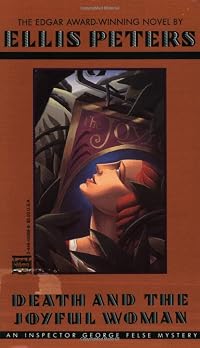






Member Recommendations
charlie68 Same time period.
Member Reviews
This is the second book in the Brother Cadfael mystery series, featuring an older Benedictine Monk who retired to the Abbey at Shrewsbury after a wild and eventful youth, and now spends his time peacefully in the Abbey’s herbarium. Or tries to: it seems there’s always a murder to be solved in 12th Century England, and Brother Cadfael is the man to do it.
This book takes place in the summer of 1138, during the war of succession for the crown of England between King Stephen and his cousin the Empress Maude. King Stephen holds Shrewsbury under siege, and he is seeking followers of his main opponents, William FitzAlan and Fulke Adeney. In particular, he wants to find the only daughter of Adeney - Godith - to hold for ransom in exchange show more for her father. He suspects she is hiding at the Abbey.
Meanwhile, Shrewsbury Castle falls to King Stephen, and the remaining 94 defenders are hanged. Brother Cadfael offers to help bury the bodies, and discovers one extra. Someone apparently tried to cover up a murder by adding an extra body to the pile. Brother Cadfael is determined to get to the bottom of it, and the King agrees. (The characters muse on the topsy-turvy morality of war that allows Stephen to collude in the killing of the 94, but be horrified by the killing of an additional man.)
As in the previous book, Brother Cadfael does not let his detective duties deter him from matchmaking. There is a lovely passage when two young people suddenly experience a difference in their regard for one another:
"And talk they did… Each of them took up the thread from the other, as though handed it in a fixed and formal ceremony, like a favour in a dance. Even their voices had grown somehow alike, as if they matched tones without understanding that they did it. They had not the least idea, as yet, that they were in love.”
“Ah well,” Brother Cadfael muses, “these things are for the young.” (See my previous review about Brother Cadfael’s proclivity for fixing up people, in which I give you the lyrics for “Hello Young Lovers.”) These lyrics include the apt stanza:
"Don't cry young lovers, whatever you do,
Don't cry because I'm alone;
All of my memories are happy tonight,
I've had a love of my own.
I've had a love of my own, like yours-
I've had a love of my own."
Another wonderful passage in the book is an exchange between Brother Cadfael and Hugh Beringar, one of King Stephen’s soldiers about to engage in a duel to the death with his enemy, Adam Courcelle. Brother Cadfael asks Hugh if he will spend the night before in prayer:
"‘I am not such a fool as all that,’ said Hugh reprovingly, and shook a finger at his friend. ‘For shame, Cadfael! You go to bed and sleep well, and rise fresh to the trial. And now I suppose you will insist on being my deputy and advocate to heaven?’
‘No,” said Cadfael grudgingly. ‘I shall sleep, and get up only when the bell rings for me. Am I to have less faith than an impudent heathen like you?’"
Still, Cadfael worries to himself about the outcome of the duel:
"‘The trouble with me,’ he thought unhappily, ‘is that I have been about the world long enough to know that God’s plans for us, however infallibly good, may not take the form that we expect and demand. And I find an immense potential for rebellion in this old heart, if God, for no matter what perfect end, choose to take Hugh Beringar out of this world and leave Adam Courcelle in it.’”
Evaluation: This second book in the Brother Cadfael series is a marked improvement over the first. Characters have more depth, and if the murderer is not so well hidden to readers, the process by which the characters get there is an enjoyable one. And like the first, there are two pairs of lovers that find fulfillment thanks to Brother Cadfael. Sad in a way, but also sweet, and entertaining. show less
This book takes place in the summer of 1138, during the war of succession for the crown of England between King Stephen and his cousin the Empress Maude. King Stephen holds Shrewsbury under siege, and he is seeking followers of his main opponents, William FitzAlan and Fulke Adeney. In particular, he wants to find the only daughter of Adeney - Godith - to hold for ransom in exchange show more for her father. He suspects she is hiding at the Abbey.
Meanwhile, Shrewsbury Castle falls to King Stephen, and the remaining 94 defenders are hanged. Brother Cadfael offers to help bury the bodies, and discovers one extra. Someone apparently tried to cover up a murder by adding an extra body to the pile. Brother Cadfael is determined to get to the bottom of it, and the King agrees. (The characters muse on the topsy-turvy morality of war that allows Stephen to collude in the killing of the 94, but be horrified by the killing of an additional man.)
As in the previous book, Brother Cadfael does not let his detective duties deter him from matchmaking. There is a lovely passage when two young people suddenly experience a difference in their regard for one another:
"And talk they did… Each of them took up the thread from the other, as though handed it in a fixed and formal ceremony, like a favour in a dance. Even their voices had grown somehow alike, as if they matched tones without understanding that they did it. They had not the least idea, as yet, that they were in love.”
“Ah well,” Brother Cadfael muses, “these things are for the young.” (See my previous review about Brother Cadfael’s proclivity for fixing up people, in which I give you the lyrics for “Hello Young Lovers.”) These lyrics include the apt stanza:
"Don't cry young lovers, whatever you do,
Don't cry because I'm alone;
All of my memories are happy tonight,
I've had a love of my own.
I've had a love of my own, like yours-
I've had a love of my own."
Another wonderful passage in the book is an exchange between Brother Cadfael and Hugh Beringar, one of King Stephen’s soldiers about to engage in a duel to the death with his enemy, Adam Courcelle. Brother Cadfael asks Hugh if he will spend the night before in prayer:
"‘I am not such a fool as all that,’ said Hugh reprovingly, and shook a finger at his friend. ‘For shame, Cadfael! You go to bed and sleep well, and rise fresh to the trial. And now I suppose you will insist on being my deputy and advocate to heaven?’
‘No,” said Cadfael grudgingly. ‘I shall sleep, and get up only when the bell rings for me. Am I to have less faith than an impudent heathen like you?’"
Still, Cadfael worries to himself about the outcome of the duel:
"‘The trouble with me,’ he thought unhappily, ‘is that I have been about the world long enough to know that God’s plans for us, however infallibly good, may not take the form that we expect and demand. And I find an immense potential for rebellion in this old heart, if God, for no matter what perfect end, choose to take Hugh Beringar out of this world and leave Adam Courcelle in it.’”
Evaluation: This second book in the Brother Cadfael series is a marked improvement over the first. Characters have more depth, and if the murderer is not so well hidden to readers, the process by which the characters get there is an enjoyable one. And like the first, there are two pairs of lovers that find fulfillment thanks to Brother Cadfael. Sad in a way, but also sweet, and entertaining. show less
I had doubts starting this one, because it starts off slow. Really slow. Like, omg, this book is never, ever going to end. This was largely due to the history dump Peters gives the reader in the beginning; the boring-to-me kind of history about battles and wars and political shenanigans.
Then the dead body is found in the pile, and Cadfael gets his new assistant and stuff starts happening. Midway through I was loving this story; "cat and mouse" comes to mind, but it's really much more "cat vs cat" because Cadfael is up against a man as clever as he is and there's no mouse in this plot. The almost-the-end/climax-but-not was magnificent; the machinations were making me positively giddy, and yet the mystery itself continued. Once Cadfael show more figured out who the murderer was, I admit I felt a bit knuckle-headed because the possibility never even entered my mind. I can only tell myself I was entirely too caught up it the sub-plot of cat-n-cat and wasn't paying attention.
That's what I'm telling myself anyway.
These are excellent mysteries for anyone who wants something more serious than a cozy, but doesn't want hard-core thrillers or crime stories. Enjoying history is a plus, but not necessary save for the first few chapters. There are 20 books in this series and if each of them are this meaty, I'll be reading them for years to come, because they aren't the kind I can binge read. Yay!
This book works for the Kill Your Darlings game's COD: Stabbed with a sword. Primarily, it takes place during the middle ages, but it also is set in the midst of a civil war and the text is chock full of the word "sword". show less
Then the dead body is found in the pile, and Cadfael gets his new assistant and stuff starts happening. Midway through I was loving this story; "cat and mouse" comes to mind, but it's really much more "cat vs cat" because Cadfael is up against a man as clever as he is and there's no mouse in this plot. The almost-the-end/climax-but-not was magnificent; the machinations were making me positively giddy, and yet the mystery itself continued. Once Cadfael show more figured out who the murderer was, I admit I felt a bit knuckle-headed because the possibility never even entered my mind. I can only tell myself I was entirely too caught up it the sub-plot of cat-n-cat and wasn't paying attention.
That's what I'm telling myself anyway.
These are excellent mysteries for anyone who wants something more serious than a cozy, but doesn't want hard-core thrillers or crime stories. Enjoying history is a plus, but not necessary save for the first few chapters. There are 20 books in this series and if each of them are this meaty, I'll be reading them for years to come, because they aren't the kind I can binge read. Yay!
This book works for the Kill Your Darlings game's COD: Stabbed with a sword. Primarily, it takes place during the middle ages, but it also is set in the midst of a civil war and the text is chock full of the word "sword". show less
'One Corpse Too Many' is a more secular book than 'A Morbid Taste For Bones'. The story is dominated by the consequences of the fall of Shrewsbury, who supported the Empress Maud, to King Henry in 1138. Cadfael's Benedictine Abbey is buffered from the secular struggle until the Abbot asks for permission to bury ninety-four defenders of the fallen city who have been executed by hanging and thrown into a ditch outside the walls. Cadfeal, who is sent to manage the gruesome task, finds one corpse too many and sets out to find the murderer. In hunting the murderer, Cadfeal finds himself involved in political intrigue and has to pitch his cunning against that of Hugh Beringar, the newly appointed Deputy Sheriff of Shropshire.
I liked the show more matter-of-fact way this story displayed the brutality of the times, the capriciousness of Kings and the bloody reality of trial by combat.
As in the first book, 'One Corpse Too Many' featured strong women who shaped the story, this time with some ingenious twists that made me smile.
There were some very strong scenes in the book that brought into focus life in 1138 as lived by beggars, women and nobles navigating royal politics at a time of civil war and showed the impact of a belief in God in terms of the rights of Kings and the Church.
I enjoyed the war of wits between Beringar and Cadfael but I thought it went on for too long at the end. The conclusion to the two sets of personal stories was a little too Happy Ever After for me.
I recommend the audiobook version of 'One Corpse Too Many'. Stephen Thorne's narration increased my enjoyment of the book. show less
I liked the show more matter-of-fact way this story displayed the brutality of the times, the capriciousness of Kings and the bloody reality of trial by combat.
As in the first book, 'One Corpse Too Many' featured strong women who shaped the story, this time with some ingenious twists that made me smile.
There were some very strong scenes in the book that brought into focus life in 1138 as lived by beggars, women and nobles navigating royal politics at a time of civil war and showed the impact of a belief in God in terms of the rights of Kings and the Church.
I enjoyed the war of wits between Beringar and Cadfael but I thought it went on for too long at the end. The conclusion to the two sets of personal stories was a little too Happy Ever After for me.
I recommend the audiobook version of 'One Corpse Too Many'. Stephen Thorne's narration increased my enjoyment of the book. show less
Summary: Burying 94 defenders of Shrewsbury loyal to Empress Maud, executed by King Stephen, Cadfael finds 95 bodies, one of which had been murdered. Could the killer be the young man seeking a daughter of a supporter of Empress Maud, hiding in the abbey under Cadfael’s protection?
The abbey at Shrewsbury is caught amid a civil war between those defending the town of Shrewsbury, loyal to Empress Maud who is in France, and the present, dominating forces under King Stephen. When the town falls, ninety-four of the defenders, loyal to Maud are executed by hanging, cut down and left in a heap outside the town. Cadfael is delegated to lead the group to provide them a decent burial or be claimed by their families. The grim task becomes show more grimmer when Cadfael counts, no doubt to make sure they have retrieved all, only to find that there are ninety-five. One of the corpses had been murdered, garrotted from behind and hidden among the others.
He secures King Stephen’s permission to investigate the murder. It is only one of the burdens he bears as he copes with the effects of war. A young boy has been assigned to him, provided for by a year’s gift to the abbey. Godric works hard and listens well–and refuses to strip down on a hot day–and Cadfael realizes this is no boy. He learns that she is Godith Adeney, daughter of one of Maud’s patrons, who had escaped the city. He arranges for her to stay with him rather than the other boys, and tries to protect her secret until he can arrange to get her to safety in neighboring Wales. She also identifies the murdered man–one of her father’s young servants, smuggling family wealth out of the city to aid Maud’s cause
The task is complicated by Hugh Beringar. Years ago he was betrothed to Godith. Now he has sided, or tried to, with King Stephen. He’s a skilled horseman and swordsman, but the proof of loyalty remains. Finding Godith and turning her over to the King as hostage and bait to bring her father out of hiding will confirm Beringar’s loyalties. He stays at the Abbey and attaches himself to Cadfael. Does he know, or suspect? The only thing that distracts is the recently bereaved Aline siward who lost her brother among the ninety-four. His rival for her affections is Adam Courcelle, a young soldier of the king, who apologizes that he could not save her brother.
Godith discovers a wounded young man in bushes outside the abbey, a companion assisting the man who was murdered, who had fought with his assailant in a barn. Cadfael attends to the young man, Tobold, who quickly develops a bond with Godith, and investigates the scene, finding a broken flower from the hilt of a knife–a key to finding the murderer. There is also the family treasure, which Tobold has hidden.
Peters does an effective job building the tension as it is evident that Beringer both enlists Cadfael’s help in secreting away some horses and provides bait for Cadfael to use with the two he is hiding who need to get to Wales, along with the treasure, which Cadfael suspects Beringar is also seeking. Beringar is both stealthy and clever. How much does he know? Can the former soldier and herbalist Cadfael outfox him? More than that, if the treasure is Beringar’s object, is he the murderer? For all that, a kind of admiration has arisen within Cadfael for this young man.
Peters has some surprises yet in store that both further the tension in the plot, and heighten the satisfaction with its outcome…but I will say no more! It’s masterful!
In back of all this, Peters captures the knife-edge abbeys lived on amid such civil distress. They do not take sides but provide stores and horses for the king–and refuge for those associated with his rival. All the while, they pursue a higher call, to care for souls, to heal bodies when they can and bury them with dignity when that fails. In Cadfael, the former soldier we read the tension of understanding the way of the warrior and the pursuit of his spiritual calling. He exemplifies one who lives “as wisely as a serpent and as innocently as a dove.” show less
The abbey at Shrewsbury is caught amid a civil war between those defending the town of Shrewsbury, loyal to Empress Maud who is in France, and the present, dominating forces under King Stephen. When the town falls, ninety-four of the defenders, loyal to Maud are executed by hanging, cut down and left in a heap outside the town. Cadfael is delegated to lead the group to provide them a decent burial or be claimed by their families. The grim task becomes show more grimmer when Cadfael counts, no doubt to make sure they have retrieved all, only to find that there are ninety-five. One of the corpses had been murdered, garrotted from behind and hidden among the others.
He secures King Stephen’s permission to investigate the murder. It is only one of the burdens he bears as he copes with the effects of war. A young boy has been assigned to him, provided for by a year’s gift to the abbey. Godric works hard and listens well–and refuses to strip down on a hot day–and Cadfael realizes this is no boy. He learns that she is Godith Adeney, daughter of one of Maud’s patrons, who had escaped the city. He arranges for her to stay with him rather than the other boys, and tries to protect her secret until he can arrange to get her to safety in neighboring Wales. She also identifies the murdered man–one of her father’s young servants, smuggling family wealth out of the city to aid Maud’s cause
The task is complicated by Hugh Beringar. Years ago he was betrothed to Godith. Now he has sided, or tried to, with King Stephen. He’s a skilled horseman and swordsman, but the proof of loyalty remains. Finding Godith and turning her over to the King as hostage and bait to bring her father out of hiding will confirm Beringar’s loyalties. He stays at the Abbey and attaches himself to Cadfael. Does he know, or suspect? The only thing that distracts is the recently bereaved Aline siward who lost her brother among the ninety-four. His rival for her affections is Adam Courcelle, a young soldier of the king, who apologizes that he could not save her brother.
Godith discovers a wounded young man in bushes outside the abbey, a companion assisting the man who was murdered, who had fought with his assailant in a barn. Cadfael attends to the young man, Tobold, who quickly develops a bond with Godith, and investigates the scene, finding a broken flower from the hilt of a knife–a key to finding the murderer. There is also the family treasure, which Tobold has hidden.
Peters does an effective job building the tension as it is evident that Beringer both enlists Cadfael’s help in secreting away some horses and provides bait for Cadfael to use with the two he is hiding who need to get to Wales, along with the treasure, which Cadfael suspects Beringar is also seeking. Beringar is both stealthy and clever. How much does he know? Can the former soldier and herbalist Cadfael outfox him? More than that, if the treasure is Beringar’s object, is he the murderer? For all that, a kind of admiration has arisen within Cadfael for this young man.
Peters has some surprises yet in store that both further the tension in the plot, and heighten the satisfaction with its outcome…but I will say no more! It’s masterful!
In back of all this, Peters captures the knife-edge abbeys lived on amid such civil distress. They do not take sides but provide stores and horses for the king–and refuge for those associated with his rival. All the while, they pursue a higher call, to care for souls, to heal bodies when they can and bury them with dignity when that fails. In Cadfael, the former soldier we read the tension of understanding the way of the warrior and the pursuit of his spiritual calling. He exemplifies one who lives “as wisely as a serpent and as innocently as a dove.” show less
Why did I put off reading Ellis Peters for so long? One Corpse Too Many was my first venture into the Brother Cadfael series, and it left me wanting more. Henry I's death led to a crisis of succession when Henry's daughter, Maud, and his nephew, Stephen, both claimed the right to the throne. When the book opens, Shrewsbury, home to many of Maud's supporters, is about to fall to Stephen's men. After the town falls, the leaders of the resistance are rounded up and executed. Brother Cadfael is charged with collecting and burying the bodies. As he goes about his task, he discovers that there is one corpse too many. Cadfael's sense of justice compels him to discover the person who used the mass execution to cover up murder.
The evidence of show more guilt relies too much on coincidence, yet I can forgive this in a book whose central figure is a man of faith. One person's coincidence is another person's answered prayer.
Although the setting is medieval, it's similar to a country house mystery. It takes place in a closed setting, limiting the number of suspects. It has stock characters: beautiful, wealthy, and troubled young women; young men of questionable character; and a wise amateur detective perfectly placed to investigate the crime. It's what Peters does with the stock location and characters that makes it special. The characters wrestle with issues of duty, loyalty, honor, honesty, faith, courage, and justice. Passages like this provoke reflection:
He left Osbern reassured and comforted, but went on ... carrying with him the load of discomfort and depression the lame man had shed. So it always is, he thought, to relieve another you must burden yourself.
I'm sorry that I waited so long to start this series, and I'm glad that I have so many more books to look forward to. show less
The evidence of show more guilt relies too much on coincidence, yet I can forgive this in a book whose central figure is a man of faith. One person's coincidence is another person's answered prayer.
Although the setting is medieval, it's similar to a country house mystery. It takes place in a closed setting, limiting the number of suspects. It has stock characters: beautiful, wealthy, and troubled young women; young men of questionable character; and a wise amateur detective perfectly placed to investigate the crime. It's what Peters does with the stock location and characters that makes it special. The characters wrestle with issues of duty, loyalty, honor, honesty, faith, courage, and justice. Passages like this provoke reflection:
He left Osbern reassured and comforted, but went on ... carrying with him the load of discomfort and depression the lame man had shed. So it always is, he thought, to relieve another you must burden yourself.
I'm sorry that I waited so long to start this series, and I'm glad that I have so many more books to look forward to. show less
A good, entertaining read, perhaps a bit naïve by modern standards, but rife with excellent historical details, and sleuthing in medieval England.
Peters does a good job of further developing the character of Brother Cadfael, enriching him with a credible past and a place within the brethren. The writing is relatively clean, if a bit precious from time to time, but that is mostly a reflection of an earlier prose style, and mores, from the 20th century.
If you're looking for an escapist read in historical fiction, the Cadfael series may very well be your ticket.
Peters does a good job of further developing the character of Brother Cadfael, enriching him with a credible past and a place within the brethren. The writing is relatively clean, if a bit precious from time to time, but that is mostly a reflection of an earlier prose style, and mores, from the 20th century.
If you're looking for an escapist read in historical fiction, the Cadfael series may very well be your ticket.
Six-word review: Politics in medieval England breed murder.
Extended review:
In this second Brother Cadfael tale, the resourceful monk is not just a detective but a clever problem-solver.
The tale ranges beyond the exposure of a murder committed under cover of political executions to take in royal rivalry, romance, a treasure seeker, intrigue, and deadly combat. The period flavor is distinctive, the adventure is entertaining, and the characters appealing. Brother Cadfael acquires dimensions and grows more interesting. I'll continue with the series.
I gave it three and a half stars in a larger literary context, but it gets four stars within the mystery genre just because I liked it a lot.
Extended review:
In this second Brother Cadfael tale, the resourceful monk is not just a detective but a clever problem-solver.
The tale ranges beyond the exposure of a murder committed under cover of political executions to take in royal rivalry, romance, a treasure seeker, intrigue, and deadly combat. The period flavor is distinctive, the adventure is entertaining, and the characters appealing. Brother Cadfael acquires dimensions and grows more interesting. I'll continue with the series.
I gave it three and a half stars in a larger literary context, but it gets four stars within the mystery genre just because I liked it a lot.
Members
- Recently Added By
Lists

Best Historical Fiction
620 works; 261 members

Historical Fiction
889 works; 91 members

British Mystery
469 works; 14 members

Best Historical Crime
44 works; 17 members

Crime and Mysteries to Read
746 works; 31 members

20th Century Literature
1,161 works; 55 members
MysteryCAT: Historical Crime
27 works; 7 members

Books I've Read More Than Once
602 works; 49 members

Books About Murder
313 works; 7 members

Detective Stories
343 works; 5 members

Set in the Middle Ages
42 works; 9 members

Books Read in 2023
5,547 works; 145 members
Our Favorite Comfort Reads
334 works; 200 members

TBR of Books I Don't Own
132 works; 1 member

Books We Love to Reread
688 works; 296 members
Best Mysteries With a Historical Setting
292 works; 160 members

Books Read in 2017
4,249 works; 130 members

Books With the Most Memorable Titles
478 works; 158 members

Books Read in 2021
5,361 works; 114 members

#JustTheFacts2020Silver
48 works; 1 member

al.vick-parents books
301 works; 1 member

Books With Numbers in the Title
308 works; 13 members

Books Read in 2016
4,666 works; 199 members
Books We Want To Read Again For The First Time
384 works; 160 members
Author Information

154+ Works 58,412 Members
Ellis Peters is the pseudonym for Edith Pargeter, who was born in Horsehay, Shropshire. She was a chemist's assistant from 1933 to 1940 and participated during World War II in the Women's Royal Navy Service. The name "Ellis Peters" was adopted by Edith Pargeter to clearly mark a division between her mystery stories and her other work. Her brother show more was Ellis and Petra was a friend from Czechoslovakia, thus the name. She came to writing mysteries, she says, "after half a lifetime of novel-writing." Her detective fiction features well-rounded, knowledgeable characters with whom the reader can empathize. Her most famous literary creation is the medieval monk Brother Cadfael. The blend of history and the formula of the detective story gives Peters's works their popular appeal. As detective hero, Brother Cadfael remains faithful to the requirements of the formula, yet the historical milieu in which he operates is both fully realized and well textured. Peters received the Mystery Writers of America's Edgar Award in 1963 and the Crime Writers Association's Silver Dagger Award in 1981. (Bowker Author Biography) show less
Some Editions
Awards and Honors
Series

Belongs to Publisher Series
Work Relationships
Common Knowledge
- Canonical title
- One Corpse Too Many
- Original title
- One Corpse Too Many
- Original publication date
- 1979
- People/Characters
- Brother Cadfael; Hugh Beringar; Stephen, King of England; Empress Maud; Godith Adeney; Aline Siward (show all 9); Adam Courcelle; Torold Blund; Nicholas Faintree
- Important places
- Shrewsbury, Shropshire, England, UK (1138)
- Important events
- Nineteen Year Winter (1135 | 1154)
- Related movies
- Cadfael (1994 | IMDb); One Corpse Too Many (1994 | IMDb)
- Epigraph
- [None]
- Dedication
- [None]
- First words
- Brother Cadfael was working in the small kitchen garden by the abbot's fish-ponds when the boy was first brought to him.
- Last words
- (Click to show. Warning: May contain spoilers.)'No need,' said Cadfael, 'for you to ever look over your shoulder, or feel any compunction. You did the work that fell to you, and did it well. God disposes all. From the highest to the lowest extreme of a man's scope, wherever justice and retribution can reach him, so can grace.'
- Original language*
- Inglese
*Some information comes from Common Knowledge in other languages. Click "Edit" for more information.
Classifications
Statistics
- Members
- 3,039
- Popularity
- 5,818
- Reviews
- 71
- Rating
- (3.89)
- Languages
- 22 — Czech, Danish, Dutch, English, Estonian, Finnish, French, German, Greek, Hebrew, Hungarian, Italian, Japanese, Korean, Norwegian (Bokmål), Norwegian, Polish, Russian, Spanish, Swedish, Turkish, Portuguese (Portugal)
- Media
- Paper, Audiobook, Ebook
- ISBNs
- 82
- UPCs
- 2
- ASINs
- 37