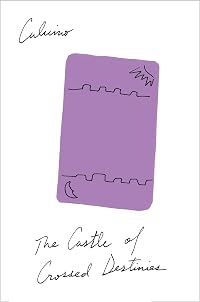
The Castle of Crossed Destinies
by Italo Calvino
On This Page
Description
A group of travellers chance to meet, first in a castle, then a tavern. Their powers of speech are magically taken from them and instead they have only tarot cards with which to tell their stories. What follows is an exquisite interlinking of narratives, and a fantastic, surreal and chaotic history of all human consciousness.Tags
Recommendations






Member Recommendations
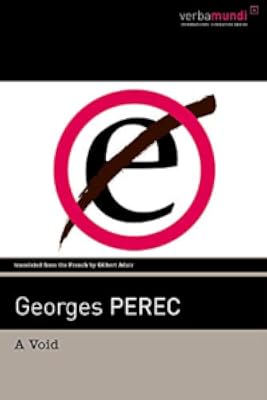
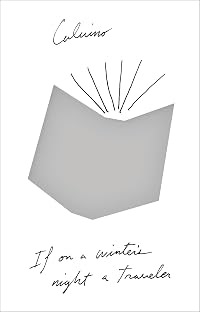
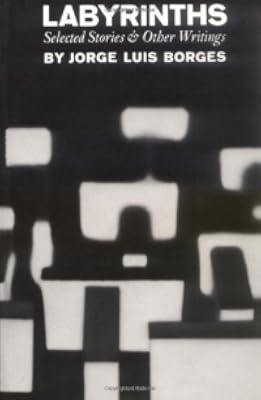
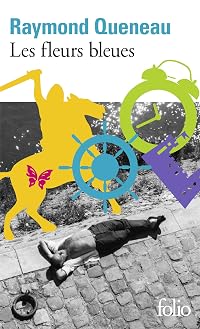
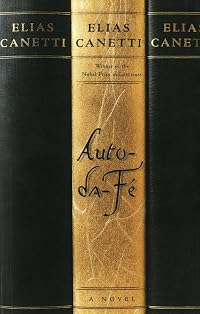
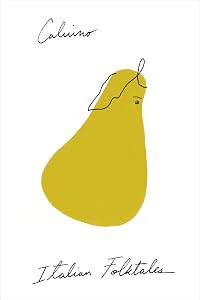
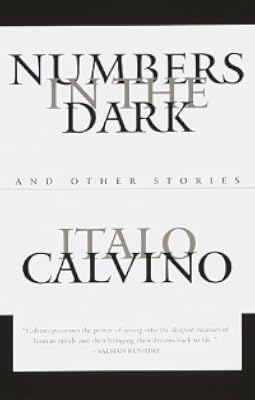
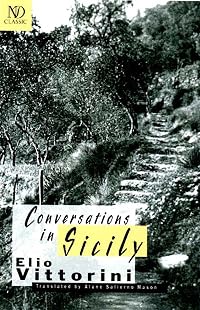
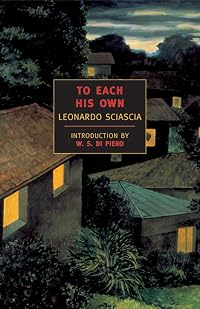
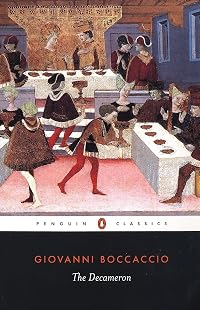
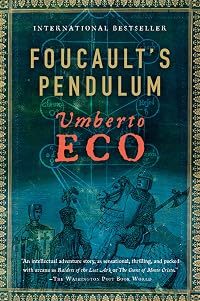
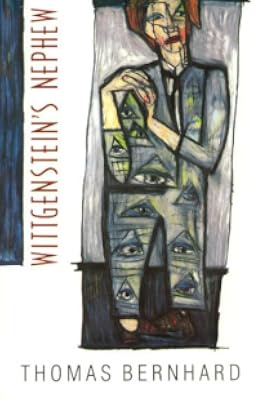
ed.pendragon Two very different approaches to using an oracle, one the Tarot, another the I Ching, to help structure a book's narrative.
20

Ludi_Ling For those interested in disparate yet intertwining narratives of a somewhat fantastical nature.
uenvs both are artful, playfully deconstructive stories structured in the form of tarot cards.
Member Reviews
"I publish this book to be free of it: it has obsessed me for years."
Wisely, Calvino states this in the "Note" at the end of The Castle of Crossed Destinies". I imagine many readers who happen about the book may wish he hadn't. I am glad he did.
Calvino, along with Kundera and Saramago, was one of the most inventive writers of his generation. This book somehow wins as art, but fails with the heart. I might compare it to those paintings where the artist executes a human head with various vegetables. As an academic and artistic game it is full of fun, but lacks a real soul. However, I never got the feeling that that was the point of this particular book, any more than I got the feeling it was the point of those paintings.
Here is the gist, show more a group of Chaucer-like pilgrims make their way through a forest, but their experiences in the forest have rendered them speechless. They all come to what might be a castle or a tavern depending on how you look at it. Each wants to tell his tale, but none can speak. Using a deck of tarot cards they begin to vie for the cards so that they might tell their stories of what happened to them in the forest. The cards are depicted alongside the text. As they each tell their tales, as in life, the cards from one's story interlaces with the cards of the others.
As an imaginative treatise of how and why we tell stories, and of the nature of stories and storytelling, this is wonderful fun and a great pleasure to read. As fiction, it is a bit soulless.
"I always feel the need to alternate one type of writing with another, completely different, to begin writing again as if I had never written anything before." Thus Calvino ends the book. And until his death from cancer, that was one thing his readers could be sure of. I wonder what dreams he would be spinning out for us now if he had lived to Saramago's age. show less
Wisely, Calvino states this in the "Note" at the end of The Castle of Crossed Destinies". I imagine many readers who happen about the book may wish he hadn't. I am glad he did.
Calvino, along with Kundera and Saramago, was one of the most inventive writers of his generation. This book somehow wins as art, but fails with the heart. I might compare it to those paintings where the artist executes a human head with various vegetables. As an academic and artistic game it is full of fun, but lacks a real soul. However, I never got the feeling that that was the point of this particular book, any more than I got the feeling it was the point of those paintings.
Here is the gist, show more a group of Chaucer-like pilgrims make their way through a forest, but their experiences in the forest have rendered them speechless. They all come to what might be a castle or a tavern depending on how you look at it. Each wants to tell his tale, but none can speak. Using a deck of tarot cards they begin to vie for the cards so that they might tell their stories of what happened to them in the forest. The cards are depicted alongside the text. As they each tell their tales, as in life, the cards from one's story interlaces with the cards of the others.
As an imaginative treatise of how and why we tell stories, and of the nature of stories and storytelling, this is wonderful fun and a great pleasure to read. As fiction, it is a bit soulless.
"I always feel the need to alternate one type of writing with another, completely different, to begin writing again as if I had never written anything before." Thus Calvino ends the book. And until his death from cancer, that was one thing his readers could be sure of. I wonder what dreams he would be spinning out for us now if he had lived to Saramago's age. show less
This one was a great deal of fun: I was absolutely delighted by this exuberantly postmodern game with literary tropes and retellings.
The castle of the title is located at the centre of a vast forest, where it serves as an inn for a host of inexplicably voiceless guests -- suddenly none of them are able to use their voice. And so they resort to using a pack of tarot cards to tell each other their adventures and the events that led them to this place. This is, of course, a flimsy excuse for Calvino to indulge in a multi-levelled game of connect-the-dots: the stories that he spins off sequences of tarot cards are spurred on by associations, hints, creative liberty, literary allusions and an impish eagerness to take visual details on the show more card out of context (the symmetrical ten of swords, for instance, is called on to represent opposing armies in one story and a barrier of archangels in another; the ace of cups stands for a forest spring, the fountain of youth, and a magic-beanstalk-type tree). One story’s sequence of cards will, when read the other way, yield a completely different story. And so, as he first builds and then explores his square of cards, Calvino presents a lovely array of stories built around late-medieval and renaissance-era tropes: retellings of Roland, Faust, Parsifal (among others), even Oedipus in the spirit of courtly romances, Boccaccio and Chaucer.
The second half of the book is similar in setup, but serves as a basis for a retelling of Shakespeare plays, coupled with a few passages of musings on Art and Life that are decidedly Literary Criticism.
It is all a wonderful, tongue-in-cheek game: Calvino only took things seriously enough to adhere to his square of cards to be read in all possible directions. But other than that, it’s sheer indulgence: an erudite, playful writer enthusiastically exploring the worlds of literature and the mechanisms of story construction. More than once Calvino’s boundless enthusiasm reminded me of Borges and his extravagant literary funhouse.
The book must have been an absolute riot to write, and I found it infectious as anything: it made me giggle with delight, repeatedly. show less
The castle of the title is located at the centre of a vast forest, where it serves as an inn for a host of inexplicably voiceless guests -- suddenly none of them are able to use their voice. And so they resort to using a pack of tarot cards to tell each other their adventures and the events that led them to this place. This is, of course, a flimsy excuse for Calvino to indulge in a multi-levelled game of connect-the-dots: the stories that he spins off sequences of tarot cards are spurred on by associations, hints, creative liberty, literary allusions and an impish eagerness to take visual details on the show more card out of context (the symmetrical ten of swords, for instance, is called on to represent opposing armies in one story and a barrier of archangels in another; the ace of cups stands for a forest spring, the fountain of youth, and a magic-beanstalk-type tree). One story’s sequence of cards will, when read the other way, yield a completely different story. And so, as he first builds and then explores his square of cards, Calvino presents a lovely array of stories built around late-medieval and renaissance-era tropes: retellings of Roland, Faust, Parsifal (among others), even Oedipus in the spirit of courtly romances, Boccaccio and Chaucer.
The second half of the book is similar in setup, but serves as a basis for a retelling of Shakespeare plays, coupled with a few passages of musings on Art and Life that are decidedly Literary Criticism.
It is all a wonderful, tongue-in-cheek game: Calvino only took things seriously enough to adhere to his square of cards to be read in all possible directions. But other than that, it’s sheer indulgence: an erudite, playful writer enthusiastically exploring the worlds of literature and the mechanisms of story construction. More than once Calvino’s boundless enthusiasm reminded me of Borges and his extravagant literary funhouse.
The book must have been an absolute riot to write, and I found it infectious as anything: it made me giggle with delight, repeatedly. show less
I publish this book to be free of it: it has obsessed me for years. I began by trying to line up the tarots at random, to see if I could read the story in them. "The Waverer's Tale" emerged; I started writing it down; I looked for other combinations of the same cards; I realized the tarots were a machine for constructing stories; I thought of a book, and I imagined its frame: the mute narrators, the forest, the inn; I was tempted by the diabolical idea of conjuring up all the stories that could be contained in a tarot deck.
The Hanged Man and The Magician from the Bembo Tarot used for The Castle
Aren't those interesting? Those are the cards used for the first section of this book. Yet here I am, handing a nice, shining single star to show more Italo Calvino. What the hell happened there?
Really, this should have worked for me. I love symbolic, self-referential books on books. I love the idea of Tarot as a story machine, of the search for an All-Story. This even has a fantastic [b:The Wasteland|19697160|The Wasteland|T.S. Eliot|https://d.gr-assets.com/books/1387725409s/19697160.jpg|389834] reference! And ends by making Hamlet, Lady Macbeth, and King Leer into the same story! So what gives?
Mainly, what gives is that this particular experiment in fiction failed. In seeking to tell the stories of the mute narrators and keep his self imposed rules, Calvino ends up with the narrator within the story interpreting the cards for the reader as they are laid down. This ends with a lot of 'he must mean,' and 'surely what happened was' going on. He is also using the minor arcana, which makes the story visually boring. As cards are reused, the story becomes confused and even more visually boring. The first part, the castle, is unmitigated crap, largely because the rules of that section require the cards to be reused in the order they are laid on the table when tales intersect. After a while, even Calvino is just glossing.
The tavern stories in the second part are considerably better, as Calvino allows his characters to grab cards from each other. He seems to have put more heart into this section. His usual sly remarks and cheerful asides are much more prominent here. He goes into an extended meditation on writing when he tells his own tale. But there are none of the wry revelations that I found so charming in [b:If on a Winter's Night a Traveller|374233|If on a Winter's Night a Traveller|Italo Calvino|https://d.gr-assets.com/books/1355316130s/374233.jpg|1116802], and this book does nothing that that book did not do better.
Final verdict: It's more crap than not. Skip it. Maybe it would be best if authors didn't publish works just to be free of them themselves. (Here, have a nice picture of a Tarot card used in the second part of the book. Call it a consolation prize.)
The Magician from the Marseilles Tarot used for The Tavern show less
The Hanged Man and The Magician from the Bembo Tarot used for The Castle
Aren't those interesting? Those are the cards used for the first section of this book. Yet here I am, handing a nice, shining single star to show more Italo Calvino. What the hell happened there?
Really, this should have worked for me. I love symbolic, self-referential books on books. I love the idea of Tarot as a story machine, of the search for an All-Story. This even has a fantastic [b:The Wasteland|19697160|The Wasteland|T.S. Eliot|https://d.gr-assets.com/books/1387725409s/19697160.jpg|389834] reference! And ends by making Hamlet, Lady Macbeth, and King Leer into the same story! So what gives?
Mainly, what gives is that this particular experiment in fiction failed. In seeking to tell the stories of the mute narrators and keep his self imposed rules, Calvino ends up with the narrator within the story interpreting the cards for the reader as they are laid down. This ends with a lot of 'he must mean,' and 'surely what happened was' going on. He is also using the minor arcana, which makes the story visually boring. As cards are reused, the story becomes confused and even more visually boring. The first part, the castle, is unmitigated crap, largely because the rules of that section require the cards to be reused in the order they are laid on the table when tales intersect. After a while, even Calvino is just glossing.
The tavern stories in the second part are considerably better, as Calvino allows his characters to grab cards from each other. He seems to have put more heart into this section. His usual sly remarks and cheerful asides are much more prominent here. He goes into an extended meditation on writing when he tells his own tale. But there are none of the wry revelations that I found so charming in [b:If on a Winter's Night a Traveller|374233|If on a Winter's Night a Traveller|Italo Calvino|https://d.gr-assets.com/books/1355316130s/374233.jpg|1116802], and this book does nothing that that book did not do better.
Final verdict: It's more crap than not. Skip it. Maybe it would be best if authors didn't publish works just to be free of them themselves. (Here, have a nice picture of a Tarot card used in the second part of the book. Call it a consolation prize.)
The Magician from the Marseilles Tarot used for The Tavern show less
The Castle of Crossed Destinies opens with an evocation of Dante's Inferno — the narrator is lost in a dark wood — but then it shifts to an evocation of The Canterbury Tales — various travelers make their way to a castle in a forest. The kicker here is that their misadventures while being lost in the woods have deprived them of their ability to speak. The host produces a deck of tarot cards which they then use to try to communicate their stories by picture and gesture. This deck of cards is the hand-painted Visconti deck from the mid 1400s, which was reproduced and marketed in the 1980s. The book is completely illustrated with each card image as it appears in a story.
The tarot trumps, when viewed in order, are understood to show more represent the Renaissance idea of a hero's progress as he pursues his quest, but when scattered randomly among the other 56 cards, they merely provide glimpses of character qualities or trials or boons, depending upon the juxtaposition of one card to another. A notion of the medieval court or Renaissance society is doubly invoked through both the setting of this collection of stories and the historic quality of the cards.
But Calvino being Calvino — playful and ironic — and the cards being what they are — ambiguous and subjective of interpretation — most of these stories go in unexpected directions, not necessarily of either the heroic or Chaucerian kind. Over and over again, the cards reveal multiple possibilities of interpretation and demonstrate that they reflect what is in the eye of the beholder at any given moment: ". . . each new card placed on the table explains or corrects the meaning of the preceding cards . . . for the cards conceal more things than they tell . . . each story runs into another story . . . the stories told from left to right or from bottom to top can also be read from right to left or top to bottom . . . the same cards presented in a different order often change their meaning." But this is the way of tarot cards.
The book consists of two parts, the first as described above, set in a castle and using the Italian Renaissance Visconti deck. The second part is set in a tavern and employs the 18th century French Marseille deck. The images are similar between the two decks although some of the cards carry different names. Also, the Renaissance cards were initially used in trick-taking games in which what are called today the "Major Arcana" were then the "greater trumps." No one knows for sure how the game was played. By the 18th century, the Marseille deck had been co-opted for fortune telling and other occult purposes, and this has been the lasting legacy until the later part of the 20th century when countless new decks began to appear which have taken tarot down a Jungian-Campbellian-meditative road. Occultism has taken a back seat to a new incarnation of the heroic quest.
In a postscript Calvino tells us that he wrote these stories so that he could move on from his obsession with the story-telling possibilities of tarot cards: "I realized that tarots were a machine for constructing stories; I thought of a book and I imagined its frame; the mute narrators, the forest, the inn; I was tempted by the diabolical idea of conjuring up all the stories that could be contained in a tarot deck." Of course, with 78 cards the number of iterations would compete with the number of stars in the sky. Before it drove him beyond the pale, he stopped with the two small collections we have here, which grant us a peek into the world of possibilities.
Some of these tales would give even Chaucer's pilgrims pause: "A Grave Robber's Tale," the "Tale of the Vampire's Kingdom." Some reflecting modern issues: "The Surviving Warrior's Tale," in which an army of Amazons defeats battling knights and only one is left to tell about it. Some reference great literature: "The Tale of Roland Crazed with Love" and "Three Tales of Madness and Destruction" which combine Hamlet, Macbeth and Lear all rolled into one.
Not everyone will be charmed by this book, which defies quite a few conventions, but once again Calvino sets himself apart as a master. Indeed, as in so much of his work, there is more here than meets the eye. show less
The tarot trumps, when viewed in order, are understood to show more represent the Renaissance idea of a hero's progress as he pursues his quest, but when scattered randomly among the other 56 cards, they merely provide glimpses of character qualities or trials or boons, depending upon the juxtaposition of one card to another. A notion of the medieval court or Renaissance society is doubly invoked through both the setting of this collection of stories and the historic quality of the cards.
But Calvino being Calvino — playful and ironic — and the cards being what they are — ambiguous and subjective of interpretation — most of these stories go in unexpected directions, not necessarily of either the heroic or Chaucerian kind. Over and over again, the cards reveal multiple possibilities of interpretation and demonstrate that they reflect what is in the eye of the beholder at any given moment: ". . . each new card placed on the table explains or corrects the meaning of the preceding cards . . . for the cards conceal more things than they tell . . . each story runs into another story . . . the stories told from left to right or from bottom to top can also be read from right to left or top to bottom . . . the same cards presented in a different order often change their meaning." But this is the way of tarot cards.
The book consists of two parts, the first as described above, set in a castle and using the Italian Renaissance Visconti deck. The second part is set in a tavern and employs the 18th century French Marseille deck. The images are similar between the two decks although some of the cards carry different names. Also, the Renaissance cards were initially used in trick-taking games in which what are called today the "Major Arcana" were then the "greater trumps." No one knows for sure how the game was played. By the 18th century, the Marseille deck had been co-opted for fortune telling and other occult purposes, and this has been the lasting legacy until the later part of the 20th century when countless new decks began to appear which have taken tarot down a Jungian-Campbellian-meditative road. Occultism has taken a back seat to a new incarnation of the heroic quest.
In a postscript Calvino tells us that he wrote these stories so that he could move on from his obsession with the story-telling possibilities of tarot cards: "I realized that tarots were a machine for constructing stories; I thought of a book and I imagined its frame; the mute narrators, the forest, the inn; I was tempted by the diabolical idea of conjuring up all the stories that could be contained in a tarot deck." Of course, with 78 cards the number of iterations would compete with the number of stars in the sky. Before it drove him beyond the pale, he stopped with the two small collections we have here, which grant us a peek into the world of possibilities.
Some of these tales would give even Chaucer's pilgrims pause: "A Grave Robber's Tale," the "Tale of the Vampire's Kingdom." Some reflecting modern issues: "The Surviving Warrior's Tale," in which an army of Amazons defeats battling knights and only one is left to tell about it. Some reference great literature: "The Tale of Roland Crazed with Love" and "Three Tales of Madness and Destruction" which combine Hamlet, Macbeth and Lear all rolled into one.
Not everyone will be charmed by this book, which defies quite a few conventions, but once again Calvino sets himself apart as a master. Indeed, as in so much of his work, there is more here than meets the eye. show less
In the uncertain light the cards describe a nocturnal landscape, the Cups are arrayed like urns, caskets, graves among the nettles, the Swords have a metallic echo like shovels or spades against the leaden lids, the Clubs are black like crooked crosses, the gold Coins glitter like will-o'-the-wisps. As soon as a cloud discloses the Moon a howling of jackals rises as they scratch furiously at the edges of the graves and fight with scorpions and tarantulas over their putrid feast.
There are two stories in this book, one taking place in a castle and the other at an inn, and in both cases the travellers spending the night there are struck dumb, and start to tell their stories to each other, using a pack of tarot cards. At the castle they use show more a beautiful painted tarot deck, and the stories are told one at a time, with each storyteller starting with a court card to represent him or herself, and then laying the cards down to build up the story, and intersecting with cards already laid down when they need to use the same cards. At the inn they are using a cheap tarot deck printed from wood-cuts, and everyone tries to tell their story at the same time, grabbing at cards that have already been laid down, rather than designing their story to intersect with them.
The pictures on the cards are used to show what is happening in the story, but since a card can stand for many different people, places or events depending on the context, the story is also told in the storyteller's gestures facial expressions, and in the imagination of the people watching the story unfold on the table. Sometimes the cards seem to be telling well-known stories from mythology, or from Shakespeare, but is that just what the writer is reading into the cards put down by the other travellers?
This was a re-read for me, and for some reason I enjoyed it much more this time. I found these stories and the storytelling more interesting, so perhaps I was just more in the mood for this type of book. show less
There are two stories in this book, one taking place in a castle and the other at an inn, and in both cases the travellers spending the night there are struck dumb, and start to tell their stories to each other, using a pack of tarot cards. At the castle they use show more a beautiful painted tarot deck, and the stories are told one at a time, with each storyteller starting with a court card to represent him or herself, and then laying the cards down to build up the story, and intersecting with cards already laid down when they need to use the same cards. At the inn they are using a cheap tarot deck printed from wood-cuts, and everyone tries to tell their story at the same time, grabbing at cards that have already been laid down, rather than designing their story to intersect with them.
The pictures on the cards are used to show what is happening in the story, but since a card can stand for many different people, places or events depending on the context, the story is also told in the storyteller's gestures facial expressions, and in the imagination of the people watching the story unfold on the table. Sometimes the cards seem to be telling well-known stories from mythology, or from Shakespeare, but is that just what the writer is reading into the cards put down by the other travellers?
This was a re-read for me, and for some reason I enjoyed it much more this time. I found these stories and the storytelling more interesting, so perhaps I was just more in the mood for this type of book. show less
Reason read: June 2025 botm, Reading 1001. This was an audiobook and I am sure would have been better to actually read the book. The book has pictures of the tarot cards and this is a book about visual communication. My impression was that this was two settings; a castle, a tavern so there would be two points of view. The stories seem to be interconnected by the fact that they were travelers and none of them could speak. The use of the tarot cards as story telling and using archtypes and myths was an important component to this story. Having knowledge of tarot cards probably would help with understanding these stories.
"The Castle of Crossed Destinies" explores the themes of storytelling, fate, and the power of visual communication. It show more examines how narratives are created and interpreted, both through the use of words and images (like tarot cards), and how these narratives can be both meaningful and ambiguous. The interconnected stories of the characters also touch on archetypes like choice, desire, and existential struggle, highlighting universal human experiences.
I would consider a reread if I find a book copy of this story. show less
"The Castle of Crossed Destinies" explores the themes of storytelling, fate, and the power of visual communication. It show more examines how narratives are created and interpreted, both through the use of words and images (like tarot cards), and how these narratives can be both meaningful and ambiguous. The interconnected stories of the characters also touch on archetypes like choice, desire, and existential struggle, highlighting universal human experiences.
I would consider a reread if I find a book copy of this story. show less
This may be a very clever book but, I am afraid, it is unutterably dull. There are some brief moments of fine writing in the second half but even these falter - the Tale of the Vampire's Kingdom takes off only to crash and burn into incomprehensibility.
There are two quite interesting half-essays on art and how Calvino came to write the book, one embedded in the 'Tavern' section and the other as postscript, but these are articles for a literary magazine and scarcely justify the effort of ploughing through the rest.
Indeed, my irritation grew to the degree that I realised that Vintage had a full paperback price for a slight work, padded out with imagery, wide margins and blank pages to give us the illusion of value.
If you are interested show more in the tarot, go to a book on tarot, rather than waste time on yet another narcissistic literary work about literature that the world can do without in the age of the internet. The whole thing is a failed experiment. show less
There are two quite interesting half-essays on art and how Calvino came to write the book, one embedded in the 'Tavern' section and the other as postscript, but these are articles for a literary magazine and scarcely justify the effort of ploughing through the rest.
Indeed, my irritation grew to the degree that I realised that Vintage had a full paperback price for a slight work, padded out with imagery, wide margins and blank pages to give us the illusion of value.
If you are interested show more in the tarot, go to a book on tarot, rather than waste time on yet another narcissistic literary work about literature that the world can do without in the age of the internet. The whole thing is a failed experiment. show less
Members
- Recently Added By
Lists

Best Contemporary Literary Fiction (Around the Last 30 Years)
388 works; 122 members

Magic Realism
371 works; 52 members

Italian Literature
558 works; 42 members

1,001 BYMRBYD Concensus
723 works; 27 members

SHOULD Read Books!
354 works; 9 members

Greatest Books
40 works; 3 members

My TBR
371 works; 3 members

Tarotiform Fiction
10 works; 1 member
Author Information

395+ Works 70,231 Members
Italo Calvino 1923-1984 Novelist and short story writer Italo Calvino was born in Cuba on October 15, 1923, and grew up in Italy, graduating from the University of Turin in 1947. He is remembered for his distinctive style of fables. Much of his first work was political, including Il Sentiero dei Nidi di Ragno (The Path of the Nest Spiders, 1947), show more considered one of the main novels of neorealism. In the 1950s, Calvino began to explore fantasy and myth as extensions of realism. Il Visconte Dimezzato (The Cloven Knight, 1952), concerns a knight split in two in combat who continues to live on as two separates, one good and one bad, deprived of the link which made them a moral whole. In Il Barone Rampante (Baron in the Trees, 1957), a boy takes to the trees to avoid eating snail soup and lives an entire, fulfilled life without ever coming back down. Calvino was awarded an honorary degree from Mount Holyoke College in 1984 and died in 1985, following a cerebral hemorrhage. At the time of his death, he was the most translated contemporary Italian writer and a contender for the Nobel Prize for Literature. (Bowker Author Biography) show less
Some Editions
Awards and Honors
Series
Belongs to Publisher Series
Work Relationships
Common Knowledge
- Canonical title
- The Castle of Crossed Destinies
- Original title
- ll castello dei destini incrociati
- Original publication date
- 1969 (original Italian; part 1) (original Italian | part 1); 1973 (original Italian; entire) (original Italian | entire); 1979 (English translation) (English translation)
- First words*
- Mitten in einem dichten Wald bot ein Schloß denen Zuflucht, die unterwegs von der Nacht überrascht wurden: Rittern und Damen, königlichen Gefolgen und einfachen Wanderern.
- Original language
- Italian
*Some information comes from Common Knowledge in other languages. Click "Edit" for more information.
Classifications
- Genres
- General Fiction, Fiction and Literature, Fantasy
- DDC/MDS
- 853.914 — Literature & rhetoric Italian, Romanian & related literatures Italian fiction 1900- 20th Century 1945-1999
- LCC
- PQ4809 .A45 .C2813 — Language and Literature French, Italian, Spanish and Portuguese literatures Italian literature Individual authors, 1900-1960
- BISAC
Statistics
- Members
- 2,311
- Popularity
- 8,611
- Reviews
- 47
- Rating
- (3.42)
- Languages
- 17 — Catalan, Czech, Dutch, English, Finnish, French, German, Greek, Hungarian, Italian, Polish, Portuguese, Romanian, Russian, Spanish, Swedish, Turkish
- Media
- Paper, Audiobook, Ebook
- ISBNs
- 45
- ASINs
- 20