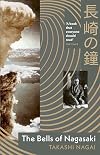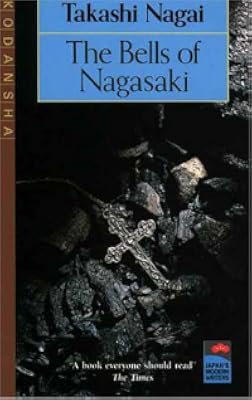
The Bells of Nagasaki
by Takashi Nagai
On This Page
Description
'A book that everyone should read' The Times A harrowing, heart-rending first-hand account of the bombing of Nagasaki - and the acts of human kindness left in its wake. On 9th August 1945, the Japanese city of Nagasaki is hit by an atomic bomb. Forty thousand people are killed instantly. Doctor Takashi Nagai is not one of them. Pulling himself, broken and bloodied, from the wreckage that was once the city's university hospital, Takashi bundles together a tattered group of survivors. Doctors, show more nurses, students, each with their own losses, their own fears for the future- they work tirelessly at the impossible task of aiding the countless wounded and easing the deaths of those they cannot save. They remain determined to heal their fallen city, to find solace and hope among the rubble, even as a strange and growing sickness begins to claim them. Eyewitness to one of the most fatal events in human history, this is Takashi's record, written from his sickbed - a chilling historical document, and undeniable evidence of the capacity for human kindness. Published now in the UK to commemorate the 80th anniversary of the bombings of Hiroshima and Nagasaki. WITH AN INTRODUCTION FROM RICHARD LLOYD PARRY show lessTags
Recommendations



















Member Recommendations
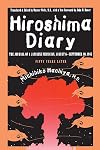
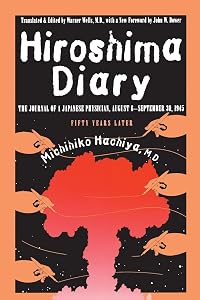
Hiroshima Diary: The Journal of a Japanese Physician, August 6-September 30, 1945 by Michihiko Hachiya
bluepiano Another account by a doctor who was near ground zero.
Member Reviews
'Go to the mountains and meditate! If you stay in the hurly-burly of this world, you'll run around in circles without ever finding your way. You'll become the kind of person who just stamps and screams. But the blue mountains are immovable and the white clouds come and go.'
This was Takashi Nagai's advice a few weeks after the atomic bomb was dropped on Nagasaki. This book was non-fiction... unfortunately.
Takashi Nagai was a doctor, a nuclear physicist, and dean of the radiology department in the medical school of the University of Nagasaki and a devout Christian. On Thursday, August 9, 1945 at two minutes past eleven in the morning he was in his office about 700 meters from the epicenter of the blast. From first hand accounts he tells show more the story of life immediately before the blast, during the blast, and after the blast. That he survived is nothing short of miraculous.
The description of seeing up-close the results of colliding atoms is nightmarish. It starts with the sound of a plane and then... the blinding white light, darkness blacker than night caused by a cloud of debris covering the sun, the coming of a red tinted light, a drop in temperature, the invisible wind, the instant disappearance of a world known... and ends with the appearance of hell on earth.
'No. The sun must have exploded,' said Choro.
'Maybe so... the temperature has suddenly dropped.' Shiro's voice was thoughtful.
'If the sun explodes, what happens to the earth?' Now it was the anxious voice of Nurse Tsubakiyama.
'It's the end of the world,' said Choro with resignation.
They remained silent and waited. No light returned. A minute passed. Someone's watch kept ticking in the darkness. Tick, tick, tick...
Takahi was a scholarly writer before the dropping of the bomb. Afterward, before his death in 1951, he became a poet, artist, humanist, and mystic and wrote over 20 books. show less
This was Takashi Nagai's advice a few weeks after the atomic bomb was dropped on Nagasaki. This book was non-fiction... unfortunately.
Takashi Nagai was a doctor, a nuclear physicist, and dean of the radiology department in the medical school of the University of Nagasaki and a devout Christian. On Thursday, August 9, 1945 at two minutes past eleven in the morning he was in his office about 700 meters from the epicenter of the blast. From first hand accounts he tells show more the story of life immediately before the blast, during the blast, and after the blast. That he survived is nothing short of miraculous.
The description of seeing up-close the results of colliding atoms is nightmarish. It starts with the sound of a plane and then... the blinding white light, darkness blacker than night caused by a cloud of debris covering the sun, the coming of a red tinted light, a drop in temperature, the invisible wind, the instant disappearance of a world known... and ends with the appearance of hell on earth.
'No. The sun must have exploded,' said Choro.
'Maybe so... the temperature has suddenly dropped.' Shiro's voice was thoughtful.
'If the sun explodes, what happens to the earth?' Now it was the anxious voice of Nurse Tsubakiyama.
'It's the end of the world,' said Choro with resignation.
They remained silent and waited. No light returned. A minute passed. Someone's watch kept ticking in the darkness. Tick, tick, tick...
Takahi was a scholarly writer before the dropping of the bomb. Afterward, before his death in 1951, he became a poet, artist, humanist, and mystic and wrote over 20 books. show less
This little book certainly is a hard one to find. I've spent nearly a decade trying to find it in regular bookstores every since I first heard of it but since it's no longer in production and it costs a small fortune online, I had simply to be persistent. When it showed up at Half-Priced Books in January I knew it was finally meant to be and quickly snatched it up. Perhaps I could have found it in a library but as I never walk into those I'm glad I finally found it.
"The Bells of Nagasaki" is one of the top books to read about the atomic bombings in Japan. It is written by Takashi Nagai, a doctor at the University of Medicine in Nagasaki, as he describes the pre-, during, and post- events of the August 9th bombing. Although I've read a show more few atomic bombing books and have been both to the peace museum in Hiroshima and the peace museum in Nagasaki, this is one of the books one must read. Nagai became one of the big influences in Japan on promoting world peace and due to his direct involvement with the atomic blast, was a huge leader in investigating the medicine associated with radiation sickness.
The book is a quick read as it starts with a great introduction from William Johnston of Sophia University. Then Nagai starts with what different citizens were doing at the time of blast and their location from the epicenter. This is followed by the chapters "The Bomb", "Immediately After" and "Relief". What has always amazed me in previous readings of bomb related books has been how inspiring it was to read about those who didn't just fall straight into despair upon realizing their fate. Seeing how the doctors, after a brief understandable moment of panic, quickly came back to their feet to not only get out of their own difficult situations but to help the many wounded around them was inspiring. Quickly they gathered any utensils that survived, formed groups of surviving nurses and doctors and went on to create relief centers to aid the wounded despite their own ailments.
Nagai goes on to describe the theory behind the creation of the atomic bomb and changes the scenery from the torn apart Nagasaki to the hills beyond the city, Mitsuyama. Here we are greeted with once again green hills, thriving plants, blue skies and a gorgeous summer air. If it weren't for the wounded who had flocked from the city, there would have been no hint of the bombing. This juxtaposition was quite amazing and something I hadn't seen in other books.
The rest of the book deals with Nagai describing the symptoms and medicine involved with the different atomic bombing sicknesses ranging from lowest to greatest severity. At the time, I'm sure this was a treasure-trove of information. Months later as Nagai deals with his own ailments we admirably discover that he does not feel that the bomb was a means of punishment from God. (Nagai was deeply religious). Instead he feels that Nagasaki was God's great sacrifice to promote world peace and to prevent a future destructive atomic age.
Even now Nagai's name is synonymous with the efforts for the promotion of world peace as can be seen throughout the city of Nagasaki. I'm glad to have finally read this book. show less
"The Bells of Nagasaki" is one of the top books to read about the atomic bombings in Japan. It is written by Takashi Nagai, a doctor at the University of Medicine in Nagasaki, as he describes the pre-, during, and post- events of the August 9th bombing. Although I've read a show more few atomic bombing books and have been both to the peace museum in Hiroshima and the peace museum in Nagasaki, this is one of the books one must read. Nagai became one of the big influences in Japan on promoting world peace and due to his direct involvement with the atomic blast, was a huge leader in investigating the medicine associated with radiation sickness.
The book is a quick read as it starts with a great introduction from William Johnston of Sophia University. Then Nagai starts with what different citizens were doing at the time of blast and their location from the epicenter. This is followed by the chapters "The Bomb", "Immediately After" and "Relief". What has always amazed me in previous readings of bomb related books has been how inspiring it was to read about those who didn't just fall straight into despair upon realizing their fate. Seeing how the doctors, after a brief understandable moment of panic, quickly came back to their feet to not only get out of their own difficult situations but to help the many wounded around them was inspiring. Quickly they gathered any utensils that survived, formed groups of surviving nurses and doctors and went on to create relief centers to aid the wounded despite their own ailments.
Nagai goes on to describe the theory behind the creation of the atomic bomb and changes the scenery from the torn apart Nagasaki to the hills beyond the city, Mitsuyama. Here we are greeted with once again green hills, thriving plants, blue skies and a gorgeous summer air. If it weren't for the wounded who had flocked from the city, there would have been no hint of the bombing. This juxtaposition was quite amazing and something I hadn't seen in other books.
The rest of the book deals with Nagai describing the symptoms and medicine involved with the different atomic bombing sicknesses ranging from lowest to greatest severity. At the time, I'm sure this was a treasure-trove of information. Months later as Nagai deals with his own ailments we admirably discover that he does not feel that the bomb was a means of punishment from God. (Nagai was deeply religious). Instead he feels that Nagasaki was God's great sacrifice to promote world peace and to prevent a future destructive atomic age.
Even now Nagai's name is synonymous with the efforts for the promotion of world peace as can be seen throughout the city of Nagasaki. I'm glad to have finally read this book. show less
I re-read this on the train from Nagasaki and been meaning to combine this with an e-mail I wrote on Nagasaki and still may, but in the mean time I wanted to add some thoughts here on the book.
This, like "Japan's Longest Day" has made me realise just how little I know about the circumstances around the surrender. I also realise that we're never really going to know the truth. I think the only ones who did, mainly Churchill, Stalin and Truman, are long dead and the truth is buried with them. Did Japan really plan to surrender before the bombs came down? Did Truman know it and commit to dropping the bomb solely because $1B UShad already been spent? We'll never know, but it's a sad prospect to consider. Personally, I don't think they were show more ready to surrender before hand; reading JLD made me aware of how much tension there was behind the scenes and I don't think the relevant parties, or the Emperor could have been persuaded to act any sooner without knowing of the immediate and utter destruction that hit them. Hell, even the bombing of Nagasaki itself wasn't enough to spur them to action.
There's also a lot that is said and to be said about Nagai himself, losing everything really gave him a lot of insight into what was important. Previously he was devoted to victory for Japan; now he is devoted to World Peace. He learnt a lot both from his background as a Christian and what he saw in the days following the bombing and yet while he is a Christian and that's important to him, it doesn't cloud the story from being understood by anyone of any religion.
"...the Japanese, the first and only people to have suffered an atomic holocaust, have a vocation and a mission to abolish war, especially nuclear war, from the face of the earth." I agree 100% with Nagai but I would extend it even further. I'd say that the US, as the cause of the nuclear holocaust, has that same duty. We can go in circles on whether dropping the bomb saved lives or not but the fact is as we've learnt 60 years later, it had unknown and undreamed of effects, we can't let that happen again to further generations. One of the mottos of Nagasaki is a prayer that Nagasaki will be the last atomic wasteland, and I dread to think of 60 years later, us not learning from our history and doing it somewhere again. And "us" in this case is all people of the world. I cringe every time I hear about a country having nuclear weapons and threatening to test, haven't we learnt anything? Anything at all? But more on that later.
In Nagai's accounts on the incident from various POVs, the lack of news flow in light of the war was made obvious. Some were aware that a bomb had been dropped on Hiroshima and equated it with what happened to them while others had no idea what this was that had happened to them.
"Pumps, hoses, water tanks, energetic people--anything or anyone capable of quenching those flames had vanished in a moment." And there again is testament to the long acting power of the bomb--not only its immediate effects on those who were burnt but it's long impact due to the doctors being killed--or even when they were alive as in Nagai's case, they had such limited supplies. Even if they were physically capable of helping the victims, they had no tools with which to do it. "...We were the heroic soldiers of the era of Showa..." like the samurai that had come and gone before them, they worked and sacrificed themselves for their country. They did what was asked of them despite the factors against them.
The bamboo spear against the atomic bomb! I felt the same as Nagai did when he mentioned this, not just Japan but no one could compare with or fight against this new force. None of the weapons that had worked in the old days, even in the earlier battles of WW2 could even compare with the mighty force of the atomic bomb. show less
This, like "Japan's Longest Day" has made me realise just how little I know about the circumstances around the surrender. I also realise that we're never really going to know the truth. I think the only ones who did, mainly Churchill, Stalin and Truman, are long dead and the truth is buried with them. Did Japan really plan to surrender before the bombs came down? Did Truman know it and commit to dropping the bomb solely because $1B UShad already been spent? We'll never know, but it's a sad prospect to consider. Personally, I don't think they were show more ready to surrender before hand; reading JLD made me aware of how much tension there was behind the scenes and I don't think the relevant parties, or the Emperor could have been persuaded to act any sooner without knowing of the immediate and utter destruction that hit them. Hell, even the bombing of Nagasaki itself wasn't enough to spur them to action.
There's also a lot that is said and to be said about Nagai himself, losing everything really gave him a lot of insight into what was important. Previously he was devoted to victory for Japan; now he is devoted to World Peace. He learnt a lot both from his background as a Christian and what he saw in the days following the bombing and yet while he is a Christian and that's important to him, it doesn't cloud the story from being understood by anyone of any religion.
"...the Japanese, the first and only people to have suffered an atomic holocaust, have a vocation and a mission to abolish war, especially nuclear war, from the face of the earth." I agree 100% with Nagai but I would extend it even further. I'd say that the US, as the cause of the nuclear holocaust, has that same duty. We can go in circles on whether dropping the bomb saved lives or not but the fact is as we've learnt 60 years later, it had unknown and undreamed of effects, we can't let that happen again to further generations. One of the mottos of Nagasaki is a prayer that Nagasaki will be the last atomic wasteland, and I dread to think of 60 years later, us not learning from our history and doing it somewhere again. And "us" in this case is all people of the world. I cringe every time I hear about a country having nuclear weapons and threatening to test, haven't we learnt anything? Anything at all? But more on that later.
In Nagai's accounts on the incident from various POVs, the lack of news flow in light of the war was made obvious. Some were aware that a bomb had been dropped on Hiroshima and equated it with what happened to them while others had no idea what this was that had happened to them.
"Pumps, hoses, water tanks, energetic people--anything or anyone capable of quenching those flames had vanished in a moment." And there again is testament to the long acting power of the bomb--not only its immediate effects on those who were burnt but it's long impact due to the doctors being killed--or even when they were alive as in Nagai's case, they had such limited supplies. Even if they were physically capable of helping the victims, they had no tools with which to do it. "...We were the heroic soldiers of the era of Showa..." like the samurai that had come and gone before them, they worked and sacrificed themselves for their country. They did what was asked of them despite the factors against them.
The bamboo spear against the atomic bomb! I felt the same as Nagai did when he mentioned this, not just Japan but no one could compare with or fight against this new force. None of the weapons that had worked in the old days, even in the earlier battles of WW2 could even compare with the mighty force of the atomic bomb. show less
Thanks to lilisin for the review and recommendation. I was intrigued by what she wrote and was happy to see my library has it. And now.......this may be one of my all time top favorites. Weird to think a description of experiencing an atomic bomb could be a fav, but there it is. There is a brief introduction about what was happening with political leaders at the time, the decision making involved, to set the scene. The book itself is an insider's story about the experience. There are the descriptions of the specific physical occurrences as well as the psychological ones: seeing the country you love defeated, addressing feeling and desires for revenge and moving beyond that. The focus ends on the meaning of the event for the whole world show more rather than just those who experienced it. The author was an amazing person who saw the importance of documenting the results with a scientific eye for the benefit of the medical world, as well as the religious implications. There were a couple of pages addressing religion, from a perspective I don't share, but that seemed to be helpful for them. I wish this was required reading for high schoolers and would love to have used it for my college classes. show less
http://pixxiefishbooks.blogspot.com/2...
Dr. Nagai was the dean of the School of Medicine at Nagasaki University, and was on the frontlines of the atomic explosion. His school was destroyed, the majority of his students and colleagues killed instantly or within days of the incident. His wife was also killed. He himself was grievously injured, but with the remaining staff and students, they moved to one of the neighbouring villages in the surrounding mountains, and spent a month or more tending wounded people for whom, oftentimes, there was not a lot they could do.
The book is fairly bluntly written. But it is honest, and a simple, sobering read. Dr. Nagai spends no time feeling sorry for himself or for others, and very little time show more philosophizing about the situation. It is a lot to take in. The no-nonsense tone of the book, and the perfectly tiny amount of time spent lamenting the loss and wondering about the horror of the use of the bomb, might throw some readers off. But it is important to remember the book is a product of its time. The fellow characters who populate Dr. Nagai's book are also medical personnel. They were trained to respond and react quickly to medical situations and emergencies, and they did their work well. While they never thought they'd have a situation so dire (to put it lightly), nor one in which they, too, were casualties, they remembered what their duties were. Dr. Nagai was trained to be cool and detached in these situations, and his book reflects that. He doesn't dwell on philosophizing about the merits of using the A-bomb, or about Japan's actions during the war, and some might perhaps criticize the book on that front, but that is not what this book is about. Those issues are for a different book.
Some knowledge of Japanese history and especially more traditional Japanese culture will help toward better enjoying this book. While certainly not necessary, it will make a lot more sense if you have at least a slight understanding of Japanese culture and ideals throughout the period between the two world wars and even earlier. While nothing can give us a sense of what it was like to be on the ground in Nagasaki on that fateful day, it clarifies the picture a little bit by allowing us into this man's professional life. I say 'professional' because I only learned from the book's introduction that Dr. Nagai's wife was killed in the atomic blast. I also know from some of the accompanying pictures that he had two children who survived the bombing and (I think) its aftermath. I wish he had spoken more personally. But again, I guess, that would have made this a different book. show less
Dr. Nagai was the dean of the School of Medicine at Nagasaki University, and was on the frontlines of the atomic explosion. His school was destroyed, the majority of his students and colleagues killed instantly or within days of the incident. His wife was also killed. He himself was grievously injured, but with the remaining staff and students, they moved to one of the neighbouring villages in the surrounding mountains, and spent a month or more tending wounded people for whom, oftentimes, there was not a lot they could do.
The book is fairly bluntly written. But it is honest, and a simple, sobering read. Dr. Nagai spends no time feeling sorry for himself or for others, and very little time show more philosophizing about the situation. It is a lot to take in. The no-nonsense tone of the book, and the perfectly tiny amount of time spent lamenting the loss and wondering about the horror of the use of the bomb, might throw some readers off. But it is important to remember the book is a product of its time. The fellow characters who populate Dr. Nagai's book are also medical personnel. They were trained to respond and react quickly to medical situations and emergencies, and they did their work well. While they never thought they'd have a situation so dire (to put it lightly), nor one in which they, too, were casualties, they remembered what their duties were. Dr. Nagai was trained to be cool and detached in these situations, and his book reflects that. He doesn't dwell on philosophizing about the merits of using the A-bomb, or about Japan's actions during the war, and some might perhaps criticize the book on that front, but that is not what this book is about. Those issues are for a different book.
Some knowledge of Japanese history and especially more traditional Japanese culture will help toward better enjoying this book. While certainly not necessary, it will make a lot more sense if you have at least a slight understanding of Japanese culture and ideals throughout the period between the two world wars and even earlier. While nothing can give us a sense of what it was like to be on the ground in Nagasaki on that fateful day, it clarifies the picture a little bit by allowing us into this man's professional life. I say 'professional' because I only learned from the book's introduction that Dr. Nagai's wife was killed in the atomic blast. I also know from some of the accompanying pictures that he had two children who survived the bombing and (I think) its aftermath. I wish he had spoken more personally. But again, I guess, that would have made this a different book. show less
There is a more detailed review, complete with other links cited below, at this link: http://scorpionstalkingduck.blogspot.com/2012/08/book-review-bells-of-nagasaki.h...
The Bells of Nagasaki
Takashi Nagai
1949
Translated by William Johnston
August 9, 2012 marks the sixty-seventh anniversary of our dropping the atomic bomb which destroyed Nagasaki, Japan.
The Bells of Nagasaki was written by a physician who was a survivor of that explosion. Takashi Nagai was a professor of Radiology at the University of Nagasaki, and was approximately seven hundred yards from the epicenter of the blast. Despite his own injuries, he and other staff at the University began to help the wounded. His account of the struggle to care for the wounded after the show more explosion is sobering. He tells of going into a storeroom to gather emergency supplies, but instead found nothing but destruction:
"Was it not for today that we assembled all this material? Was it not for today that we practiced with those stretchers and gave all those lectures on relief work? And now we were confronted with total failure....It was really primitive medicine that we were now reduced to. Our knowledge, our love, our hands - we had only these with which to save the people."
And that is what they did. The doctors, nurses, technicians, and medical students did what they could with what they had. Dr. Nagai had to stop working because he had been bleeding from a laceration on the side of his face. It was not until he passed out that his colleagues realized the seriousness of his injuries.
Nagai's wife, Midori, died in the explosion. When he recovered her body, her Rosary was still in her right hand. This woman and her family had a tremendous influence on Dr. Nagai's conversion to the Catholic Faith. Her family had been members of the Kakure Kirishitan, or 'Hidden Christians' who continued to follow the Catholic Faith after it was suppressed in the 1600's.
I have written before about the nuns of Compiegne praying and offering themselves up as a holocaust to end the Reign of Terror in France. It appears as if the Catholic community of Nagasaki had been offering themselves as a sacrifice as well during World War II. It makes sense that Nagasaki would have a kind of martyrs' vocation, as it was the site where St. Paul Miki and companions were crucified on a hill overlooking the city.
When he was baptized, Takashi Nagai took the Christian name 'Paul' in honor of St. Paul Miki. He meditated on the significance of men and women lifting their prayers up to God - offering themselves as a holocaust to the war - when he gave this speech at the funeral for the 8,000 Catholics who died in the bombing of Nagasaki:
Is there not a profound relationship between the destruction of Nagasaki and the end of the war? Nagasaki, the only holy place in all Japan—was it not chosen as a victim, a pure lamb, to be slaughtered and burned on the altar of sacrifice to expiate the sins committed by humanity in the Second World War?
The human family has inherited the sin of Adam who ate the fruit of the forbidden tree; we have inherited the sin of Cain who killed his younger brother; we have forgotten that we are children of God; we have believed in idols; we have disobeyed the law of love. Joyfully we have hated one another; joyfully we have killed one another. And now at last we have brought this great and evil war to an end. But in order to restore peace to the world it was not sufficient to repent. We had to obtain God’s pardon through the offering of a great sacrifice.
Before this moment there were many opportunities to end the war. Not a few cities were totally destroyed. But these were not suitable sacrifices; nor did God accept them. Only when Nagasaki was destroyed did God accept the sacrifice. Hearing the cry of the human family, He inspired the emperor to issue the sacred decree by which the war was brought to an end.
Our church of Nagasaki kept the faith during four hundred years of persecution when religion was proscribed and the blood of martyrs flowed freely. During the war this same church never ceased to pray day and night for a lasting peace. Was it not, then, the one unblemished lamb that had to be offered on the altar of God? Thanks to the sacrifice of this lamb many millions who would otherwise have fallen victim to the ravages of war have been saved.
How noble, how splendid was that holocaust of August 9, when flames soared up from the cathedral, dispelling the darkness of war and bringing the light of peace! In the very depth of our grief we reverently saw here something beautiful, something pure, something sublime. Eight thousand people, together with their priests, burning with pure smoke, entered into eternal life. All without exception were good people whom we deeply mourn.
How happy are those people who left this world without knowing the defeat of their country! How happy are the pure lambs who rest in the bosom of God! Compared with them how miserable is the fate of us who have survived! Japan is conquered. Urakami is totally destroyed. A waste of ash and rubble lies before our eyes. We have no houses, no food, no clothes. Our fields are devastated. Only a remnant has survived. In the midst of the ruins we stand in groups of two or three looking blankly at the sky.
Why did we not die with them on that day, at that time, in this house of God? Why must we alone continue this miserable existence?
It is because we are sinners. Ah! Now indeed we are forced to see the enormity of our sins! It is because I have not made expiation for my sins that I am left behind. Those are left who were so deeply rooted in sin that they were not worthy to be offered to God.
We Japanese, a vanquished people, must now walk along a path that is full of pain and suffering. The reparations imposed by the Potsdam Declaration are a heavy burden. But this painful path along which we walk carrying our burden, is it not also the path of hope, which gives to us sinners an opportunity to expiate our sins?
“Blessed are those that mourn for they shall be comforted.” We must walk this way of expiation faithfully and sincerely. And as we walk in hunger and thirst, ridiculed, penalized, scourged, pouring with sweat and covered with blood, let us remember how Jesus Christ carried His cross to the hill of Calvary. He will give us courage
“The Lord has given: the Lord has taken away. Blessed be the name of the Lord!”
Let us give thanks that Nagasaki was chosen for the sacrifice. Let us give thanks that through this sacrifice peace was given to the world and freedom of religion to Japan.
May the souls of the faithful departed, through the mercy of God, rest in peace. Amen.
This book gives one much to think about. Along with John Hersey's Hiroshima and some other books, Takashi Nagai gives a brutally frank description of the massive destruction that followed the use of an atomic bomb on a city. But I wonder if this destruction is any worse than, say, the saturation bombing of Dresden, or London, or whatever city one may care to name. Even one grenade or bullet could have just as serious an outcome, only to fewer people.
This book did not change my thoughts on war. I recall that I when served in the Air Force, we were advised to remember that even though we were doctors, we still were part of the government which specialized in killing people and blowing things up. We were advised to think about this seriously and leave if this mission were not compatible with our beliefs. I stuck around.
I strongly recommend this book for several reasons. One is for those who are considering a military career. The other is that Takashi Nagai's book is inspirational, as it shows how people can overcome tremendous obstacles that are put in their way. I could only hope to continue on as Dr. Nagai and his comrades did.
Stephen M. Donahue show less
The Bells of Nagasaki
Takashi Nagai
1949
Translated by William Johnston
August 9, 2012 marks the sixty-seventh anniversary of our dropping the atomic bomb which destroyed Nagasaki, Japan.
The Bells of Nagasaki was written by a physician who was a survivor of that explosion. Takashi Nagai was a professor of Radiology at the University of Nagasaki, and was approximately seven hundred yards from the epicenter of the blast. Despite his own injuries, he and other staff at the University began to help the wounded. His account of the struggle to care for the wounded after the show more explosion is sobering. He tells of going into a storeroom to gather emergency supplies, but instead found nothing but destruction:
"Was it not for today that we assembled all this material? Was it not for today that we practiced with those stretchers and gave all those lectures on relief work? And now we were confronted with total failure....It was really primitive medicine that we were now reduced to. Our knowledge, our love, our hands - we had only these with which to save the people."
And that is what they did. The doctors, nurses, technicians, and medical students did what they could with what they had. Dr. Nagai had to stop working because he had been bleeding from a laceration on the side of his face. It was not until he passed out that his colleagues realized the seriousness of his injuries.
Nagai's wife, Midori, died in the explosion. When he recovered her body, her Rosary was still in her right hand. This woman and her family had a tremendous influence on Dr. Nagai's conversion to the Catholic Faith. Her family had been members of the Kakure Kirishitan, or 'Hidden Christians' who continued to follow the Catholic Faith after it was suppressed in the 1600's.
I have written before about the nuns of Compiegne praying and offering themselves up as a holocaust to end the Reign of Terror in France. It appears as if the Catholic community of Nagasaki had been offering themselves as a sacrifice as well during World War II. It makes sense that Nagasaki would have a kind of martyrs' vocation, as it was the site where St. Paul Miki and companions were crucified on a hill overlooking the city.
When he was baptized, Takashi Nagai took the Christian name 'Paul' in honor of St. Paul Miki. He meditated on the significance of men and women lifting their prayers up to God - offering themselves as a holocaust to the war - when he gave this speech at the funeral for the 8,000 Catholics who died in the bombing of Nagasaki:
Is there not a profound relationship between the destruction of Nagasaki and the end of the war? Nagasaki, the only holy place in all Japan—was it not chosen as a victim, a pure lamb, to be slaughtered and burned on the altar of sacrifice to expiate the sins committed by humanity in the Second World War?
The human family has inherited the sin of Adam who ate the fruit of the forbidden tree; we have inherited the sin of Cain who killed his younger brother; we have forgotten that we are children of God; we have believed in idols; we have disobeyed the law of love. Joyfully we have hated one another; joyfully we have killed one another. And now at last we have brought this great and evil war to an end. But in order to restore peace to the world it was not sufficient to repent. We had to obtain God’s pardon through the offering of a great sacrifice.
Before this moment there were many opportunities to end the war. Not a few cities were totally destroyed. But these were not suitable sacrifices; nor did God accept them. Only when Nagasaki was destroyed did God accept the sacrifice. Hearing the cry of the human family, He inspired the emperor to issue the sacred decree by which the war was brought to an end.
Our church of Nagasaki kept the faith during four hundred years of persecution when religion was proscribed and the blood of martyrs flowed freely. During the war this same church never ceased to pray day and night for a lasting peace. Was it not, then, the one unblemished lamb that had to be offered on the altar of God? Thanks to the sacrifice of this lamb many millions who would otherwise have fallen victim to the ravages of war have been saved.
How noble, how splendid was that holocaust of August 9, when flames soared up from the cathedral, dispelling the darkness of war and bringing the light of peace! In the very depth of our grief we reverently saw here something beautiful, something pure, something sublime. Eight thousand people, together with their priests, burning with pure smoke, entered into eternal life. All without exception were good people whom we deeply mourn.
How happy are those people who left this world without knowing the defeat of their country! How happy are the pure lambs who rest in the bosom of God! Compared with them how miserable is the fate of us who have survived! Japan is conquered. Urakami is totally destroyed. A waste of ash and rubble lies before our eyes. We have no houses, no food, no clothes. Our fields are devastated. Only a remnant has survived. In the midst of the ruins we stand in groups of two or three looking blankly at the sky.
Why did we not die with them on that day, at that time, in this house of God? Why must we alone continue this miserable existence?
It is because we are sinners. Ah! Now indeed we are forced to see the enormity of our sins! It is because I have not made expiation for my sins that I am left behind. Those are left who were so deeply rooted in sin that they were not worthy to be offered to God.
We Japanese, a vanquished people, must now walk along a path that is full of pain and suffering. The reparations imposed by the Potsdam Declaration are a heavy burden. But this painful path along which we walk carrying our burden, is it not also the path of hope, which gives to us sinners an opportunity to expiate our sins?
“Blessed are those that mourn for they shall be comforted.” We must walk this way of expiation faithfully and sincerely. And as we walk in hunger and thirst, ridiculed, penalized, scourged, pouring with sweat and covered with blood, let us remember how Jesus Christ carried His cross to the hill of Calvary. He will give us courage
“The Lord has given: the Lord has taken away. Blessed be the name of the Lord!”
Let us give thanks that Nagasaki was chosen for the sacrifice. Let us give thanks that through this sacrifice peace was given to the world and freedom of religion to Japan.
May the souls of the faithful departed, through the mercy of God, rest in peace. Amen.
This book gives one much to think about. Along with John Hersey's Hiroshima and some other books, Takashi Nagai gives a brutally frank description of the massive destruction that followed the use of an atomic bomb on a city. But I wonder if this destruction is any worse than, say, the saturation bombing of Dresden, or London, or whatever city one may care to name. Even one grenade or bullet could have just as serious an outcome, only to fewer people.
This book did not change my thoughts on war. I recall that I when served in the Air Force, we were advised to remember that even though we were doctors, we still were part of the government which specialized in killing people and blowing things up. We were advised to think about this seriously and leave if this mission were not compatible with our beliefs. I stuck around.
I strongly recommend this book for several reasons. One is for those who are considering a military career. The other is that Takashi Nagai's book is inspirational, as it shows how people can overcome tremendous obstacles that are put in their way. I could only hope to continue on as Dr. Nagai and his comrades did.
Stephen M. Donahue show less
Superb eyewitness account by a doctor-researcher of the days immediately following the Hiroshima bombing--the doctor is a man of faith and science and he takes the reader on a remarkable personal journey.
Members
- Recently Added By
Lists

Witness from the front: accounts of war, revolution, and strife
23 works; 5 members
Author Information

14+ Works 220 Members
Series
Belongs to Publisher Series
Common Knowledge
- Canonical title
- The Bells of Nagasaki
- Important places
- Japan
Classifications
Statistics
- Members
- 173
- Popularity
- 189,198
- Reviews
- 8
- Rating
- (4.36)
- Languages
- English, French, Indonesian, Turkish
- Media
- Paper, Ebook
- ISBNs
- 9
- ASINs
- 3