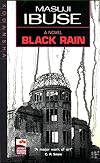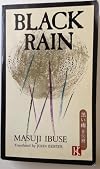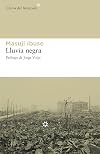
Black Rain
by Masuji Ibuse
On This Page
Description
]Black Rain is centered around the story of a young woman who was caught in the radioactive "black rain" that fell after the bombing of Hiroshima. lbuse bases his tale on real-life diaries and interviews with victims of the holocaust; the result is a book that is free from sentimentality yetmanages to reveal the magnitude of the human suffering caused by the atom bomb. The life of Yasuko, on whom the black rain fell, is changed forever by periodic bouts of radiation sickness and the show more suspicion that her future children, too, may be affected. lbuse tempers the horror of his subject with the gentle humor for which he is famous. His sensitivity to the complex web of emotions in a traditional community torn asunder by this historical event has made Black Rain one of the most acclaimed treatments of the Hiroshima story. show lessTags
Recommendations




Member Recommendations

Member Reviews
This book started as a serialization in the magazine Shincho (Shinchosha Publishing Co, Ltd) in January 1965. Masuji Ibuse used historical records and the diaries of survivors to reconstruct the experience of the devastation caused by the atomic bombing of Hiroshima.
Black Rain switches between the time & immediate aftermath of the bombing, covering the timeframe August the 6th to the 15th (1945) via the main protagonist, Shigematsu Shizuma’ s diary entries and the present (several years after).The book opens with Shigematsu’s concerns with his niece, Yasuko and her three failed marriage matches, the reason for which seems to be due to rumours about her health and whether she was exposed to the “Black Rain” fallout from the show more atomic bomb. In fact Shigematsu compiles a journal with the express aim of proving that she couldn’t have been exposed and thus didn’t have radiation sickness. We soon learn she has.
*
Although the translator John Bester, posits this book firmly within the tradition of the I-Novel (私小説 Shishōsetsu, Watakushi shōsetsu), the narrator is not Masuji Ibuse, but the primary protagonist Shigematsu, through whom we follow a period of his life as though it were laid out for our inspection – Shigematsu’s original reasoning for his journal is to prove his niece hadn’t come into contact with the black rain. By having Shigematsu write out his journal, Ibuse in a clever move, has used the I- Novel tradition to portray a realistic view of the narrator’s world, allowing us to perceive his life during the moment of the blast and the consequences that followed in the days, months and years after. Ibuse also shows us other viewpoints, by weaving them through Shigematsu’s tale, we learn of other survivors, the hibakusha*, whether family members, neighbours or other characters he meets on his journey and via their tales we learn more about this point, this ground zero that will be forever rooted deep in this nations psyche.
In his notes, John Bester writes
“ Black Rain is a portrait of a group of human beings; of the death of a great city; of a nation crumbling into defeat. It is a picture of the Japanese mind that tells more than many sociological studies. Yet more than this, it is a statement of a philosophy. Although that philosophy in its essence, is neither pessimistic nor optimistic, it seems to me to be life-affirming. Dealing with the grimmest of subjects, the work is not, in the end depressing, for the author is ultimately concerned with life rather than death, and with an overall beauty that transcends ugliness of detail. In that sense, I would suggest, Black Rain is not a “book about the bomb” at all.”
*
This is a fascinating quote and one, that with hindsight, I totally agree with, it wasn’t my original response, I think that was a feeling of being overwhelmed by the sheer horror and yet beauty of this book, of trying to come to terms with moments of absolute hell, and don’t let anyone tell you Hell is all fireworks and fiery extravaganza, it’s not. It’s watching your world disintegrate, a loved one slowly mutate and die and then there were moments of sly humour in the descriptions of the everyday reality, in the tender relationships between the characters. This is a book where nothing and everything happened, where everything changed in an instance, one giant exclamation mark decimated all that was known, and yet life in some form goes on.This is a book that the very idea of screams horror and yet where there is humanity, there is humour- where there is life you’ll find hope.
http://parrishlantern.blogspot.co.uk/2012/02/black-rainmasuji-ibuse.html show less
Black Rain switches between the time & immediate aftermath of the bombing, covering the timeframe August the 6th to the 15th (1945) via the main protagonist, Shigematsu Shizuma’ s diary entries and the present (several years after).The book opens with Shigematsu’s concerns with his niece, Yasuko and her three failed marriage matches, the reason for which seems to be due to rumours about her health and whether she was exposed to the “Black Rain” fallout from the show more atomic bomb. In fact Shigematsu compiles a journal with the express aim of proving that she couldn’t have been exposed and thus didn’t have radiation sickness. We soon learn she has.
*
Although the translator John Bester, posits this book firmly within the tradition of the I-Novel (私小説 Shishōsetsu, Watakushi shōsetsu), the narrator is not Masuji Ibuse, but the primary protagonist Shigematsu, through whom we follow a period of his life as though it were laid out for our inspection – Shigematsu’s original reasoning for his journal is to prove his niece hadn’t come into contact with the black rain. By having Shigematsu write out his journal, Ibuse in a clever move, has used the I- Novel tradition to portray a realistic view of the narrator’s world, allowing us to perceive his life during the moment of the blast and the consequences that followed in the days, months and years after. Ibuse also shows us other viewpoints, by weaving them through Shigematsu’s tale, we learn of other survivors, the hibakusha*, whether family members, neighbours or other characters he meets on his journey and via their tales we learn more about this point, this ground zero that will be forever rooted deep in this nations psyche.
In his notes, John Bester writes
“ Black Rain is a portrait of a group of human beings; of the death of a great city; of a nation crumbling into defeat. It is a picture of the Japanese mind that tells more than many sociological studies. Yet more than this, it is a statement of a philosophy. Although that philosophy in its essence, is neither pessimistic nor optimistic, it seems to me to be life-affirming. Dealing with the grimmest of subjects, the work is not, in the end depressing, for the author is ultimately concerned with life rather than death, and with an overall beauty that transcends ugliness of detail. In that sense, I would suggest, Black Rain is not a “book about the bomb” at all.”
*
This is a fascinating quote and one, that with hindsight, I totally agree with, it wasn’t my original response, I think that was a feeling of being overwhelmed by the sheer horror and yet beauty of this book, of trying to come to terms with moments of absolute hell, and don’t let anyone tell you Hell is all fireworks and fiery extravaganza, it’s not. It’s watching your world disintegrate, a loved one slowly mutate and die and then there were moments of sly humour in the descriptions of the everyday reality, in the tender relationships between the characters. This is a book where nothing and everything happened, where everything changed in an instance, one giant exclamation mark decimated all that was known, and yet life in some form goes on.This is a book that the very idea of screams horror and yet where there is humanity, there is humour- where there is life you’ll find hope.
http://parrishlantern.blogspot.co.uk/2012/02/black-rainmasuji-ibuse.html show less
Shortly after the atomic bomb fell on Hiroshima, a black rain fell from the sky that stained everything that it touched. Black Rain is a beautifully written novel exploring the effects not only of the bombing and the subsequent radiation sickness, but also of the privations and sacrifices of war and the fear of defeat. Ibuse is a wonderful writer, capable of exploring these topics without either looking away from or reveling in the horror.
The narrator of the novel is Shigematsu Shizuma, a mid-level factory manager, husband, and guardian of his niece, Yasuko, who lives with them. At the time the story begins, Shigematsu is worried whether they will be able to find a husband for Yasuko because a rumor is circulating that she was in show more Hiroshima when the bomb was dropped. In an effort to belie the rumor, Shigematsu begins copying out his journal of the days in August that detail what he and his family were doing. He plans to lend one copy to the marriage go-between and donate the other to the school collecting firsthand accounts. To support his narrative, Shigematsu asks his wife to write down her thoughts and also includes journal excerpts from two other survivors. The only voice not heard in the novel is Yasuko's.
When Shigematsu is not copying out his journal (and thus relaying to us, the reader, his story), he is with his two friends planning an elaborate carp raising endeavor. The author's ability to switch from the death and misery of the bombing to the everyday activities and concerns of the survivors is one of the things that saves the book from being overwhelmingly depressing. In addition, the way in which the story switches from the "present", nearly a year after the bombing, to the recorded past in his journal keeps the reader from experiencing everything firsthand. We know that the family survives and that in a way creates an emotional buffer which a straight narrative would not do.
Black Rain is an amazing novel as much for what it isn't as for what it is. It isn't maudlin although it is sensitive, it isn't horrific although it looks at horror unflinchingly, and it isn't dismissive when it includes everyday detail. Highly recommended. show less
The narrator of the novel is Shigematsu Shizuma, a mid-level factory manager, husband, and guardian of his niece, Yasuko, who lives with them. At the time the story begins, Shigematsu is worried whether they will be able to find a husband for Yasuko because a rumor is circulating that she was in show more Hiroshima when the bomb was dropped. In an effort to belie the rumor, Shigematsu begins copying out his journal of the days in August that detail what he and his family were doing. He plans to lend one copy to the marriage go-between and donate the other to the school collecting firsthand accounts. To support his narrative, Shigematsu asks his wife to write down her thoughts and also includes journal excerpts from two other survivors. The only voice not heard in the novel is Yasuko's.
When Shigematsu is not copying out his journal (and thus relaying to us, the reader, his story), he is with his two friends planning an elaborate carp raising endeavor. The author's ability to switch from the death and misery of the bombing to the everyday activities and concerns of the survivors is one of the things that saves the book from being overwhelmingly depressing. In addition, the way in which the story switches from the "present", nearly a year after the bombing, to the recorded past in his journal keeps the reader from experiencing everything firsthand. We know that the family survives and that in a way creates an emotional buffer which a straight narrative would not do.
Black Rain is an amazing novel as much for what it isn't as for what it is. It isn't maudlin although it is sensitive, it isn't horrific although it looks at horror unflinchingly, and it isn't dismissive when it includes everyday detail. Highly recommended. show less
Black Rain is set several years after WWII and is told through the main narrator Shigematsu Shizuma as he and a small group of local survivors, including his family, struggle with the stigma and mysterious symptoms of radiation sickness. Which the only cure seems to be that of the common cold and a lot rest; it's that last part that seems to be so upsetting to Japanese sensibility. The narrative revolves around Shigematsu Shizuma’s niece, Yasuko, who is not yet married, and rumors that she was hit by poisonous black rain after the Hiroshima bombing, and is now suffering from radiation sickness, lower her chances of finding someone. When someone makes inquires about her, her uncle decides to copy his diary of the days after the bombing show more so that he can set the record straight about what the family went through and to preserve a first hand account of the immediate aftermath for a local school.
The real power of this narrative comes from narrow focus of these one family as they struggle through the immediate aftermath and fallout. Black Rain is not about the political or social implications of nuclear warfare. Rather, it’s about its everyday consequences and impacts of war on the lives of those who lived it. Through the diary entries we get a clear picture of the hardships rationing, the stress of air raids or the lack of air raids, the complications of black market dealings, and the bureaucracy of life under army rule. Then there was the flash that changed it all for the people of Hiroshima. The Diary entries detail the bombing from several perspectives, describing the deaths and injuries of the victims in all their gory detail. Some of descriptions are extremely disturbing. But what really stands out is the chaos and confusion that prevails the situation throughout the first week. Victims not knowing were to seek safety from the flames; not knowing how to deal with the dead and dieing; the continued frustration of dealing with a never-ending bureaucracy to get help and needed supplies; and finally the surreal reaction to the final surrender. The immense suffering of and udder lack of humanity that saturates the whole situation (I'm including the victims here as well) is enough to cause me to question what the hell is wrong with the species.
Black Rain is a very moving book, written in a very quiet, restrained tone. The lack emotions stands in stark contrast to that of western writers. The casual observations that make up much of the diary entries are what make this fictional biography so disturbing. Anger or self-pity would detract from understanding the totality of this tragedy. Black Rain is one of those books that should be required reading in history class covering the war with Japan. The images from this book will linger in my mind for a long time to come. show less
The real power of this narrative comes from narrow focus of these one family as they struggle through the immediate aftermath and fallout. Black Rain is not about the political or social implications of nuclear warfare. Rather, it’s about its everyday consequences and impacts of war on the lives of those who lived it. Through the diary entries we get a clear picture of the hardships rationing, the stress of air raids or the lack of air raids, the complications of black market dealings, and the bureaucracy of life under army rule. Then there was the flash that changed it all for the people of Hiroshima. The Diary entries detail the bombing from several perspectives, describing the deaths and injuries of the victims in all their gory detail. Some of descriptions are extremely disturbing. But what really stands out is the chaos and confusion that prevails the situation throughout the first week. Victims not knowing were to seek safety from the flames; not knowing how to deal with the dead and dieing; the continued frustration of dealing with a never-ending bureaucracy to get help and needed supplies; and finally the surreal reaction to the final surrender. The immense suffering of and udder lack of humanity that saturates the whole situation (I'm including the victims here as well) is enough to cause me to question what the hell is wrong with the species.
Black Rain is a very moving book, written in a very quiet, restrained tone. The lack emotions stands in stark contrast to that of western writers. The casual observations that make up much of the diary entries are what make this fictional biography so disturbing. Anger or self-pity would detract from understanding the totality of this tragedy. Black Rain is one of those books that should be required reading in history class covering the war with Japan. The images from this book will linger in my mind for a long time to come. show less
Wow! This is such a powerful novel in the same way that [All Quiet On the Western Front] was for me. Both were books about war told from the side that for me would be the "enemy", but in reality became my own side as that was the point of view from which the story was written. Neither [All Quiet on the Western Front] nor [Black Rain] were politicized in any manner other than the mention of the "enemy", but rather each novel made a point about war in general.
[Black Rain] is about the atomic bomb being dropped at Hiroshima, Japan. In this story, Shigematsu and his niece Yasuka work in a factory which manufactures military clothing. His manager sends him out on a fruitless search for coal. Shigematsu and his wife worry that their niece show more Yasuka, who lives with them, might not be marriageable if she contracts radiation sickness. Of course, at the time that the bomb was dropped, no one living in Japan had any idea what an atomic bomb or radiation sickness was.
The horror of this novel is the inhumanity of it all. For page after page, the reader is left with the ruins, the pain, the illness, and the atomic bomb's devastating aftermath. There is no respite from any of this throughout the entire novel. I felt as if I had to read through this book very slowly just to understand the cost and effects of war on individuals and families, politics aside. It's not a pretty picture and leaves me with little faith in humanity although the story is extremely well done with most of its details having been gleaned from actual interviews and diaries of survivors of the Hiroshima nightmare.
Don't be afraid to pick up this book. It's necessary to understand what can happen in a world unhinged. show less
[Black Rain] is about the atomic bomb being dropped at Hiroshima, Japan. In this story, Shigematsu and his niece Yasuka work in a factory which manufactures military clothing. His manager sends him out on a fruitless search for coal. Shigematsu and his wife worry that their niece show more Yasuka, who lives with them, might not be marriageable if she contracts radiation sickness. Of course, at the time that the bomb was dropped, no one living in Japan had any idea what an atomic bomb or radiation sickness was.
The horror of this novel is the inhumanity of it all. For page after page, the reader is left with the ruins, the pain, the illness, and the atomic bomb's devastating aftermath. There is no respite from any of this throughout the entire novel. I felt as if I had to read through this book very slowly just to understand the cost and effects of war on individuals and families, politics aside. It's not a pretty picture and leaves me with little faith in humanity although the story is extremely well done with most of its details having been gleaned from actual interviews and diaries of survivors of the Hiroshima nightmare.
Don't be afraid to pick up this book. It's necessary to understand what can happen in a world unhinged. show less
In his beautifully written novel, Black Rain, Masuji Ibuse takes us into the experience of ordinary citizens coping with the after-math of the August 6, 1945 bombing of Hiroshima. Set several years following the bombing, Shigematsu Shizuma, his wife Shigeko and niece Yasuko, temporarily residing in Hiroshima at the time of the blast, have survived and returned to their rural community of Kobatake. Acting as their niece’s guardians, Shigematsu and his wife are responsible to find her a husband, a duty that is rendered difficult by potential suitors’ fears that Yasuko has been exposed to the “black rain”. Shigematsu struggles himself with a mild case of radiation sickness, yet continues his factory employment, while joining show more friends in establishing a carp nursery. Throughout the story, recollections of the bombing and its aftermath are intermingled with the family’s concerns for every day life.
Ibuse advances his narrative in multiple voices, through an inventive use of four characters’ journal entries that move the story back and forth between the present day and the time of the bombing. Shigematsu dominates through transcription of his journal entries, from the day of the bombing to the day of the Imperial Majesty’s surrender, the copying of which he has undertaken both for donation to the school library and to disprove his niece’s illness. The first person perspectives of Shigeko, Yasuko and a physician, Dr. Iwatake, are brought in through their own personal journal entries. In writing this novel, Ibuse drew heavily from actual materials and interviews, and we are told in the preface that Shigematsu, his journal, and Dr. Iwatake actually existed.
Ibuse details the horror of the utter devastation and death that occurred in the aftermath of the bombing, with his writing made even more powerful by the absence of political commentary or overt emotionalism. The characters display remarkable emotional reserve and resilience, and struggle to continue on with their lives and traditional ceremonies, despite heart-wrenching encounters with death and suffering. Their lack of self-pity or hysteria, and initial incomprehension of the true nature and ramifications of the bomb, lends an almost eerie quality to the narrative.
Black Rain is one of few novels that I have read by a Japanese author and I found John Bester’s Translator’s Preface very helpful in understanding the ways in which it is uniquely Japanese. Bester’s insights into this brilliant work summarize its power far more elegantly than I ever could.
Highly recommended. ***** show less
Ibuse advances his narrative in multiple voices, through an inventive use of four characters’ journal entries that move the story back and forth between the present day and the time of the bombing. Shigematsu dominates through transcription of his journal entries, from the day of the bombing to the day of the Imperial Majesty’s surrender, the copying of which he has undertaken both for donation to the school library and to disprove his niece’s illness. The first person perspectives of Shigeko, Yasuko and a physician, Dr. Iwatake, are brought in through their own personal journal entries. In writing this novel, Ibuse drew heavily from actual materials and interviews, and we are told in the preface that Shigematsu, his journal, and Dr. Iwatake actually existed.
Ibuse details the horror of the utter devastation and death that occurred in the aftermath of the bombing, with his writing made even more powerful by the absence of political commentary or overt emotionalism. The characters display remarkable emotional reserve and resilience, and struggle to continue on with their lives and traditional ceremonies, despite heart-wrenching encounters with death and suffering. Their lack of self-pity or hysteria, and initial incomprehension of the true nature and ramifications of the bomb, lends an almost eerie quality to the narrative.
Black Rain is one of few novels that I have read by a Japanese author and I found John Bester’s Translator’s Preface very helpful in understanding the ways in which it is uniquely Japanese. Bester’s insights into this brilliant work summarize its power far more elegantly than I ever could.
“…Ibuse, with infinite nostalgia, sets against the violent destruction of the city the beauty of the Japanese countryside and the ancient customs of its people. Against the mighty, brutal purposes of State, he lays the small human preoccupations and foibles. Against the threat of universal destruction, he sets a love for, and sense of wonder at life in all its forms…
Black Rain is a portrait of a group of human beings; of the death of a great city; of a nation crumbling into defeat. It is a picture of the Japanese mind that tells more than many sociological studies. Yet more than this, it is statement of a philosophy. Although that philosophy, in its essence, is neither pessimistic nor optimistic, it seems to me to be life-affirming. Dealing with the grimmest of subjects, the work is not, in the end, depressing, for the author is ultimately concerned with life rather than with death, and with an overall beauty that transcends ugliness of detail. In that sense, I would suggest, Black Rain is not a “book about the bomb” at all.”
Highly recommended. ***** show less
The narrator of the story, Shigematsu Shizuma, is the uncle of a young woman in his care who, it is rumoured in the village, has been affected by the radioactive "black rain" which fell on Hiroshima after the atomic bombing. In order to convince her latest suitor that she is not suffering radiation poisoning, he writes his account of the bombing and the effects he saw in others and in himself.
The account is drawn largely from Shizuma's journal oft he war years, but also from that of his niece, Yasuko, and a couple of other people whose paths crossed with his.
There is very little in the way of recrimination against the American's who dropped the bomb, Ibuse is almost completely concerned with the immediate experience of those caught up show more in the horror of nuclear warfare. The effect is to humanise an event of global significance, bringing it within the scope of personal understanding. A work of great compassion and empathy. show less
The account is drawn largely from Shizuma's journal oft he war years, but also from that of his niece, Yasuko, and a couple of other people whose paths crossed with his.
There is very little in the way of recrimination against the American's who dropped the bomb, Ibuse is almost completely concerned with the immediate experience of those caught up show more in the horror of nuclear warfare. The effect is to humanise an event of global significance, bringing it within the scope of personal understanding. A work of great compassion and empathy. show less
A sensitive handling of numerous eyewitness accounts of the atomic bombing of Hiroshima served up in novel format. The story starts one year after the bombing with the main character, Shigematsu, pondering the future of his niece Yasuko's marriage prospects. There is a persistent rumor that Yasuko was in Hiroshima City on the day of the bombing and now suffers from radiation sickness. Shigematsu, frustrated, as a means of correcting the inaccuracy, suggests a perusal of Yasuko's diary for Aug. 6, 1945--the day of the bombing--and the days thereafter. It is through this device that the story of the atomic bombing of Hiroshima is told. The suffering of the people is simply unfathomable. The bean counter's trade is opprobrious here, but show more what other measure shall we use? The number killed varies, but a mid-range estimate is well over 100,000 within 24 hours of the air raid. That does not include those who suffered with radiation sickness for years afterward. One simply cannot gets one's mind around the extent of such suffering. Naked blackened figures face down in the street, literally melted into the asphalt. (An image I'm convinced Cormac McCarthy borrowed for THE ROAD.) The walking wounded with great sheaths of black skin hanging on them; the suppurating lice-riddled bedsores; the dead piled up like cord wood. At one point author Ibuse writes "In olden times, people used to say that in an area badly ravaged by war it took a century to repair the moral damage done to the inhabitants...." The correctness of this statement stings the brain. There is no plot since there was no plot to the bombing. There is a shifting from the relatively orderly present of a year after the bombing, to the recollected past which is all confusion, mass death, cremation pyres raging all up and down the river shore, and the citizens of Hiroshima not understanding what has hit them. Repeatedly the survivors return to the blast zone (a true Ground Zero) without understanding how such exposure is harming them. One can see why the Americans said nothing in the aftermath, negotiating the end of hostilities as they were, but the cold discipline of doing that! show less
Members
- Recently Added By
Lists

Japanese Literature
230 works; 40 members

Best of World Literature
436 works; 52 members

Books about World War II
241 works; 22 members

Books Read in 2014
2,344 works; 89 members

Books Read in 2018
4,360 works; 110 members

THE WAR ROOM
813 works; 24 members
Author Information

The son of middle-class landowners, Ibuse grew up in the country, for which he always retained a special feeling. While a student majoring in French literature, he published his first story and has since won almost every literary prize in Japan. His work is known for its eloquent use of dialect, irony, historical settings, and dry, sometimes dark show more humor. (Bowker Author Biography) show less
Some Editions
Awards and Honors
Awards
Distinctions
Notable Lists
Series
Belongs to Publisher Series
Work Relationships
Has the adaptation
Common Knowledge
- Canonical title
- Black Rain
- Original title
- Kuroi ame; Black rain
- Original publication date
- 1965 (original Japanese) (original Japanese)
- People/Characters
- Shigematsu Shizuma; Yasuko
- Important places
- Hiroshima, Japan
- Important events
- Atoombom (1945-08); Hiroshima Bombing; Atomic Bombings of Hiroshima and Nagasaki
- Related movies
- Black Rain (1989 | IMDb)
- First words
- For several years past, Shigematsu Shizuma, of the village of Kobatake, had been aware of his niece Yasuko as a weight on his mind.
- Quotations
- I hated war. Who cared, after all, which side won. The only important thing was to end it all as soon as possible: rather an unjust peace, than a “just” war!
- Last words
- (Click to show. Warning: May contain spoilers.)So he told himself, with his eyes of the nearby hills, though he knew all the while it could never come true.
- Blurbers
- Hersey, John; Symons, Julian; Snow, C. P.
- Original language
- Japanese
- Canonical DDC/MDS
- 895.63
- Canonical LCC
- PL830.B8
Classifications
- Genres
- General Fiction, Fiction and Literature, Historical Fiction
- DDC/MDS
- 895.63 — Literature & rhetoric Literatures of other languages Literatures of East and Southeast Asia Japanese Japanese fiction
- LCC
- PL830 .B8 — Language and Literature Languages and literatures of Eastern Asia, Africa, Oceania Languages of Eastern Asia, Africa, Oceania Japanese language and literature Japanese literature Individual authors and works
- BISAC
Statistics
- Members
- 963
- Popularity
- 27,528
- Reviews
- 27
- Rating
- (3.94)
- Languages
- 13 — Czech, Dutch, English, Finnish, French, German, Italian, Japanese, Malay, Portuguese, Russian, Spanish, Swedish
- Media
- Paper, Ebook
- ISBNs
- 28
- ASINs
- 11