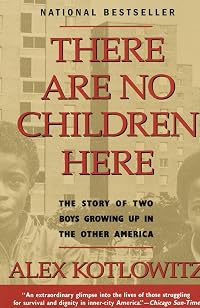
There Are No Children Here: The Story of Two Boys Growing Up in the Other America
by Alex Kotlowitz
On This Page
Description
This New York Public Library selection as one of the 150 most important books of the twentieth century is a true-life portrait of growing up in the Chicago projects. This national best-seller chronicles the true story of two brothers coming of age in the Henry Horner public housing complex in Chicago. Lafeyette and Pharoah Rivers are eleven and nine years old when the story begins in the summer of 1987. Living with their mother and six siblings, they struggle against grinding poverty, gun show more violence, gang influences, overzealous police officers, and overburdened and neglectful bureaucracies. Immersed in their lives for two years, Kotlowitz brings us this classic rendering of growing up poor in America's cities. show lessTags
Recommendations







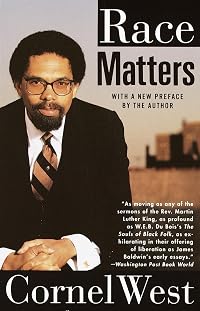

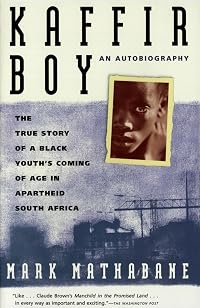
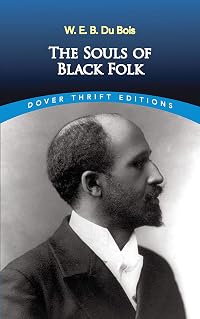
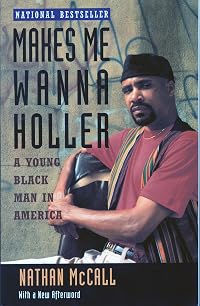




Member Recommendations
Member Reviews
Kotlowitz's account of two young boys growing up in the projects of Chicago is exhaustively researched, and his writing is both thoughtful and thought-provoking. The book is informative without being preachy and challenged many of my assumptions about government, birth control, criminal justice and gangs in the United States.
First, this is a beautifully written book. There is a compassion that flows through the narrative while never once being afraid to tell the bad along with the good of its characters. Fiction writers would kill to be so compelling, but this is nonfiction. Secondly, it struck me that this could easily have been the story of a family trying to make ends meet in some American frontier town but caught amidst the crime and lawlessness of the old west. But this is not about old time Deadwood or Tombstone. This is about modern day Chicago. The book ends with some small degree of optimism, but it appears the degradation of life that this story covers has lived long afterwards. Some good news was that Oprah Winfrey made a TV movie from this book, show more and that the author helped significantly in the lives of the family members after finishing the book. The bad and very sad news is that the actor, who played Lafeyette in the movie, was later fatally shot at a West Side Chicago gas station, much like could have happened to the real Lafeyette. Even more sad is that Pharoah, perhaps the most sympathetic character in the book, even after making it out of the Chicago jungle into college, was sentenced in June of this year to 45 months in prison for his part in a heroin-delivery case. But then, anyone who has read this book would already realize how very very hard it would be for someone in that environment to break free. Highly recommended reading. show less
On a snowy Thursday, March 2, Craig Davis was on his way to a friend’s house to pick up two turntables and speakers for a dance the following evening at which he was going to DJ.
On the way he was spotted with some friends and pursued by a policeman and an agent of the Bureau of Alcohol, Tobacco, and Firearms. The Treasury Dept. official, Richard Marianos, caught up to Davis and held his revolver close to Davis skull when Davis struggled to escape.
The revolver fired into the back of Davis’s skull. The bullet fragmented through both hemispheres of the brain. Davis died shortly after receiving emergency care at Mount Sinai Hospital, where Davis had been born.
Now so far in this story I have left out four key facts as recounted in Alex show more Kotlowitz’ remarkable story “There Are No Children Here: The Story of Two Boys growing Up in the Other America.”
Davis was black. This took place in the mean streets of Chicago. It happened in 1989. And to this day, I believe, nobody has taken responsibility for Davis’ death, an event we would barely have heard about. It merited one paragraph in the back pages of a Chicago newspaper.
The reason Kotlowitz chose to highlight the death in his story was for the psychological impact it had on one of the two boys in his story, Lefeyette Rivers.
The conditions under which these children lived in a Chicago public housing project were quite plainly, horrifying. It was as evil and gross as any description of poverty including the New York classic, “How the other Half Lives,” by journalist Jacob Riis back in the 19th century.
It was also before the notorious Rodney King riots in Los Angeles in 1991, and long before the riots in Ferguson, Missouri, and the demonstrations we experience today in the wake of the police killing of George Floyd.
There is no better time to memorialize the fallen, and no better time than the present to excoriate society for so heinously forgetting that Black Lives Matter. show less
On the way he was spotted with some friends and pursued by a policeman and an agent of the Bureau of Alcohol, Tobacco, and Firearms. The Treasury Dept. official, Richard Marianos, caught up to Davis and held his revolver close to Davis skull when Davis struggled to escape.
The revolver fired into the back of Davis’s skull. The bullet fragmented through both hemispheres of the brain. Davis died shortly after receiving emergency care at Mount Sinai Hospital, where Davis had been born.
Now so far in this story I have left out four key facts as recounted in Alex show more Kotlowitz’ remarkable story “There Are No Children Here: The Story of Two Boys growing Up in the Other America.”
Davis was black. This took place in the mean streets of Chicago. It happened in 1989. And to this day, I believe, nobody has taken responsibility for Davis’ death, an event we would barely have heard about. It merited one paragraph in the back pages of a Chicago newspaper.
The reason Kotlowitz chose to highlight the death in his story was for the psychological impact it had on one of the two boys in his story, Lefeyette Rivers.
The conditions under which these children lived in a Chicago public housing project were quite plainly, horrifying. It was as evil and gross as any description of poverty including the New York classic, “How the other Half Lives,” by journalist Jacob Riis back in the 19th century.
It was also before the notorious Rodney King riots in Los Angeles in 1991, and long before the riots in Ferguson, Missouri, and the demonstrations we experience today in the wake of the police killing of George Floyd.
There is no better time to memorialize the fallen, and no better time than the present to excoriate society for so heinously forgetting that Black Lives Matter. show less
Welcome to the Henry Horner Homes! It is a public-housing project, located on the west-side of Chicago. The apartments are hot in the summer and even hotter in the winter. Poorly maintained, with broken down elevators, horrible plumbing and defunct appliances. The windows are blocked to prevent stray bullets and the occupants huddle in hallways, when the ubiquitous shooting begins.
Living in these conditions are two brothers, Lafeyette and Pharoah Rivers, ages 11 and 9. The author followed these boys for two years, in the late ‘80s, as they navigate, through a world filled with gangs, drug-dealers, welfare, over-burdened public defenders and dispassionate police. A life of violence and death, with “hope” being a foreign and elusive show more term.
This is an excellent nonfiction account and a perfect, eye-opening, reminder of how many live in America today. Highly recommended. show less
Living in these conditions are two brothers, Lafeyette and Pharoah Rivers, ages 11 and 9. The author followed these boys for two years, in the late ‘80s, as they navigate, through a world filled with gangs, drug-dealers, welfare, over-burdened public defenders and dispassionate police. A life of violence and death, with “hope” being a foreign and elusive show more term.
This is an excellent nonfiction account and a perfect, eye-opening, reminder of how many live in America today. Highly recommended. show less
This eye opening, intensely researched, and heartbreaking story is written about two brothers growing up in the Henry Horner government housing in Chicago. This story chronicles the lives of these two boys and their extended families from 1987 to 1989. The lives these children have to live is just so sad. The drugs, gangs, missing fathers, poor educations and crime really placed the odds against these kids. Kotlowitz spent time with these kids in their neighborhood and the research is extensive. This book captures the hopelessness of the people in these low income neighborhoods and the fact that many will not make it out alive. A must read book!!
I read this book when I first moved to Chicago, and it made me want to become a social worker. Eventually, I got over that, but this book is so haunting and powerful, it stays with you.
Everyone in Chicago, if not America, should read this book.
Everyone in Chicago, if not America, should read this book.
The author spends 1987 - 1989 interviewing two brothers, Layfayette and Pharoah Rivers, who grow up in Henry Horner, a housing project on the west side of Chicago. They are two of eight children, the father has mostly checked out and the mother has done her best to hold down some jobs, but mainly supports her family (and interlopers) via government assistance. Henry Horner is decrepit, gunfire is a regular occurrence, and the lure of joining a gang or selling drugs is hard for many impoverished kids to pass up.
Members
- Recently Added By
Lists

New York Public Library's Books of the Century - All
170 works; 14 members
Author Information

6+ Works 2,500 Members
Awards and Honors
Awards
Distinctions
Notable Lists
Work Relationships
Is abridged in
Common Knowledge
- Canonical title
- There Are No Children Here: The Story of Two Boys Growing Up in the Other America
- Original publication date
- 1991
- Important places
- Chicago, Illinois, USA
- Related movies
- There Are No Children Here (1993 | IMDb)
Classifications
- Genres
- Sociology, General Nonfiction, Nonfiction, Biography & Memoir
- DDC/MDS
- 305.230977311 — Society, government, & culture Social sciences, sociology & anthropology Social group - Age, Gender, Ethnicity Age groups Young people up to 20
- LCC
- HQ792 .U5 .K683 — Social sciences The family. Marriage, Women and Sexuality The Family. Marriage. Women The family. Marriage. Home Children. Child development
- BISAC
Statistics
- Members
- 1,616
- Popularity
- 13,968
- Reviews
- 20
- Rating
- (4.17)
- Languages
- English, German
- Media
- Paper, Audiobook, Ebook
- ISBNs
- 19
- UPCs
- 1
- ASINs
- 9