
Alexander the Great
by Robin Lane Fox
On This Page
Description
Presents an overview of Alexander the Great's life as well as his influence on history and the world.Tags
Recommendations
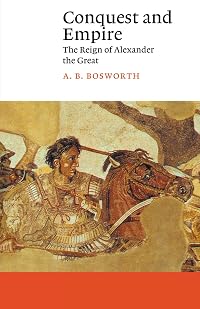


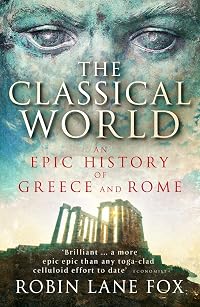
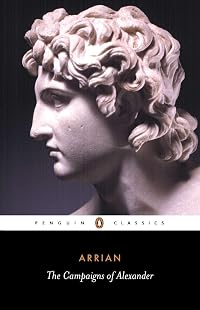
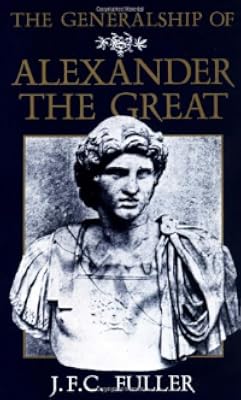











Member Recommendations
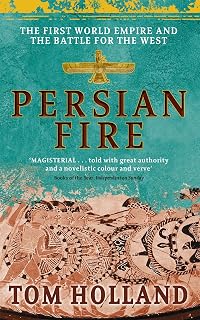
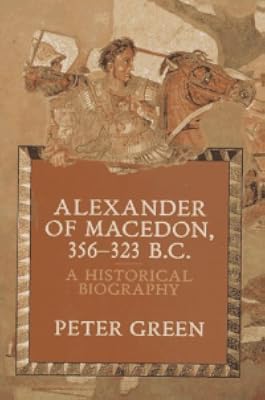
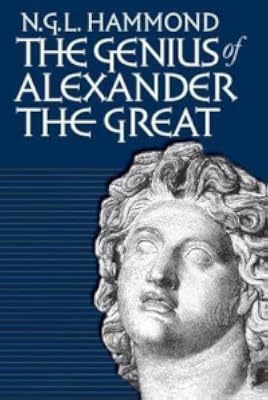
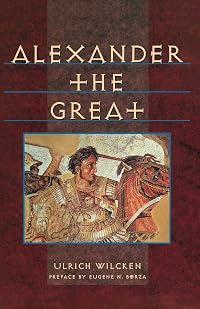
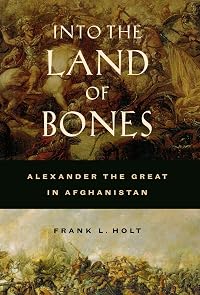
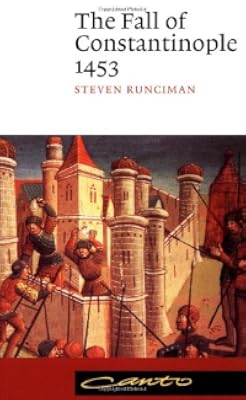
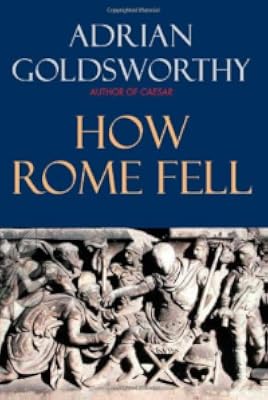
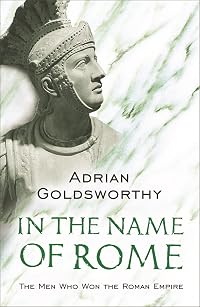
timspalding Robin Lane Fox and Peter Green work well together—very different, but equally intelligent approaches to the same topic. If you're interested enough to read two books on Alexander, read both. Then, I suspect, you'll want to read at least ten more.
30
Member Reviews
I knew something about Alexander the Great before reading this book but it's still full of surprises. Firstly has to be Robin Lane Fox's mass of knowledge (and informed speculation) about such distant events. I never realized the depth of Alexander's Homeric influence or the extent that he adopted the Persian imperial style after his Asian conquests.
He shows Alexander to be an interesting blend of detailed practicality and wild ambition. He believed that he was a Greek God and had an endless reckless drive but could still make detailed preparations, careful tactical decisions and work out successful relations with troops, allies and defeated nations. So successful in fact that by age 32 he was by far the richest man in the world with show more an empire covering some 2 million square miles.
One difficulty with the Classical world is that it's so different from own. The Homeric ideal of conquest, valour and generally Might = Right doesn't sit too comfortably with modern ideas of democracy and peaceful co-existence. Lane Fox can see the problem but opts firmly for the glory of Alexander in his Homeric ancient world context. show less
He shows Alexander to be an interesting blend of detailed practicality and wild ambition. He believed that he was a Greek God and had an endless reckless drive but could still make detailed preparations, careful tactical decisions and work out successful relations with troops, allies and defeated nations. So successful in fact that by age 32 he was by far the richest man in the world with show more an empire covering some 2 million square miles.
One difficulty with the Classical world is that it's so different from own. The Homeric ideal of conquest, valour and generally Might = Right doesn't sit too comfortably with modern ideas of democracy and peaceful co-existence. Lane Fox can see the problem but opts firmly for the glory of Alexander in his Homeric ancient world context. show less
t's well worth the read; very well-written and engaging, it functions well as both an introduction to Alexander's life, and a thoughtful read for people who've already studied the era a little. His psychological analysis of Alexander was considered and logical, and for the most part, I would agree with him; the same can be said of his analysis of the political intrigues of the time, especially of the politics of the former Persian Empire. I also greatly enjoyed the fact that he branched out to describe the peoples and culture and economy of these regions as well, since its an area about which I know little.
There is one enormous caveat attached to the book, however. Due to the fact that I am naught but a poor wee student, I had to pick show more up a bargain bin copy of the book, complete with movie tie-in cover. Perhaps it was because they were rushing to get it out in order to coincide with the movie's release; but haste or not, this was one of the worst formatted books I've ever read. The maps are such bad quality as to be frequently unintelligible; the layout of the footnotes is hard to follow, especially given the size of the type; and the illustrations are few, dated, and in blurry black-and-white. The typesetting itself, though, was what gave me an enormous headache. There are frequent typos - Alexander faces a possible 'munity' by his troops at one point, while a people called the 'Ews' now seem to have been living in Judaea at the time. Whole lines were transposed in the text at one point. It was irritating, and made the whole book seem a bit amateurish at times, which was a shame show less
There is one enormous caveat attached to the book, however. Due to the fact that I am naught but a poor wee student, I had to pick show more up a bargain bin copy of the book, complete with movie tie-in cover. Perhaps it was because they were rushing to get it out in order to coincide with the movie's release; but haste or not, this was one of the worst formatted books I've ever read. The maps are such bad quality as to be frequently unintelligible; the layout of the footnotes is hard to follow, especially given the size of the type; and the illustrations are few, dated, and in blurry black-and-white. The typesetting itself, though, was what gave me an enormous headache. There are frequent typos - Alexander faces a possible 'munity' by his troops at one point, while a people called the 'Ews' now seem to have been living in Judaea at the time. Whole lines were transposed in the text at one point. It was irritating, and made the whole book seem a bit amateurish at times, which was a shame show less
Once upon a time, my younger brother (aged 12) needed to read a biography for school. My other brother (17) and I (18) took it upon ourselves to drive down to a bookstore and try to find a suitable choice.
A 500-page scholarly dissection of Alexander the Great was our idea of "suitable."
Our mother intervened at that point and found something that our brother had a hope of finishing.
Fox's book is, indeed, scholarly -- sometimes to the point of tedium. Since first-hand accounts of Alexander's exploits are scarce, Fox spends a lot of time backtracking to explain the many alternative possibilities that could have happened. This is all very academically important, but it doesn't help the reader grasp the linear progression of events. On show more the other hand, Fox does an excellent job of describing the battles and Alexander's tactics therein. His scholarship is hard to knock. At times, he does feel like an apologist for some of Alexander's excesses, but he ultimately presents a balanced view of Alexander-the-human. It's not written vividly enough for a casual recommendation, but it's an obvious read if you're interested in the classical world. show less
A 500-page scholarly dissection of Alexander the Great was our idea of "suitable."
Our mother intervened at that point and found something that our brother had a hope of finishing.
Fox's book is, indeed, scholarly -- sometimes to the point of tedium. Since first-hand accounts of Alexander's exploits are scarce, Fox spends a lot of time backtracking to explain the many alternative possibilities that could have happened. This is all very academically important, but it doesn't help the reader grasp the linear progression of events. On show more the other hand, Fox does an excellent job of describing the battles and Alexander's tactics therein. His scholarship is hard to knock. At times, he does feel like an apologist for some of Alexander's excesses, but he ultimately presents a balanced view of Alexander-the-human. It's not written vividly enough for a casual recommendation, but it's an obvious read if you're interested in the classical world. show less
Robin Lane Fox'e accessible and erudite life of Alexander searches through the mass of conflicting evidence and legend to focus on the living actuality of the man and his experience - 'It is tempting', he concludes, 'to see in Alexander the romantic's complex nature for the first time in Greek history.' Beautifully written, perspective, and fluent, it is a a superb example of historical scholarship and psychological insight.
The book is non-fiction, and is about Alexander the Great. I have always had an interest in history, military, and classical history. I like the book because even though we may have only fragments and vague recollections, we attempt to picture together what we have left of a very faint memory of a distant past. He does this through this book. In his own way, he attempts to find the personality of Alexander, by analyzing his exploits and stories told of him throughout his short life. I have not had much knowledge before reading this book, but now I understand a lot more of this person’s life and have had a glimpse into daily and yearly workings of Greek and Persian civilizations. Shed some light on religious dogma of that era, and some show more customs practiced through that period.
In addition, I learned a little about their political structure and society. It is a good book, and very rewarding to read, to the interested reader. show less
In addition, I learned a little about their political structure and society. It is a good book, and very rewarding to read, to the interested reader. show less
Certainly the best biography of Alexander I've read so far. That said, the term "biography" is not one RLF would apply to the book himself, at least not in the light of his Preface, where he says, "This is not a biography nor does it pretend to certainty in Alexander's name." The end result is nonetheless more interesting, appear more sensible and better thought-out than some of the biographies I've read. I had a feeling of something strange being going on in RLF's The Search for Alexander, I didn't get that feeling here.
I honestly LOVED reading this book. Alexander the Great has always been a point of interest for me, and this book only made that interest grow. Robin Lane Fox did a fantastic job in writing this book and working through the mountain of information - legend and otherwise - that surrounds Alexander the Great. I didn’t feel like I could really give this 5/5 stars, though, due to the fact that my copy is the 1997 Folio Society edition. Don’t get me wrong: I love older books - the smell, seeing the author work through what information they have, and so forth. However, I feel like I would need to read an updated version to see if I’d give this book a 5/5 stars.
Members
- Recently Added By
Lists

Favourite Books
1,819 works; 316 members
Folio Society
831 works; 53 members

Best Alexander Books
4 works; 1 member
Author Information

29+ Works 7,349 Members
Robin Lane Fox is a university reader in ancient history and an emeritus fellow of New College, Oxford. The author of The Classical World and Alexander the Great, Fox lives in Oxford, England.
Awards and Honors
Series
Belongs to Publisher Series
Heyne Biographien (41)
Work Relationships
Is contained in
Common Knowledge
- Original title
- Alexander the Great
- Original publication date
- 1973
- People/Characters
- Alexander III the Great, 326-253 BC; Antipater; Aristotle, 384-322; Darius III; Bagoas; Barsine (show all 10); Hephaestion; Olympias; Parmenion; Philip II of Macedon
- Important places*
- Makedonien; Griechenland
- Epigraph
- When Alexander's sarcophagus was brought from the shrine, Augustus gazed at the body, then laid a crown of gold on its glass case and scattered some flowers to pay his respects. When they asked if he would like to see Ptolemy... (show all) too, 'I wished to see a king,' he replied. 'I di not wish to see corpses.'
Suetonious, Life of Augustus, 18.1
As for the exact thoughts in Alexander's mind, I am neither able nor concerned to guess them, but this I think I can state, that nothing common or mean would have been his intention; he would not have remained content with an... (show all)y of his conquests not even if he had added the British Isles to Europe; he would always have searched beyond for something unknown, and if there had been no other competition, he would have competed against himself.
Arrian (AD150) Alexander's Expedition, 7l1
Fluellen
I think it is in Macedon where Alexander is porn. I tell you, captain, if you look in the maps of the 'orld, I warrant you shall find, in the comparisons between Macedon and Monmouth, that the situations, look you... (show all), is both alike. there is a river in Macedon, and there is also moreover a river at Monmouth: it is called Wye at Monmouth; but it is out of my prains what is the name of the other river; but 'tis all one, 'tis alike as my fingers is to my fingers, and there is salmons in both.
Henry V, IV, vii - Dedication
- To Louisa
- First words
- Two thousand three hundred years ago, in the autumn of 336BC, the king of the Macedonians was celebrating another royal wedding.
- Last words
- (Click to show. Warning: May contain spoilers.)Only a lover of Homer can sense what the mood must have been.
- Blurbers
- Stone, Oliver
- Original language
- English
*Some information comes from Common Knowledge in other languages. Click "Edit" for more information.
Classifications
- Genres
- History, Nonfiction, Biography & Memoir, General Nonfiction
- DDC/MDS
- 938.07092 — History & geography History of ancient world (to ca. 499) Greece to 323 Greece to 323 Macedonian Supremacy (362-323 BC)
- LCC
- DF234 .L3 — History of Europe, Asia, Africa and Oceania Greece History of Greece History By period Alexander the Great, 336-323 B.C.
- BISAC
Statistics
- Members
- 1,521
- Popularity
- 15,140
- Reviews
- 22
- Rating
- (3.83)
- Languages
- 5 — Dutch, English, German, Italian, Spanish
- Media
- Paper, Ebook
- ISBNs
- 23
- ASINs
- 21