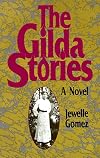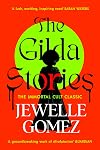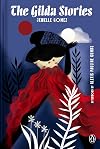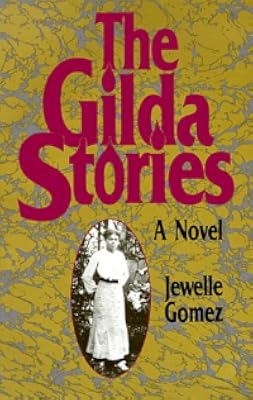
The Gilda Stories
by Jewelle Gomez
On This Page
Description
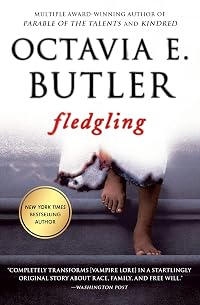
"Before Buffy, before Twilight, before Octavia Butler's Fledgling, there was The Gilda Stories, Jewelle Gomez's sexy vampire novel."The Gilda Stories is groundbreaking not just for the wild lives it portrays, but for how it portrays them--communally, unapologetically, roaming fiercely over space and time."--Emma Donoghue, author of Room"Jewelle Gomez sees right into the heart. This is a book to give to those you want most to find their own strength."-Dorothy Allison"Gomez's women are savvy show more and bold, with a sense of ancestry and history. The author's compassion, affection, and respect for her characters are infectious."-Library Journal This remarkable novel begins in 1850s Louisiana, where Gilda escapes slavery and learns about freedom while working in a brothel. After being initiated into eternal life as one who "shares the blood" by two women there, Gilda spends the next two hundred years searching for a place to call home. An instant lesbian classic when it was first published in 1991, The Gilda Stories has endured as an auspiciously prescient book in its explorations of blackness, radical ecology, re-definitions of family, and yes, the erotic potential of the vampire story. Jewelle Gomez is a writer, activist, and the author of many books including Forty-Three Septembers, Don't Explain, The Lipstick Papers, Flamingoes and Bears, and Oral Tradition. The Gilda Stories was the recipient of two Lambda Literary Awards, and was adapted for the stage by the Urban Bush Women theater company in thirteen United States cities. Alexis Pauline Gumbs was named one of UTNE Reader's 50 Visionaries Transforming the World, a Reproductive Reality Check Shero, a Black Woman Rising nominee, and was awarded one of the first-ever "Too Sexy for 501c3" trophies. She lives in Durham, North Carolina. More praise for The Gilda Stories:"Jewelle's big-hearted novel pulls old rhythms out of the earth, the beauty shops and living rooms of black lesbian herstory, expressed by the dazzling vampire Gilda. Her resilience is a testament to black queer women's love, power, and creativity. Brilliant!"--Joan Steinau Lester, author of Black, White, Other "-- show lessTags
Recommendations



















Member Reviews
In the Afterword for the 25th Anniversary Edition of The Gilda Stories, Alexis Pauline Gumbs calls the book: "A precise and prophetic work. A neo-slavery escape narrative. An Afro-futuristic projection." And before that, in the introduction to the work, Gomez speaks of how she was spurred into writing the book, and the 'pent-up fury' that went into it. The passion in all of this language, and the way it carefully bleeds through this long-form narrative of vampires and personal history, is absolute--and while the book may disappoint readers coming to it from a horror perspective for a tale of vampires and violence, I would answer that it is an important, worthwhile work that takes influence from classic slave narratives, classic novels show more such as Uncle Tom's Cabin and Giovanni's Room, and moves the narratives into a contemporary space that is at once a coming-of-age tale for a slave-turned-vampire and an examination of growth, love, and hope.
If you're reading this review, and curious about the book, I'm hope you'll read it. It feels like one which should have found its way to my hands much sooner, and one which should be far more widely known, read, and spoken of.
I'd absolutely recommend it. show less
If you're reading this review, and curious about the book, I'm hope you'll read it. It feels like one which should have found its way to my hands much sooner, and one which should be far more widely known, read, and spoken of.
I'd absolutely recommend it. show less
I can’t quite believe that this book was written and published back in 1991, and yet it undoubtedly was. Jewelle Gomez challenges the mythos surrounding vampires in culture and lore by writing her protagonist, Gilda, as a Black American lesbian - the polar opposite of the vampires popularized by authors such as Stoker, Rice, and Süskind. Gilda begins her tale as a nameless Girl, recently run away from the plantation where she was born and raised. As she runs, she is confronted by a man who wishes her harm (rape most assuredly and a return to the plantation from where she has run from or at least back to the status of slave), and she proves her mettle from the get go: waiting with preternatural patience until her hidden blade can find show more his heart. Bathed in blood, nameless, and having shed the painful memories of the remnants of her family that she left behind, she is reborn (literally and figuratively) under the care of Gilda, a vampire who runs a brothel, and her lover and companion Bird, a Lakota woman. As the first Gilda chooses to go into the light for the True Death, Bird completes the process of transformation, and our protagonist begins a new life after taking on the name of her creator. Gomez traces Gilda’s life through 200 years of American history, touching on so many powerful themes around the changing landscape, the face of female survival, the power inherent in Black women, the strength in female relationships (lesbian or otherwise), and created family (just to name a few) that to fully unpack this novel would take an encyclopedia. Suffice to say, that it deserves a place in the canon not just as a powerful piece of vampire literature, but also as a commentary on the evolution of American society. show less
I read this as slowly as I could force myself to do, challenging for a speed reader, because I didn't want it to end. As I read I occasionally felt this flush of anger or annoyance that I hadn't known about it before or had the stories in my life so far (it was originally published in 1991), but at the same time relieved and lucky and special to have it right now. This one will stay with me, you guys. It is like nothing else you have read and the descriptions or preconceived notions you might have (lesbians, vampires, and racism, oh my!) will do you no good. Don't even read descriptions, just read the book. Highly recommended.
This book is super cool because it takes you from 1850 to 2050. Each chapter is a different time and place in Gilda's life representing how the world changes around her, and how she must change with it while still holding onto her values and, ironically, her humanity (she's a vampire.) Plus, I always love seeing how different the world is from an author's assumptions about the future. The Gilda Stories was published in 1991 and Gomez's expectations of 2020 are not entirely wrong, but it's funny that she talks about video calls but still thinks people will have house phones. But I digress. I think this is a really important piece of literature because it also discusses chosen family, queerness, and living through several civil rights show more movements as a black woman. Not only does Gilda have to work through problems in the vampiric world, but in the world at large, both of which have tried to harm her. Gomez tackles taboos like death, being a minority in a world that is against you, and sapphic love all at once, and it's truly astonishing. show less
You know me and literary fiction; we're frenemies at best. But sometimes, one just needs to pull a book of Mount TBR for the express purpose of exploring under represented voices. The Gilda Stories was first published in 1991 and republished in 2016, so it is one of those books that reached my attention as possibly being urban fantasy before Urban Fantasy genre, and even more interestingly, written by a lesbian woman of color (we used such terms in those days, and Gomez' language in the foreword echoes the third-wave feminism of the time). I found it unexpectedly engrossing; easy to read and get absorbed in the gentle, detailed story-telling, but also equally able to let it sit and rest between readings.
The writing, I think, is show more impeccable for purpose. It begins in outside New Orleans in 1850 with a nameless, young Black slave girl. The next chapter continues in 1890 in California, then in Missouri in 1921, followed by Boston in 1955, NYC in 1971 and 1981, New Hampshire in 2020, and finally, in New Mexico in 2050.
"But many of the years were simply a broad strip of darkness into which she peered, out of which she could draw little. Whenever she wanted to remember them she read through her journal as she had just done, but still they held little meaning for her. Most decades were dazed watercolor views sketched from a distance. They provided precise narrative of journeys but few sensations."
The plot, however, may be where it challenges some readers. I would think of this as a slice of life kind of book--but definitely not 'cozy'--as Gilda negotiates her extended life and the meaning of family in a variety of settings and decades. This approach allows Gomez to explore large issues of Black female experience through time. Interestingly, I found the themes of sexuality to be understated; this is not vampirism as a vehicle for orgiastic pleasure (why, hello, Laurell Hamilton). But it does explore what it means to be Black, female, and have power, and what we do with that power, and how the people around one interact with that power. Do they attempt to manipulate? Open themselves up to affection? Become dependent?
"You've forgiven me the other's death?'
'No,' Bird responded. 'I leaned there was no need for forgiveness... All along I had been refusing her the final right that was hers, to die when and where she wished. It's the most elemental power.'"
There's quite a bit that feels third-wave about it to me in theme. Much of the philosophy is overt, but there are some scenes that are particularly emblematic of challenging issues that might be triggering to some readers. The first chapter has a powerful attempted assault scene that is certainly hard to witness but is equally certainly the lived slave experience. The second story centers around a relationship with a manipulative white woman. A number of the settings involve prostitution, which makes story-sense to me; prostitution being a type of woman-owned business back in the day, and with mobile clientele, provides the perfect cover for long-lived people as well as a source of new sensations and experiences. I thought it good, moving, rooted in real emotion and likely well-researched (or lived) (what I know about history, meh) and not inclusive of certain things just to make a thematic point.
Gomez really writes it best:
"In Gilda, I created a character who escapes her sense of helplessness as a slave and gains the ultimate power over life and death. She becomes a witness over time to the injustices that humans visit upon one another... What began as fury has become a decades long pursuit in search of meaningful responses to these political and philosophical questions: What is family? How do we live inside our power and at the same time act responsibly? How do we build community? How do we connect authentically across gender, ethnicity, and class lines?"
Overall, feels a lot like [b:Kindred|60931|Kindred|Octavia E. Butler|https://i.gr-assets.com/images/S/compressed.photo.goodreads.com/books/1339423248l/60931._SY75_.jpg|1049657] by Butler, without the driving plot. Very worth it for genre fans who have tolerance for the literary fiction voice. show less
The writing, I think, is show more impeccable for purpose. It begins in outside New Orleans in 1850 with a nameless, young Black slave girl. The next chapter continues in 1890 in California, then in Missouri in 1921, followed by Boston in 1955, NYC in 1971 and 1981, New Hampshire in 2020, and finally, in New Mexico in 2050.
"But many of the years were simply a broad strip of darkness into which she peered, out of which she could draw little. Whenever she wanted to remember them she read through her journal as she had just done, but still they held little meaning for her. Most decades were dazed watercolor views sketched from a distance. They provided precise narrative of journeys but few sensations."
The plot, however, may be where it challenges some readers. I would think of this as a slice of life kind of book--but definitely not 'cozy'--as Gilda negotiates her extended life and the meaning of family in a variety of settings and decades. This approach allows Gomez to explore large issues of Black female experience through time. Interestingly, I found the themes of sexuality to be understated; this is not vampirism as a vehicle for orgiastic pleasure (why, hello, Laurell Hamilton). But it does explore what it means to be Black, female, and have power, and what we do with that power, and how the people around one interact with that power. Do they attempt to manipulate? Open themselves up to affection? Become dependent?
"You've forgiven me the other's death?'
'No,' Bird responded. 'I leaned there was no need for forgiveness... All along I had been refusing her the final right that was hers, to die when and where she wished. It's the most elemental power.'"
There's quite a bit that feels third-wave about it to me in theme. Much of the philosophy is overt, but there are some scenes that are particularly emblematic of challenging issues that might be triggering to some readers. The first chapter has a powerful attempted assault scene that is certainly hard to witness but is equally certainly the lived slave experience. The second story centers around a relationship with a manipulative white woman. A number of the settings involve prostitution, which makes story-sense to me; prostitution being a type of woman-owned business back in the day, and with mobile clientele, provides the perfect cover for long-lived people as well as a source of new sensations and experiences. I thought it good, moving, rooted in real emotion and likely well-researched (or lived) (what I know about history, meh) and not inclusive of certain things just to make a thematic point.
Gomez really writes it best:
"In Gilda, I created a character who escapes her sense of helplessness as a slave and gains the ultimate power over life and death. She becomes a witness over time to the injustices that humans visit upon one another... What began as fury has become a decades long pursuit in search of meaningful responses to these political and philosophical questions: What is family? How do we live inside our power and at the same time act responsibly? How do we build community? How do we connect authentically across gender, ethnicity, and class lines?"
Overall, feels a lot like [b:Kindred|60931|Kindred|Octavia E. Butler|https://i.gr-assets.com/images/S/compressed.photo.goodreads.com/books/1339423248l/60931._SY75_.jpg|1049657] by Butler, without the driving plot. Very worth it for genre fans who have tolerance for the literary fiction voice. show less
The first book about vampirism that I've read and this was really good. This book follows the life of Gilda for a two hundred year period, set in different parts of the U.S.
Beginning in Louisiana, we meet her as "The Girl", who has recently escaped the plantation where she and her family were enslaved. She is offered a home ina brothel named Woodard owned and operated by Gilda, and her lover Bird, who later brings her into her vampiric family and the protagonist takes her name too.
This was a thrilling read, one that examines power and cruelty and love. One of my favourite parts being "the exchange", in that the vampires here, the good ones at least, give something in return to what they take. Life in this fictional context can be an show more experience where individuals enrich each other by exchanging ideas, dreams, material and emotional support.
Each chapter was set in a different time and in a different location, this book was published in 1991 and the story itself stretches into 2020 and 2050. I'd say Jewelle Gomez correctly envisioned this year in a lot of ways, the destruction of the planet and mass panic and hysteria especially. This is a book that certainly deserves more readership, I don't understand why I've only come to know of this book's existence this year, and I would have probably gone a longer time without knowing of it had it not been for bookriot's "Black Queer Writers To Read" list. I'd highly recommend this to anyone that is interested in reading Spec Fiction. show less
Beginning in Louisiana, we meet her as "The Girl", who has recently escaped the plantation where she and her family were enslaved. She is offered a home ina brothel named Woodard owned and operated by Gilda, and her lover Bird, who later brings her into her vampiric family and the protagonist takes her name too.
This was a thrilling read, one that examines power and cruelty and love. One of my favourite parts being "the exchange", in that the vampires here, the good ones at least, give something in return to what they take. Life in this fictional context can be an show more experience where individuals enrich each other by exchanging ideas, dreams, material and emotional support.
Each chapter was set in a different time and in a different location, this book was published in 1991 and the story itself stretches into 2020 and 2050. I'd say Jewelle Gomez correctly envisioned this year in a lot of ways, the destruction of the planet and mass panic and hysteria especially. This is a book that certainly deserves more readership, I don't understand why I've only come to know of this book's existence this year, and I would have probably gone a longer time without knowing of it had it not been for bookriot's "Black Queer Writers To Read" list. I'd highly recommend this to anyone that is interested in reading Spec Fiction. show less
A subversive and exhilarating read!
(Full disclosure: I received a free book for review from the publisher. Trigger warning for violence, including rape.)
“Why do you say others may kill and we must not?”
“Some are said to live through the energy of fear. That is their sustenance more than sharing. The truth is we hunger for connection to life, but it needn’t be through horror or destruction. Those are just the easiest links to evoke. Once learned, this lesson mustn’t be forgotten. To ignore it, to wallow in death as the white man has done, can only bring bitterness.”
###
My love is the blood that enriches this ground.
The sun is a star denied you and me.
But you are the life I’ve searched for and found
And the moon is our half of show more the dream.
###
That she hit him with his own whip seemed to startle him more than the pain.
###
The Girl is just nine when her mother passes away - of the flu, contracted from one of the white women she was caring for in the main house. Scared that she'll be sold off like her father, she runs away, getting as far as the state line that separates Mississippi from Louisiana before being discovered by a bounty hunter. Gilda finds the Girl in her cellar, shaking and covered in blood - and with the corpse of her would-be rapist at her feet.
As with many girls before her, Gilda takes the Girl in, offering her sanctuary in her saloon/brothel. But Gilda and her lover/business partner, Bird, take a special interest in this girl, teaching her how to read and write in multiple languages; how to grow her own food and run a business; and, eventually, in the ways of their kind. Gilda is a three hundred-year-old vampire, you see, and her days walking this earth are numbered. Tired of the war, hatred, and inequality that surrounds her, Gilda yearns for her "true death," and hopes to turn the Girl so that Bird will not be left alone in her absence.
The stories within these pages are not Gilda's, but the Girl's, who at her second mother's request assumes her name upon her passing. After the original Gilda dies, Bird stays on only long enough for the Girl to finish her lessons; then, bereft, she seeks out her own people, the Lakota (and, eventually, other native peoples as well).
Gilda, in turn, embarks on a search of her own, traveling the United States: she visits Gilda's father Sorel and his companion Anthony in 1890 Yerba Buena, California; she purchases a farm and mentors a young widow named Aurelia in 1921 Rosebud, Missouri; she opens a beauty parlor in the South End of Chicago, circa 1955, where her clientele is primarily sex workers and women of color; she buys a tenement in Chelsea and works off-Broadway (1971) and as a singer in Riverside (1981); relocates to Hampton Falls, New Hampshire, where she and her lover, Effie, watch the world sputter to an end in 2020; and, thirty years later, she tries to make her way to safety in Machu Picchu, with Hunters hot on her trail.
Throughout it all, Gilda holds the lessons taught her by Gilda, Bird, Sorel, and Anthony close: never take more blood than a person can safely give. Always leave something in return: a peaceful dream, a reassuring thought; confidence and direction. Never kill unless absolutely necessary; and then, only if you're willing to carry your victim's face with you for all of eternity. In this way, you nurture a connection to humanity, to nature, and to life.
Gilda's search for family and self-identity form the core of the story. As a young vampire, she sometimes find herself tempted to turn a human she's taken a special liking to: Aurelia in Missouri, Savannah in Chicago. Yet she's been taught that this must not be a selfish act: the would-be vampire must know what she's signing up for, have no qualms, and be well-suited to the life. Otherwise you risk creating a monster, like Eleanor and Samuel.
Gilda finds herself drawn to humanity, even as she walks apart from it. She desperately wants a family of her own, yet indecision plagues her. A young black woman who lived through slavery (and an escape); the terror of night riders; Jim Crow; race riots; and racism and sexism of every flavor, Gilda craves a connection with her people. Yet while they are black, like her, they are also human, which she is not. She is both of them and separate from them: "Her connection to the daylight world came from her blackness."
The Gilda Stories is strange and wonderful; unlike anything I've ever read, and especially anything I might have been able to get my hands on when it was first published in 1991. It is subversive and exhilarating; imaginative and yet grounded in history; and looks at what was and what could be.
The novel crosses genres in an exciting way: fantasy, horror, historical fiction, speculative fiction, coming of age - there's a little bit of everything here. As Gilda travels through space and time, the story assumes the vibe of a time travel tale - even though the narrative is linear, and Gilda lives through every one of those two hundred years, even if we're not privy to the details. While memories of Gilda's time as a slave are thankfully hazy, few and far between, I couldn't help but be reminded of another scifi American slavery tale: Octavia Butler's Kindred. (Kindred in reverse, if you will.)
There's even a bit of an ecofeminist bent to the story, which this vegan feminist just loved. Telepaths, vampires are able to communicate with both human and nonhuman animals. Of course, this requires that animals be able to think, to feel, to suffer. In a word, sentient. This is established very early on - on page 13, to be exact - when Gilda encounters a group of "satisfied, sentient horses" outside of Gilda I's establishment. It's reaffirmed time and again, whether Gilda is commiserating with the fear and anxiety felt by a pair of night riders' mounts, or bedding down with a group of benevolent wolves while traveling the wild.
While her "gifts" set Gilda apart from the species to which she once belonged, they also make her better equipped to travel among them, and offer assistance when needed; for example, rescuing a sex worker from her pimp in the South End. This seems to be what Gilda the first so struggled with: though she, too, tried to help make the world a safer place, the constant cycle of warring for freedom became too much to bear. The end of slavery was on the horizon when she took her true death - yet the world remained a dangerous place for blacks (not to mention many other minority groups, to which vampires would eventually belong), just as Gilda feared. Family, community, and compassion are central tenants of the story.
The expanded, 25th anniversary edition of the story includes a forward by the author, as well as an afterward by Alexis Pauline Gumbs. Especially interesting is the story's genesis: Gomez began the first draft after an incident of street harassment one night in Manhattan. One of many, this one was notable in that she lost her shit and raged at her harassers. Thankfully Gomez escaped unharmed, and The Gilda Stories was born. Its heroine walks a fine line between fighting the monsters in her midst, while trying not to become one herself. It's a lovely story, full of heart and intellect.
Gomez's writing is sometimes hard to follow, which is why I gave this four stars instead of five. Her transitions can be rough: one moment, Gilda is holding Anthony's hand as they converse in earnest; and in the next sentence, her coat is already on and she's at the door, poised to leave. It's almost evocative of the superhuman way vampires can move when desired: so fast it's imperceptible to the human eye. One moment you're in the doorway; the next, on your stagecoach, taking leave. Anyway, it's disconcerting at first (in the opening chapter especially), but eventually I got used to it.
That said: it's still a must read.
http://www.easyvegan.info/2016/06/17/the-gilda-stories-by-jewelle-gomez/ show less
(Full disclosure: I received a free book for review from the publisher. Trigger warning for violence, including rape.)
“Why do you say others may kill and we must not?”
“Some are said to live through the energy of fear. That is their sustenance more than sharing. The truth is we hunger for connection to life, but it needn’t be through horror or destruction. Those are just the easiest links to evoke. Once learned, this lesson mustn’t be forgotten. To ignore it, to wallow in death as the white man has done, can only bring bitterness.”
###
My love is the blood that enriches this ground.
The sun is a star denied you and me.
But you are the life I’ve searched for and found
And the moon is our half of show more the dream.
###
That she hit him with his own whip seemed to startle him more than the pain.
###
The Girl is just nine when her mother passes away - of the flu, contracted from one of the white women she was caring for in the main house. Scared that she'll be sold off like her father, she runs away, getting as far as the state line that separates Mississippi from Louisiana before being discovered by a bounty hunter. Gilda finds the Girl in her cellar, shaking and covered in blood - and with the corpse of her would-be rapist at her feet.
As with many girls before her, Gilda takes the Girl in, offering her sanctuary in her saloon/brothel. But Gilda and her lover/business partner, Bird, take a special interest in this girl, teaching her how to read and write in multiple languages; how to grow her own food and run a business; and, eventually, in the ways of their kind. Gilda is a three hundred-year-old vampire, you see, and her days walking this earth are numbered. Tired of the war, hatred, and inequality that surrounds her, Gilda yearns for her "true death," and hopes to turn the Girl so that Bird will not be left alone in her absence.
The stories within these pages are not Gilda's, but the Girl's, who at her second mother's request assumes her name upon her passing. After the original Gilda dies, Bird stays on only long enough for the Girl to finish her lessons; then, bereft, she seeks out her own people, the Lakota (and, eventually, other native peoples as well).
Gilda, in turn, embarks on a search of her own, traveling the United States: she visits Gilda's father Sorel and his companion Anthony in 1890 Yerba Buena, California; she purchases a farm and mentors a young widow named Aurelia in 1921 Rosebud, Missouri; she opens a beauty parlor in the South End of Chicago, circa 1955, where her clientele is primarily sex workers and women of color; she buys a tenement in Chelsea and works off-Broadway (1971) and as a singer in Riverside (1981); relocates to Hampton Falls, New Hampshire, where she and her lover, Effie, watch the world sputter to an end in 2020; and, thirty years later, she tries to make her way to safety in Machu Picchu, with Hunters hot on her trail.
Throughout it all, Gilda holds the lessons taught her by Gilda, Bird, Sorel, and Anthony close: never take more blood than a person can safely give. Always leave something in return: a peaceful dream, a reassuring thought; confidence and direction. Never kill unless absolutely necessary; and then, only if you're willing to carry your victim's face with you for all of eternity. In this way, you nurture a connection to humanity, to nature, and to life.
Gilda's search for family and self-identity form the core of the story. As a young vampire, she sometimes find herself tempted to turn a human she's taken a special liking to: Aurelia in Missouri, Savannah in Chicago. Yet she's been taught that this must not be a selfish act: the would-be vampire must know what she's signing up for, have no qualms, and be well-suited to the life. Otherwise you risk creating a monster, like Eleanor and Samuel.
Gilda finds herself drawn to humanity, even as she walks apart from it. She desperately wants a family of her own, yet indecision plagues her. A young black woman who lived through slavery (and an escape); the terror of night riders; Jim Crow; race riots; and racism and sexism of every flavor, Gilda craves a connection with her people. Yet while they are black, like her, they are also human, which she is not. She is both of them and separate from them: "Her connection to the daylight world came from her blackness."
The Gilda Stories is strange and wonderful; unlike anything I've ever read, and especially anything I might have been able to get my hands on when it was first published in 1991. It is subversive and exhilarating; imaginative and yet grounded in history; and looks at what was and what could be.
The novel crosses genres in an exciting way: fantasy, horror, historical fiction, speculative fiction, coming of age - there's a little bit of everything here. As Gilda travels through space and time, the story assumes the vibe of a time travel tale - even though the narrative is linear, and Gilda lives through every one of those two hundred years, even if we're not privy to the details. While memories of Gilda's time as a slave are thankfully hazy, few and far between, I couldn't help but be reminded of another scifi American slavery tale: Octavia Butler's Kindred. (Kindred in reverse, if you will.)
There's even a bit of an ecofeminist bent to the story, which this vegan feminist just loved. Telepaths, vampires are able to communicate with both human and nonhuman animals. Of course, this requires that animals be able to think, to feel, to suffer. In a word, sentient. This is established very early on - on page 13, to be exact - when Gilda encounters a group of "satisfied, sentient horses" outside of Gilda I's establishment. It's reaffirmed time and again, whether Gilda is commiserating with the fear and anxiety felt by a pair of night riders' mounts, or bedding down with a group of benevolent wolves while traveling the wild.
While her "gifts" set Gilda apart from the species to which she once belonged, they also make her better equipped to travel among them, and offer assistance when needed; for example, rescuing a sex worker from her pimp in the South End. This seems to be what Gilda the first so struggled with: though she, too, tried to help make the world a safer place, the constant cycle of warring for freedom became too much to bear. The end of slavery was on the horizon when she took her true death - yet the world remained a dangerous place for blacks (not to mention many other minority groups, to which vampires would eventually belong), just as Gilda feared. Family, community, and compassion are central tenants of the story.
The expanded, 25th anniversary edition of the story includes a forward by the author, as well as an afterward by Alexis Pauline Gumbs. Especially interesting is the story's genesis: Gomez began the first draft after an incident of street harassment one night in Manhattan. One of many, this one was notable in that she lost her shit and raged at her harassers. Thankfully Gomez escaped unharmed, and The Gilda Stories was born. Its heroine walks a fine line between fighting the monsters in her midst, while trying not to become one herself. It's a lovely story, full of heart and intellect.
Gomez's writing is sometimes hard to follow, which is why I gave this four stars instead of five. Her transitions can be rough: one moment, Gilda is holding Anthony's hand as they converse in earnest; and in the next sentence, her coat is already on and she's at the door, poised to leave. It's almost evocative of the superhuman way vampires can move when desired: so fast it's imperceptible to the human eye. One moment you're in the doorway; the next, on your stagecoach, taking leave. Anyway, it's disconcerting at first (in the opening chapter especially), but eventually I got used to it.
That said: it's still a must read.
http://www.easyvegan.info/2016/06/17/the-gilda-stories-by-jewelle-gomez/ show less
Members
- Recently Added By
Lists

Books Read in 2023
5,547 works; 145 members

LGBTQIA Horror
172 works; 7 members

LGBTQ+ Speculative Fiction
821 works; 51 members

Diverse Horror
262 works; 6 members

Black Authors
384 works; 32 members

Nightmares Not Included
175 works; 3 members

Horror: Creature Features
70 works; 9 members

Kate & Cheyanne's Horror Extravaganza
144 works; 6 members

Afro-Sapphic
1 work; 1 member

Horror (Owned TBR)
60 works; 1 member

Queer Fiction (Owned TBR)
142 works; 1 member
Author Information

20+ Works 1,315 Members
Some Editions
Awards and Honors
Series
Belongs to Publisher Series
Work Relationships
Is contained in
Common Knowledge
- Original publication date
- 1991
- Epigraph
- At night sleep locks me into an echoless coffin
sometimes at noon I dream
there is nothing to fear...
Audre Lorde - Dedication
- As always my work is dedicated Gracias Archelina Sportsman Morandus, Lydia Mae Morandus, Dolores Mae Minor LeClairs, and Duke Gomes.
- First words
- The girl slept restlessly, feeling the prickly straw as if it were teasing pinches from her mother.
The Girl slept restlessly, feeling the prickly straw as if it were teasing pinches from her mother. - Last words
- (Click to show. Warning: May contain spoilers.)Gilda was no longer fleeing for her life.
(Click to show. Warning: May contain spoilers.)Gilda was no longer feeling for her life. - Blurbers
- Donoghue, Emma; Waters, Sarah; Imarisha, Walidah; Clarke, Cheryl; Due, Tananarive; Moise, Lenelle (show all 12); Lester, Joan Steinau; Pickens, Theri A.; Keesey, Pam; Allison, Dorothy; Nava, Michael; Tan, Cecilia
- Original language
- English, US
Classifications
- Genres
- LGBTQ+, Fiction and Literature, General Fiction, Horror, Fantasy, Historical Fiction
- DDC/MDS
- 813.54 — Literature & rhetoric American literature in English American fiction in English 1900-1999 1945-1999
- LCC
- PS3557 .O457 .G5 — Language and Literature American literature American literature Individual authors 1961-
- BISAC
Statistics
- Members
- 837
- Popularity
- 32,820
- Reviews
- 22
- Rating
- (3.91)
- Languages
- English
- Media
- Paper, Audiobook, Ebook
- ISBNs
- 11
- ASINs
- 6