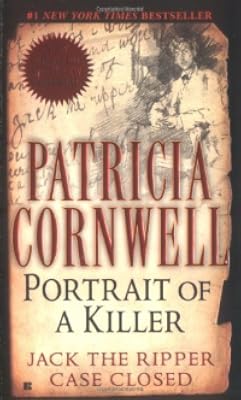
Portrait of a Killer : Jack the Ripper — Case Closed
by Patricia Cornwell
On This Page
Description
Now updated with new material that brings the killer's picture into clearer focus.In the fall of 1888, all of London was held in the grip of unspeakable terror. An elusive madman calling himself Jack the Ripper was brutally butchering women in the slums of London's East End. Police seemed powerless to stop the killer, who delighted in taunting them and whose crimes were clearly escalating in violence from victim to victim. And then the Ripper's violent spree seemingly ended as abruptly as show more it had begun. He had struck out of nowhere and then vanished from the scene. Decades passed, then fifty years, then a hundred, and the Ripper's bloody sexual crimes became anemic and impotent fodder for puzzles, mystery weekends, crime conventions, and so-called "Ripper Walks" that end with pints of ale in the pubs of Whitechapel. But to number-one New York Times bestselling novelist Patricia Cornwell, the Ripper murders are not cute little mysteries to be transformed into parlor games or movies but rather a series of terrible crimes that no one should get away with, even after death. Now Cornwell applies her trademark skills for meticulous research and scientific expertise to dig deeper into the Ripper case than any detective before her—and reveal the true identity of this fabled Victorian killer.
In Portrait of a Killer: Jack the Ripper, Case Closed, Cornwell combines the rigorous discipline of twenty-first century police investigation with forensic techniques undreamed of during the late Victorian era to solve one of the most infamous and difficult serial murder cases in history. Drawing on unparalleled access to original Ripper evidence, documents, and records, as well as archival, academic, and law-enforcement resources, FBI profilers, and top forensic scientists, Cornwell reveals that Jack the Ripper was none other than a respected painter of his day, an artist now collected by some of the world's finest museums: Walter Richard Sickert.
It has been said of Cornwell that no one depicts the human capability for evil better than she. Adding layer after layer of circumstantial evidence to the physical evidence discovered by modern forensic science and expert minds, Cornwell shows that Sickert, who died peacefully in his bed in 1942, at the age of 81, was not only one of Great Britain's greatest painters but also a serial killer, a damaged diabolical man driven by megalomania and hate. She exposes Sickert as the author of the infamous Ripper letters that were written to the Metropolitan Police and the press. Her detailed analysis of his paintings shows that his art continually depicted his horrific mutilation of his victims, and her examination of this man's birth defects, the consequent genital surgical interventions, and their effects on his upbringing present a casebook example of how a psychopathic killer is created.
New information and startling revelations detailed in Portrait of a Killer include:
- How a year-long battery of more than 100 DNA tests—on samples drawn by Cornwell's forensics team in September 2001 from original Ripper letters and Sickert documents—yielded the first shadows of the 75- to 114 year-old genetic evid...
. show less
Tags
Recommendations
















Member Reviews
Intriguing theory, but ‘Case Closed’? – Hardly!
In PORTRAIT OF A KILLER: JACK THE RIPPER - CASE CLOSED, crime novelist Patricia Cornwell tackles the true crime genre with mixed results. With the help of modern-day forensics, she attempts to prove that Walter Sickert (1860-1942), an English Impressionist painter, was in fact Jack the Ripper. She lays out an intriguing, albeit largely circumstantial, case. However, one could hardly say that she's managed to do what so many before her have not - that is, close the case.
To her credit, Cornwell presents the reader with a volume of evidence that points to Sickert as a viable suspect in the Ripper crimes. She draws on paper, watermark, handwriting, and mitochondrial DNA analysis, and also show more delves deep into Sickert's personality, expounding upon his childhood traumas and adult eccentricities in great detail.
Of particular interest is a childhood condition that may have caused damage to Sickert's penis, perhaps to the point that he was impotent as an adult. Clearly, Sickert endured lengthy hospital stays and several surgeries as a young boy. Unfortunately, hospital records kept during this time were spotty, so it's impossible to tell whether Sickert did in fact suffer from a fistula on his penis - or if the fistula was instead located on his anus (as the more commonly accepted theory goes).
Certainly, it's possible that the results of a penile fistula suffered in the days before modern medicine - i.e., the inability to have sex `normally,' and/or the grotesque appearance of one's genitalia - could cause a man to hate that which he cannot have, that is, women. Although Cornwell assumes that Sickert did in fact have a fistula on his penis as a boy, and was disfigured by the resulting surgery, she has no concrete evidence to support her claim. Since this is a significant part of her argument - after all, she presents it as Sickert's primary motive for the killings - it tends to weaken the rest of her case, which she presents in pieces as she describes the Whitechapel murders.
The "penile or anal fistula mystery" is illustrative of what follows. Cornwell has certainly done her research; yet, when all her digging fails to turn up any conclusive evidence, she shows herself more than willing to take huge leaps of faith. What results is a case built almost entirely on circumstantial evidence. It makes for an interesting read, but to call the case closed is preemptive at best (and, quite frankly, Cornwell comes off much worse, what with the smug, know-it-all tone she takes, particularly throughout the first third of the book).
Another major point of contention is that Cornwell explicitly refuses to consider any suspects other than Sickert. She briefly dismisses John Druitt, who committed suicide shortly after Mary Kelly was murdered, but Druitt is literally the only other suspect that Cornwell mentions by name. In fact, she explicitly states that it's not her place to clear other suspects in PORTRAIT OF A KILLER, which strikes me as rather disingenuous (especially when her case against Sickert is so flimsy!). Throughout the book, Cornwell seems so eager ("overeager" is putting it mildly) to implicate Sickert - continually referring to him as "Jack the Ripper," a "killer" and "psychopath," etc. - that one has to wonder whether her inexplicable hatred of Sickert clouded her judgment. Or perhaps mere stubbornness is to blame? It seems that, once Cornwell had her sights set on Sickert, on went the blinders, rendering the author incapable of registering any information that contradicted her theory that "Sickert did it!"
Other reviewers have complained that the book is disjointed. While Cornwell does jump back and forth in time, it didn't bother me. Rather, I thought it was a nice narrative technique. I do agree, though, that the book ended abruptly. One moment, Cornwell is describing how Sickert mistreated his second wife; the next, the poor woman is dead and buried, and so is the book. I'm still puzzled why the discussion ended with the wife's death, and not Sickert's, particularly when Sickert's murderous tendencies (allegedly) continued.
Finally, a note on the various formats. I first listened to PORTRAIT OF A KILLER as an audiobook on CD. Kate Burton did an excellent job of narrating, assuming both elite and Cockney English accents with ease. The play-like quality of the book also helps to offset the abrupt switches in place and time. The unabridged version, which I borrowed from my local library, ran eleven discs (the current version available on Amazon, which is listed at five discs, seems awfully short - even for an abridged book).
Not long after finishing the audio book, I ran across the hardcover edition at a used book sale and snatched it up. It has a number of pictures, including a few autopsy photos, Sickert family portraits, and snapshots of Sickert's artwork and handwriting, side-by-side with that contained in some of the Ripper letters. After listening to Cornwell's comparisons of Sickert's and the Ripper's (or the Ripper imposter's) handwriting and scribbles, it was interesting to compare them for myself, firsthand. Suffice it to say, I was less impressed with the similarities between the two men's handiwork than was Cornwell.
In summary: Serious Ripperologists will most likely hate this book. Very little of Cornwell's evidence is bulletproof, and her arrogance can be off-putting (doubly so to those who have been studying Jack the Ripper for years). Even so, I found the book entertaining and thought-provoking. Cornwell's description of 1800s England and early police work, along with comparisons of modern and centuries-old forensic techniques, makes PORTRAIT OF A KILLER worth a read alone. We'll probably never know who killed Nichols, Chapman, Stride, Eddowes, Kelly, and possibly others - or if they were even murdered by the same person - but it's "fun" to wonder. Cornwell's theory, at the very least, makes for an engaging exercise in "what if?"
One star for the thorough research, another for the author's captivating writing style, and a third for sheer entertainment value.
http://www.easyvegan.info/2006/05/21/portrait-of-a-killer-jack-the-ripper-by-pat... show less
In PORTRAIT OF A KILLER: JACK THE RIPPER - CASE CLOSED, crime novelist Patricia Cornwell tackles the true crime genre with mixed results. With the help of modern-day forensics, she attempts to prove that Walter Sickert (1860-1942), an English Impressionist painter, was in fact Jack the Ripper. She lays out an intriguing, albeit largely circumstantial, case. However, one could hardly say that she's managed to do what so many before her have not - that is, close the case.
To her credit, Cornwell presents the reader with a volume of evidence that points to Sickert as a viable suspect in the Ripper crimes. She draws on paper, watermark, handwriting, and mitochondrial DNA analysis, and also show more delves deep into Sickert's personality, expounding upon his childhood traumas and adult eccentricities in great detail.
Of particular interest is a childhood condition that may have caused damage to Sickert's penis, perhaps to the point that he was impotent as an adult. Clearly, Sickert endured lengthy hospital stays and several surgeries as a young boy. Unfortunately, hospital records kept during this time were spotty, so it's impossible to tell whether Sickert did in fact suffer from a fistula on his penis - or if the fistula was instead located on his anus (as the more commonly accepted theory goes).
Certainly, it's possible that the results of a penile fistula suffered in the days before modern medicine - i.e., the inability to have sex `normally,' and/or the grotesque appearance of one's genitalia - could cause a man to hate that which he cannot have, that is, women. Although Cornwell assumes that Sickert did in fact have a fistula on his penis as a boy, and was disfigured by the resulting surgery, she has no concrete evidence to support her claim. Since this is a significant part of her argument - after all, she presents it as Sickert's primary motive for the killings - it tends to weaken the rest of her case, which she presents in pieces as she describes the Whitechapel murders.
The "penile or anal fistula mystery" is illustrative of what follows. Cornwell has certainly done her research; yet, when all her digging fails to turn up any conclusive evidence, she shows herself more than willing to take huge leaps of faith. What results is a case built almost entirely on circumstantial evidence. It makes for an interesting read, but to call the case closed is preemptive at best (and, quite frankly, Cornwell comes off much worse, what with the smug, know-it-all tone she takes, particularly throughout the first third of the book).
Another major point of contention is that Cornwell explicitly refuses to consider any suspects other than Sickert. She briefly dismisses John Druitt, who committed suicide shortly after Mary Kelly was murdered, but Druitt is literally the only other suspect that Cornwell mentions by name. In fact, she explicitly states that it's not her place to clear other suspects in PORTRAIT OF A KILLER, which strikes me as rather disingenuous (especially when her case against Sickert is so flimsy!). Throughout the book, Cornwell seems so eager ("overeager" is putting it mildly) to implicate Sickert - continually referring to him as "Jack the Ripper," a "killer" and "psychopath," etc. - that one has to wonder whether her inexplicable hatred of Sickert clouded her judgment. Or perhaps mere stubbornness is to blame? It seems that, once Cornwell had her sights set on Sickert, on went the blinders, rendering the author incapable of registering any information that contradicted her theory that "Sickert did it!"
Other reviewers have complained that the book is disjointed. While Cornwell does jump back and forth in time, it didn't bother me. Rather, I thought it was a nice narrative technique. I do agree, though, that the book ended abruptly. One moment, Cornwell is describing how Sickert mistreated his second wife; the next, the poor woman is dead and buried, and so is the book. I'm still puzzled why the discussion ended with the wife's death, and not Sickert's, particularly when Sickert's murderous tendencies (allegedly) continued.
Finally, a note on the various formats. I first listened to PORTRAIT OF A KILLER as an audiobook on CD. Kate Burton did an excellent job of narrating, assuming both elite and Cockney English accents with ease. The play-like quality of the book also helps to offset the abrupt switches in place and time. The unabridged version, which I borrowed from my local library, ran eleven discs (the current version available on Amazon, which is listed at five discs, seems awfully short - even for an abridged book).
Not long after finishing the audio book, I ran across the hardcover edition at a used book sale and snatched it up. It has a number of pictures, including a few autopsy photos, Sickert family portraits, and snapshots of Sickert's artwork and handwriting, side-by-side with that contained in some of the Ripper letters. After listening to Cornwell's comparisons of Sickert's and the Ripper's (or the Ripper imposter's) handwriting and scribbles, it was interesting to compare them for myself, firsthand. Suffice it to say, I was less impressed with the similarities between the two men's handiwork than was Cornwell.
In summary: Serious Ripperologists will most likely hate this book. Very little of Cornwell's evidence is bulletproof, and her arrogance can be off-putting (doubly so to those who have been studying Jack the Ripper for years). Even so, I found the book entertaining and thought-provoking. Cornwell's description of 1800s England and early police work, along with comparisons of modern and centuries-old forensic techniques, makes PORTRAIT OF A KILLER worth a read alone. We'll probably never know who killed Nichols, Chapman, Stride, Eddowes, Kelly, and possibly others - or if they were even murdered by the same person - but it's "fun" to wonder. Cornwell's theory, at the very least, makes for an engaging exercise in "what if?"
One star for the thorough research, another for the author's captivating writing style, and a third for sheer entertainment value.
http://www.easyvegan.info/2006/05/21/portrait-of-a-killer-jack-the-ripper-by-pat... show less
It is unnecessary to add to the compelling arguments against Patricia Cornwell's thesis that the 19th century English murderer, Jack the Ripper, was in fact the celebrated early modern painter, Walter Richard Sickert. If you have the stomach for the repellent detail of the Ripper murders and mutilations and the patience for its digressions and fractured chronology, Cornwell's book does have a certain interest for its expository technique. The title, 'Portrait of a Killer' is indicative. Cornwell has created a composite figure of Jack the Ripper from police records and newspaper accounts and superimposed on the composite whatever information she could find, infer or imagine about Walter Sickert. The imaginative glue that holds this show more rickety structure together is the re-iterated assertion that Sickert, like the Ripper, was a 'psychopath'. Even if one allows latitude to Cornwell for her impressionistic accounts of psychopathy, there is very little to support that characterisation of the artist. The diabolic cunning which she attributes to the generic figure of the 'psychopath' is invoked whenever the evidence fails to implicate Sickert. The spelling, orthography and style of letters supposed to have been written by the Ripper are inconsistent with each other and bear no resemblance to Sickert's own hand? Readily explained: Sickert the psychopath was a cunning and skilled counterfeiter of styles. Witness accounts of the men seen with the victims bear no resemblance to the Ripper? Sickert the psychopath was a master of disguise, who had acted in plays when young. The other point of interest, for me, has to do with trashing cultural values. Cornwell would not have invested her time and wealth in pursuit of Sickert if she had not expected a commensurate return from her vandalism. No-one would be particularly surprised or interested to learn that the Ripper was a semi-literate brute called Smith, Brown or Jones from the seething London underworld of the late 19th century. I knew little of Sickert before reading Cornwell's Portrait. I now owe a debt to his memory and to myself to read a fair, frank and well written account of his life. show less
Having recently sworn off Cornwell's fiction, I decided to give this last title on my shelves a try, more out of a passing interest in the crimes than out of any sense of rehabilitating Cornwell's writing. Sure enough, Cornwell's bitter pride still shines through in this attempt to identify and convict a man in the court of public opinion. Cornwell knows enough about behavioral analysis to get her into trouble. Certainly, Sickert bore an unusual interest in the gory and sensational crimes, and probably had a similar unnatural interest in violence, particularly against women. But the evidence in his paintings and writings doesn't pass the smell test for evidence of guilt, Cornwell herself admits he was around the crime scene areas and show more the places where the victim's plied their trade. It's not much of a stretch to think that Sickert simply collected images and impressions from these experiences to include in his work, including his writing. All of the imagery would've fueled his active and creative imagination and tapped into his taste for violence. And Cornwell also admits Sickert was quite the performer, a seeker of attention. Again, it's not tough to imagine his use of the collected information to create more of a stir around his work. There's nothing definitive to prove Sickert's guilt, not for lack of Cornwell trying to convince everyone. But the strength of her personality can't make her take on things into any certainty.
The redeeming characteristic in the book is Cornwell's surprising research abilities. More than anything, the book carries a great flavor of Victorian England.
3 bones!!! show less
The redeeming characteristic in the book is Cornwell's surprising research abilities. More than anything, the book carries a great flavor of Victorian England.
3 bones!!! show less
This is one of the best non-fiction books that I have read; very well written, well detailed and extremely informative. Patricia Cornwell's research is not only fascinating but compelling and convincing.
Cornwell's research presents damn near irrefutable, extensive forensic evidence that Walter Sickert is Jack the Ripper. Cornwell does an amazing job explaining the psychological profile of Walter Sickert that adds to her proof that he very well could be the infamous Jack the Ripper. She holds nothing back, giving us readers, in great depth, all the gore and gruesomeness.
She also tells, in great detail, of the deplorable conditions the poor had to endure in 1880’s London, England, which I found captivating.
I have always been fascinated show more with all things related to Jack the Ripper. So much so that when in London, my husband and I did the “THE ORIGINAL JACK THE RIPPER MURDERS TOUR”, https://www.jack-the-ripper-tour.com/.... Now whether or not Walter Sickert is The Ripper, I couldn't say 100% one way or another. However, I can say if you are a Ripperologist, this is definitely worth a go! show less
Cornwell's research presents damn near irrefutable, extensive forensic evidence that Walter Sickert is Jack the Ripper. Cornwell does an amazing job explaining the psychological profile of Walter Sickert that adds to her proof that he very well could be the infamous Jack the Ripper. She holds nothing back, giving us readers, in great depth, all the gore and gruesomeness.
She also tells, in great detail, of the deplorable conditions the poor had to endure in 1880’s London, England, which I found captivating.
I have always been fascinated show more with all things related to Jack the Ripper. So much so that when in London, my husband and I did the “THE ORIGINAL JACK THE RIPPER MURDERS TOUR”, https://www.jack-the-ripper-tour.com/.... Now whether or not Walter Sickert is The Ripper, I couldn't say 100% one way or another. However, I can say if you are a Ripperologist, this is definitely worth a go! show less
Patricia Cornwell is a very good writer of crime fiction. I have enjoyed several of her novels featuring Dr Kay Scarpetta. But I think she should have stuck to the fiction. This 365-page tome is full of speculation, but completely lacking in evidence. It was widely panned when published and Cornwell’s response was to write an even longer version, still without any evidence.
There are many theories regarding who was the infamous Whitechapel murderer who terrorised London in the 1880s. The idea that the painter Walter Sickert may have been the killer had been around for a while when Cornwell wrote this book. None of those authors proved Sickert’s connection to the crimes. Cornwell did not succeed either. The case is most certainly not show more closed. show less
There are many theories regarding who was the infamous Whitechapel murderer who terrorised London in the 1880s. The idea that the painter Walter Sickert may have been the killer had been around for a while when Cornwell wrote this book. None of those authors proved Sickert’s connection to the crimes. Cornwell did not succeed either. The case is most certainly not show more closed. show less
I couldn’t handle this book. It came off as if the author had a grudge against the Sickert family and wrote this just to drag their name through the mud. Now, of course I’m not saying that’s what they did, but that’s the way it read. All of the stated facts are peppered with maybes and this could have happened. I misquoted in one of my updates for this book, but it actually spends a few paragraphs talking about Sickerts nurse, and how she could have been an alcoholic and mistreated her patients, and then finishes with, but I don’t know anything about Mrs. Whateverhernamewas, she could have been a teetotaler. If there’s no proof either way, why include it, and why spend paragraphs talking about the negative aspects that you show more don’t know about, but a sentence taking it back.
Sickert might or might not have been the Ripper, but this book actually does a disservice to convincing me he was. If the hypotheticals were left out and just the cold hard facts that could be proved presented it would have gone a lot further as a credible book.
Definitely NOT Case Closed... show less
Sickert might or might not have been the Ripper, but this book actually does a disservice to convincing me he was. If the hypotheticals were left out and just the cold hard facts that could be proved presented it would have gone a lot further as a credible book.
Definitely NOT Case Closed... show less
'Complete tosh' is the phrase that leaps to mind. Cornwell does her reputation no favours by publishing this text. The case against Sickert is circumstantial and not terribly convincing. Her absolute conviction that she's identified the ripper reveals her arrogance and her rather shocking ignorance of Victorian life. The sad fact is that despite the steaming loads of circumstantial 'evidence' that Cornwell piles upon the reader, she misses one very important point: opportunity.
Sickert was in Dieppe (on the other side of the channel) when one of the murders took place. Riddle me that, Sherlock.
Sickert was in Dieppe (on the other side of the channel) when one of the murders took place. Riddle me that, Sherlock.
Members
- Recently Added By
Lists

True Crime-Unsolved
9 works; 1 member

Books Read in 2003
258 works; 7 members

Llibres que he llegit el 2015
34 works; 1 member

Llibres que he llegit el 2009
35 works; 1 member

The Worst Bestsellers Podcast
296 works; 5 members
Author Information

200+ Works 137,237 Members
Patricia Cornwell was born in Miami, Florida on June 9, 1956. When she was nine years old, her mother tried to give her and her two brothers to evangelist Billy Graham and his wife to care for. For a while the children lived with missionaries since their mother was unable to care for them. After graduating from Davidson College in 1979, she worked show more for The Charlotte Observer eventually covering the police beat and winning an investigative reporting award from the North Carolina Press Association for a series of articles on prostitution and crime in downtown Charlotte. Her award-winning biography of Ruth Bell Graham, the wife of Billy Graham, A Time for Remembering, was published in 1983. From 1984 to 1990, she worked as a technical writer and a computer analyst at the Office of the Chief Medical Examiner in Richmond, Virginia. While working for the medical examiner, she began to write novels. Although the award-winning novel Postmortem was initially rejected by seven different publishers, once it was published in 1990 it became the only novel ever to win the Edgar, Creasey, Anthony, and Macavity awards as well as the French Prix du Roman d'Adventure, in one year. She is the author of the Kay Scarpetta series, the Andy Brazil series, and the Winston Garano series. She has also written two cookbooks entitled Scarpetta's Winter Table and Food to Die For; a children's book entitled Life's Little Fable; and non-fiction works like Portrait of a Killer: Jack the Ripper - Case Closed. (Bowker Author Biography) show less
Some Editions
Awards and Honors
Distinctions
Series
Belongs to Publisher Series
I miti [Mondadori] (281)
Common Knowledge
- Canonical title
- Portrait of a Killer : Jack the Ripper — Case Closed
- Original title
- Portrait of a Killer: Jack the Ripper, Case Closed
- Original publication date
- 2003-04-02
- People/Characters
- Jack the Ripper; Frederick Abberline (Inspector); Prince Albert Victor, Duke of Clarence; Thomas Bond; Annie Chapman; Emily Dimmock (show all 16); Catherine Eddowes; Mary Jane Kelly; Rees Ralph Llewellyn (doctor); Mary Ann Nichols; Walter Sickert; Elizabeth Stride; Donald Sutherland Swanson; Martha Tabram; Sir Charles Warren; James McNeill Whistler
- Important places
- London, England, UK; Whitechapel, London, England, UK
- Important events
- Whitechapel Murders (1888 | 1891)
- Epigraph
- There was a general panic, a great many excitable people declaring that the evil one was revisiting the earth. H.M., ANONYMOUS EAST END MISSIONARY, 1888
- Dedication
- To Scotland Yard's John Grieve
You would have caught him. - First words
- Monday, August 6, 1888, was a bank holiday in London.
- Quotations*
- ...Paniek heerste alom en veel sensatiebeluste mensen verklaarden dat het kwaad weer op aarde was verschenen. (H.M., anonieme missionaris uit het East End, 1888)
- Last words
- (Click to show. Warning: May contain spoilers.)He dug his hands inside the urn and flung them into the wind, which blew them onto the coats and into the faces of his friends.
*Some information comes from Common Knowledge in other languages. Click "Edit" for more information.
Classifications
- Genres
- General Nonfiction, Nonfiction, History, Biography & Memoir
- DDC/MDS
- 364.1523092 — Society, government, & culture Social problems and social services Crime Criminal offenses Offenses against the person Homicide Murder History, geographic treatment, biography Biography
- LCC
- HV6535 .G6 .L6335 — Social sciences Social pathology. Social and public welfare. Criminology Social pathology. Social and public welfare. Criminology Crimes and offenses
- BISAC
Statistics
- Members
- 4,837
- Popularity
- 2,940
- Reviews
- 97
- Rating
- (3.05)
- Languages
- 13 — Chinese, Danish, Dutch, English, Finnish, French, German, Italian, Japanese, Norwegian (Bokmål), Portuguese, Spanish, Swedish
- Media
- Paper, Audiobook, Ebook
- ISBNs
- 66
- ASINs
- 18