On This Page
Description
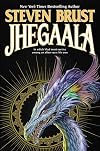
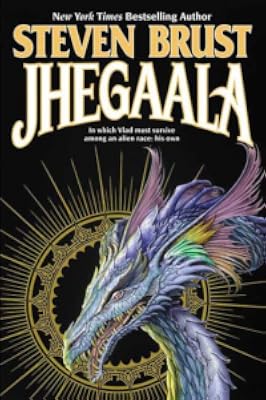
Fresh from the collapse of his marriage, and with the criminal Jhereg organization out to eliminate him, Vlad Taltos decides to hide out among his relatives in faraway Fenario. All he knows about them is that their family name is Merss and that they live in a papermaking industrial town called Burz. At first Burz isn't such a bad place, though the paper mill reeks to high heaven. But the longer he stays there, the stranger it becomes. No one will tell him where to find his relatives. Even show more stranger, when he mentions the name Merss, people think he's threatening them. The witches' coven that every Fenarian town and city should have is nowhere in evidence. And the Guild, which should be protecting the city's craftsmen and traders, is an oppressive, all-powerful organization, into which no tradesman would ever be admitted. Then a terrible thing happens. In its wake, far from Draegara, without his usual organization working for him, Vlad is going to have to do his sleuthing amidst an alien people: his own. Steven Brust delivers another thrilling entry in his Vlad Taltos fantasy epic. show lessTags
Recommendations





Member Reviews
Another interesting, but rather confusing story from Brust with one of my favorite characters in fiction. That means I was somewhat disappointed. I don't know if I'm just not able to pay proper attention since I only get to read in snatches of 30 minutes or so at a time or if Brust is just getting more obscure, but I have a feeling it is the latter. I like books that make me think, have subtle story lines & mysteries, but this was too unsolvable. When the story finally came together, it just read as too arbitrary & convenient.
I'd taken a long break from the series. I was all caught up with it & had to wait on the next book, but several (5?) years passed before I got back to it. I was careful to look up the order of the books & re-read show more [b:Dzur|133453|Dzur (Vlad Taltos, #10)|Steven Brust|http://d.gr-assets.com/books/1312061898s/133453.jpg|1915001] thinking that would be helpful for keeping the continuity of the series, but there were references that I couldn't place about his trip back east. I blamed it on time & my old memory. Turns out the story hadn't been told until now.
I don't mind series that are not chronologically in order IF that adds to the story. Modesitt does a great job of growing Recluce, its magic & themes, by skipping around in time. Brust did the same thing with the early books of this series, but then settled into a chronological order. Now he breaks out of that again. I didn't appreciate it. It served no useful purpose, just made the previous book even more confusing.
Brust likes to preface chapters with something different that says subtle things about the upcoming chapter, sets the mood, to some extent. In the last book, it was each course of a fantastic dinner. Interesting at first, I thought it was strained at times. This time, he has not one but two of these going; a naturalist treatise on the life cycle of a jhegaala & a comedic play. One or the other would have been fine. The combination detracted rather than added to the story.
I have [b:Iorich|6678974|Iorich (Vlad Taltos, #12)|Steven Brust|http://d.gr-assets.com/books/1312036242s/6678974.jpg|6874180] & [b:Tiassa|8705465|Tiassa (Vlad Taltos, #13)|Steven Brust|http://d.gr-assets.com/books/1312232193s/8705465.jpg|13578278], but I'm taking a break again. Hopefully it won't be as long & I'll be in a better mood when I come back to the series. Right now, I'm just kind of ticked off. show less
I'd taken a long break from the series. I was all caught up with it & had to wait on the next book, but several (5?) years passed before I got back to it. I was careful to look up the order of the books & re-read show more [b:Dzur|133453|Dzur (Vlad Taltos, #10)|Steven Brust|http://d.gr-assets.com/books/1312061898s/133453.jpg|1915001] thinking that would be helpful for keeping the continuity of the series, but there were references that I couldn't place about his trip back east. I blamed it on time & my old memory. Turns out the story hadn't been told until now.
I don't mind series that are not chronologically in order IF that adds to the story. Modesitt does a great job of growing Recluce, its magic & themes, by skipping around in time. Brust did the same thing with the early books of this series, but then settled into a chronological order. Now he breaks out of that again. I didn't appreciate it. It served no useful purpose, just made the previous book even more confusing.
Brust likes to preface chapters with something different that says subtle things about the upcoming chapter, sets the mood, to some extent. In the last book, it was each course of a fantastic dinner. Interesting at first, I thought it was strained at times. This time, he has not one but two of these going; a naturalist treatise on the life cycle of a jhegaala & a comedic play. One or the other would have been fine. The combination detracted rather than added to the story.
I have [b:Iorich|6678974|Iorich (Vlad Taltos, #12)|Steven Brust|http://d.gr-assets.com/books/1312036242s/6678974.jpg|6874180] & [b:Tiassa|8705465|Tiassa (Vlad Taltos, #13)|Steven Brust|http://d.gr-assets.com/books/1312232193s/8705465.jpg|13578278], but I'm taking a break again. Hopefully it won't be as long & I'll be in a better mood when I come back to the series. Right now, I'm just kind of ticked off. show less
This 11th book takes us back in time to the point where he'd just left his wife and needed a place to hide away from all the hoards and hoards and hoards of people he'd pissed off, long before he became a godslayer.
Wanna move back home, Vlad? All fine and dandy, except these human yokels have never heard of you and the reverse is also true. Oh, Vlad, what are you doing here?
Well, suffice to say, he gets embroiled in a murder investigation, gets tortured, and discovers that going back to the old world is generally never a good idea. Plus, it's smelly. And corrupt. And pretty much just like the place you came from except for the whole short, brutish, lives they live and the witchcraft, but, you know, DETAILS.
I may not really like this show more novel for the same reasons I don't like most of the Vlad In Exile books, mostly because I think he works best as a city boy, but let's be honest here... Brust writes a better fantasy than most writers out there, with such clarity of vision and interesting characters that it's hard not to just put him in a class of his own. When I say I dislike one of these books, I'm only saying I dislike it for purely personal reasons and preference, not because the book is at all uninteresting, has story-related problems, or that it isn't satisfying.... Because it was interesting, it didn't have any unresolved issues, and it was satisfying. :) It just happened not to be up to the same standards as the REST of his books. :)
And yet, I'm fully looking forward to the next in the series. :) show less
Wanna move back home, Vlad? All fine and dandy, except these human yokels have never heard of you and the reverse is also true. Oh, Vlad, what are you doing here?
Well, suffice to say, he gets embroiled in a murder investigation, gets tortured, and discovers that going back to the old world is generally never a good idea. Plus, it's smelly. And corrupt. And pretty much just like the place you came from except for the whole short, brutish, lives they live and the witchcraft, but, you know, DETAILS.
I may not really like this show more novel for the same reasons I don't like most of the Vlad In Exile books, mostly because I think he works best as a city boy, but let's be honest here... Brust writes a better fantasy than most writers out there, with such clarity of vision and interesting characters that it's hard not to just put him in a class of his own. When I say I dislike one of these books, I'm only saying I dislike it for purely personal reasons and preference, not because the book is at all uninteresting, has story-related problems, or that it isn't satisfying.... Because it was interesting, it didn't have any unresolved issues, and it was satisfying. :) It just happened not to be up to the same standards as the REST of his books. :)
And yet, I'm fully looking forward to the next in the series. :) show less
Jhegaala (In which Vlad must survive amongst an alien race: his own) is the 11th book - going in publication order - but is set between the fifth and sixth books, Phoenix and Athyra. Vlad has gone East, looking for his mother's family. He spends much of the book in one town, trying to get answers. It's obvious that something is going on beneath the surface, but it's less obvious to Vlad - and not at all obvious to the reader - what that is.
This could easily be boring, but it isn't. For one thing, it's interesting to see Vlad navigating a wholly-human community - Vlad has a few significant fellow-humans in his life, but like him, they're humans living in Dragaeran society. Culturally, Vlad is more Dragaeran than he perhaps realises.
For show more another, not having any friends at hand means Vlad's conversations with his jhereg familiar, Loiosh, become extra important. Vlad and Loiosh's banter and teamwork a lot of fun.
And because this series doesn't unfold chronologically, I knew Vlad's isn't unscathed by his time in the East. Therefore something was going to happen.
Which it does. It's bigger and darker than I expected, but I appreciated the way Vlad talked about it. And knowing that Vlad gets out okay - not entirely unscathed, but comparatively speaking okay - meant it wasn't unbearably tense.
Usually I'm a fan of reading things in order, but it's fascinating to have a series that doesn't lend itself to that. It helps that Vlad assumes his audience might not have heard about his other adventures and so frames his stories like standalone episodes - and rather than being contrived, what Vlad might chose to leave out is just in keeping with his character. show less
This could easily be boring, but it isn't. For one thing, it's interesting to see Vlad navigating a wholly-human community - Vlad has a few significant fellow-humans in his life, but like him, they're humans living in Dragaeran society. Culturally, Vlad is more Dragaeran than he perhaps realises.
For show more another, not having any friends at hand means Vlad's conversations with his jhereg familiar, Loiosh, become extra important. Vlad and Loiosh's banter and teamwork a lot of fun.
And because this series doesn't unfold chronologically, I knew Vlad's isn't unscathed by his time in the East. Therefore something was going to happen.
Which it does. It's bigger and darker than I expected, but I appreciated the way Vlad talked about it. And knowing that Vlad gets out okay - not entirely unscathed, but comparatively speaking okay - meant it wasn't unbearably tense.
Usually I'm a fan of reading things in order, but it's fascinating to have a series that doesn't lend itself to that. It helps that Vlad assumes his audience might not have heard about his other adventures and so frames his stories like standalone episodes - and rather than being contrived, what Vlad might chose to leave out is just in keeping with his character. show less
This one didn't really work for me.
Steven Brust's Drageara series began in 1983 with the publication of Jhereg, the story of a Chandler-esque low-level mafia boss and sometime assassin in a world of gods, elves and sorcerers. Jhegaala is the eighteenth book in the overall series, and the eleventh to focus on Vlad's exploits. Like two or three earlier books in the sequence, this is a flashback novel; this time filling in some of the events between Vlad's departure from Adrilankha after the events of Phoenix and his return to the Dragearan Empire three years later in Athyra. When I started writing this review I was going to try explaining some of that a little more, but the truth is, if you don't know what `the events of Phoenix' refers show more to, you probably shouldn't be reading this book yet: start with Jhereg or Taltos instead.
For that matter, you could well skip this book even if you've read all the others.
I'd been interested in reading about Vlad's journey back to his ancestral homelands in the East ever since they were first hinted at, but I found the actual experience rather underwhelming. Three possible reasons for this come to mind. First of all, this book suffers from the same problem as Dragon, the previous `flashback' book. Even in 1998 Brust was having problems recapturing the tone of the younger, more confident Vlad, and while Jhegaala is set a few years later than that book the intervening ten years of real time haven't helped. Second, one of the strengths of the series has always been Vlad's interactions with the rest of the series' regular cast; other than Athyra I think this is the only Vlad book not to feature any of them, and the story is poorer for their absence. This is only compounded by the third problem, which is, simply, that the plot isn't very interesting - as this was a flashback I knew that Vlad and his familiars Loiosh and Rocza would be fine, and I wasn't given a good reason to care about anybody else.
Having been similarly underwhelemed by Dzur, the previous book in the sequence, I'm not sure how keen I'll be to pick up the next Vlad installment. Though to be fair, this wasn't a bad book - merely a slightly dull one. Established fans of the series may well enjoy it more than I did. show less
Steven Brust's Drageara series began in 1983 with the publication of Jhereg, the story of a Chandler-esque low-level mafia boss and sometime assassin in a world of gods, elves and sorcerers. Jhegaala is the eighteenth book in the overall series, and the eleventh to focus on Vlad's exploits. Like two or three earlier books in the sequence, this is a flashback novel; this time filling in some of the events between Vlad's departure from Adrilankha after the events of Phoenix and his return to the Dragearan Empire three years later in Athyra. When I started writing this review I was going to try explaining some of that a little more, but the truth is, if you don't know what `the events of Phoenix' refers show more to, you probably shouldn't be reading this book yet: start with Jhereg or Taltos instead.
For that matter, you could well skip this book even if you've read all the others.
I'd been interested in reading about Vlad's journey back to his ancestral homelands in the East ever since they were first hinted at, but I found the actual experience rather underwhelming. Three possible reasons for this come to mind. First of all, this book suffers from the same problem as Dragon, the previous `flashback' book. Even in 1998 Brust was having problems recapturing the tone of the younger, more confident Vlad, and while Jhegaala is set a few years later than that book the intervening ten years of real time haven't helped. Second, one of the strengths of the series has always been Vlad's interactions with the rest of the series' regular cast; other than Athyra I think this is the only Vlad book not to feature any of them, and the story is poorer for their absence. This is only compounded by the third problem, which is, simply, that the plot isn't very interesting - as this was a flashback I knew that Vlad and his familiars Loiosh and Rocza would be fine, and I wasn't given a good reason to care about anybody else.
Having been similarly underwhelemed by Dzur, the previous book in the sequence, I'm not sure how keen I'll be to pick up the next Vlad installment. Though to be fair, this wasn't a bad book - merely a slightly dull one. Established fans of the series may well enjoy it more than I did. show less
If you haven't been reading the saga of Vlad Taltos, there's nothing for you to see here; do not pass go, do not collect $200, go to the start of the series and start reading.
If you have been reading the series this is actually one of the more significant backfiller books, as early in his exile from Drageran lands Vlad tries to visit the ancestral homeland and blunders into a war of all against him; thus beginning his transformation from crime lord to the paladin that we see in "Issola."
If you have been reading the series this is actually one of the more significant backfiller books, as early in his exile from Drageran lands Vlad tries to visit the ancestral homeland and blunders into a war of all against him; thus beginning his transformation from crime lord to the paladin that we see in "Issola."
***If you haven't read the other books in this series, there are spoilers ahead***
In his eleventh adventure to date, Vlad Taltos finds himself in a difficult position. His marriage, that he had thought was perfect in just about every way, has just collapsed. Oh and there is one other minor detail, the Jhereg organization as a whole is on his tail, a Morganti blade in hand. With nowhere left in the Empire to hide, he decides that now would be a good time to learn about his past. So armed with minimal leads from his Noish-pa about his mother's people, he heads east to the small town of Burz where he finds himself embroiled in the center of a standoff between three different and equally powerful groups of people.
***End Spoilers***
I think show more it's been too long since I've read a Brust novel. I always love everything this author has to offer but I didn't find myself nearly as engrossed in this tale as I have previously. Maybe a reread of the other 10 stories would have helped or maybe it was the story itself. Most of my favorite characters, including Aliera, Morrolan, Lady Teldra, and Sethra Lavode, were completely absent. Given the storyline, that is to be expected, but these characters add so much to the stories, that this one suffered as a result. Yes, the sarcastic interplay between Loiosh and Vlad was still humorous, but overall the story felt lacking. In addition, the lack of explanation about anything until the very last pages got annoying. Normally you would get some sort of idea of what was happening through the conversations between Vlad and his familiar, but instead there was a lot of Vlad telling Loiosh that he wasn't sure or he didn't want to talk about it. This made for a frustrating read.
Notwithstanding, I will definitely continue with the series. I love the characters and the world is a really unique one to fantasy literature. I just hope that sooner or later my old favorite characters reappear and that the stories are less convoluted. show less
In his eleventh adventure to date, Vlad Taltos finds himself in a difficult position. His marriage, that he had thought was perfect in just about every way, has just collapsed. Oh and there is one other minor detail, the Jhereg organization as a whole is on his tail, a Morganti blade in hand. With nowhere left in the Empire to hide, he decides that now would be a good time to learn about his past. So armed with minimal leads from his Noish-pa about his mother's people, he heads east to the small town of Burz where he finds himself embroiled in the center of a standoff between three different and equally powerful groups of people.
***End Spoilers***
I think show more it's been too long since I've read a Brust novel. I always love everything this author has to offer but I didn't find myself nearly as engrossed in this tale as I have previously. Maybe a reread of the other 10 stories would have helped or maybe it was the story itself. Most of my favorite characters, including Aliera, Morrolan, Lady Teldra, and Sethra Lavode, were completely absent. Given the storyline, that is to be expected, but these characters add so much to the stories, that this one suffered as a result. Yes, the sarcastic interplay between Loiosh and Vlad was still humorous, but overall the story felt lacking. In addition, the lack of explanation about anything until the very last pages got annoying. Normally you would get some sort of idea of what was happening through the conversations between Vlad and his familiar, but instead there was a lot of Vlad telling Loiosh that he wasn't sure or he didn't want to talk about it. This made for a frustrating read.
Notwithstanding, I will definitely continue with the series. I love the characters and the world is a really unique one to fantasy literature. I just hope that sooner or later my old favorite characters reappear and that the stories are less convoluted. show less
You don't read Stven Brust for cutting edge science or epic fantasy. He has found his niche in a detailed and believable fantasy world of long-lived sorcerers (elves) and humans with some different powers (witches). The series started off with a human, Vlad Taltos, owner of a telepathic jhereg (dragonette), who just happens to be an assassin living among the Dragaerans.
This novel finds Vlad leaving Dragaera (home of the elves) for his ancestral home of Fenario (home of the humans). He is being chased by a series of assassins from his former guild who want him permanently dead. Thinking that it would be easier to hide among humans, Vlad travels to Burz; home of a paper mill, the Count who runs it, the Guild of Merchants that opposes the show more Count, and the Coven, witches who are just trying to keep a low profile and not be burned by the peasants who fear them. Although his situation is dire, especially since everyone in Burz feels terribly threatened by his presence, this is mostly a novel of of interior witty dialogues between Vlad and his jhereg, Loiosh. As long as you are not expecting any grand ideas, this is a quick and pleasant read. show less
This novel finds Vlad leaving Dragaera (home of the elves) for his ancestral home of Fenario (home of the humans). He is being chased by a series of assassins from his former guild who want him permanently dead. Thinking that it would be easier to hide among humans, Vlad travels to Burz; home of a paper mill, the Count who runs it, the Guild of Merchants that opposes the show more Count, and the Coven, witches who are just trying to keep a low profile and not be burned by the peasants who fear them. Although his situation is dire, especially since everyone in Burz feels terribly threatened by his presence, this is mostly a novel of of interior witty dialogues between Vlad and his jhereg, Loiosh. As long as you are not expecting any grand ideas, this is a quick and pleasant read. show less
Members
- Recently Added By
Lists

What Makes This Book So Great
102 works; 16 members

Books Read in 2014
2,344 works; 89 members

Books Read in 2016
4,666 works; 199 members

Books Read in 2020
4,379 works; 124 members

Books Read in 2019
4,052 works; 110 members
Author Information

70+ Works 35,647 Members
Steven Karl Zoltan Brust is a writer and musician. He was born on November 23, 1955. Brust has worked as a systems programmer for a computer company and played guitar, drums, and banjo in such bands as Cats Laughing, Morrigan, and Boiled in Lead. Brust writes science fiction, including the Vlad Taltos series, The Pheonix Guards, 500 Years After, show more and Brokedown Palace. He has written "choose-your-own-adventure" books for Tor and published several short stories in a series. Brust also released a solo album, A Rose for Iconoclastes, on the SteelDragon label. (Bowker Author Biography) show less
Some Editions
Series


Work Relationships
Common Knowledge
- Canonical title
- Jhegaala
- Original publication date
- 2008-07
- People/Characters
- Vlad Taltos; Loiosh; Rocza; Noish-pa
- Dedication
- To Anika and Miklos
- First words
- There is a place in the mountain called Saestara where, according to the locals, you can look east and see the past, and look west and see the future.
- Last words
- (Click to show. Warning: May contain spoilers.)Looking ahead, I couldn't see my future at all, which I figured was probably just as well.
- Publisher's editor
- Nielsen Hayden, Teresa
Classifications
Statistics
- Members
- 918
- Popularity
- 29,296
- Reviews
- 29
- Rating
- (3.72)
- Languages
- English
- Media
- Paper, Audiobook, Ebook
- ISBNs
- 6
- ASINs
- 6