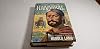
Hannibal: One Man Against Rome
by Harold Lamb
On This Page
Description
Эта книга - оригинальное беллетризованное жизнеописание величайшего полководца всех времен, легендарного предводителя карфагенской армии Ганнибала, чье имя приводило в трепет самых неустрашимых врагов, а великие деяния остались в анналах мировой истории.Tags
Recommendations



















Member Reviews
It is so true that history is written by the winners. While I found this book to be well written and reasonably interesting, it wasn’t terribly engaging. Most of it was the story of troop movements, battle formations and tactics and not stories of the man himself. He remains to me almost as mysterious as he was before I read this, only knowing of him through the eyes of Roman accounts and personalities. Carthage must be destroyed, indeed. What’s left of source material about Hannibal is twisted by Roman propaganda of the time and historical axe-grinding (Livy is a perfect example of this) and so makes for a vague biography of a man who must have been quite feared if his name ended up so blackened by his enemies. Still, his name show more lives on and is more famous even than his enemy’s, the victor Publius Scipio Africanus so I guess the winners can’t have everything.
There’s nothing of Hannibal’s childhood or education, political struggles in coming to power or his domestic life and children; the things we need to fully engage with him as a person, not just a persona. Even his military tactics and planning were shrouded in mystery, told through the fact of their occurrence more than why Hannibal did what he did. I’d love to be able to read about conversations and meetings he had with his subordinates. I’d love to know why he seemed so indecisive after winning key battles. For example after Cannae, why didn’t he march on Rome itself? The Roman army was basically wiped out and nothing stood in his way, but he held back and instead marched through Italia confiscating crops. I would like to have known what it was like to be persuaded by his charisma as his whole army must have been or else they would have mutinied on more than one occasion during their long and arduous campaigns.
What information there was to be had Lamb worked into an interesting and well crafted storyline. Of course much of the story is about battles and who won what and when. Not only when Hannibal was in command of troops, but his father Hamilcar and others like Hasdrubal. At the time Lamb wrote the book he says that military historians still had not found out which route exactly Hannibal took over the Alps in his famous march. Amazing. Is it weird that I felt more sympathy for the poor elephants than I did for the soldiers?
One complaint I have is for the audio publishing company – why didn’t you include maps??? It’s not so hard people. Luckily I have plenty of other physical books with maps so I could picture the movements, locations and distances. For those without maps in their homes, a quick trip to Hannibal’s Wikipedia page will definitely help. show less
There’s nothing of Hannibal’s childhood or education, political struggles in coming to power or his domestic life and children; the things we need to fully engage with him as a person, not just a persona. Even his military tactics and planning were shrouded in mystery, told through the fact of their occurrence more than why Hannibal did what he did. I’d love to be able to read about conversations and meetings he had with his subordinates. I’d love to know why he seemed so indecisive after winning key battles. For example after Cannae, why didn’t he march on Rome itself? The Roman army was basically wiped out and nothing stood in his way, but he held back and instead marched through Italia confiscating crops. I would like to have known what it was like to be persuaded by his charisma as his whole army must have been or else they would have mutinied on more than one occasion during their long and arduous campaigns.
What information there was to be had Lamb worked into an interesting and well crafted storyline. Of course much of the story is about battles and who won what and when. Not only when Hannibal was in command of troops, but his father Hamilcar and others like Hasdrubal. At the time Lamb wrote the book he says that military historians still had not found out which route exactly Hannibal took over the Alps in his famous march. Amazing. Is it weird that I felt more sympathy for the poor elephants than I did for the soldiers?
One complaint I have is for the audio publishing company – why didn’t you include maps??? It’s not so hard people. Luckily I have plenty of other physical books with maps so I could picture the movements, locations and distances. For those without maps in their homes, a quick trip to Hannibal’s Wikipedia page will definitely help. show less
Hannibal Barca, commander of armies of Carthage, man who almost brought Rome to its knees. Man of whom we know nothing except what was written by his bitter enemies, Romans, centuries after Carthage was razed.[return]Harold Lamb s takes us on the journey through northern Africa, Spain, through wilderness of Alps and finally all the way from the northern plains of Italy to the old Greek cities in the south of Italy (to Capua and even further south to Syracuse).[return][return]It is time of great change old Greek city-states are losing their spheres of influence while Rome [bent on conquest and domination of all surrounding territories] rises in power and starts offering unacceptable terms to surrounding states [and thus tries to provoke show more conflict] and forcing them to withdraw, knowing that old states are more bent on negotiations than on war [while Rome is ready to wage war on anybody who defies it (at the time this means almost everybody)].[return]One side bent on conquest and the other seeking a way to preserve its way of life.[return]Hannibal starts his invasion of Italian peninsula knowing that only in that way he will be able to ease the Roman pressure on Carthage. He will win many battles and soon Romans will fear his very name. But, as it is almost always the case, internal quarrelling and Roman perseverance (coupled with Rome s almost limitless human and material resources) will bring end not only to Hannibal s dream of free Carthage but to any independent city-state in Europe, Asia and Africa, they will soon all become Rome s client s .[return][return]Lamb s prose is quick paced and reads more like a novel than historical research (which is a great plus in my opinion because many historians try to get as many details as possible which may drive the reader in totally opposite direction and cause him/her to loose itself entirely (Keegan and Goldsworthy are modern writers that have this same quality as Lamb)). I got hooked from the first page so much in fact that I am looking forward to reading other historical works of Harold Lamb.[return]Highly recommended. show less
Hannibal Barca, commander of armies of Carthage, man who almost brought Rome to its knees. Man of whom we know nothing except what was written by his bitter enemies, Romans, centuries after Carthage was razed.
Harold Lamb’s takes us on the journey through northern Africa, Spain, through wilderness of Alps and finally all the way from the northern plains of Italy to the old Greek cities in the south of Italy (to Capua and even further south to Syracuse).
It is time of great change – old Greek city-states are losing their spheres of influence while Rome [bent on conquest and domination of all surrounding territories] rises in power and starts offering unacceptable terms to surrounding states [and thus tries to provoke conflict] and show more forcing them to withdraw, knowing that old states are more bent on negotiations than on war [while Rome is ready to wage war on anybody who defies it (at the time this means almost everybody)].
One side bent on conquest and the other seeking a way to preserve its way of life.
Hannibal starts his invasion of Italian peninsula knowing that only in that way he will be able to ease the Roman pressure on Carthage. He will win many battles and soon Romans will fear his very name. But, as it is almost always the case, internal quarrelling and Roman perseverance (coupled with Rome’s almost limitless human and material resources) will bring end not only to Hannibal’s dream of free Carthage but to any independent city-state in Europe, Asia and Africa, they will soon all become Rome’s “client’s”.
Lamb’s prose is quick paced and reads more like a novel than historical research (which is a great plus in my opinion because many historians try to get as many details as possible which may drive the reader in totally opposite direction and cause him/her to loose itself entirely (Keegan and Goldsworthy are modern writers that have this same quality as Lamb)). I got hooked from the first page – so much in fact that I am looking forward to reading other historical works of Harold Lamb.
Highly recommended. show less
Harold Lamb’s takes us on the journey through northern Africa, Spain, through wilderness of Alps and finally all the way from the northern plains of Italy to the old Greek cities in the south of Italy (to Capua and even further south to Syracuse).
It is time of great change – old Greek city-states are losing their spheres of influence while Rome [bent on conquest and domination of all surrounding territories] rises in power and starts offering unacceptable terms to surrounding states [and thus tries to provoke conflict] and show more forcing them to withdraw, knowing that old states are more bent on negotiations than on war [while Rome is ready to wage war on anybody who defies it (at the time this means almost everybody)].
One side bent on conquest and the other seeking a way to preserve its way of life.
Hannibal starts his invasion of Italian peninsula knowing that only in that way he will be able to ease the Roman pressure on Carthage. He will win many battles and soon Romans will fear his very name. But, as it is almost always the case, internal quarrelling and Roman perseverance (coupled with Rome’s almost limitless human and material resources) will bring end not only to Hannibal’s dream of free Carthage but to any independent city-state in Europe, Asia and Africa, they will soon all become Rome’s “client’s”.
Lamb’s prose is quick paced and reads more like a novel than historical research (which is a great plus in my opinion because many historians try to get as many details as possible which may drive the reader in totally opposite direction and cause him/her to loose itself entirely (Keegan and Goldsworthy are modern writers that have this same quality as Lamb)). I got hooked from the first page – so much in fact that I am looking forward to reading other historical works of Harold Lamb.
Highly recommended. show less
History fascinates me (as you can probably tell by the number of histories I have been reading lately). Hannibal has always been a figure I never knew anything about, but knew he did something important. Something about elephants and the Alps. Well, I decided to find out and grabbed this book. What a fascinating man. He was a brilliant general and gifted leader. He managed to keep an army wandering up and down the Italian peninsula for years without any supply lines or reinforcements, terrorizing the Romans and enthralling everyone else. The interesting part is how little is known of him due to the fact after he was defeated, Rome did everything in their power to wipe his memory from the face of the Earth. They nearly succeeded. There show more is only one picture known to have survived and almost all the written record is from the biased side of the Romans. Mr. Lamb has pieced as much together as he could and presented it in a captivating manner. He describes some of the brilliant tactics he came up with and showed how the Romans were utterly befuddled by them. On several occasions, Hannibal was outnumbered several times over and still managed to rout the Romans almost completely. His fame in Italy soon rose to mythic stature. Just the word that Hannibal was marching toward a town would be enough to cause the inhabitants to not only flee, but to burn it behind them. And the truth was, he was marching the other way!
I really enjoyed putting this piece of history into perspective with all the rest I have been reading. It is something I don't remember going by in school at all. I know they have so much to cover in school, but one thing I missed was putting all the little pieces together so that I could figure out what happened when and in relation to what else was going on in another place. Hannibal was one of those. Highly recommended for any person who manages or leads people. Good lessons to be learned. show less
I really enjoyed putting this piece of history into perspective with all the rest I have been reading. It is something I don't remember going by in school at all. I know they have so much to cover in school, but one thing I missed was putting all the little pieces together so that I could figure out what happened when and in relation to what else was going on in another place. Hannibal was one of those. Highly recommended for any person who manages or leads people. Good lessons to be learned. show less
Thanks to my friend Rich for drawing my attention to this classic history of Hannibal. Lamb's account draws out the heroic perseverance and single-minded drive of Hannibal. I am drawn to this story like that of the explorations of Shackleton. Though I've read the arc of the Punic wars before, this work really underscores how the Roman reaction to this threat became the impetus to empire.
660. Hannibal: One Man Against Rome, by Harold Lamb (read 23 June 1961) This is a "popular" biography which I found quite worth reading
Amazing account of the life of one of history's giants.
Members
- Recently Added By
Author Information

154+ Works 4,224 Members
Some Editions
Awards and Honors
Awards
Series
Belongs to Publisher Series
Common Knowledge
- Canonical title
- Hannibal: One Man Against Rome
- Original publication date
- 1958
- People/Characters
- Scipio Africanus; Hannibal Barca; Mago Barca; Hasdrubal Barca; Hanno the Great; Philip of Macedon
- Important places
- Ancient Rome; Carthage (Ancient City); Numidia (Ancient); Macedonia (Ancient); Iberian Peninsula; Mediterranean Sea (show all 7); Capua, Campania, Italy (Ancient City)
- Epigraph
- Of all that befell both the Romans and Carthaginians, the cause was one man, and one mind--Hannibal's.
POLYBIUS - First words
- Like many others Hannibal emerged from childhood within sight of the sea.
Classifications
- Genres
- History, Nonfiction, Biography & Memoir, General Nonfiction
- DDC/MDS
- 923.53973 — History & geography Biographies, Genealogy, Healdry Unique Notables Administration: army and navy, civil service
- LCC
- DG249 .L33 — History of Europe, Asia, Africa and Oceania City History of Italy Ancient Italy. Rome to 476 History By period Kings and Republic, 753-27 B.C. Republic, 509-27 Conquest of Mediterranean world. 264-133 First and Second Punic Wars. Illyrian
Statistics
- Members
- 254
- Popularity
- 127,305
- Reviews
- 7
- Rating
- (3.74)
- Languages
- English, Russian
- Media
- Paper, Audiobook
- ISBNs
- 5
- ASINs
- 16