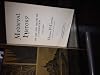
Medieval history; the life and death of a civilization
by Norman F. Cantor
On This Page
Tags
Recommendations







































Member Reviews
An excellent survey of the European scene from the collapse of the Roman Empire in the West, to the sixteenth Century, Cantor has a good command of the sources, and clear expression. The book, though now some decades old, is still assignable as a survey and basis for more detailed reading.
Ratings
Members
- Recently Added By
Lists

Books in the Bibliography of The History of Hell by Alice K. Turner
155 works; 1 member
Author Information

68 Works 8,934 Members
Norman F. Cantor is Emeritus Professor of History, Sociology, and Comparative Literature at New York University.
Common Knowledge
- Original publication date
- 1963
- Epigraph
- Even the heavenly city, while in its state of
pilgrimage, avails itself of the peace of the earth
. . . and makes this earthly peace bear upon
the peace of heaven.
— St. Augustine, The City of God<... (show all)/cite> - Dedication
- To My Father and Mother
- First words
- Preface to the Second Edition: When this book was published in 1963, it differed from the other general histories of medieval civilization available for use as textbooks in American universities in two histories.
Preface to the Second Edition: During the past eight years I have taught medieval history to students at Columbia, Barnard, Princeton, Johns Hopkins, Yeshiva, and Manitoba.
Prologue: In beginning the study of any subject we have a right to ask, What are its uses, Why should we apply our time and energy to this subject, Of what use is this study in our own lives?
Introduction: It is possible to designate the precise day on which the study of the middle ages as a branch of historical literature really begins.
Chapter One: Edward Gibbon believed that men were happiest under the rule of the Roman empire in the second century A.D. - Last words
- (Click to show. Warning: May contain spoilers.)The study of medieval history therefore teaches us that civilization is the result of a complex interpenetration of spirit and power, of moral and material resources; that this delicate compromise is not easy to maintain, that its preservation requires mature intelligence, sophisticated moderation, and constant vigilance; and that the enemies of civilization, apart from the uncomprehending primitives, are the socially irresponsible zealots and the neurotic simplifiers.
Classifications
- Genres
- History, Nonfiction, General Nonfiction, Travel, Religion & Spirituality
- DDC/MDS
- 914.03 — History & geography Geography & travel Geography of and travel in Europe subdivisions and modified standard subdivisions [formerly Man and his Civilisation, now in 940]
- LCC
- D118 .C3 — History of Europe, Asia, Africa and Oceania History (General) Medieval history
Statistics
- Members
- 265
- Popularity
- 122,872
- Reviews
- 1
- Rating
- (3.69)
- Languages
- English
- Media
- Paper
- ISBNs
- 3
- ASINs
- 18